
2015 Ram 1500 Towing Capacity Chart: Engine, Cab, And Axle Ratio Specifications

For truck owners and prospective buyers, the 2015 Ram 1500 remains a cornerstone of light-duty performance, but its true utility is defined by its versatile towing capabilities. With three distinct engines and dozens of cab and axle combinations, determining the exact towing capacity for a specific 2015 Ram 1500 can be confusing and lead to dangerous overloading. This professional guide provides a detailed towing capacity chart and breaks down the mechanical factors—from axle ratios to engine types—to ensure you haul your cargo with absolute confidence and safety.


Section 1: Understanding 2015 Ram 1500 Towing Terminology and Weight Ratings
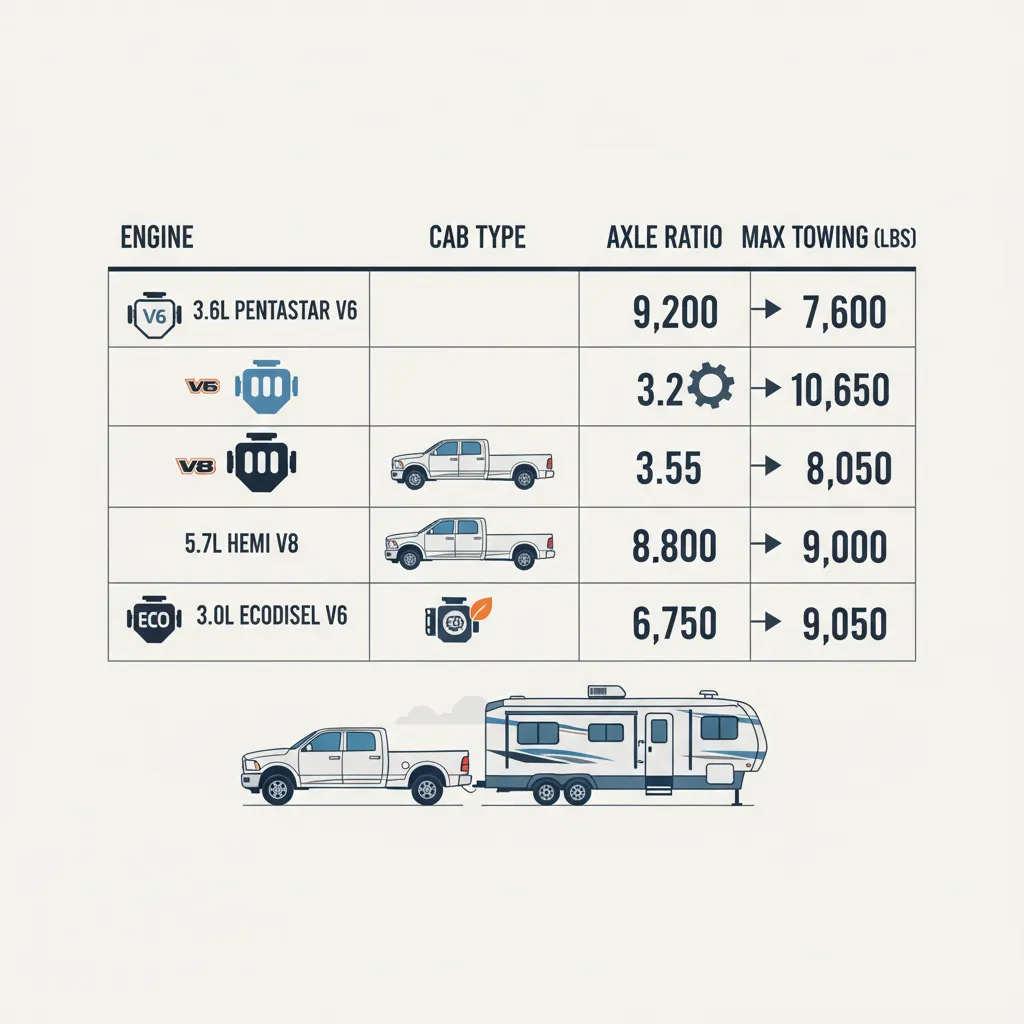
To accurately interpret a 2015 Ram 1500 towing capacity chart, one must first master the technical terminology that governs safe operations. The most critical figure in your calculations isn’t actually the towing capacity itself, but the Gross Combined Weight Rating (GCWR). This represents the absolute maximum permissible weight of the truck, the trailer, all cargo, all passengers, and a full tank of fuel combined. For the 2015 model year, the GCWR can reach as high as 15,950 pounds, but this is entirely dependent on your mechanical configuration.
A common mistake among novice towers is ignoring Payload Capacity in favor of towing numbers. Payload is the amount of weight your truck can carry in the cab and bed. When you attach a trailer, the “tongue weight” (typically 10-15% of the trailer weight) counts against your payload. If you have a Crew Cab filled with four 200-pound adults and 300 pounds of gear in the bed, you may exceed your Gross Vehicle Weight Rating (GVWR) long before you hit your maximum towing limit. To find your specific limits, always check the official guide or the Door Jamb Certification Label on the driver’s side pillar.
A truck rated to tow 10,000 lbs might have a payload of only 1,500 lbs. If your trailer has a 1,200 lb tongue weight, you only have 300 lbs left for passengers and fuel. Overloading the payload is one of the leading causes of suspension failure and tire blowouts while towing.

Section 2: 2015 Ram 1500 Towing Capacity Chart by Engine Performance
The engine is the heart of your towing capability, and the 2015 Ram 1500 offers three distinct flavors of power. Research indicates that the variety in engine architecture allows the Ram to compete across multiple segments, from light utility to near-heavy-duty hauling tasks. Most of these engines are paired with the 8-speed TorqueFlite automatic transmission, which provides optimized gear ratios for maintaining momentum on steep grades.
3.6L Pentastar V6: The Efficiency Specialist
The 3.6L Pentastar V6 is surprisingly capable for a base engine. According to aggregated Ram specs, this engine typically provides a towing range of 4,350 to 7,600 pounds. It is ideal for homeowners hauling small boats, ATVs, or light utility trailers. However, it lacks the low-end torque required for comfortable long-distance hauling of large travel trailers.
5.7L HEMI V8: The Towing Workhorse
Producing 395 horsepower and 410 lb-ft of torque, the 5.7L HEMI is the undisputed king of the 1500 lineup for maximum pulling power. Statistics show this engine can tow between 7,500 and 10,650 pounds. When properly equipped with the 3.92 axle ratio, it transforms the 2015 Ram 1500 into a highly capable machine for large campers and horse trailers.
3.0L EcoDiesel V6: Torque and Range
The EcoDiesel was a game-changer in 2015, offering high low-end torque (420 lb-ft) that rivals the HEMI but with significantly better fuel economy. It features a towing capacity between 4,200 and 9,200 pounds. While its peak rating is lower than the HEMI, the way it delivers power makes it a favorite for those who tow frequently over long distances.


By The Numbers: Engine Performance
Max Hemi Towing (lbs)
Max EcoDiesel Towing (lbs)
Max Pentastar Towing (lbs)

Section 3: The Impact of Axle Ratios and Drivetrain on Towing Limits
One of the most nuanced aspects of truck specifications is the axle ratio. In the 2015 Ram 1500, the choice between a 3.21, 3.55, or 3.92 rear axle ratio drastically alters the numbers in the towing chart. A higher numerical ratio (3.92) means the engine turns more times for every revolution of the tires, providing more mechanical advantage and pulling power at the expense of highway fuel economy.
Technical comparisons show that two identical HEMI-powered Ram 1500s can have a tow rating difference of over 2,000 pounds based solely on the axle ratio. For example, a 2015 Ram 1500 with a 3.21 axle ratio is often limited to roughly 8,000 lbs, whereas the 3.92 ratio unlocks the full 10,000+ lb potential. Furthermore, opting for Four-Wheel Drive (4WD) adds mechanical weight (roughly 200-300 pounds) to the chassis, which technically subtracts from the maximum towing capacity compared to a Two-Wheel Drive (2WD) equivalent.
Section 4: Cab Styles and Bed Length Configuration Variables
The physical geometry of your truck—the cab style and bed length—plays a pivotal role in stability and raw capacity. Generally, the Regular Cab 2WD with a 6’4″ bed is the configuration that achieves the maximum 10,650-pound rating because it is the lightest version of the truck, leaving more of the GCWR available for the trailer.
As you move to the Quad Cab or the spacious Crew Cab, the truck’s curb weight increases. While a Crew Cab offers superior comfort for family camping trips, that extra interior volume translates to hundreds of pounds of steel and glass that “eat” into your towing and payload capacity. Additionally, wheelbase length affects how the truck handles trailer sway. A longer wheelbase (Crew Cab with a 6’4″ bed) provides a more stable footprint on the highway compared to the shorter configurations, even if its raw tow rating is slightly lower on paper.
Regular Cab Advantage
Highest raw towing numbers due to lower vehicle curb weight.
Crew Cab Stability
Longer wheelbase offers better control against trailer sway at highway speeds.



Section 5: Professional Towing Equipment and Safety Best Practices
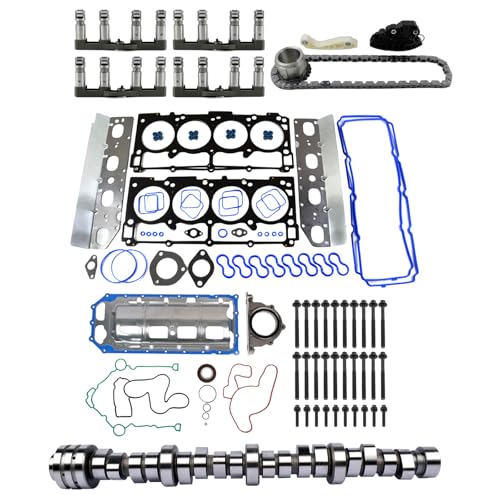
Even with the most powerful HEMI and a 3.92 axle, you cannot safely tow at the limits without the right hardware. A Class IV hitch receiver is a prerequisite for any load exceeding 5,000 pounds. Furthermore, for trailers over 3,500 pounds, an integrated trailer brake controller is essential. This allows the truck to manage the trailer’s brakes, preventing the “jackknife” effect during emergency stops. For more hardware insights, visit expert tips from official parts catalogs.
One of the standout features of the 2015 Ram 1500 is the optional 4-corner air suspension. This system can automatically level the truck when a heavy trailer is attached, maintaining proper headlight aim and suspension geometry. Expert insight suggests that if your truck uses standard coils, you must use a Weight Distribution Hitch (WDH) for trailers exceeding 5,000 pounds to prevent rear-end sag and maintain front-wheel traction.
📋
Safe Towing Checklist
Ensure both truck and trailer tires are inflated to the “Cold PSI” listed on the sidewall or door jamb. Consider upgrading to LT-rated tires for frequent hauling.
This alters shift points to keep the engine in its power band and increases engine braking to preserve your brake pads on descents.
Always determine your capacity based on the ‘weakest link’ in your setup. If your truck is rated for 10,000 lbs but your hitch ball is only rated for 6,000 lbs, your maximum capacity is 6,000 lbs. Never exceed the lowest-rated component in your towing chain.
Summary and Professional Recommendation
The 2015 Ram 1500 towing capacity ranges from 4,200 to 10,650 pounds depending on engine and axle configuration. Mechanical factors like the 3.92 axle ratio and HEMI V8 are essential for reaching maximum heavy-duty towing limits, while the EcoDiesel offers a fantastic middle ground for efficiency-minded haulers. Safety should always come first: never exceed the GCWR or the individual payload capacity indicated on your door jamb sticker. Consult the specific VIN-based towing guide or visit a trusted professional to verify your equipment before hitting the road with a heavy trailer.
Frequently Asked Questions
Where can I find the towing capacity sticker on my 2015 Ram 1500?
The most reliable source for your specific vehicle is the Tire and Loading Information sticker located on the driver’s side B-pillar (door jamb). This label provides the Gross Vehicle Weight Rating (GVWR) and maximum payload. For towing-specific capacity, you should cross-reference this with the 2015 Ram Towing Guide using your VIN to account for your specific axle ratio and engine.


What is the difference between towing capacity and payload capacity?
Towing capacity refers to the maximum weight the truck can pull behind it. Payload capacity is the total weight the truck can carry within the cab and bed, including passengers and the tongue weight of the trailer. It is common to hit your payload limit before reaching your max towing capacity, especially when hauling a heavy trailer with a full cab of people.
What is the best engine for towing with a 2015 Ram 1500?
For maximum capacity, the 5.7L HEMI V8 is the professional choice, offering up to 10,650 lbs of pulling power. However, for those who tow frequently over long distances, the 3.0L EcoDiesel V6 is highly regarded for its 420 lb-ft of torque and superior fuel efficiency under load, though its maximum capacity peaks slightly lower at 9,200 lbs.
Do I need a trailer brake controller for my trailer?
In most states, a trailer brake controller is legally required for any trailer weighing over 3,000 or 3,500 pounds. For a 2015 Ram 1500, using the integrated factory brake controller is recommended as it syncs with the truck’s ABS and stability control systems to provide smoother, more reliable stopping power during heavy hauls.
How does the axle ratio affect the 2015 Ram 1500 towing capacity?
The axle ratio determines how many times the driveshaft turns for every wheel rotation. A higher number, like 3.92, provides more mechanical advantage for moving heavy loads from a standstill, significantly increasing the tow rating. A lower number, like 3.21, is optimized for fuel economy at highway speeds but reduces the total weight the truck can safely pull.
![2015 RAM 1500 AC Recharge Port Location & Identification [2026]](https://truckguider.com/wp-content/uploads/2026/03/2015-ram-1500-ac-recharge-port-featured.webp)



![2022 Ram 1500 Brush Guards: Top Picks [2026]](https://truckguider.com/wp-content/uploads/2026/03/2022-ram-1500-brush-guard-featured.webp)