6.7 Powerstroke Problems by Generation: Common Failures and Fixes 2011-2026

Not every 6.7 Powerstroke problem applies to every truck. Ford’s 6.7L Power Stroke has gone through three distinct hardware generations since it launched for the 2011 model year, and the failure patterns owners run into depend heavily on which generation they own.
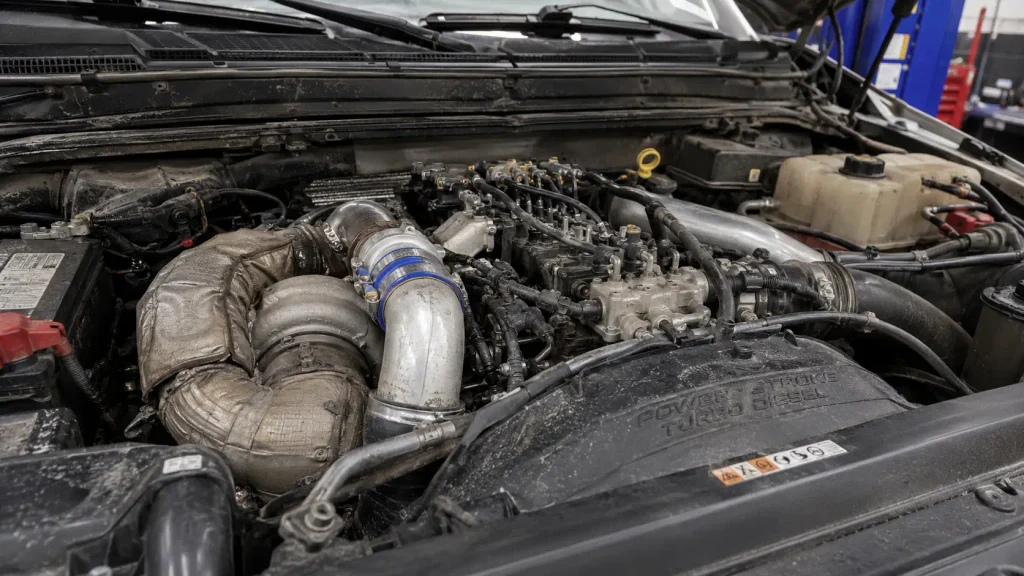
A 2012 Super Duty and a 2022 Super Duty share the same engine family name, but they fail in different places, for different reasons, and at different costs.

Prime for Young Adults — 6 Months Free
Students and 18–24s get six months of Prime free, then half price.
Start 6 Months FreeThis guide breaks the 6.7 Powerstroke’s most common problems down by generation: Gen 1 (2011-2014), Gen 2 (2015-2019), and Gen 3 (2020-present). Two issues, the CP4 high-pressure fuel pump and the EGR cooler, span all three generations in some form, but the specific pump variant, failure mileage, and current recall status change year to year.
That recall history, including a 2024 fuel pump recall and a 2026 follow-up correction, is where most competing guides stop short.
6.7 Powerstroke Reliability
Problems by Generation, 2011-2026
Three hardware generations. Three different failure patterns.
Gen 1
2011-2014
Primary Risk
Ceramic-bearing turbo failure (2011-2012) and EGR cooler cracking
Turbo fails 50k-100k mi

Audible — Listen Free for 30 Days
One free credit a month and thousands of titles included.
Listen Free for 30 DaysTurbo Replacement
$2,000-$5,000
EGR Cooler Replacement
$900-$2,500
Gen 2
2015-2019
Primary Risk
EGR cooler cracking and CP4 pump wear; fan clutch stuck-on reports
Audible Premium Plus — Annual Membership
12 audiobook credits up front, plus the full Audible catalogue.
See Annual PlansEGR fails 130k-160k mi
EGR Cooler Replacement
$900-$2,500
CP4 Pump (Contaminated)
$8,000-$15,000
Gen 3
2020-present
Primary Risk
CP4 RP7/RP8 pump biodiesel deposits, covered under active recall
Typical Repair Cost
Free (PCM reflash)
Active Recall 24S78 / NHTSA 24V-957
Covers roughly 295,000 2020-2022 Super Duty and medium-duty trucks (built Feb 2019-Aug 2021) for CP4 pump biodiesel deposit risk. Remedy is a free dealer PCM reflash. A follow-up recall issued April 2026 covers about 7,100 trucks whose original fix did not install correctly.
Repair cost ranges are estimates from independent cost guides and owner-reported shop quotes; actual cost varies by shop, region, and failure severity. Verify recall status by VIN at NHTSA’s recall database.
6.7L Power Stroke Generations: 2011-2014, 2015-2019, 2020-Present
Recommended Best Deal Products

Ford introduced the 6.7L Power Stroke for the 2011 model year as its first fully in-house turbodiesel, replacing the Navistar-built 6.4L. It uses a compacted graphite iron (CGI) block, aluminum heads, and a reverse-flow layout that routes exhaust through the valley of the V rather than the outside of the heads.
That basic architecture has carried through all three generations, but the fuel system, turbocharger, and cooling system have all changed significantly.
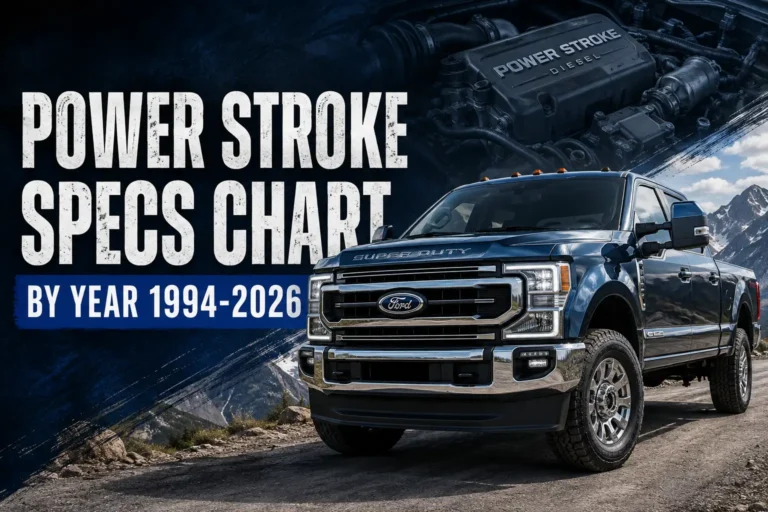
| Generation | Model Years | Pickup Rated Output (F-250/F-350) | Key Hardware |
|---|---|---|---|
| Gen 1 | 2011-2014 | 390 hp / 735 lb-ft at launch, updated to 400 hp / 800 lb-ft via a factory reflash later in 2011 | Bosch CP4.2 pump, Garrett GT32 SST dual-compressor turbo, dual-circuit cooling system |
| Gen 2 | 2015-2019 | 440 hp / 860 lb-ft (2015-2016), torque rose to 925 lb-ft starting in 2017 | Updated CP4.2 with more fuel flow, single Garrett GT37 VGT turbo, revised EGR cooling circuit |
| Gen 3 | 2020-present | 475 hp / 1,050 lb-ft standard; 500 hp / 1,200 lb-ft on the High Output variant introduced for 2023 | Bosch CP4 RP7 (2020-2021) then RP8 (2021+) pump, ball-bearing VGT turbo, revised secondary cooling circuit |
These figures come from Ford’s own media announcements at launch and a Cars.com dyno test confirming the 2011 mid-year reflash. Chassis cab (F-350/F-450/F-550) ratings run lower than pickup ratings in some years, since Ford derates those configurations for commercial duty cycles.
For owners cross-shopping engines, our comparison of the 7.3 and 6.7 Powerstroke platforms covers how the two diesels differ on reliability, simplicity, and repair cost, which matters if you’re deciding between an older gas-friendly 7.3 or a more powerful but more complex 6.7.
CP4 Fuel Pump Failure: 2011-2021 6.7 Powerstroke Trucks
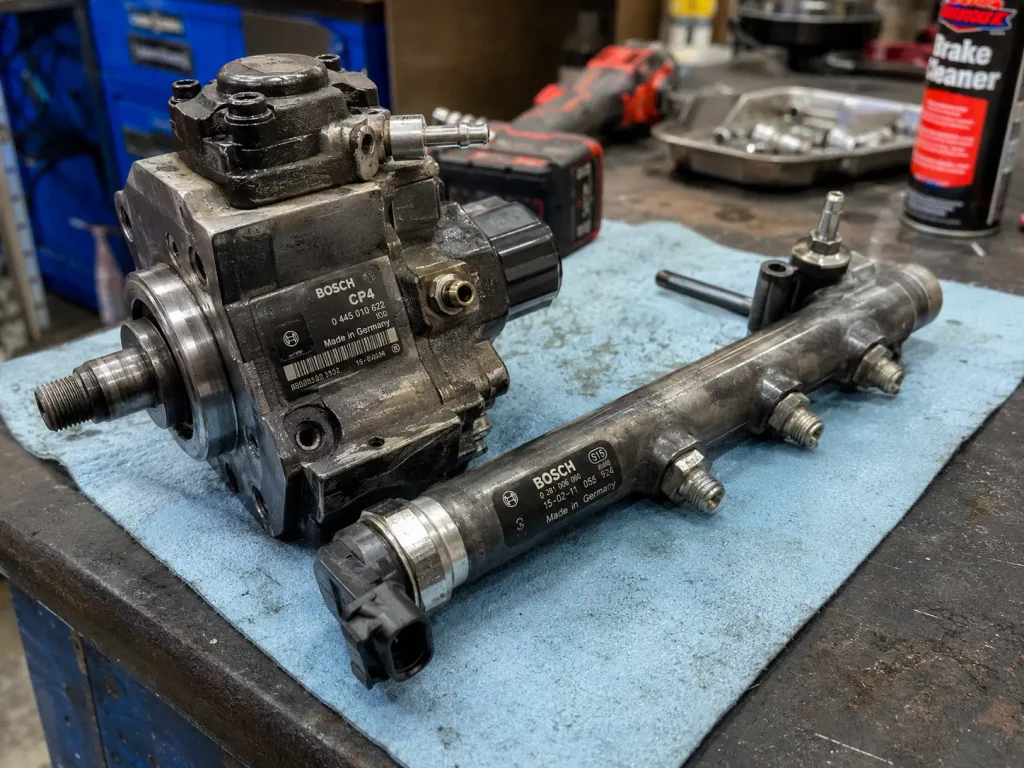
The Bosch CP4 high-pressure fuel pump is the single most expensive failure point on the 6.7 Powerstroke, and it has affected every generation in one form or another.
How it fails: The CP4 uses the diesel fuel itself as an internal lubricant, rather than a separate oil supply. Ultra-low-sulfur diesel has less lubricity than the fuel the pump was originally engineered around, so any contamination, air intrusion,
or aged fuel accelerates internal wear. Once metal-on-metal contact starts inside the pump, it self-destructs and sends metal shavings downstream into the injectors, fuel rails, and lines.
Symptoms: extended cranking on startup, a Check Engine Light, unusual fuel pump noise, and a noticeable loss of power. Some owners report the truck stalling without warning at highway speed.
Cost: A pump failure caught early and isolated to the pump itself typically runs $2,000-$5,000. If contamination spreads through the injectors, rails, and lines before it’s caught, full fuel system replacement can run $8,000-$15,000 and in severe cases higher, since every contaminated component needs replacement rather than cleaning.
Recall history by generation:
- 2011-2019 (CP4.2 pump): No fuel-pump-specific recall exists for this range. Failures on these trucks are typically treated as a wear-and-maintenance issue rather than a defect, so repairs generally fall outside factory recall coverage.
- 2020-2022 (CP4 RP7 pump): In December 2024, Ford issued Recall 24S78 (NHTSA Campaign 24V-957), covering roughly 295,000 Super Duty and medium-duty trucks built between February 2019 and August 2021. Ford’s investigation attributed failures to biodiesel deposits accumulating on the pump’s roller shoe and tappet body during extended idle periods, including COVID-era storage. The remedy is a free dealer software reflash of the Powertrain Control Module (PCM) to improve pump cooling, not a physical pump replacement.
- 2021+ (RP8 pump): In April 2026, Ford issued a follow-up recall covering roughly 7,100 trucks after discovering the original 24S78 software fix had not downloaded correctly on some vehicles, requiring a second dealer visit to complete the reflash.
Owners can check recall status by VIN through NHTSA’s recall database or by calling Ford at 1-866-436-7332 and referencing recall number 24S78.
If you’re chasing an intermittent fuel pump electrical issue rather than a mechanical CP4 failure, our Ford fuel pump wiring color code guide can help you rule out a wiring fault before assuming the pump itself has failed.
EGR Cooler Failure by Generation: Symptoms and Repair Cost
The EGR cooler is the second most common expensive failure on the 6.7 Powerstroke, and its design has changed enough between generations that the failure pattern shifts too.
How it works: The 6.7 Powerstroke uses a dual-circuit cooling design. A primary circuit cools the main EGR cooler body, and a secondary circuit, fed by a small radiator near the passenger-side valve cover, handles additional cooling duty.
On 2011-2014 trucks, that secondary circuit runs on its own separate loop; starting in 2015, Ford fed both circuits from the primary cooling system, reducing heat load on the secondary side. The 2020 redesign changed the secondary circuit again, limiting it to the charge-air cooler and fuel cooler only.
Symptoms: white or steam-like exhaust smoke (often sweet-smelling) after the engine warms up, unexplained coolant loss, a bubbling or overpressured coolant reservoir, and repeat EGR-related trouble codes.
Typical failure mileage: Most cracked EGR coolers show up in the 130,000-160,000 mile range, most often at the junction where the primary and secondary passages meet, since that’s the point of highest thermal stress. Gen 1 trucks (2011-2014) with the original dual-circuit layout report this failure most frequently; Gen 2’s revised cooling circuit reduced but did not eliminate it.
Cost: Owner-reported shop quotes on the Ford Powerstroke Diesel Forum (powerstroke.org) for a customer-supplied EGR cooler replacement run around $1,000-$1,100 including tax, on top of a separate diagnostic charge.
Independent cost guides for diesel-specific EGR cooler jobs put the broader range at $900-$2,500, with the high end reflecting dealership labor rates or engine bays that require significant disassembly to reach the cooler.
2011-2012 Turbo Failures: Ceramic Bearing Issue Explained
This is a Gen 1-specific problem that Ford largely resolved in later production.
The earliest 6.7 Powerstroke trucks used a Garrett GT32 single sequential turbocharger (SST) with a dual-compressor design. On 2011 and early 2012 production trucks, that turbo used ceramic ball bearings, which proved too fragile for the loads the engine put on them. When the bearings failed, the result was unmistakable: a loud screeching noise and visible smoke from the tailpipe caused by the turbo burning engine oil internally.
Owner-forum production records and diesel repair shops consistently place the switch to steel bearings at the 2013 model year: 2011 trucks and most of the 2012 model year run ceramic bearings, while 2013-2014 trucks use the updated steel-bearing turbo.
Ford did not publish an exact mid-2012 VIN break for the change, and owners with early-build 2012 trucks report mixed results, so the safest practical guidance is to treat any 2011 or 2012 truck as a candidate for this failure regardless of build date.
Trucks from the 2013 model year on, and all Gen 2 (2015-2019) and Gen 3 (2020-present) trucks with their redesigned Garrett GT37 and ball-bearing VGT turbos, see meaningfully fewer turbo-related failures.
On the original ceramic-bearing units, failures commonly show up between 50,000 and 100,000 miles; when a turbo does fail on an affected 2011-2012 truck, replacement typically runs $2,000-$5,000.
Additional 6.7 Powerstroke Problems: Fan Clutch, Crankshaft Damper, EGT Sensors
A few smaller but still common issues show up on specific generations:
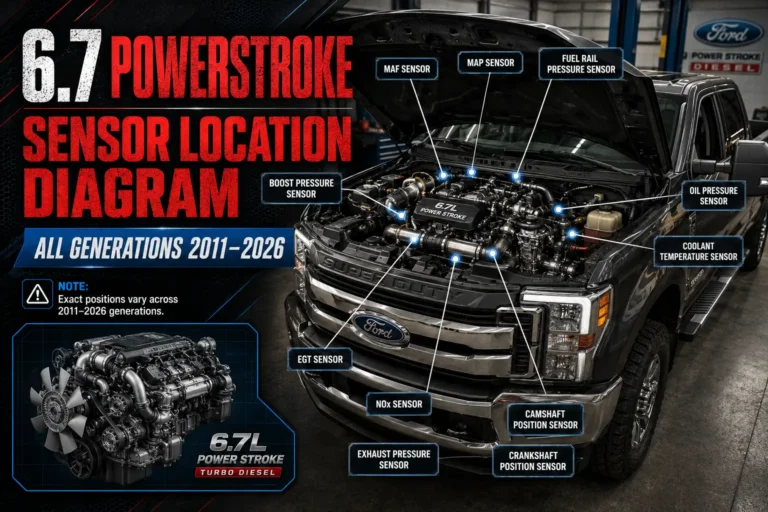
- EGT sensor failure (2012-era, especially fleet/ambulance-package trucks): A failed Exhaust Gas Temperature sensor can trigger a Check Engine Light and, in some cases, a “stop safely now” warning. This was reported most often on 2012 model year trucks in emergency-vehicle configurations, though it can occur on standard pickups as well.
- Fan clutch and crankshaft damper (Gen 1 weak point, addressed starting 2015): The original fan clutch and crankshaft damper on 2011-2014 trucks were identified as reliability weak points, and Ford’s 2015 Gen 2 update specifically introduced a revised fan clutch and a heavier-duty crankshaft damper to address them. That said, fan clutch complaints, most commonly a clutch stuck in the “always on” position that roars continuously without setting a diagnostic code, show up in owner forum threads across multiple model years including both Gen 1 and Gen 2 trucks, so it isn’t a problem that was fully eliminated by the 2015 revision.
- DEF system faults (all generations): Diesel Exhaust Fluid system faults, including sensor and injector issues, appear across all three generations and typically show up as a DEF-related warning or a required fluid quality check rather than a mechanical failure.
For a broader look at Super Duty problems outside the engine itself, our Ford F-350 hydroboost brake problems guide covers a separate, unrelated failure point worth knowing about if you’re troubleshooting a used Super Duty.
6.7 Powerstroke Towing Capacity and Long-Term Reliability
It’s worth stepping back from the problem list to put things in context. The 6.7 Powerstroke’s reliability issues are concentrated almost entirely in the emissions and fuel-delivery systems, not the core engine architecture. The CGI block, aluminum heads, and forged internals are built for high-mileage service.
Long-running owner forum threads on both PowerStroke.org and The Diesel Stop include multiple verified reports of original engines reaching 270,000 to 371,000 miles with routine maintenance, and Ford’s own diesel technicians have documented individual trucks well past the 1 million mile mark.
Taken together with independent maintenance-focused reporting, a realistic service life for a well-maintained 6.7 Powerstroke is 300,000-500,000+ miles, with 2015-and-later trucks generally trending toward the higher end of that range.
That reliability comes with real capability. The 6.7 Powerstroke has led its class in torque output since the 2020 refresh, and current towing figures for Ford Super Duty trucks are detailed in our Ford towing capacity chart, which breaks down maximum conventional and fifth-wheel towing by year, cab, and drivetrain configuration.
6.7 Powerstroke Problems FAQ
What year 6.7 Powerstroke is most reliable?
2015-2016 trucks are commonly cited as a reliability sweet spot: they carry the Gen 2 turbo and cooling improvements without the CP4 RP7 recall history that affects 2020-2021 trucks, and they’ve had over a decade for early defects to surface and get addressed.
How much does a CP4 pump failure cost to fix?
A pump-only replacement caught early runs $2,000-$5,000. If metal contamination spreads through the fuel system before it’s diagnosed, expect $8,000-$15,000 or more for a full fuel system overhaul.
Is the 6.7 Powerstroke fuel pump recall still active?
Yes, as of this writing. Ford’s Recall 24S78 (NHTSA 24V-957) covers 2020-2022 Super Duty and medium-duty trucks built between February 2019 and August 2021, with a follow-up recall issued in April 2026 for trucks whose original software fix didn’t download correctly. Check your VIN at NHTSA’s recall database to confirm your truck’s status.
At what mileage do 6.7 Powerstroke problems typically start?
EGR cooler cracking tends to show up around 130,000-160,000 miles. CP4 fuel pump failures are less predictable and have been reported anywhere from under 50,000 miles to well past 150,000, since contamination and fuel quality play a bigger role than mileage alone.