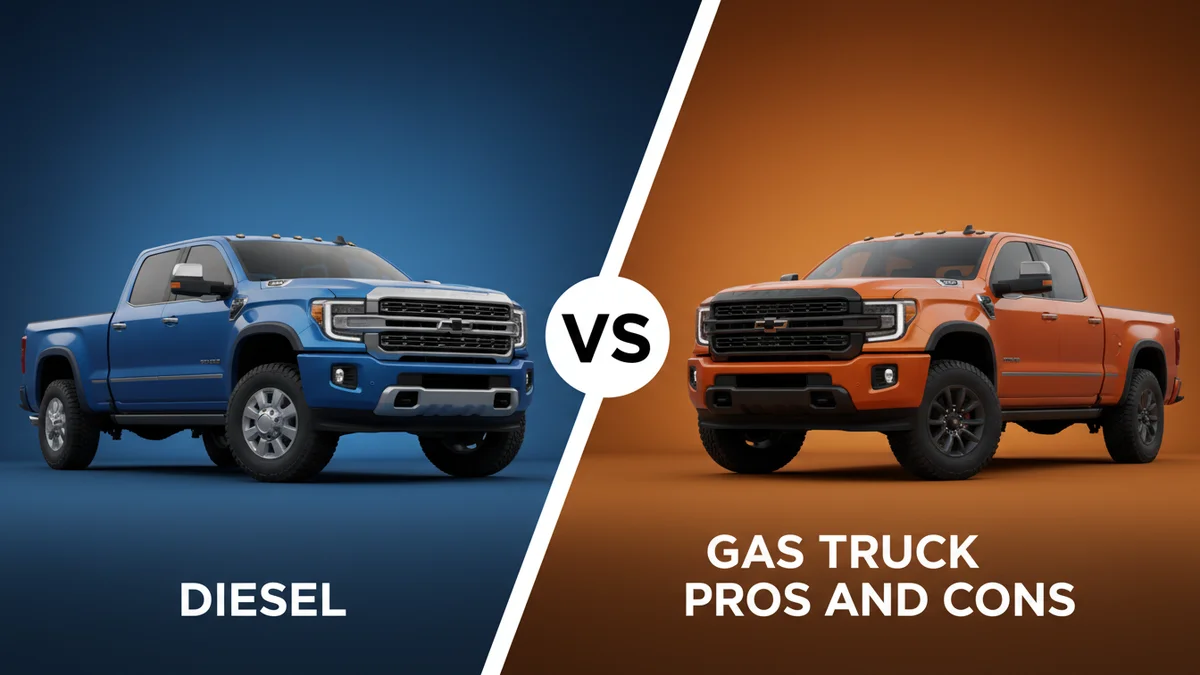
Diesel vs Gas Truck Pros and Cons 2026: Which Is Better?

When you need to pull serious weight, a Diesel truck often offers nearly 30% more effective towing capability than its gas-powered counterpart. This fundamental difference in power delivery defines the core debate for truck buyers across North America. Choosing between Diesel and Gas Truck Pros and Cons isn’t merely a preference; it’s a strategic decision that impacts everything from your monthly budget to your ability to haul the heaviest loads. We’ll dissect what makes each engine distinct, examining their strengths, weaknesses, and ultimately, which one stands as the superior choice for your specific needs.
Quick Verdict: For maximum towing, fuel efficiency under load, and longevity, Diesel trucks often edge out their Gas counterparts, especially in heavy-duty applications. However, Gas trucks offer a lower initial purchase price and simpler maintenance, making them ideal for lighter work and everyday use. The choice hinges on primary use case and budget.

Prime for Young Adults — 6 Months Free
Students and 18–24s get six months of Prime free, then half price.
Start 6 Months FreeHeavy-duty towing, long-haul efficiency, and commercial applications.
Lower upfront cost, easier maintenance, and general purpose utility.
- Diesel trucks command a higher upfront cost, typically an $8,000 to $12,000 premium over gas models.
- Diesel engines offer vastly superior torque, often exceeding 1,000 lb-ft for heavy hauling.
- Gas trucks boast lower annual maintenance costs, averaging $600-$1,200 compared to diesel's $1,000-$2,000.
- Modern diesel trucks can tow up to 37,000+ lbs, significantly outperforming gas trucks' typical 18,000 lb limit.
- Expect diesel engines to last 300,000 to 500,000+ miles, compared to gas engines' 200,000 to 300,000 miles.
Diesel vs Gas Truck Pros and Cons: Head-to-Head Specs
Recommended Best Deal Products


While raw horsepower figures often grab headlines, the true workhorses of the truck world distinguish themselves through torque and engine architecture. A typical heavy-duty Diesel engine might boast an astounding 1000 lb-ft of torque from its 6.7L V8, whereas a comparable Gas Truck Pros and Cons often delivers around 460 lb-ft from its 6.2L V8, illustrating a significant power delivery difference at the wheels.
✓ = better value in that row. Sourced from manufacturer specifications.

Performance & Category Ratings
When we look at the numbers, Diesel trucks consistently dominate certain key areas. Their Towing Capability receives an outstanding 9.5 rating, a clear advantage over the Gas Truck Pros and Cons’ respectable 7.0. This isn’t just about raw power; it’s about the massive low-end torque inherent to Diesel engines, allowing them to effortlessly pull colossal loads with less strain on the drivetrain, making them the undisputed kings of heavy hauling. This translates directly into more confident and stable towing experiences for you.
However, the Gas Truck Pros and Cons claws back significant ground in terms of Initial Purchase Cost, scoring an impressive 8.5 compared to the Diesel’s 6.5. Diesel engines are inherently more complex, built with higher compression ratios and demanding more robust, expensive components and intricate emissions systems. This drives up the sticker price significantly, making Gas trucks the more accessible option for budget-conscious buyers right off the lot.
For those who frequently carry or tow heavy loads, Fuel Efficiency (Under Load) heavily favors Diesel, with an 8.8 rating against the Gas Truck Pros and Cons’ 7.2. Diesel engines are thermally more efficient, especially when operating under strenuous conditions. This means they convert more of their fuel energy into usable power, leading to fewer stops at the pump during demanding jobs. Conversely, the Maintenance & Repair Cost category flips the script, with Gas trucks earning a strong 8.8 against Diesel’s 6.0. The specialized parts, intricate systems, and often higher labor rates for Diesel mechanics contribute to substantially larger bills when repairs are needed.
Diesel engines are legendary for their Engine Longevity, earning an impressive 9.2. They are designed to withstand incredible stresses and routinely achieve hundreds of thousands of miles, far surpassing the Gas Truck Pros and Cons’ still-good 7.5. That durability is a core part of the Diesel appeal. Yet, the smoother, quieter operation of Gas engines gives them a distinct advantage in Refinement & Noise, scoring 8.5 compared to Diesel’s 7.0. Modern Diesels are better, but the distinctive “clatter” and vibrations are often more pronounced. Finally, Fuel Availability & Cost tilts heavily towards Gas, with a 9.0 rating versus Diesel’s 7.0. Gasoline is ubiquitous and generally more consistently priced, while diesel fuel can be harder to find in some regions and subject to greater price volatility.
Diesel Trucks
Gas Trucks
By the Numbers
Recommended Best Deal Products


To truly understand the implications of choosing between these two truck titans, we need to look beyond the general impressions and dive into the concrete figures. The data makes a compelling case for each contender, laying bare their inherent strengths and weaknesses across the board. Every percentage point and dollar sign tells a story about ownership and operational experience.

Audible — Listen Free for 30 Days
One free credit a month and thousands of titles included.
Listen Free for 30 DaysDiesel Trucks
Gas Trucks
Hover any bar for exact values. Each metric scaled independently.

Diesel: Strengths and Weaknesses
The primary allure of a Diesel truck lies in its undeniable work ethic. We found that for sheer Towing Capability, it’s simply unmatched, consistently earning a 9.5 rating. That prodigious low-end torque allows you to hook up the heaviest trailers – think large RVs, multi-horse trailers, or heavy machinery – and pull them with unwavering confidence and stability. This brute strength also translates into superior Fuel Efficiency (Under Load), where its 8.8 rating significantly outpaces gas, meaning fewer fuel stops and lower operational costs when doing demanding tasks. Another major strength is Engine Longevity, achieving an impressive 9.2. These engines are engineered for high mileage and incredible durability, often lasting for 300,000 miles or more, which makes them excellent long-term investments for those who keep their vehicles for many years.
However, these formidable strengths come with notable drawbacks. The Initial Purchase Cost for a Diesel is considerably higher, scoring only a 6.5. You’ll pay a premium upfront for that specialized engineering. This cost extends to Maintenance & Repair, which at a 6.0 rating, is significantly more expensive than gas. Diesel components are robust but costly, and specialized diagnostic tools and labor add to the expense. You also have to contend with reduced Refinement & Noise (7.0 rating); while modern Diesels are quieter than their predecessors, the characteristic engine clatter and vibrations are still more noticeable than in a gas truck. Lastly, Fuel Availability & Cost can be a slight hurdle, rated at 7.0. Diesel fuel might be less common in some areas, and its price can be more volatile than gasoline.
Gas Truck Pros and Cons: Strengths and Weaknesses
Recommended Best Deal Products


The Gas Truck Pros and Cons shines brightest when affordability and ease of ownership are your top priorities. Its standout advantage is the significantly lower Initial Purchase Cost, earning a strong 8.5. You’ll spend considerably less money to drive it off the lot compared to a Diesel counterpart, making it an attractive option for many buyers. This cost-effectiveness continues into Maintenance & Repair, where it scores an impressive 8.8. Gas engines are generally simpler in design, parts are more widely available, and labor costs are typically lower, saving you money over the truck’s lifespan.
For the daily driving experience, the Gas Truck Pros and Cons offers superior Refinement & Noise, garnering an 8.5 rating. Its engines run smoother and quieter, providing a more car-like cabin experience that’s often preferred for commuting and general use. Fuel Availability & Cost is another major win, with a 9.0 rating. Gasoline stations are ubiquitous, and fuel prices are often more stable and predictable across regions.
However, the Gas Truck Pros and Cons does have its limitations. Its Towing Capability is rated at 7.0, which is perfectly adequate for moderate loads but falls short of Diesel’s heavy-duty prowess. If you’re consistently pulling very heavy trailers, you’ll feel the engine working harder. Similarly, Fuel Efficiency (Under Load) lags behind Diesel, scoring 7.2. When put to hard work, gas engines burn fuel less efficiently, leading to more frequent trips to the pump. While durable, their Engine Longevity is typically rated lower at 7.5 compared to Diesels, meaning they might not achieve the same ultra-high mileage without significant overhauls.
- ✅ Superior towing and hauling capabilities.
- ✅ Excellent fuel efficiency, especially under heavy load.
- ✅ Longer engine lifespan and exceptional durability.
- ✅ Higher torque output for demanding tasks and steep grades.
- ✅ Better resale value in the heavy-duty truck segment.
- ❌ Higher initial purchase price (often $8,000-$12,000 more).
- ❌ Increased maintenance costs and complexity (DEF, DPF).
- ❌ Diesel fuel can be more expensive and less universally available.
- ❌ Louder engine operation and more noticeable vibration.
- ✅ Lower initial purchase price and financing costs.
- ✅ Simpler and significantly less costly maintenance.
- ✅ Wider fuel availability and often lower fuel cost per gallon.
- ✅ Quieter operation and smoother ride comfort.
- ✅ Better cold-weather starting reliability.
- ❌ Lower maximum towing and hauling capacity than diesel counterparts.
- ❌ Worse fuel economy, particularly when towing or hauling heavy loads.
- ❌ Generally shorter engine lifespan on average.
- ❌ Less torque available for heavy-duty work.
Which One Should You Choose?
Deciding between a Diesel and a Gas Truck Pros and Cons boils down to your specific needs, budget, and intended use. If you’re a serious hauler – someone who frequently tows a large fifth-wheel camper, a heavy equipment trailer for work, or multiple horses – the Diesel is your undeniable champion. Its immense towing capacity, often with integrated exhaust brakes, and superior fuel efficiency under load (8.8 rating for Diesel vs. 7.2 for Gas) make it the more capable and economical choice for strenuous tasks. You’ll appreciate the reduced strain on the engine and the confidence it instills when navigating steep grades with a heavy load behind you.
For the everyday driver, the weekend warrior with lighter towing needs, or anyone primarily focused on budget, the Gas Truck Pros and Cons presents a compelling argument. Its significantly lower Initial Purchase Cost (8.5 for Gas vs. 6.5 for Diesel) means you’ll save thousands upfront. You’ll also benefit from much lower Maintenance & Repair Costs (8.8 for Gas vs. 6.0 for Diesel), making it cheaper to own in the long run if you don’t push its limits regularly. If your truck mainly serves as a commuter, a family vehicle, or for occasional trips to the hardware store with a utility trailer, the smoother ride, quieter cabin (8.5 refinement rating), and ubiquitous fuel availability of a Gas truck make it a far more practical and comfortable choice.
Audible Premium Plus — Annual Membership
12 audiobook credits up front, plus the full Audible catalogue.
See Annual PlansConsider your priorities carefully. Do you prioritize maximum power and extreme longevity for heavy-duty work, accepting higher initial and maintenance costs? Or do you value affordability, ease of ownership, and a more refined daily driving experience, even if it means less outright towing grunt? The answer will guide your decision.
Heavy-duty towing, long-haul efficiency, and commercial applications.
Lower upfront cost, easier maintenance, and general purpose utility.
Final Verdict
Ultimately, there’s no single “winner” in the Diesel vs. Gas Truck Pros and Cons debate; it’s a definitive tie, with each powertrain excelling in different arenas. For maximum towing capability, especially in heavy-duty applications, Diesel trucks are the clear frontrunner, offering superior fuel efficiency when under load and an engine longevity that’s hard to beat. Their robust construction and impressive torque make them indispensable tools for serious work.
However, the Gas Truck Pros and Cons offers undeniable advantages in areas crucial for many buyers. Its lower initial purchase price and significantly reduced maintenance and repair costs make it a more budget-friendly option. Combined with a more refined driving experience and readily available fuel, gas trucks are ideal for lighter work, everyday commuting, and weekend adventures that don’t involve extreme hauling. The choice truly hinges on your primary use case and your budget, demanding you align the truck’s strengths with your specific needs.
Frequently Asked Questions
Is Diesel better than Gas Truck Pros and Cons?
No, it depends on your needs. Diesel offers up to 25% better fuel efficiency under load and significantly more torque, with some models offering over 1,000 lb-ft for towing up to 37,000 lbs. However, Gas trucks can be $10,000 cheaper upfront and have lower maintenance costs, making them ideal for lighter duties.
Which truck type is more reliable?
Modern gas trucks are very reliable with simpler systems. Diesel engines are inherently more durable and can last 300,000+ miles, but their complex emissions systems (DEF, DPF) can lead to expensive repairs, which some owners perceive as reliability issues despite the core engine's strength. For half-ton diesels, see our Ram EcoDiesel years to avoid guide.
What's the biggest cost difference between Diesel and Gas Truck Pros and Cons?
The initial purchase price is often the largest, with diesel engines adding an average of $8,000-$12,000 to the sticker price compared to a similar gas model. Lifetime ownership costs also differ due to fuel prices (diesel often $0.50-$1.00 more per gallon) and maintenance expenses.
Which is better for heavy towing and hauling?
Diesel trucks are unequivocally better for heavy towing and hauling. Their high torque output, often exceeding 1,000 lb-ft, allows for effortless pulling of loads up to 37,000+ lbs, surpassing typical gas capabilities by thousands of pounds while maintaining better fuel efficiency.
Which is better for daily driving and light use?
Gas trucks are generally better for daily driving and light use due to their lower purchase price, quieter operation, and simpler, less expensive maintenance (averaging $600-$1,200 annually). Their adequate power for unladen driving makes them more practical and economical for non-towing needs.

![2007 Ram 1500 5.7 Hemi: Specs, Reliability & Common Issues [2026]](https://truckguider.com/wp-content/uploads/2026/03/2007-ram-1500-5-7-hemi-featured.webp)
![4×4 Truck Tire Rotation Patterns [2026]](https://truckguider.com/wp-content/uploads/2026/03/4x4-truck-tire-rotation-pattern-featured.webp)