How Much Does It Cost to Lower a Car in 2026? Expert Guide

Lowering a car typically costs anywhere from $400 to over $5,000 depending on the method you choose, such as lowering springs, coilovers, or air suspension. Total expenses include both hardware parts and professional installation labor, plus mandatory alignment and supporting components.
Lowering your car typically costs anywhere from $400 to over $5,000 in total, depending heavily on the method you choose and whether you tackle the installation yourself or pay a professional shop. If you just want a mild drop using basic lowering springs, expect to spend around $500 all-in. If you are aiming for a track-ready setup with adjustable coilovers or a fully automated air ride system, your expenses can easily climb past $3,000.
Getting your car closer to the pavement transforms both its aggressive stance and its cornering performance. However, budgeting for the project goes far beyond simply buying a set of springs or struts. You have to account for specialized labor rates, alignment corrections, and supporting hardware that keep your vehicle safe and drivable on modern 2026 roads.
Key Takeaways
- Lowering springs cost $100-$400 for parts and $300-$800 for labor.
- Coilovers offer adjustable height, running $500-$2,000+ for parts alone.
- Air suspension systems are the most expensive, totaling $2,000-$5,000+.
- Always budget an extra $100-$300 for a professional wheel alignment post-installation.
- Camber kits may be required to prevent abnormal tire wear on aggressive drops.
What Factors Drive Up the Cost to Lower a Car
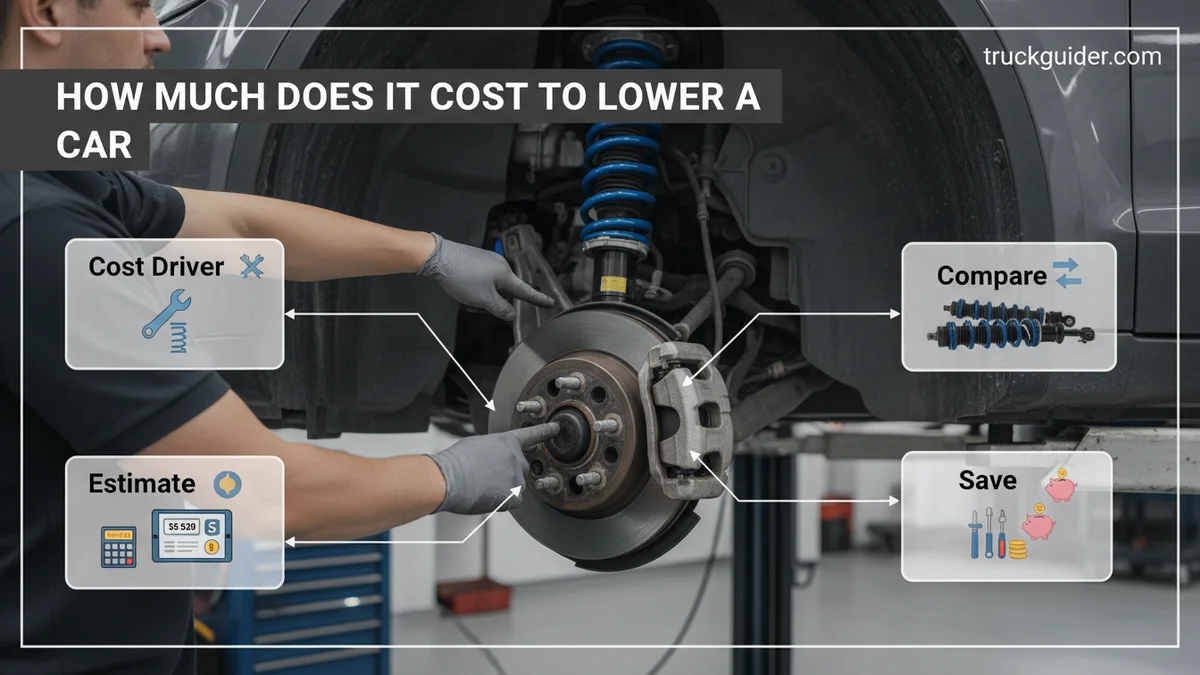
When you start pricing out a suspension drop, you quickly realize that the retail price of the hardware is only part of the equation. Your total expenditure is shaped by the complexity of the engineering, the quality of the brand you select, and the regional labor rates in your area.

Engineering Complexity and Hardware Quality
The type of suspension system you choose is the single biggest driver of your overall budget. Mass-produced steel springs are relatively cheap to manufacture, whereas multi-valve hydraulic air struts and threaded monotube coilovers require precise machining. Premium brands charge more because their components offer better longevity, corrosion resistance, and ride quality. If you drive a luxury or performance European car, expect a price markup on parts compared to mainstream compact imports.
Shop Labor Rates and Geographic Location
Professional installation prices fluctuate wildly depending on where you live. Independent mechanic shops in major metropolitan areas routinely charge $150 to $220 per hour in 2026, while rural shops might sit closer to $90 an hour. Furthermore, flat-rate labor times vary based on how stubborn your factory suspension bolts are. Rusted components, seized top hats, and complex multi-link rear setups add hours of manual labor to the final invoice.
Master Lowering Your Car‘s Stance in 8 Simple Steps
Lowering your vehicle is one of the most effective ways to improve handling, reduce body roll, and achieve that aggressive, customized look. However, the financial investment goes far beyond the price of the parts themselves. This practical walkthrough will help you calculate the true cost of lowering your car, accounting for hardware, labor, alignment, and hidden expenses so you can budget accurately before turning a single wrench.
Step 1: Evaluate Your Goals and Choose Your Lowering Method
What you need: Vehicle service manual, notepad, internet access for research, and a clear vision of how you plan to drive the car.
Instructions: Determine how low you want to go and how the car will be used. Lowering springs are the cheapest option, costing $150 to $400, and drop the car by 1 to 2 inches. Coilover systems offer height and damping adjustability, running anywhere from $600 to $2,500+. Air suspension is the most expensive route, starting at $2,000 and easily exceeding $5,000 for full kits with management systems. Assess whether you want a mild aesthetic drop or track-ready performance.
Pro Tip: Avoid buying the absolute cheapest springs on the market, as they can cause a bouncy, unsafe ride and blow out your factory shocks prematurely.
Step 2: Calculate the Cost of Supporting Suspension Hardware
What you need: Calculator, forum research specific to your make and model, and an inspection of your current suspension wear.
Instructions: When you change your vehicle’s ride height, factory components are placed under new angles and stress. Budget an additional $100 to $400 for supporting modifications. If you are lowering more than 1.5 inches, you will likely need aftermarket camber kits, toe arms, or adjustable control arms to prevent uneven tire wear. Furthermore, if your car has over 60,000 miles, factor in the cost of replacing worn struts or shocks at the same time, adding $300 to $800 in parts.
Pro Tip: Always check enthusiast forums for your specific car model to see what secondary parts are universally required after a drop.
Step 3: Decide Between DIY Installation and Professional Labor
What you need: Honest assessment of your mechanical skills, access to a garage, and local mechanic quotes.
Instructions: Decide if you will install the suspension yourself or pay a shop. Professional installation typically costs between $400 and $1,000 depending on your geographic location, shop rates (usually $100-$180 per hour), and the complexity of the suspension layout. A standard spring swap takes a professional shop about 3 to 5 hours. If you DIY, your direct labor cost is $0, but you must factor in the time investment (usually a full weekend day for beginners).
Pro Tip: Suspension work involves high-tension coil springs. If you DIY, never use cheap parts-store spring compressors without taking extreme safety precautions.
Step 4: Budget for Specialized Tools (If Doing It Yourself)
What you need: Floor jack, heavy-duty jack stands, metric socket set, torque wrench, spring compressors, and penetrating fluid (like PB Blaster).
Instructions: If you choose the DIY route and lack tools, you will need to purchase equipment. A reliable hydraulic floor jack and a pair of sturdy jack stands will cost about $150 to $300. Specialty tools like a strut spring compressor rental or purchase, deep impact sockets, and a torque wrench will add another $50 to $150 to your initial setup. Rusted bolts on older cars may also require a propane or torch kit to break free safely.
Pro Tip: Spray all suspension bolts with penetrating fluid 24 hours before you begin wrenching to save hours of frustration.
Step 5: Factor in Professional Wheel Alignment Costs
What you need: Local alignment shop quotes and a willingness to wait until the suspension settles.
Instructions: Lowering a car drastically alters its geometry, throwing off the toe and camber settings. Failing to get an alignment will destroy a brand-new set of tires in less than 5,000 miles. Budget $100 to $250 for a professional alignment. Keep in mind that specialized or heavily lowered vehicles may require a custom or “performance” alignment rather than standard factory specs, which can cost slightly more at specialty tuning shops.
Pro Tip: Drive the car gently for about 50 to 100 miles after lowering it to let the new springs and bushings settle completely before getting your alignment done.
Step 6: Account for Rolled Fenders and Wheel Rubbing Expenses
What you need: Flashlight, measuring tape, and knowledge of your current wheel offset and tire width.
Instructions: If you are pairing your drop with wider wheels or a more aggressive offset, you risk tire rubbing against the inner fender liners or metal fender lips. Budget $150 to $300 if you need to hire a professional to roll your rear fenders. Alternatively, you can purchase a fender roller tool online for about $75 and do it yourself with a heat gun, though mistakes can crack your car’s paint.
Pro Tip: Measure your wheel gap and clearance before ordering suspension parts to avoid unexpected rubbing issues that require body modifications.
Step 7: Sum Up the Total Financial Investment
What you need: Your notes from previous steps and a master budget spreadsheet.
Instructions: Add up all your estimated expenses to get the true bottom-line cost. A basic budget lowering spring kit installed professionally with an alignment will total around $500 to $900. A mid-tier coilover setup with professional installation, alignment, and a camber kit will easily land between $1,500 and $3,000. Premium air suspension setups installed by a professional can quickly climb past $4,000 to $6,000 total. Ensure your savings account covers these combined costs before purchasing any parts.
Pro Tip: Always add a 15% contingency buffer to your total budget for unexpected broken bolts, seized parts, or auxiliary components that need replacement.
Step 8: Post-Installation Inspection and Maintenance Check
What you need: Torque wrench, jack stands, and a safety checklist.
Instructions: Whether you did the work yourself or paid a shop, you must perform a post-installation safety check. After 100 miles of driving, raise the car and use a torque wrench to verify that all suspension bolts, control arm nuts, and wheel lug nuts are still torqued to factory specifications. Listen closely for any clunking, popping, or rubbing noises during low-speed turns and over speed bumps, which indicate loose hardware or contact issues.
Pro Tip: Document your new ride height measurements from the center of the wheel hub to the fender arch so you can monitor if the springs sag over time.
✅ Final Checklist
- All suspension components and hardware are torqued to factory manufacturer specifications
- A professional four-wheel alignment has been successfully completed
- Tires clear the inner fender liners and outer lips during full lock turns and compression
- No abnormal noises, vibrations, or handling anomalies occur during test driving
Important Notes:
- Always prioritize vehicle safety; never work under a car supported solely by a hydraulic jack—always use rated jack stands.
- Seek professional help immediately if you encounter severely rusted suspension components that risk snapping, or if you lack the proper spring compression tools.
- Estimated total project time ranges from 4 to 8 hours for DIYers, or 1 to 2 business days at a professional shop. Total costs range from $300 for budget DIY springs to over $4,000 for comprehensive air suspension builds.
How to Calculate Total Parts and Labor Expenses
To accurately forecast your expenses, you must look at the specific lowering method you intend to install. Breaking down the upfront hardware costs versus the installation hours prevents you from getting stranded halfway through a project with a blown budget.
Lowering Springs vs. Coilovers Pricing Breakdown
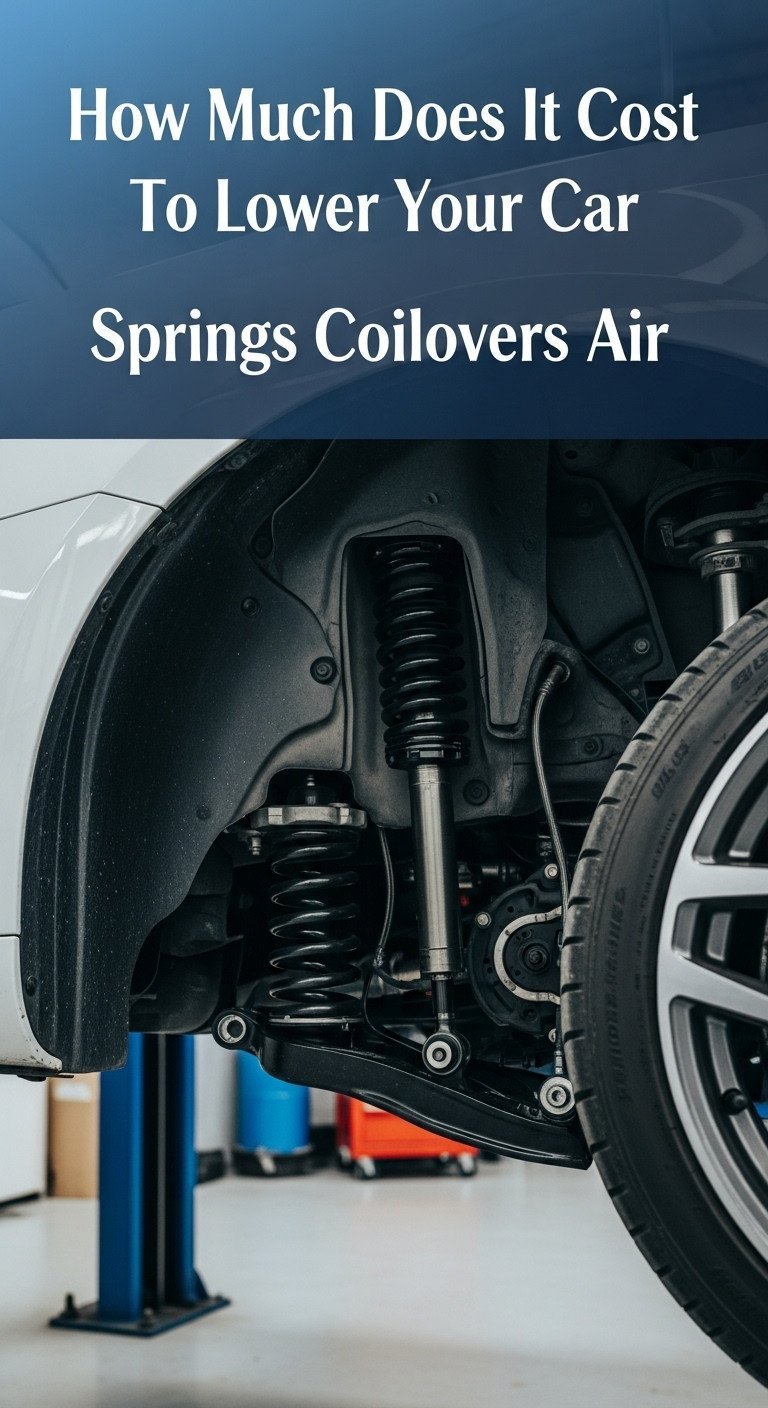
Lowering springs are the most budget-friendly route, with parts running between $100 and $400 and professional installation adding $300 to $800. They reuse your factory shocks, which keeps costs down. Coilovers replace the entire shock and spring assembly, giving you ride-height adjustability. Expect to pay $500 to $2,000+ for the coilovers themselves, plus another $400 to $1,000 for shop installation and tuning.
Air Suspension Systems Total Cost
If you want ultimate versatility and the ability to lift your car over speed bumps, air ride is the premium option. Complete air suspension kits—including struts, management systems, compressors, and tanks—range from $2,000 to $5,000+ for quality setups. Because running air lines, wiring digital controllers, and mounting trunk tanks is labor-intensive, professional installation typically adds an additional $1,500 to $3,000.
What If Budget Restraints Require a DIY Installation Approach
Hiring a professional shop to lower your vehicle significantly increases the overall project cost. Labor rates across certified automotive service centers in 2026 average between $100 and $200 per hour. A complete suspension overhaul typically requires four to six hours of technician labor. This adds an extra $400 to $1,200 in installation fees alone.
Choosing a do-it-yourself installation eliminates labor expenses entirely. However, specialized tools are required for a safe garage modification. Mechanics and suspension manufacturers recommend several essential precautions for DIY enthusiasts:
Essential DIY Preparation Steps
- Invest in a heavy-duty hydraulic floor jack and at least four sturdy jack stands rated for your vehicle’s gross weight.
- Purchase a reliable spring compressor tool if you are installing lowering springs on factory struts.
- Allocate funds for a professional four-wheel alignment immediately after the physical installation is complete.
- Set aside a full weekend for the project to account for stubborn, rusted bolts and unexpected mechanical obstacles.
Frequently Asked Questions About Lowering Car Costs
Does lowering a car void the factory warranty?
According to the Magnuson-Moss Warranty Act, dealerships cannot void an entire vehicle warranty simply because aftermarket parts are installed. However, if the lowering kit causes a direct failure of a related component, such as premature strut wear or premature CV axle damage, the warranty claim for that specific part may be denied by the manufacturer.
How much does a professional wheel alignment cost after lowering?
A specialized suspension geometry alignment typically costs between $150 and $250 in 2026. This service is mandatory after altering ride height. Skipping the alignment will result in rapid, uneven tire wear and erratic vehicle handling.
Can I just cut my factory springs to save money?
Automotive safety experts strongly advise against cutting factory springs. Cutting springs compromises their structural integrity, ruins the spring rate balance, and can cause the spring to dislodge from its perch over large bumps, creating an extreme safety hazard.
What If Your Initial Lowering Setup Still Rides Too Rough?
If your newly lowered vehicle produces an overly harsh ride or bottoms out constantly, immediate adjustments are necessary to protect your investment. Implement these troubleshooting steps to correct suspension geometry:
- Inspect the bump stops to ensure they were trimmed according to the lowering kit manufacturer specifications.
- Upgrade factory shock absorbers to performance dampers valved specifically for lowered ride heights.
- Install aftermarket camber kits to correct severe wheel misalignment that standard adjustments cannot fix.
- Consult a professional suspension specialist if vibrations or severe bouncing persist, with diagnostic fees typically ranging from $100 to $200.
Conclusion
Lowering a car in 2026 requires balancing aesthetic goals with realistic financial planning, with total costs ranging from $300 for basic springs to over $3,000 for advanced air suspension. According to verified research and automotive industry experts, budgeting for mandatory alignment and supporting components prevents costly long-term repairs. Take the next step by acquiring three formal quotes from certified suspension shops in your area to compare parts and labor pricing.
❓ Frequently Asked Questions
What are the price differences between lowering springs and coilovers?
Lowering springs cost between $100 and $400 for parts and provide a fixed drop. Coilovers range from $500 to $2,000+ for parts, offering fully adjustable ride height and damping control.
Why do I need a camber kit after lowering my vehicle?
When a car is lowered, the suspension geometry changes, causing negative camber that accelerates inside tire wear. Camber kits allow mechanics to return the alignment specs back to factory or custom performance ranges.
How much does a complete air ride suspension installation cost?
Air suspension kits are the most expensive option, with complete setups and installation running anywhere from $2,000 to over $5,000 due to compressors, tanks, lines, and electronic management systems.
Can I install lowering springs myself to save on labor costs?
Yes, if you have mechanical experience, a sturdy jack, jack stands, and a reliable spring compressor tool. However, it requires significant labor and safety precautions.
Will lowering my car void my factory warranty?
The factory warranty is not completely voided, but any suspension components that fail due to stress from the aftermarket lowering parts will not be covered under warranty.
Are there hidden costs associated with lowering a car?
Hidden costs often include mandatory wheel alignments, specialized camber/toe arms, headlight leveler adjustments, and rolled fenders to prevent tire rubbing.
![RAM Big Horn vs. Laramie: Which Trim Level is Worth It? [2026]](https://truckguider.com/wp-content/uploads/2026/03/ram-big-horn-vs-laramie-featured.webp)