
Ram Lug Nut Torque Chart: 1500, 2500, 3500, 5500 by Year 2026

The standard Ram lug nut torque is 130 ft-lb (176 N·m) for cone-type nuts on the Ram 1500, and 129 ft-lb (175 N·m) for flanged nuts on 2012 and newer 2500, 3500 and chassis cab trucks. Ram’s 2026 heavy-duty manual adds a range of 134 to 149 ft-lb for flanged nuts on dual rear wheels. Older trucks use different numbers, listed by year below.
Ram Lug Nut Torque Quick Reference
Recommended Best Deal Products


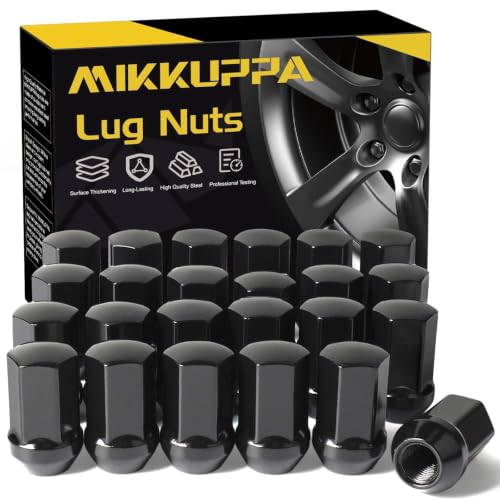
These figures come from Ram’s own owner’s manuals and user guides on the Mopar site, which we read for each row. In the 2012 and later manuals, the studs are M14 x 1.50 and the socket is 22 mm.
| Truck | Model years | Nut type | Torque | Manuals we checked |
|---|---|---|---|---|
| Ram 1500 (DT) | 2019 to 2027 | Cone | 130 ft-lb (176 N·m) | 2019, 2020, 2021, 2023, 2026, 2027 |
| Ram 1500 Classic | 2022 | Cone | 130 ft-lb (176 N·m) | 2022 |
| Ram 1500, 2500, 3500 (DS and DJ) | 2012 to 2018 | Cone, flanged | 130 ft-lb cone, 129 ft-lb flanged | 2012 to 2018 |
| Ram 2500 and 3500 single rear wheel | 2019 to 2023, 2026 | Cone, flanged | 130 ft-lb cone, 129 ft-lb flanged | 2019 to 2023, 2026 |
| Ram 3500 dual rear wheel | 2012 to 2023 | Flanged | 129 ft-lb (175 N·m) | 2012 to 2023 |
| Ram 2500 and 3500 dual rear wheel | 2026 | Flanged | 134 to 149 ft-lb (182 to 202 N·m), nominal 142 | 2026 |
| Ram 4500 and 5500 chassis cab | 2026 | Cone, flanged | Same table as the 2026 heavy-duty trucks | 2026 chassis cab |
| Ram 2500 and 3500 single rear wheel | 2006 to 2011 | Not specified | 135 ft-lb (183 N·m) | 2006, 2008, 2011 |
| Ram 3500 dual rear wheel | 2006 to 2011 | Not specified | 145 ft-lb (197 N·m) | 2006, 2008, 2011 |
| Ram 1500 | 2008 and 2011 | Not specified | 135 ft-lb (183 N·m) in 2008; 130 ft-lb (177 N·m) in 2011 | 2008, 2011 |
Ram Lug Nut Torque at a Glance
From Ram’s owner’s manuals and NHTSA recall 21V-398.
Torque by truck (ft-lb)
Bar length is scaled to 150 ft-lb. The 2026 dually bar shows Ram’s 134 to 149 ft-lb range, with a nominal 142.
Recall 21V-398: 447,985 trucks, 2012 to 2021
NHTSA calls it incorrect service information, not a part defect.
Tightening basics
Common mix-ups
Ram does not list a separate figure for front and rear wheels, for aluminum and steel wheels, or by trim. One number applies per nut type, with the dual-wheel exception above.
What We Could Not Confirm
Recommended Best Deal Products

Some years are not in Ram’s online manuals, so we do not give a number for them.
- 1994 to 2005 Ram 1500, 2500 and 3500. Mopar’s site does not carry these manuals. Check the owner’s manual that came with your truck.
- 2006, 2007, 2009 and 2010 Ram 1500. We found the 2008 and 2011 manuals that cover the 1500, not these years.
- 2024 and 2025 Ram 2500, 3500, 4500 and 5500. We found the 2023 manual and the 2026 manual, which differ for dual rear wheels. Check your own manual before you assume either value.
If your truck is in one of these gaps, use the owner’s manual or ask a Ram dealer to read the spec for your VIN. Our Ram towing capacity by VIN guide shows how to decode a VIN to confirm the model year and drivetrain first.
Ram 1500 Lug Nut Torque by Generation
The Ram 1500 uses 130 ft-lb on every year we could confirm from 2011 onward. Ram’s 1500 manuals and guides from 2019 to 2027 list cone-type nuts only.
2019 to 2027 (DT). Ram’s owner’s manuals list one entry: 130 ft-lb (176 N·m), cone, M14 x 1.50, 22 mm socket. The 2023 manual adds a note not to substitute chrome-plated nuts on chrome wheels.
2012 to 2018 (DS). The combined 1500/2500/3500 manuals list 130 ft-lb for cone nuts and 129 ft-lb for flanged nuts, both M14 x 1.50 with a 22 mm socket. The 2013 manual also prints an older sentence in the 1500 tire-change steps, giving 120 to 140 ft-lb for cone nuts and 130 to 160 ft-lb for flanged nuts. That sentence disagrees with the chart on the same pages, so use the chart.
2006 to 2011. The 2008 manual says correct tightness is 135 ft-lb (183 N·m) for 1500, 2500 and 3500 single rear wheel trucks, and its chart lists ranges for 9/16-18 studs: 120 to 150 ft-lb for cone nuts and 130 to 160 ft-lb for flanged nuts. The 2011 manual gives 130 ft-lb (177 N·m) for the 1500 series.
For wheel fitment, use our guides to the 2020 Ram 1500 lug pattern and Ram 1500 lug nut torque by year.
Ram 2500 and 3500 Lug Nut Torque
Recommended Best Deal Products


Single rear wheel Ram 2500 and 3500 trucks from 2012 on use 130 ft-lb for cone nuts and 129 ft-lb for flanged nuts. This is the same table as the 1500 uses for 2012 to 2018, and the 2021, 2022, 2023 and 2026 heavy-duty manuals repeat it.
Dual rear wheel 3500 trucks use two-piece flanged nuts. Ram’s 2012 to 2023 manuals give 129 ft-lb. The 2026 manual changes this: single rear wheel stays at 130 ft-lb cone and 129 ft-lb flanged, while dual rear wheel flanged nuts are listed as a range, with a minimum of 134 ft-lb, a nominal 142 ft-lb and a maximum of 149 ft-lb. The manual does not explain the change, and we did not find a 2024 or 2025 manual to show where it began.
In the 2006, 2008 and 2011 manuals, Ram told 2500 and 3500 owners to use 135 ft-lb on single rear wheels and 145 ft-lb on dual rear wheels. Our Ram 2500 wheel torque specs guide and Ram 2500 lug pattern guide cover that truck in more detail.
If you buy a dually for heavy loads, see our Ram 3500 towing capacity charts and Ram 3500 payload capacity chart by year.
Ram 4500 and 5500 Chassis Cab Lug Nut Torque
Ram’s 2026 chassis cab manual uses the same table as the 2026 heavy-duty trucks. Single rear wheel: 130 ft-lb for cone nuts and 129 ft-lb for flanged nuts. Dual rear wheel, flanged: 134 to 149 ft-lb, nominal 142 ft-lb.
For 2012 to 2021 chassis cabs, the figure is set by the 2021 recall below, which corrected the flanged value to 129 ft-lb. The 2007 and 2009 chassis cab manuals use the older 135 ft-lb single rear wheel and 145 ft-lb dual rear wheel figures. We did not find chassis cab manuals for the years between.
Cone and Flanged Lug Nuts: Which Do You Have?
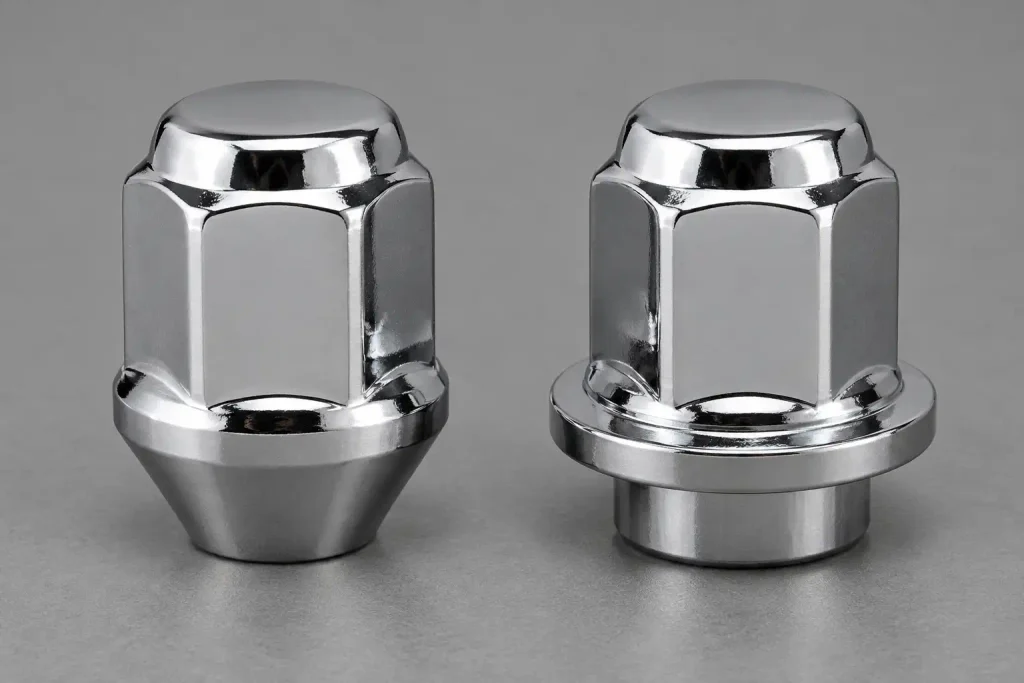
Cone nuts have a tapered end that seats in a matching cone in the wheel. Flanged nuts have a flat washer-style collar. Ram’s 2026 manual lists both types for the heavy-duty trucks, and its dual-wheel nuts are a two-piece assembly with a separate washer. Ram’s Ram 1500 manuals from 2019 list only cone nuts.
Use the torque for your nut type and your truck’s own manual. Ram’s tables do not translate a cone figure into a flanged figure.
The 2021 Recall That Corrected the Flanged Torque (NHTSA 21V-398)
FCA US recall 21V-398 covers 2012 to 2021 Ram 3500 pickups, 3500 chassis cabs, and 4500 and 5500 chassis cabs. The population is 447,985 vehicles: 221,091 Ram 3500 pickups, 150,031 Ram 4500 and 5500 chassis cabs, and 76,863 Ram 3500 chassis cabs.
The recall is not about a faulty part. NHTSA’s report calls it “incorrect vehicle service information.” The service and owner’s manuals gave a torque for flanged lug nuts that could over-torque the nut and yield a wheel stud. A yielded stud can break and let the wheel separate.
| Torque | |
|---|---|
| Value on the manual page the recall covers | 140 ft-lb (190 N·m) |
| Corrected value | 129 ft-lb (175 N·m) |
| Nuts affected | Flanged |
The remedy is a stud inspection with a stud measurement tool. If every stud passes, the wheels go back on at 129 ft-lb and the owner gets a new manual label and an addendum card. If a stud fails, it is replaced. Transport Canada describes the same recall for trucks with dual rear wheels and flanged nuts.
The 140 ft-lb flanged figure is still repeated on many parts and dealer pages. It is the superseded number from the recall notice, so do not use it. To see whether your truck is covered, enter your VIN on NHTSA’s recall lookup. The Ram 2500 and Ram 1500 are not on the recall’s model list.
How to Torque Ram Lug Nuts
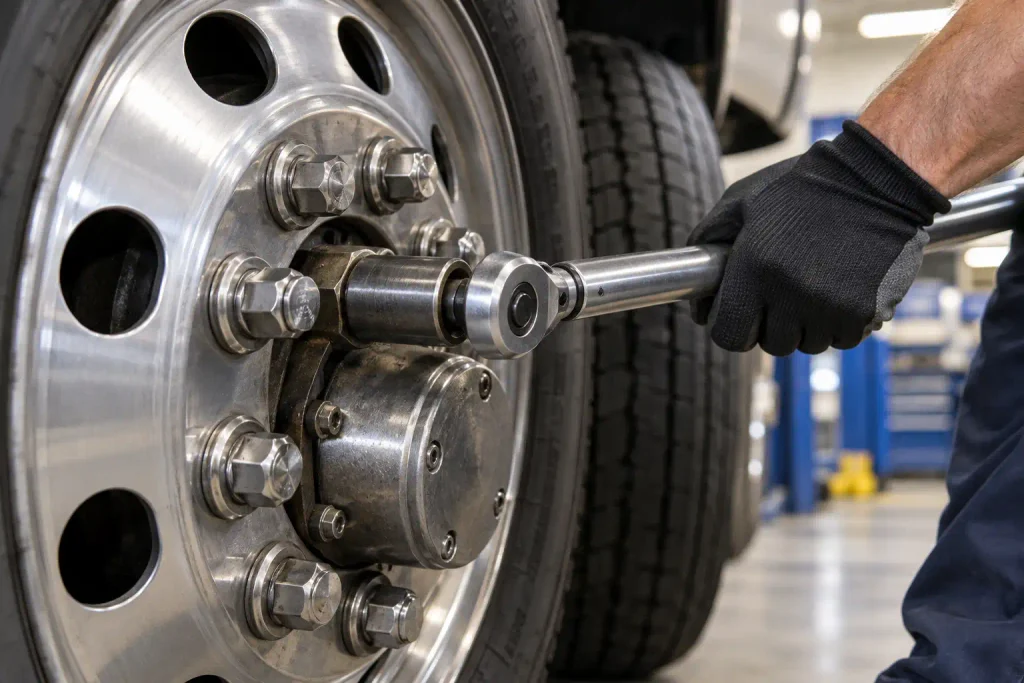
Follow the steps in Ram’s manuals:
- Clean the surfaces. Remove dirt or oil from the lug nuts, and inspect the wheel mounting surface for corrosion or loose particles.
- Do not oil the wheel studs. Ram’s manuals say so in every manual we read. On dual wheels, the newer manuals say to clean the interface between the lug nut and its washer.
- Snug the nuts with the truck on the jack. Ram warns not to tighten them fully until the vehicle is lowered, so the truck cannot be forced off the jack.
- Use a calibrated torque wrench with a six-sided deep-wall socket. Ram’s newer manuals say to fully engage the socket on the nut.
- Tighten in a star pattern, twice. Ram says to go around until each nut has been tightened twice.
- Check the torque again after 25 miles (40 km). Ram’s manuals use this interval, not a longer one.
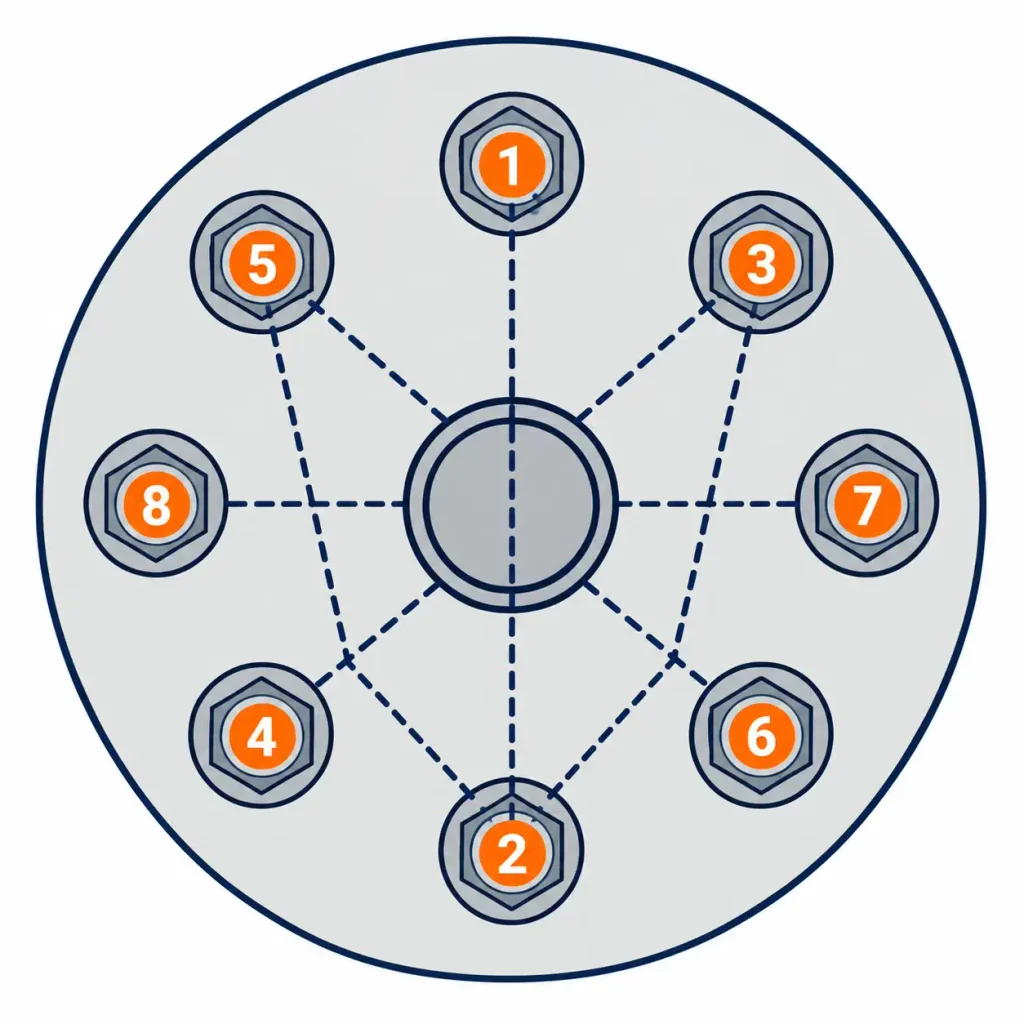
Ram also advises keeping wheel nuts torqued to specification at all times. Its 2021 heavy-duty manual says to torque the nuts at each lubrication interval.
Ram Lug Nut Torque FAQ
What is the lug nut torque for a Ram 1500?
For a 2019 or newer Ram 1500, it is 130 ft-lb (176 N·m) with cone nuts. We confirmed the same value in Ram’s 2011 manual and in the combined 2012 to 2018 manuals. The 2006 to 2008 trucks use 135 ft-lb according to the 2008 manual.
What is the lug nut torque for a Ram 2500 or 3500?
On 2012 and newer single rear wheel trucks it is 130 ft-lb for cone nuts and 129 ft-lb for flanged nuts. Dual rear wheel flanged nuts are 129 ft-lb in Ram’s 2012 to 2023 manuals, and 134 to 149 ft-lb in the 2026 manual.
What is the torque for a Ram 5500 or 4500?
The 2026 chassis cab manual lists 130 ft-lb for cone nuts, 129 ft-lb for flanged nuts on single rear wheels, and 134 to 149 ft-lb for flanged nuts on dual rear wheels. For 2012 to 2021 trucks, the recall set the flanged value at 129 ft-lb.
Is 140 ft-lb right for flanged Ram lug nuts?
No. 140 ft-lb is the figure on the manual page that recall 21V-398 replaced. Ram’s current manuals list 129 ft-lb for flanged nuts on 2012 to 2023 trucks.
Does the Ram 2500 fall under the 2021 wheel stud recall?
No. The recall covers 2012 to 2021 Ram 3500 pickups, 3500 chassis cabs, and 4500 and 5500 chassis cabs. Check your VIN on NHTSA’s lookup to be sure.
Can I use an impact wrench on Ram lug nuts?
Ram’s manuals say to torque the nuts with a properly calibrated torque wrench any time a wheel has been removed and reinstalled. They give no torque setting for an impact tool, so use a torque wrench for the final pass.
Can I use anti-seize on the wheel studs?
Ram’s manuals say not to oil the wheel studs. We found no Ram guidance for anti-seize, so ask your dealer before you use it.
When should I recheck the torque?
After 25 miles (40 km). Ram’s manuals also say to keep wheel nuts torqued to specification at all times.
What socket size fits Ram lug nuts?
A 22 mm six-sided deep-wall socket on trucks with M14 x 1.50 studs, which is every truck from 2012 on in the manuals we read. The 2006 to 2011 manuals list 9/16-18 studs in their torque chart.
Does the torque change for aluminum wheels, front wheels or trim levels?
Ram’s tables do not give a separate value for any of these. The torque depends on the truck, nut type and, for 2026 dual rear wheels, the listed range. Do not substitute chrome-plated nuts on chrome wheels.
Related Guides
- Ram 1500 lug nut torque by year
- Ram 2500 wheel torque specs
- 2020 Ram 1500 lug pattern
- Dodge Ram 2500 lug pattern specifications
- Ram towing capacity by VIN
- Ram 3500 towing capacity charts
- Ram 3500 payload capacity chart by year
How We Checked This Page
We read the torque tables in these Ram owner’s manuals and the recall documents in October 2026:
- 2027 Ram 1500 owner’s manual
- 2026 Ram 1500 owner’s manual
- 2026 Ram 2500/3500 owner’s manual
- 2026 Ram chassis cab owner’s manual
- 2023 Ram 1500 owner’s manual
- 2023 Ram 2500/3500 owner’s manual
- 2022 Ram 2500/3500 torque specifications
- 2022 Ram 1500 Classic owner’s manual
- 2021 Ram 2500/3500 owner’s manual
- 2018 Ram 1500/2500/3500 owner’s manual
- 2013 Ram Truck owner’s manual
- 2011 Ram Truck 1500/2500/3500 owner’s manual
- 2008 Dodge Ram Truck owner guide
- 2006 Ram 2500/3500 owner’s manual
- NHTSA recall 21V-398 (FCA remedy notice)
- NHTSA recall 21V-398 (defect report)
- Transport Canada recall 2021336
Use your own owner’s manual or a Ram dealer to confirm the figure for your VIN before you torque a wheel. Last updated October 2026.

![RAM Big Horn vs. Laramie: Which Trim Level is Worth It? [2026]](https://truckguider.com/wp-content/uploads/2026/03/ram-big-horn-vs-laramie-featured.webp)