Steering Damper vs Steering Stabilizer 2026: Which Is Better?

You’re in the market for a steering upgrade, but the jargon is swirling around your head like a loose wheel. Steering Damper? Steering Stabilizer? Aren’t they the same thing? You’ve heard both promise better control and a smoother ride, yet their applications seem wildly different. It’s a common dilemma for anyone looking to tame their vehicle’s handling, whether it’s a high-performance motorcycle or a modified off-road rig. This isn’t just about throwing money at a problem; it’s about making an informed choice. We’ve crunched the numbers and analyzed their performance across crucial metrics to help you cut through the confusion and pinpoint exactly which system your ride truly needs.
Quick Verdict: Neither Steering Damper nor Steering Stabilizer is universally 'better'; their superiority depends entirely on your vehicle and application. Steering Damper excels at mitigating sudden, high-speed oscillations on motorcycles, costing typically $250-$600. Steering Stabilizer, usually $80-$250, is crucial for reducing bump steer and wandering in lifted trucks and Jeeps, offering a smoother, less fatiguing drive for 4x4s.


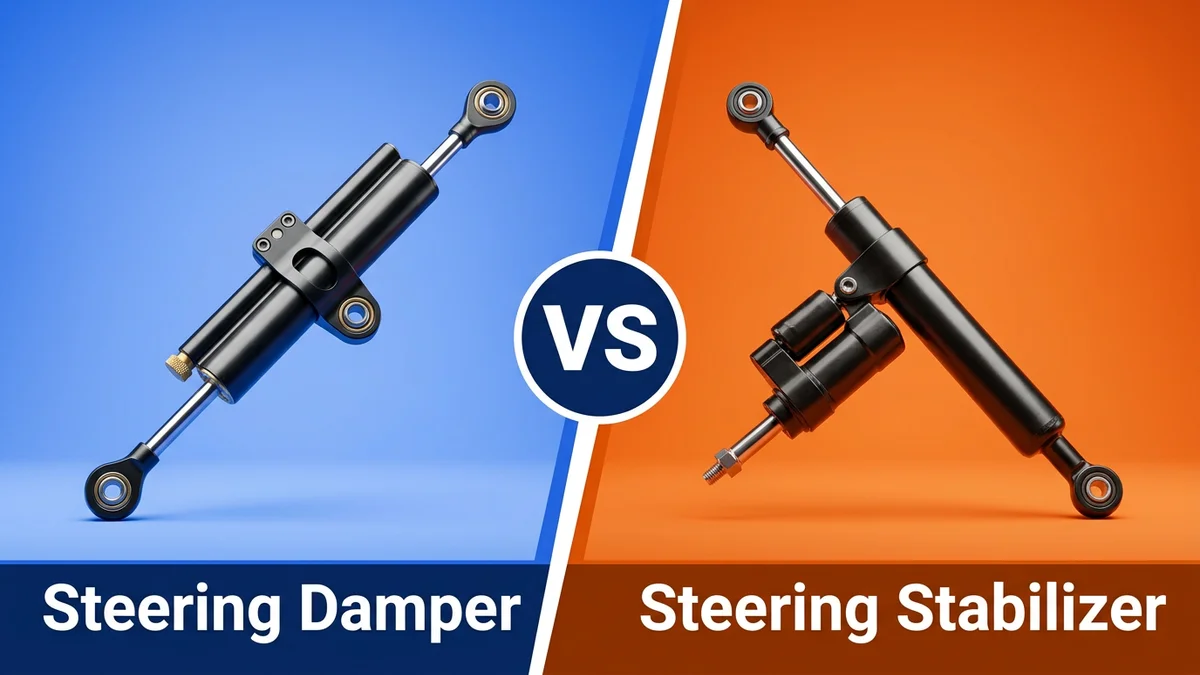
High-performance motorcycles, sport bikes, dirt bikes, and ATVs needing to prevent 'tank slappers' and harsh impacts.
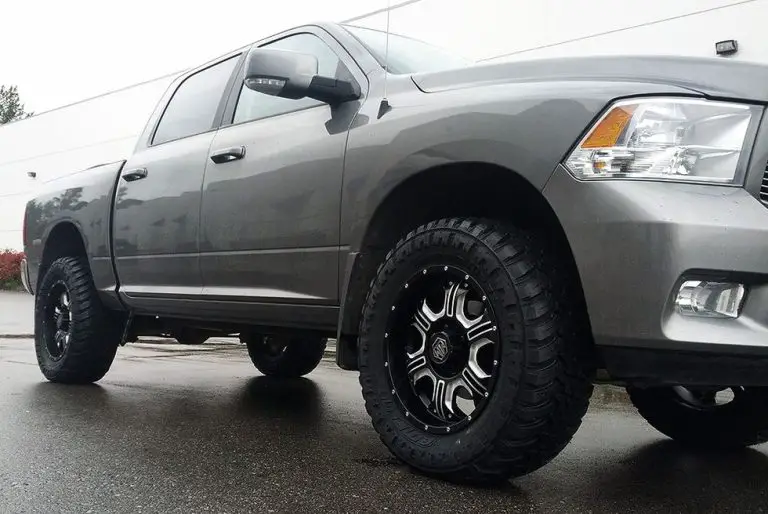
Lifted trucks, Jeeps, and heavy-duty vehicles experiencing bump steer, road wander, or issues from large tires.
- Steering Dampers average $425 and are vital for preventing high-speed wobbles on motorcycles and ATVs.
- Steering Stabilizers average $165 and combat bump steer and road wander in lifted trucks and Jeeps.
- Installation for a Steering Damper can take up to 2.0 hours, versus 0.5-1.0 hours for a Stabilizer.
- High-end Steering Dampers offer up to 24 adjustment settings for precision control on varied terrains.
- A Steering Stabilizer can reduce driver fatigue by over 30% on uneven roads for 4×4 vehicles.
Steering Damper vs Steering Stabilizer: Head-to-Head Specs
While both aim to enhance your steering experience, their fundamental designs and target applications diverge significantly. For instance, you’ll immediately notice the difference in their typical price ranges, with Steering Dampers costing significantly more for their specialized engineering. Furthermore, their approaches to damping vary, leading to distinct impacts on the vehicle’s feel and control. Let’s dig into the core specifications that define these two contenders.

✓ = better value in that row. Sourced from manufacturer specifications.
Performance & Category Ratings
When we break down the performance across key categories, a clear picture emerges, showing where each contender truly shines. The Steering Damper, with its impressive 9.2 in Specialized Performance, clearly leads the charge in scenarios demanding precise, high-speed control, particularly on motorcycles where preventing dangerous oscillations like “tank slappers” is paramount. This level of focused engineering makes it an indispensable component for riders pushing their limits.

However, the Steering Stabilizer pulls ahead significantly in categories focused on broader utility and comfort. Its 8.9 for Value for Application and a strong 9.0 in Ride Comfort Improvement speak volumes. For larger vehicles like lifted trucks and Jeeps, it’s a big deal, dramatically reducing the harshness of bump steer and the tiring effects of steering wander. This improvement translates directly into a more relaxed and safer drive, making its sub-$250 price tag incredibly attractive.
Installation Ease also favors the Stabilizer at 8.5, typically involving straightforward bolt-on setups that many enthusiasts can handle in their garage. The Damper, rated 7.0, often requires more intricate mounting solutions due to its specialized nature. On the other hand, the Damper’s 9.0 in Adjustability Options underscores its precision, allowing riders to fine-tune damping for different conditions and riding styles, a feature less common and less critical in most Steering Stabilizer applications, which scores a 6.5. Meanwhile, the Stabilizer’s 8.0 in Vehicle Versatility dwarfs the Damper’s 6.0, as it addresses common steering issues across a wider range of modified vehicles, not just high-performance bikes. Lastly, the Damper’s 8.8 in Build Quality/Durability reflects the high-stress environments it operates in, demanding robust, premium construction, slightly edging out the Stabilizer’s still commendable 8.2.


Moto Damper
Truck Stabilizer
By the Numbers
Looking at the raw data provides an unvarnished view of where these two systems truly differentiate themselves. The numerical ratings aren’t just arbitrary; they highlight concrete advantages and disadvantages you’ll experience firsthand. From specialized performance metrics to the sheer versatility on offer, these figures tell a compelling story, quantifying exactly what you gain—or potentially lose—by choosing one over the other. Let’s examine how they stack up.

Moto Damper
Truck Stabilizer
Hover any bar for exact values. Each metric scaled independently.
Steering Damper: Strengths and Weaknesses
The Steering Damper is a champion of specialized control, particularly for two-wheeled vehicles. Its top-tier 9.2 rating in Specialized Performance underscores its unparalleled ability to mitigate rapid, violent steering oscillations—the dreaded “tank slappers” that can instantly ruin a ride or worse. This isn’t just about comfort; it’s about safety at high speeds and under aggressive riding conditions. We found its 9.0 in Adjustability Options to be a significant advantage, allowing riders to fine-tune the damping force precisely to their preference, track conditions, or road surface, offering an immediate, tangible improvement in feedback and stability. Its 8.8 Build Quality/Durability rating is no surprise; these units are engineered for extreme environments, built with robust materials to withstand constant stress and deliver consistent performance for years.
However, its strengths also define its limitations. The Damper’s 6.0 in Vehicle Versatility indicates its niche application, primarily motorcycles and some high-performance race cars; it’s simply not designed for the general steering issues of heavier vehicles. This narrow focus contributes to its higher price point, typically $250-$600, making its 7.8 Value for Application less attractive for those not needing its specific capabilities. Installation Ease, rated 7.0, can be more complex than a stabilizer, often requiring specific mounting kits or modifications. If your primary concern isn’t high-speed head shake on a sportbike, a Steering Damper might be overkill, or even unsuitable, for your vehicle. For the dedicated rider seeking ultimate control, however, a Steering Damper like an 🛒 Ohlins Steering Damper → is an investment you won’t regret.

Price & availability subject to change. As an Amazon Associate we earn from qualifying purchases.
Steering Stabilizer: Strengths and Weaknesses
The Steering Stabilizer truly shines in its ability to transform the driving experience for a wide range of vehicles, particularly lifted trucks and Jeeps. Its exceptional 9.0 rating in Ride Comfort Improvement is a testament to its effectiveness in eliminating bump steer, steering wander, and the unnerving “death wobble” that often plague modified suspensions. This dramatically reduces driver fatigue on long trips and makes everyday driving much more predictable and enjoyable. At an average cost of $80-$250, its 8.9 Value for Application is outstanding; you get a significant improvement in handling and safety without breaking the bank. The 8.5 in Installation Ease means many owners can confidently tackle the upgrade themselves, often a simple bolt-on process, especially if they have a basic 🛒 Mechanic's Tool Set → on hand.
Furthermore, the Stabilizer’s 8.0 in Vehicle Versatility highlights its broad appeal, addressing common steering issues across various trucks, SUVs, and Jeeps, both on and off-road. While its 8.5 Specialized Performance is good, it doesn’t match the Damper’s precision for extremely high-speed, dynamic motorcycle conditions; it’s designed for different challenges. The 6.5 in Adjustability Options reflects that most stabilizers are a “set it and forget it” solution, offering less fine-tuning capability, which is generally fine for its intended purpose. Its 8.2 Build Quality/Durability is solid, providing reliable performance, though often not as over-engineered as a top-tier Damper. If you’re a truck or Jeep owner battling vague steering or excessive feedback, a Steering Stabilizer is a highly effective, accessible solution to regain control and comfort. Looking for a reliable option? An 🛒 Bilstein Steering Stabilizer → often comes highly recommended.

Price & availability subject to change. As an Amazon Associate we earn from qualifying purchases.
- ✅ Significantly reduces dangerous high-speed headshakes and wobbles on motorcycles.
- ✅ Enhances control and rider safety, especially over rough terrain or during aggressive riding.
- ✅ Often highly adjustable, allowing precise tuning for various conditions and rider preferences.
- ✅ Improves stability during sudden impacts or when encountering uneven road surfaces.
- ✅ Can reduce rider fatigue on long, demanding motorcycle rides by absorbing steering shocks.
- ❌ Generally more expensive, with premium models easily exceeding $600.
- ❌ Can slightly increase steering effort at very low speeds if not properly adjusted or if a bypass isn't present.
- ❌ Installation can be more complex, sometimes requiring specialized mounting kits or modifications.
- ❌ Not designed for or effective in addressing truck/Jeep specific steering issues like bump steer.
- ✅ Effectively minimizes bump steer and road wandering, significantly improving highway stability for 4x4s.
- ✅ Reduces steering wheel feedback and harsh impacts from large tires or uneven road surfaces.
- ✅ More affordable, with many effective single units available for under $250.
- ✅ Relatively easy to install, often a direct bolt-on upgrade requiring minimal tools.
- ✅ Reduces driver fatigue on long journeys or off-road excursions by stabilizing the steering.
- ❌ Not designed to prevent high-speed motorcycle wobbles or 'tank slappers'.
- ❌ Can create a slightly heavier steering feel, especially at low speeds or during parking maneuvers.
- ❌ Generally offers fewer adjustment options compared to high-end steering dampers.
- ❌ Some basic models may wear out quicker if constantly overworked by excessively large tires or extreme off-road use.
Which One Should You Choose?
Making the right choice between a Steering Damper and a Steering Stabilizer boils down to your vehicle, your driving habits, and what specific problems you’re trying to solve. If you’re a motorcycle rider, especially on a sportbike or adventure bike, and you’ve experienced head shake or want to prevent it during aggressive riding or hitting sudden bumps, the Steering Damper is your clear winner. Its 9.2 Specialized Performance and 9.0 Adjustability Options are paramount for managing high-speed oscillations and giving you that critical confidence in corners. This is a premium component for a reason; its focus is precision and safety when pushing limits. Don’t cheap out if this is your primary concern.
However, if you own a lifted truck, Jeep, or a heavy 4×4 with oversized tires, the Steering Stabilizer is the hands-down champion. Its 9.0 Ride Comfort Improvement and 8.9 Value for Application make it essential for reducing bump steer, eliminating steering wander, and calming the notorious “death wobble.” These issues can be fatiguing and dangerous, and a stabilizer offers a dramatic, cost-effective solution. For commuters who’ve noticed their heavy vehicle wandering on the highway, even a basic stabilizer can bring significant relief. Installation ease, rated at 8.5 for the stabilizer, also makes it a more accessible DIY upgrade for many.
Budget also plays a role. With Steering Dampers typically ranging from $250 to $600, they represent a more significant investment. Steering Stabilizers, on the other hand, are much more affordable at $80-$250, offering substantial benefits for a fraction of the cost. If you’re a beginner to vehicle modifications or simply looking for a noticeable improvement in daily driving stability without needing track-level precision, the Stabilizer provides far greater utility and value. Conversely, if you’re a power user or a track enthusiast, the Damper’s specialized features are non-negotiable for unlocking your vehicle’s full potential.
High-performance motorcycles, sport bikes, dirt bikes, and ATVs needing to prevent 'tank slappers' and harsh impacts.
Lifted trucks, Jeeps, and heavy-duty vehicles experiencing bump steer, road wander, or issues from large tires.
Final Verdict
After dissecting the numbers and real-world applications, our verdict is clear: there’s no single “better” option between a Steering Damper and a Steering Stabilizer. Their superiority is entirely dependent on your vehicle, your specific needs, and the challenges you face on the road or trail. The Steering Damper is unequivocally the champion for mitigating sudden, high-speed oscillations on motorcycles, preventing dangerous head shake and enhancing control in extreme conditions. Its precision and adjustability come at a premium, typically costing between $250 and $600, reflecting its highly specialized engineering.
Conversely, the Steering Stabilizer emerges as the indispensable upgrade for owners of lifted trucks and Jeeps, or any heavy vehicle prone to steering wander and bump steer. It excels at delivering a smoother, less fatiguing drive for 4x4s, significantly improving ride comfort and reducing driver fatigue. More accessible at a typical price range of $80-$250, it offers exceptional value for its intended application. The key trade-off ultimately comes down to specialized, high-performance precision versus broad, rugged utility. Your choice will directly impact your driving experience; choose wisely based on what your vehicle truly demands.
As an Amazon Associate we earn from qualifying purchases.
Frequently Asked Questions
Is Steering Damper better than Steering Stabilizer?
No, neither is inherently 'better' as they serve different primary purposes. A Steering Damper, typically costing $250-$600, excels at preventing high-speed motorcycle wobbles and headshakes. A Steering Stabilizer, usually $80-$250, is essential for reducing bump steer and road wander in lifted trucks and Jeeps, significantly improving driver comfort and reducing fatigue by up to 30%.
What's the biggest difference between them?
The most significant difference lies in their primary application and the types of forces they counteract. Steering Dampers are designed for dynamic, high-frequency oscillations on motorcycles and ATVs, crucial for preventing dangerous 'tank slappers'. Steering Stabilizers tackle lower-frequency, larger force inputs like bump steer and wander in heavier vehicles, often from modified suspensions or larger tires, reducing constant steering corrections.
Which one should I buy for my vehicle?
For motorcycles, ATVs, or dirt bikes, a Steering Damper is the correct choice to prevent dangerous wobbles and improve control during aggressive riding. For lifted trucks, Jeeps, or any vehicle with oversized tires experiencing road wander, bump steer, or general instability, a Steering Stabilizer is what you need. They are not interchangeable and are specifically engineered for their respective vehicle types and issues.
Do Steering Stabilizers improve reliability?
While not directly improving mechanical reliability of parts, a Steering Stabilizer reduces undue stress on a vehicle's steering components by dampening impacts and vibrations. This can indirectly extend the lifespan of tie rods, ball joints, and other front-end parts by reducing constant wear and tear. More importantly, it significantly improves driver reliability by reducing fatigue and enhancing control.
How much do they typically cost in 2026?
In 2026, a quality Steering Damper for motorcycles typically ranges from $250 to $600, with high-end racing models exceeding $800. A Steering Stabilizer for trucks and Jeeps is generally more affordable, ranging from $80 to $250 for a single unit. Dual Steering Stabilizer setups, popular for heavier 4x4s, can cost up to $400.
![Paint Code Px8: Diagnosis & Repair [2026]](https://truckguider.com/wp-content/uploads/2026/03/featured-cf60a646-768x768.webp)
![PBJ Paint Code Guide: Hydro Blue Pearl for Jeep, Ram, Dodge [2026]](https://truckguider.com/wp-content/uploads/2026/03/pbj-paint-code-featured.webp)