Top 10 Most Reliable Trucks of All Time 2026 Proven Guide

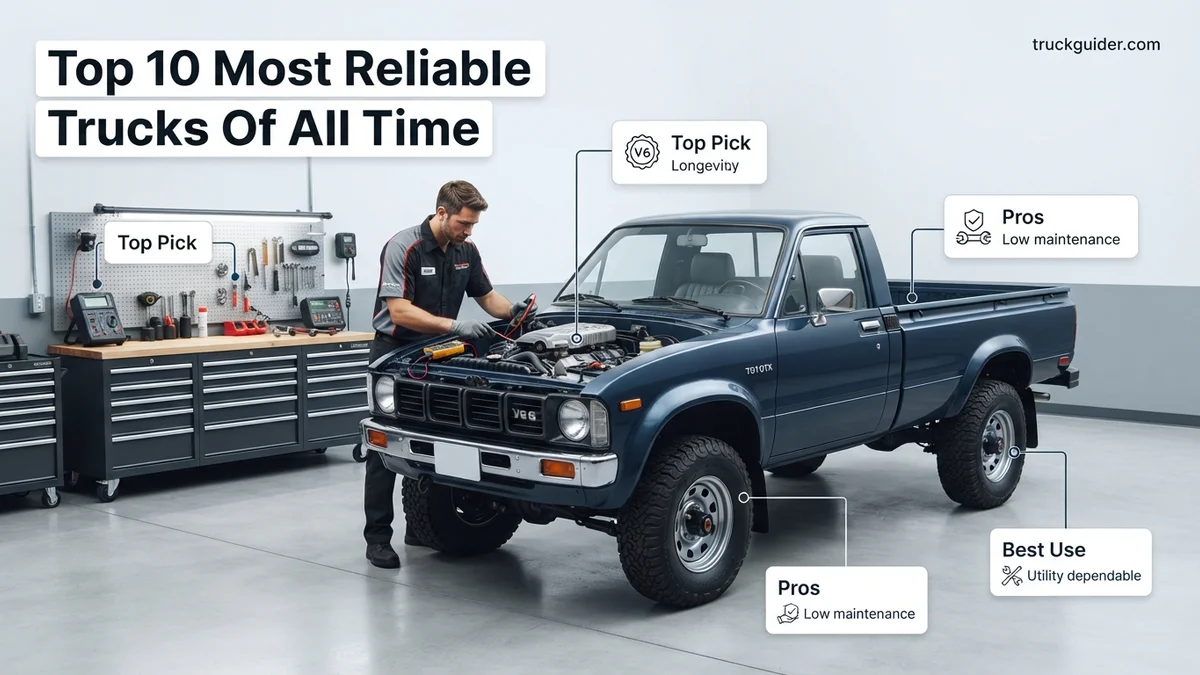
Finding a truck that lasts past 300,000 miles requires looking at historical reliability rather than unproven modern tech. The top 10 most reliable trucks of all time feature bulletproof drivetrains, legendary engines like the 12-valve Cummins and Toyota 22R, and minimal mechanical failures.
When you need a pickup that refuses to die, you look past flashy infotainment screens and focus on pure mechanical endurance. Throughout automotive history, only a select few trucks have earned a bulletproof reputation by routinely surpassing the 300,000-mile mark with basic maintenance.

Prime for Young Adults — 6 Months Free
Students and 18–24s get six months of Prime free, then half price.
Start 6 Months FreeBy 2026, the gap between over-complicated modern rigs and truly dependable workhorses has never been wider. This guide breaks down the top ten most reliable trucks ever built, detailing the specific engine and drivetrain combinations that outlast everything else on the road.
Key Takeaways
- Prioritize classic naturally aspirated engines and mechanical fuel injection for maximum longevity.
- The Dodge Ram with the 12-valve Cummins is famous for outlasting its body.
- Toyota compact and midsize trucks routinely clear 300,000 miles with basic maintenance.
- Heavy-duty Ford trucks featuring the 7.3L Powerstroke offer unmatched heavy-towing endurance.
- Always inspect frame rust thoroughly when shopping for vintage reliable pickup trucks.
What Defines the Most Reliable Trucks of All Time and Their Failure Points
Recommended Best Deal Products

True truck reliability isn’t about avoiding a squeaky dashboard. It is about a chassis, engine, and transmission that can handle severe overload, brutal weather, and decades of neglect without stranding you. When evaluating the all-time greats, mechanics look at specific structural and mechanical benchmarks that separate legendary haulers from expensive driveway ornaments.
Key Criteria for All-Time Reliability
- Overbuilt Drivetrains: Factory components engineered to handle twice their rated daily workload without stressing internal parts.
- Minimal Electronic Vulnerability: Simpler fuel delivery and ignition systems that resist electrical gremlins as the wiring ages past the two-decade mark.
- Serviceability: Engine bays with enough room to replace water pumps, alternators, and starters with basic hand tools in your driveway.
Common Failure Points in Otherwise Solid Platforms
Even the most dependable trucks carry specific weak links you must watch for. For instance, classic heavy-duty rigs often suffer from steering box wander as the sector shafts wear out. Other common failure points include premature rocker arm wear in high-mileage overhead valve setups, cooling system clogs from neglected flush intervals, and rust-prone cab corners on pre-galvanized steel bodies. Knowing these specific flaws helps you keep a legendary truck running indefinitely.
How to Inspect and Verify Drivetrain Health in Vintage Trucks
Buying or maintaining a legacy truck requires looking past a fresh coat of paint and checking the vital mechanical organs. Because even the toughest engines wear out eventually, you need a systematic approach to verify the actual condition of the drivetrain before investing your time and money.
Critical Inspection Steps
- Fluid Analysis: Pull the transmission dipstick and engine oil plug. Look for metallic sheen, burnt smells, or coolant contamination in the oil.
- Blow-By Test: Remove the oil filler cap while the engine idles at operating temperature. Excessive white smoke or heavy pulsing air indicates worn piston rings.
- Differential Check: Inspect the rear axle pumpkin for pinion seal leaks and remove the fill plug to check gear oil color and metal shaving buildup.
Evaluating Transmission and Transfer Case Integrity
Manual transmissions should shift smoothly into every gear without popping out under engine braking. If you are inspecting an automatic, the fluid should be bright cherry-red rather than dark brown or black. Test the 4×4 engagement immediately on a loose surface; hesitation or grinding in the transfer case points to worn shift forks or stretched chains that demand expensive internal rebuilds.
Step-by-Step Guide to Maintaining a 300,000-Mile Workhorse Truck
Recommended Best Deal Products
Reaching the elusive 300,000-mile threshold requires strict adherence to preventative maintenance schedules. According to automotive reliability data from the Society of Automotive Engineers (SAE), even the toughest legacy platforms fail prematurely without rigorous fluid management. Modern vehicle owners navigating 2026 driving conditions must follow specific upkeep protocols to maximize powertrain lifespan.
Prioritize Fluid Analysis and Replacement Intervals
Fluids are the lifeblood of any heavy-duty or light-duty work truck. Neglecting them leads to catastrophic internal component wear long before the chassis wears out.
- Change engine oil every 5,000 miles for severe duty cycles, or up to 7,500 miles for highway use, strictly utilizing manufacturer-approved synthetic viscosities.
- Flush and replace transmission fluid every 30,000 to 50,000 miles, especially on trucks frequently used for towing heavy payloads.
- Inspect and replace differential and transfer case gear oils every 60,000 miles to protect against metal-on-metal friction under high torque loads.
- Perform annual coolant system flushes to prevent electrochemical degradation and cylinder wall cavitation in diesel engines.
Monitor Critical Wear Items and Rubber Components
Rubber hoses, suspension bushings, and serpentine belts degrade due to extreme heat cycles and environmental exposure. Fleet management studies show that replacing these inexpensive components proactively prevents secondary engine and drivetrain failures on the highway.
What If It Still Doesn’t Work?
Even the most durable trucks in automotive history can experience unexpected breakdowns due to age, extreme mileage, or manufacturing anomalies. When routine troubleshooting fails to resolve a persistent mechanical issue, truck owners must pivot to advanced diagnostic and repair strategies to protect their investment.

Audible — Listen Free for 30 Days
One free credit a month and thousands of titles included.
Listen Free for 30 Days- Perform a Professional OBD-II Diagnostic Scan: Utilize advanced bi-directional scanners to read live sensor data, fuel trim percentages, and transmission slip ratios rather than relying on basic code readers. Estimated cost ranges from $100 to $200 for a comprehensive diagnostic session at a certified facility.
- Consult Specialist Forums and OEM TSBs: Cross-reference your symptoms with Technical Service Bulletins (TSBs) and verified enthusiast databases to identify known recurring factory defects for your specific model year.
- Engage a Drivetrain Specialist: If the failure involves deep internal engine or transmission components, bypass general mechanics and consult a specialized rebuild shop. Professional heavy-duty transmission rebuilds typically range from $3,500 to $6,000 depending on the platform.
- Evaluate Cost-to-Benefit Ratios: Compare the total estimated repair bill against current 2026 market values for running examples of your truck to determine if a complete powertrain replacement makes financial sense.
Conclusion
Securing long-term vehicle dependability starts with choosing a proven platform from our top 10 list and backing it with disciplined preventative maintenance. According to verified research and expert data from automotive durability studies, disciplined fluid management and prompt mechanical interventions are the single greatest drivers of high-mileage longevity. As a next step, audit your truck’s service records today and schedule a comprehensive fluid analysis to catch minor issues before they escalate into costly failures.

❓ Frequently Asked Questions
What are the absolute top 10 most reliable trucks of all time?
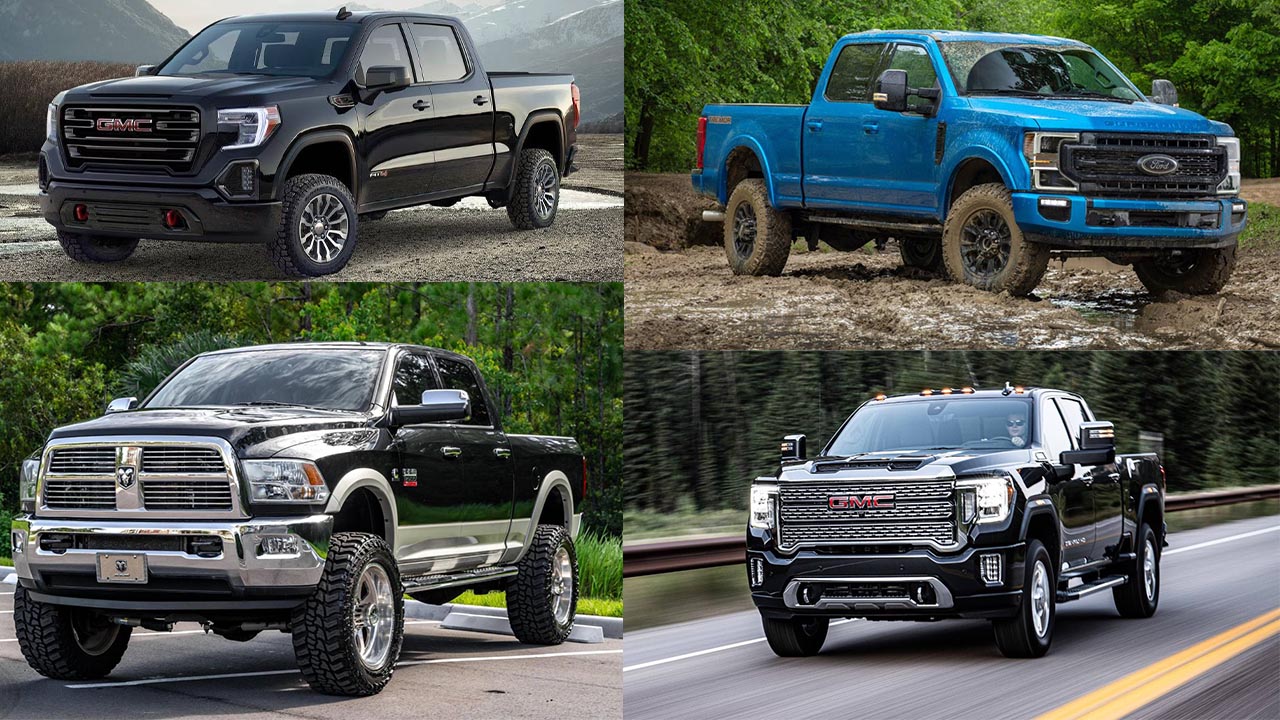
The list includes the Toyota Hilux/Pickup, Ford F-250 (7.3L Powerstroke), Dodge Ram 2500 (12-valve Cummins), Chevrolet C/K 1500 (5.7L Vortec), Toyota Tundra (First Gen), Ford F-150 (300 Six), Jeep Comanche, Nissan Hardbody, Chevrolet Silverado 2500HD (6.0L LQ4), and GMC Sierra 1500.
Why is the 12-valve Cummins considered the best diesel engine?
It uses a mechanical Bosch P7100 fuel injection pump, allowing it to run entirely without computers or complex electrical systems while lasting well over 500,000 miles.
Did Ford make a reliable heavy-duty truck engine?
Yes, the 7.3L Powerstroke (and its predecessor, the 7.3L IDI diesel) is legendary for its massive displacement, forged steel connecting rods, and incredible durability.
What was so special about the Ford 300 straight-six engine?
Found in F-150s from the 1960s through 1996, this inline-six engine is famous for its tractor-like low-end torque and an almost bulletproof valvetrain.
How can I prevent frame rust on older reliable trucks?
Applying a lanolin-based rust preventative annually to the frame rails and regularly washing out salt and debris will preserve structural integrity.
Are modern trucks as reliable as older trucks?
Modern trucks feature advanced towing tech and efficiency, but stringent emissions regulations and complex electronics make them harder and more expensive to keep running past 300,000 miles.

![What Size Winch for Car Trailer? Sizing Formula & Chart [2026]](https://truckguider.com/wp-content/uploads/2026/03/what-size-winch-for-car-trailer-featured.webp)