2013 Ford Escape Oil Reset: A Complete Step-by-Step Guide

Clearing the “Oil Change Required” Message on Your 2013 Escape
After completing an oil change on your 2013 Ford Escape, it can be frustrating to see the “Oil Change Required” message still illuminated on your dashboard. This persistent light does not mean the oil change was done incorrectly; rather, it indicates that the vehicle’s maintenance monitoring system needs to be manually reset. This guide serves as the definitive resource for 2013 Ford Escape owners, providing clear, tool-free instructions to extinguish that warning light.
This comprehensive walkthrough covers all trims—including the S, SE, SEL, and Titanium—and accounts for both traditional keyed ignitions and modern push-button start systems.1 The underlying procedure is remarkably consistent across the model lineup. Whether you’re a seasoned DIYer or just completed your first Ford Escape oil change, this guide will help you complete the job. Beyond just the reset procedure, this report details why this step is critical for your engine’s health, how the monitoring system functions, and the precise oil specifications your specific engine requires.
2013 Ford Escape
A Data-Driven Owner’s Guide
This guide explores the 2013 Ford Escape’s reliability issues with visual charts to help you decide on maintenance and ownership.
Key Statistics
At a glance: critical numbers for the 2013 Ford Escape.
According to the National Highway Traffic Safety Administration (NHTSA), an unusually high number for a single model year.
This estimated cost is significantly higher than the average for the compact SUV class, indicating more frequent or expensive repairs.
Recall Breakdown
The 17 recalls cover a range of issues, but problems related to the engine and latches are the most frequent and severe.
Top Owner Complaints
Owners have reported a consistent pattern of problems, with transmission issues being the most prevalent.
Cost of Ownership Comparison
Long-term maintenance costs can be a significant burden compared to peers in the compact SUV segment.
How to Choose Your Ideal Engine
Based on your driving needs and risk tolerance, follow this decision flow to pick the best engine option.
→ 2.5L Duratec (Non-Turbo)
Most reliable with fewer powertrain complaints.
→ 2.0L EcoBoost Turbo
Robust but monitor transmission and turbo issues.
→ 1.6L EcoBoost Turbo
Highest power but prone to overheating and fire risks.
Why Resetting Your Oil Light is a Non-Negotiable Maintenance Step
The dashboard warning light is more than a simple annoyance or a mileage counter. It is the primary indicator for Ford’s sophisticated Intelligent Oil-Life Monitor (IOLM) system. This system does not use a physical sensor to analyze the quality of your oil. Instead, it employs a complex algorithm that calculates oil degradation based on your specific driving habits and conditions, such as engine operating temperatures, towing, idle time, and overall mileage.
Failing to reset the IOLM after an oil change renders this intelligent system ineffective for the next service cycle. When the system isn’t reset, it continues its countdown assuming the old, degraded oil is still in the engine. This leads to one of two negative outcomes. First, you may receive a premature “Oil Change Required” alert, prompting you to spend money on unnecessary service. More critically, if you begin to ignore the now-inaccurate light, the system will fail to warn you when your new oil has actually reached the end of its effective life, putting your engine at risk of accelerated wear and potential damage.
Therefore, manually resetting the monitor is a mandatory final step for every oil change. It recalibrates the IOLM to 100%, ensuring it can accurately track the new oil’s lifespan and provide timely, correct alerts for your next service interval. According to , the IOLM is designed to optimize oil change intervals, and proper resetting is essential to that function.
The Primary Method: Resetting Your 2013 Escape Oil Light with the Pedal Technique
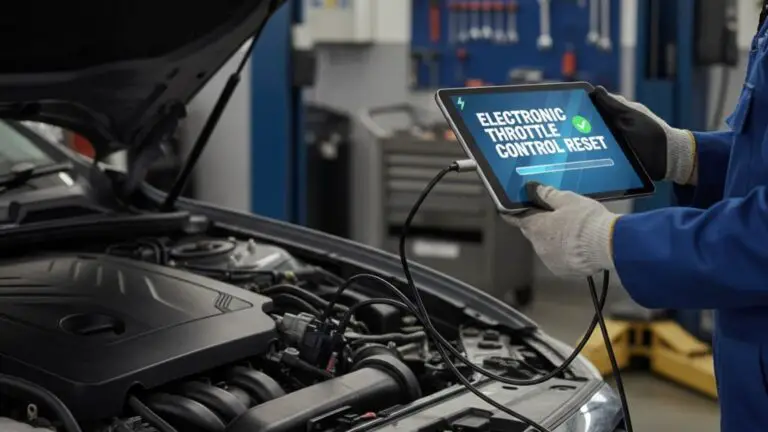
The most reliable and universally applicable method for resetting the oil life monitor on a 2013 Ford Escape involves a simple sequence using the accelerator and brake pedals. This factory-recommended procedure requires no special tools and can be completed in under a minute. It is the standard method for a wide range of Ford models, generally from the 2000 to 2016 model years.
The core action is identical for both keyed and push-button start systems; the only variation is in how you place the vehicle into the “ON” or “Accessory” mode without starting the engine. Success hinges on performing this initial step correctly. Attempting the procedure with the engine running will cause it to fail.
For Keyed Ignition Models (S, SE, some SEL)
- Preparation: Ensure the vehicle is in Park (P) and that all doors are fully closed.
- Ignition ON: Insert the key into the ignition. Turn the key clockwise to the “ON” position (often labeled as position “II”). This is the position where all the dashboard warning lights illuminate and the electronics activate, but just before the final turn that engages the starter. Do not start the engine.
- Press Pedals: Within a few seconds of turning the key, simultaneously press both the accelerator and brake pedals firmly and completely to the floor.
- Wait for Confirmation: Continue to hold both pedals down. After several seconds, a message such as “Oil Reset in Progress” will appear on the instrument cluster’s information display.
- Completion: Maintain pressure on both pedals for approximately 20 to 30 seconds, until the display shows a confirmation message like “Reset Complete”.
- Finalize: Once the confirmation message appears, release both pedals. Turn the ignition key back to the “OFF” position. You can now start the engine normally to verify that the “Oil Change Required” message has been cleared.
For Push-Button Start Models (Titanium, some SEL)
- Preparation: Ensure the vehicle is in Park (P) and all doors are closed.
- Ignition ON: With your foot completely off the brake pedal, press the “ENGINE START/STOP” button one time. This will activate the vehicle’s accessory mode, illuminating the dashboard and powering the electronics without starting the engine. This is the most critical step; pressing the brake while pushing the button will start the car and prevent the reset from working.
- Press Pedals: Once the ignition is on, simultaneously press both the accelerator and brake pedals firmly and completely to the floor.
- Wait for Confirmation: Continue holding both pedals down. The information display will soon show a message like “Oil Reset in Progress”.
- Completion: Keep holding the pedals for the full duration of the reset, which can take 20 to 30 seconds. Wait for the display to confirm with a “Reset Complete” message.
- Finalize: After the reset is confirmed, release both pedals. Press the “ENGINE START/STOP” button again (with your foot still off the brake) to turn the vehicle completely off. Finally, start the engine as you normally would (foot on the brake, press the button) to confirm the oil change message is gone.
Alternative Method: Using Steering Wheel Controls (For Equipped Models
While the pedal method is the standard for the 2013 model year, some Ford vehicles allow for the oil life monitor to be reset through the instrument cluster menu using steering wheel-mounted controls. Some documentation suggests this may be possible on a 2013 Escape, but the vast majority of owner reports and video demonstrations confirm the pedal method is the correct and intended procedure. The steering wheel menu-based reset is typically found on 2017 and newer Ford models.
If your 2013 Escape is equipped with a high-tier information display and the pedal method does not work, you can attempt the following steps. However, it is very likely that the pedal method is the correct procedure for your vehicle.
- Turn the ignition to the “ON” position without starting the engine.
- Use the directional arrow buttons on your steering wheel to navigate the information display menu.
- Navigate to the main menu and select “Settings,” then “Vehicle,” and finally “Oil Life Reset” (the exact wording may vary).
- Once the oil life reset option is highlighted, press and hold the “OK” button on the steering wheel until a message confirms the reset is successful, such as “Oil Life Reset to 100%”.
While this method is valid for many Ford products, it should be considered a secondary option for the 2013 Escape. Exploring your vehicle’s features is always a good practice, and you can find more helpful tips in our library of(/resources/diy-guides/).
Check Related Article: https://truckguider.com/2013-ram-1500-reset-oil-life/
Essential Knowledge: 2013 Ford Escape Oil Type and Capacity
Resetting the maintenance light is only half the battle; performing the oil change with the correct type and amount of oil is paramount for the long-term health of your engine. The 2013 Ford Escape was offered with three different engine options, and their oil requirements are not interchangeable. Using the wrong oil viscosity can lead to inadequate lubrication, reduced fuel economy, and potential engine damage, particularly in the turbocharged EcoBoost engines.
Ford officially recommends using its own Motorcraft brand of oil. However, any high-quality oil is acceptable, provided it meets the specific viscosity grade (e.g., SAE 5W-20) and the Ford Worldwide Standards Specification (WSS) listed in your owner’s manual. You can find oils meeting these specifications at major retailers like or other automotive parts suppliers.
The following table synthesizes official data to provide the correct specifications for your vehicle.
| Engine Type | Recommended Oil Viscosity (SAE Grade) | Ford Specification | Oil Capacity (with filter) |
| 1.6L EcoBoost I-4 | SAE 5W-20 | WSS-M2C945-A | 4.3 quarts (4.1 Liters) |
| 2.0L EcoBoost I-4 | SAE 5W-30 | WSS-M2C946-B1 | 5.7 quarts (5.4 Liters) |
| 2.5L I-4 | SAE 5W-20 | WSS-M2C945-B1 | 5.7 quarts (5.4 Liters) |
| Data compiled from Ford Service Content and leading automotive parts suppliers. |
It is critical to note that the 2.0L EcoBoost engine requires a different, slightly heavier viscosity oil (SAE 5W-30) than the other two engines. Turbocharged engines operate under higher temperatures and pressures, and the specified oil is formulated to provide the necessary protection and film strength under these more demanding conditions. Always verify your engine size before purchasing oil.
A Deeper Dive: How Ford’s Intelligent Oil-Life Monitor (IOLM) Works
To fully appreciate the importance of the reset procedure, it helps to understand the technology behind the dashboard light. As mentioned, the IOLM is not a sensor but a sophisticated software algorithm that lives within your vehicle’s onboard computer. It acts as a predictive model, estimating the remaining useful life of your engine oil.
The algorithm continuously processes data from a variety of vehicle systems to make its calculation. Key inputs include :
- Engine Operating Temperatures: Frequent short trips where the engine doesn’t fully warm up can degrade oil faster than long highway cruises.
- Driving Habits: Aggressive acceleration, heavy loads, and towing put more stress on the engine and the oil.
- Idle Time: Extended periods of idling can contribute to oil contamination and breakdown.
- Mileage Driven: The total distance covered since the last reset.
- Time: Oil degrades over time due to oxidation, even if the vehicle is not driven frequently.
Based on these factors, the IOLM provides two primary alerts on the instrument cluster display :
- “Change Engine Oil Soon”: This message typically appears when the calculated oil life reaches approximately 5%. It serves as an advance warning to schedule your maintenance.
- “Oil Change Required”: This alert is triggered when the oil life reaches 0%. Service should be performed as soon as possible to avoid risking engine health.
For more information on how these systems work across different brands, resources like(https://www.yourmechanic.com/article/understanding-ford-service-indicator-lights-by-brent-minderler) offer excellent explanations.
Troubleshooting and Common Issues
If you encounter a problem while trying to reset your oil light, review these common scenarios and solutions.
Problem: The “Oil Reset in Progress” Message Never Appears
This is the most common issue and is almost always caused by an incorrect initial step.
- Solution 1: Re-check the Ignition State. The single most likely cause of failure is not having the vehicle in the correct mode. The engine must be off, and the ignition must be in the “ON” / “Accessory” position. For push-button start models, remember to keep your foot off the brake when pressing the start button. Review the specific instructions for your ignition type and try again.
- Solution 2: Check Pedal Timing and Pressure. Ensure you are pressing both the accelerator and brake pedals simultaneously and holding them fully to the floor. A partial or staggered press may not register correctly.
- Solution 3: Try Again. Sometimes the system just needs a second attempt. Turn the vehicle completely off, wait a few seconds, and then carefully repeat the entire procedure from the beginning.
Problem: The Oil Light Comes Back On Shortly After a Reset
If the oil life monitor resets successfully but the oil warning light (often a red or yellow oil can symbol) illuminates again soon after, this indicates a potential mechanical problem, not an issue with the reminder system.
- Solution: Safely pull over and turn off the engine. Check your engine oil level using the dipstick. If the oil level is low, it could indicate a leak or excessive oil consumption. If the oil level is correct, the light could be signaling a problem with low oil pressure, which may be caused by a faulty sensor, a clogged oil filter, or a failing oil pump. In this situation, it is strongly advised to have the vehicle inspected by a qualified technician. If you suspect a larger issue, it is best to seek professional help. You can learn more about our comprehensive for diagnosis and repair.
Frequently Asked Questions (FAQs)
Q1: Do I need any special tools to reset the oil light on a 2013 Ford Escape?
A: No. The standard pedal reset method is designed to be performed without any special tools. All you need is access to the vehicle’s ignition and pedals.
Q2: Will disconnecting the battery reset the oil light?
A: No, disconnecting the battery will not properly reset the Intelligent Oil-Life Monitor. This action may clear some temporary codes or settings, but the IOLM requires the specific reset procedure to be performed to recalibrate its tracking to 100%.
Q3: How often should I change the oil in my 2013 Ford Escape?
A: The most accurate answer is to follow the recommendation of your vehicle’s IOLM. However, a general rule for the synthetic blend oil recommended by Ford is to perform a change every 7,500 to 10,000 miles or at least once a year, whichever occurs first. Your IOLM may suggest a shorter interval if it detects severe driving conditions. For the most definitive schedule, always consult your .
Q4: Is the oil reset procedure the same for the S, SE, SEL, and Titanium trims?
A: Yes. The pedal-based reset procedure is the same across all 2013 Ford Escape trim levels. The only functional difference in the process is whether your trim uses a traditional key or a push-button start to enter the “ON” mode before pressing the pedals.
Q5: Can I use full synthetic oil in my 2013 Escape?
A: Absolutely. While the factory recommendation is for a synthetic blend oil , upgrading to a full synthetic oil that meets the correct SAE viscosity (5W-20 or 5W-30 for your engine) and the required Ford WSS specification is a beneficial choice. Full synthetic oils generally offer superior protection against heat and wear and can help keep your engine cleaner.
Conclusion: Taking Control of Your Vehicle’s Maintenance
Resetting the oil change required light on your 2013 Ford Escape is a simple yet vital part of your vehicle’s maintenance routine. By following the straightforward pedal method, you ensure that the Intelligent Oil-Life Monitor remains an effective tool for protecting your engine. Remember that this reset must be paired with using the correct, engine-specific oil type and capacity to guarantee proper performance and longevity. Mastering this quick, tool-free procedure empowers you as an owner, putting you in direct control of your Escape’s health and helping you avoid both unnecessary service costs and the risk of costly engine repairs. Perform the reset confidently after every oil change to keep your Ford Escape reliable for years to come.