2022 Ram EcoDiesel Problems: A Buyer’s & Owner’s Guide 2025

The 2022 Ram 1500 EcoDiesel stands as a paradox in the modern truck world. It represents the peak of Ram’s half-ton diesel experiment, featuring the “Gen 3” 3.0L EcoDiesel engine. This redesigned powertrain was lauded for its class-leading 480 lb-ft of torque and a “whisper quiet” performance that seemed to defy its diesel nature. Owners and reviewers alike celebrated its exceptional fuel economy, with many reporting 28-30+ MPG on the highway —figures that its V8-powered counterparts could only dream of.
And yet, this pinnacle of engineering was also its final curtain call. Ram officially announced the “Last Call” for the EcoDiesel in September 2022, with production ending permanently in January 2023. This abrupt discontinuation, combined with a string of high-profile recalls, left many owners and prospective buyers asking one critical question: why?
This report provides a definitive, data-driven guide for both current owners and potential buyers. We will analyze the 2022 Ram EcoDiesel problems, from catastrophic, multi-thousand-dollar safety recalls to common mechanical failures, to explain the real-world risks and realities of owning this brilliant but flawed engine. While the engine’s power is a major draw, showcased in the, its long-term reliability is the central concern.
2022 Ram 1500 EcoDiesel: A Data-Driven Look at Common Problems
The 3rd Generation 3.0L EcoDiesel (2020-2023) in the Ram 1500 is praised for its impressive torque and fuel efficiency. However, owner-reported data and service bulletins reveal a pattern of significant, costly mechanical issues. This infographic breaks down the most common problems potential owners and current drivers face.
EPA-Rated Highway Fuel Economy
Avg. HPFP Failure Repair Cost
Problem Frequency Breakdown
Based on an analysis of owner forums and NHTSA complaints, problems are not distributed equally. A catastrophic failure of the High-Pressure Fuel Pump (HPFP) is, by far, the most commonly reported and severe issue.
This donut chart visualizes the share of major complaints. The HPFP failure often leads to a cascade of other system damages, magnifying its impact.
Average Repair Cost Comparison
The financial impact of these failures varies dramatically. While a DEF system fault is an inconvenience, an HPFP or EGR cooler failure represents a significant financial liability, often occurring outside the standard warranty period.
This horizontal bar chart compares the average out-of-pocket repair costs for the most common 3.0L EcoDiesel failures, as reported by service centers.
Problem Reports vs. Vehicle Mileage
Data suggests a sharp increase in major component failures, particularly the HPFP and EGR cooler, as vehicles move beyond the 30,000-mile mark. The “sweet spot” for catastrophic failures appears to be between 45,000 and 80,000 miles.
This line chart plots the cumulative volume of major failure reports against vehicle mileage, showing a clear acceleration after the initial warranty period.
The HPFP Failure Chain
The primary issue with the CP4 high-pressure fuel pump is not just its failure, but the chain reaction it initiates. This diagram illustrates how a single component failure leads to systemic contamination.
Recalls & Resources
In response to these issues, several actions have been taken. Owners should be aware of official recalls and available resources.
NHTSA Recall 22V-406
Addresses a potential HPFP failure in 2020-2022 models that could cause a stall, increasing crash risk. The remedy involves replacing the pump.
Class-Action Lawsuits
Multiple lawsuits allege Stellantis (Ram’s parent company) knowingly used the failure-prone CP4 pump. Owners may be eligible for compensation.
Further Reading
At a Glance: Key 2022 Ram 1500 EcoDiesel Problems
For owners and buyers who need a high-level summary, the 2022 model’s issues range from critical safety recalls to persistent mechanical faults.
Visual 1: Summary of Common 2022 EcoDiesel Issues
| Problem | Common Symptoms | Severity (1-5) | Estimated Cost (Out of Warranty) |
| High-Pressure Fuel Pump (HPFP) Failure | Sudden engine stall, loss of power, check engine light | 5/5 (Catastrophic) | $10,000 – $18,000+ |
| Leaking EGR Cooler | Mysterious coolant loss, strong exhaust odor, “tar-like” soot in intake | 4/5 (High) | $1,500 – $2,500 |
| Oil Cooler Failure | Oil (“milkshake”) in coolant reservoir, overheating | 3.5/5 (High) | $1,200 – $2,300 |
| Low-Mileage Bottom End Failure | Engine ticking/knocking, catastrophic engine failure | 5/5 (Catastrophic) | $20,000+ (Full Engine) |
The Ticking Time Bomb: Catastrophic HPFP Failure (NHTSA Recall 23V-263)
The single most significant and well-documented problem affecting the 2022 Ram 1500 EcoDiesel is the failure of its High-Pressure Fuel Pump (HPFP).
What is the 2022 Ram EcoDiesel HPFP Recall?
The National Highway Traffic Safety Administration (NHTSA) has issued multiple recalls related to this issue. The most prominent are:
- NHTSA CAMPAIGN ID: 22V767000: This recall, announced in October 2022, covered 60,413 vehicles, including 2020-2022 Ram 1500 and Jeep models with the 3.0L diesel engine.
- NHTSA CAMPAIGN ID: 23V-263: This recall, issued in 2023, specifically targeted the Mopar High Pressure Fuel Pump (Part Number 68501449AA) used in certain 2022-2023 Ram 1500 vehicles.
For the 2022-2023 Ram 1500 specifically, a total of 26,671 units are included in this recall population. The affected vehicles were built between October 5, 2021, and March 23, 2023.
The Core Defect: The Notorious Bosch CP4.2 Fuel Pump
The official recall reports identify the defective component as the High-Pressure Fuel Pump, manufactured by Robert Bosch GmbH. This pump is known throughout the diesel industry as the Bosch CP4.2.
This component’s involvement is a critical data point. The CP4.2 pump is infamous; it is the exact same pump design that has been the subject of class-action lawsuits and widespread owner complaints for years, known for similar catastrophic failures in GM LML Duramax and Ford 6.7L PowerStroke engines.
The “Gen 3” EcoDiesel, which featured an updated crankshaft and a new EGR system, was marketed as the fix for the reliability issues of prior generations. The decision by Ram’s parent company, FCA (Stellantis), to use the notoriously problematic CP4.2 in this redesigned engine represents a significant engineering compromise that prioritized cost or emissions compliance over proven long-term reliability.
What Happens When the HPFP Fails? (The $18,000 Repair Bill)
This is not a simple component failure; it is a catastrophic event for the entire fuel system. The pump doesn’t just stop working—it “grenades.”
According to the official NHTSA recall report, “A HPFP failure may introduce internally failed component debris into the fuel system potentially causing fuel starvation”.
This “debris” consists of microscopic metal shavings from the pump’s own disintegrating internal components. Because modern diesel fuel systems are a closed loop, these shavings are instantly sent:
- Through the high-pressure fuel distributor.
- Directly into the high-precision fuel injectors.
- Back through the return lines and into the fuel tank.
The entire fuel system is contaminated. This is why the repair cost is so astronomical. A simple “Diesel Injection Pump Replacement,” which cost guides estimate at around $1,024 to $1,183, is useless. A new pump will immediately ingest the metal debris from the contaminated tank and lines and destroy itself.
The only correct repair is a full fuel system replacement: a new HPFP, new fuel injectors, new fuel rails, a new in-tank lift pump, and dropping and flushing the fuel tank. This is why forum owners and mechanics report out-of-warranty repair bills of $15,000 to $18,000, with some quotes for a full engine replacement reaching $30,000 if the damage is severe.
The safety risk, as stated by NHTSA, is that this fuel starvation can result in an “unexpected loss of motive power, which can cause a vehicle crash without prior warning”.
Warning Signs & Owner-Reported Prevention
According to the recall chronology, warning signs may occur, but they are not guaranteed. These include:
- A Malfunction Indicator Lamp (Check Engine Light).
- A “Service Electronic Throttle Control” indicator.
- A physical fuel leak at the HPFP.
- Excessive “ticking” noise from the pump.
Given the pump’s sensitivity to fuel lubricity and air, owners in online communities strongly recommend several preventative measures:
- Use a high-quality diesel fuel lubricant/additive (like Stanadyne) with every fill-up to increase lubricity.
- Never let the fuel tank go below 1/4 full. This ensures the pump is always submerged in fuel, which acts as its coolant and lubricant.
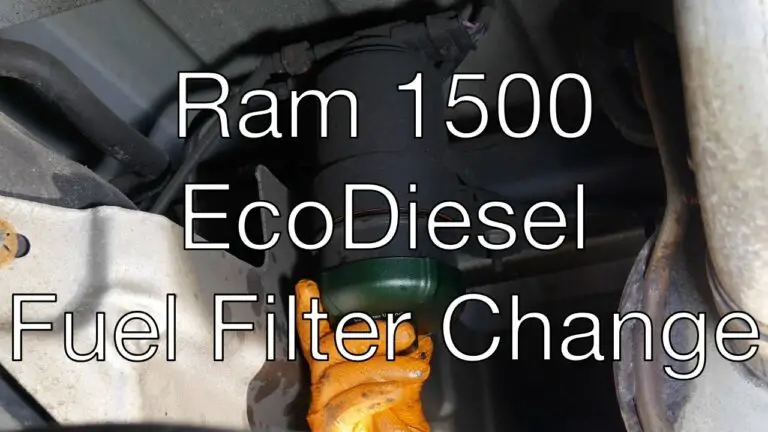
- Adhere to the new 10,000-mile fuel filter change interval.
Common Mechanical Failures (Beyond the HPFP)
Beyond the critical HPFP recall, 2022 EcoDiesel owners report several other significant mechanical problems.
Problem 1: Leaking Exhaust Gas Recirculation (EGR) Cooler
The Exhaust Gas Recirculation (EGR) system is a notorious weak point on virtually all modern diesel engines, and the EcoDiesel is no exception. The “Gen 3” engine features an updated dual (high and low pressure) EGR system, but it is still prone to internal coolant leaks.
Symptoms (The “Smoking Gun”):
- Mysterious Coolant Loss: This is the most common pre-failure sign. Owners report having to add 8 to 16 ounces of coolant periodically to keep the level up. A dealer may dismiss this as normal evaporation, but it is often the first sign of an internal leak.
- Strong Exhaust Odor: A distinct, strong smell from the exhaust when idling, different from a typical diesel smell.
- Gooey, Tar-Like Soot: This is the definitive diagnostic sign. When inspecting the EGR diffuser pipe (where it enters the intake manifold), a dry soot is normal. However, a “gooey tar-like substance” indicates that coolant is leaking from the cooler, mixing with the exhaust soot, and being deposited in the intake.
- Check Engine Codes: A failing EGR cooler or bypass valve can trigger codes, most commonly P26FB-00 (“EGR cooler bypass control stuck closed bank 1”).
This issue is prevalent enough that it has been the subject of class-action lawsuit investigations.
Problem 2: Oil Cooler Failures
Another widely reported issue is the failure of the engine oil cooler. This component uses the engine’s coolant to regulate oil temperature.
This problem presents a significant “catch-22” for owners. The oil cooler failures are often exacerbated by high engine temperatures, which occur specifically when towing. The EcoDiesel’s #1 selling point is its torque-rich 12,560-pound towing capacity and its excellent fuel economy while doing so. However, using the truck as it was intended puts significant stress on this known weak part, increasing the likelihood of failure.
Symptoms are a classic sign of cross-contamination:
- The appearance of a milky, brown “milkshake” or sludge in the coolant reservoir, which is oil that has been forced into the cooling system.
- Overheating, as the oil-contaminated coolant can no longer dissipate heat effectively.
Problem 3: Low-Mileage Bottom End Failures
Perhaps the most alarming issue, given the “Gen 3” redesign, is the persistence of bottom-end engine failures. The Gen 3 EcoDiesel received an updated crankshaft specifically to prevent the connecting rod and main bearing failures that plagued earlier generations.
Despite this, the problem has not been fully eliminated. What is most concerning is the mileage at which these failures occur. Repair shops and owners report catastrophic failures of the connecting rods or main bearings “before the vehicle hits 20,000 miles, and sometimes even earlier”. Forum reports echo this, with spun bearings at 37,000 miles and total engine failure at 43,000 miles.
This type of failure at such low mileage almost certainly points to “manufacturing defects, such as improperly assembled components” , rather than owner abuse or neglect.
EcoDiesel Repair Costs: An Owner’s Financial Reality
For a prospective buyer, understanding the out-of-warranty financial risk is paramount. The EcoDiesel is not an inexpensive engine to maintain or repair. Routine dealer maintenance, such as an oil change and fuel filter replacement, can cost around $750. The failure costs, however, are on another level.
Visual 2: Estimated 2022 Ram EcoDiesel Repair Costs (Out of Warranty)
| Component Failure | Estimated Parts Cost | Estimated Labor Cost | Total Estimated Cost | Notes |
| HPFP Failure (Full System) | $3,000 – $8,000+ | $5,000 – $10,000+ | $10,000 – $18,000+ | This is the ONLY correct fix. Requires full fuel system replacement. |
| HPFP Only (Incorrect Fix) | ~$682 | ~$342 – $501 | ~$1,024 – $1,183 18 | WARNING: Will not fix the issue. The new pump will be destroyed by system debris. |
| EGR Cooler Assembly | $595 – $869 (Aftermarket) | $500 – $1,000 | $1,100 – $1,900 | Aftermarket “H-Core” designs are reportedly more durable. |
| Oil Cooler Replacement | $65 – $250 | $1,000 – $2,000 | $1,200 – $2,300 | Labor-intensive repair due to component location. |
Real-World Reliability: What Owners Actually Say
Technical data and recall reports only tell part of the story. Owner sentiment reveals a sharp divide based almost entirely on use case.
The Good: “Love the Mileage, Love How Comfy It Is”
Many owners are “very happy” with their 2022 EcoDiesel and report flawless operation, even at high mileage.
- One owner of a 2022 Rebel reported 98,000 miles with no issues other than a bad DEF nozzle.
- Another 2022 owner reported 70,000 miles of hard driving with “maintenance only”.
The appeal is undeniable. Owners consistently praise the 28-32 MPG on the highway , the “luxury amenities”, and the quiet, powerful towing. One owner who tows a fishing boat reported averaging 16 MPG, a massive improvement from the 4-6 MPG they got in their 5.7L Hemi.
The Bad & The Big “But”: The EcoDiesel Hates Short Trips
Herein lies the central conflict of EcoDiesel ownership: its reliability is entirely dependent on its use case. This engine is not a daily commuter or a grocery-getter.
Owners and mechanics repeatedly warn that the EcoDiesel “require[s] to be driven around a half hour every time you start it up or you will run into problems”.
The reason is the emissions system. Short, stop-and-go trips do not allow the engine and exhaust to reach full operating temperature. This has two negative effects:
- It clogs the Diesel Particulate Filter (DPF) and EGR system with soot.
- It prevents the DPF from running its “regeneration” cycle, which is a high-heat process that burns off the accumulated soot.
This is a common issue with all modern diesel engine emissions systems, but the EcoDiesel seems particularly sensitive to it. An owner who only takes 10-minute trips to the store will likely face a future of clogged components and expensive repair bills.
Why Was the Ram 1500 EcoDiesel Discontinued?
If the “Gen 3” engine was so powerful and efficient, why did Ram kill it? The official reason is only part of the story.
The Official Reason: Ram announced the “Last Call” in September 2022, confirming production would end in January 2023.4 The official strategy is a “shift towards electrification,” as Ram pivots to its new 3.0L Hurricane twin-turbo I-6 engine and the 2025 Ramcharger electric truck.
The Real Reasons (A “Death by a Thousand Cuts”):
The PR-friendly “electrification” narrative masks a more complex reality. The EcoDiesel was likely discontinued due to a combination of factors:
- Damaged Reputation: The failures of the Gen 1 and 2 engines, combined with the “Ecodiesel emissions scandal” , had already severely damaged buyer trust. Even with the superior Gen 3, forum users noted that “nobody wants to buy it because they would rather buy Chevy’s diesel”. The 2022 HPFP recall on the “fixed” engine was the final nail in the coffin.
- Astronomical Emissions Costs: The complex array of emissions-control devices (EGR, DPF, SCR) are expensive to manufacture, warranty, and maintain.
- Fierce In-Brand Competition: The EcoDiesel was made redundant by Ram’s own product pipeline. The new 3.0L Hurricane Twin-Turbo I-6 engine is set to deliver V8 power with 6-cylinder efficiency, effectively replacing both the 5.7L Hemi and the 3.0L EcoDiesel.
- Fierce External Competition: The EcoDiesel did not exist in a vacuum. Ford killed its 3.0L PowerStroke in 2021 because its own EcoBoost V6 was more popular. Meanwhile, GM’s 3.0L Duramax I6 proved to be smoother and more reliable, becoming the “only one left”.
EcoDiesel vs. Duramax vs. PowerStroke: Why GM Won the Half-Ton Diesel War
To understand the EcoDiesel’s failure, one must look at its competitors. For a brief period, all three Detroit automakers offered a light-duty diesel.
Visual 3: 2022-Era Half-Ton Diesel Powertrain Comparison
| Spec | Ram 3.0L EcoDiesel (Gen 3) | GM 3.0L Duramax (LM2) | Ford 3.0L PowerStroke |
| Engine Layout | 3.0L V6 | 3.0L Inline-6 (I6) | 3.0L V6 |
| Horsepower | 260 hp | 277 hp | 250 hp |
| Torque | 480 lb-ft | 460 lb-ft | 440 lb-ft |
| Fuel Pump Type | Bosch CP4.2 | Bosch (Not CP4.2) | Bosch CP4.2 |
| Status | Discontinued (Jan 2023) | Still in Production | Discontinued (2021) |
The data in this table tells the entire story. The GM 3.0L Duramax is the “only one left”. It succeeded for two key reasons:
- Superior Design: As an Inline-6, the Duramax is inherently balanced and offers “smooth and linear power delivery.” In contrast, the EcoDiesel V6 was noted for “considerable acceleration delay”.
- Reliability: Most importantly, GM’s engineers did not use the catastrophic Bosch CP4.2 fuel pump.
Both the Ram EcoDiesel and the Ford PowerStroke were built with the problematic CP4.2 pump, and both engines are now discontinued.
Final Verdict: Should You Buy a 2022 Ram 1500 EcoDiesel?
The 2022 Ram 1500 EcoDiesel is a high-risk, high-reward vehicle. It offers a “luxury-grade interior” and levels of fuel efficiency and towing torque that no half-ton V8 can touch. However, this undeniable appeal is directly tied to catastrophic financial risks.
Avoid this truck if:
- You are a city driver or primarily take short, stop-and-go trips (under 30 minutes). Your driving habits will clog the emissions system.
- You are looking for low-maintenance, “gas-and-go” reliability. This engine requires meticulous care.
- You cannot, under any circumstances, afford a surprise $10,000 – $18,000 repair bill for a fuel system replacement.
Consider this truck ONLY if all the following are true:
- The vehicle has a documented service history and has already had the HPFP recall (NHTSA 23V-263) completed by a certified dealer.
- You purchase a comprehensive, top-tier extended warranty and have verified in writing that it explicitly covers the fuel system (including injectors) and the emissions system (EGR, DPF).
- You are a high-mileage (20,000+ miles/year) highway driver who tows regularly and will work the engine hard, keeping it hot and clean.
- You are willing to be meticulous about preventative maintenance: using a fuel lubricity additive with every fill-up and never letting the tank drop below 1/4 full.
2022 Ram EcoDiesel Problems: Frequently Asked Questions
Q1: What is the main recall on the 2022 Ram EcoDiesel?
The most critical recall is NHTSA campaign 23V-263 (which is related to 22V767000). It addresses a potential failure of the Bosch CP4. high-pressure fuel pump (HPFP). This pump can fail and send metal debris throughout the entire fuel system, causing engine stall and increasing the risk of a crash.
Q2: Is the 2022 “Gen 3” EcoDiesel reliable?
The Gen 3 (2020-2023) is considered more reliable than the problematic Gen 1 and 2 engines, as it fixed known issues with the bottom end and EGR. However, it was still built with the faulty CP4. fuel pump, meaning it carries the inherent risk of a catastrophic, $10,000 – $18,000 fuel system failure.
Q3: Why was the Ram 1500 EcoDiesel discontinued?
Ram officially ended production in January 2023 to focus on its new 3.0L Hurricane I-6 engine and its electrification strategy (like the 2025 Ramcharger). Unofficially, its reputation was severely damaged by years of reliability issues, emissions scandals, and high maintenance costs, and it could no longer compete with the more reliable GM 3.0L Duramax.
Q4: What is the out-of-warranty cost for an EcoDiesel HPFP failure?
If the HPFP fails and contaminates the fuel system, the only correct fix is a full system replacement. Owners and mechanics report out-of-warranty costs between $10,000 and $18,000. A simple pump replacement (~$1,100) will not fix the problem and will fail again.
Q5: Can I prevent 2022 EcoDiesel problems?
You can mitigate (but not eliminate) risks. Owners must avoid short trips and drive the truck at highway speeds for at least 30 minutes regularly to allow the emissions system to regenerate. Using a high-quality diesel fuel additive for lubrication 19 and never letting the fuel tank drop below 1/4 full 16 are also highly recommended to protect the fragile HPFP.