2025 Ford F-350 Towing Capacity Chart: The Definitive Guide

The 2025 Ford F-350 Super Duty stands as a titan in the heavy-duty truck segment, engineered to move immense loads with confidence. However, its capability isn’t a single, simple number. The true towing capacity of an F-350 is a complex calculation, a final figure derived from a matrix of critical choices involving the engine, drivetrain, axle configuration, and hitch type. Understanding these variables is essential to configuring a truck that meets, but doesn’t dangerously exceed, your specific needs.
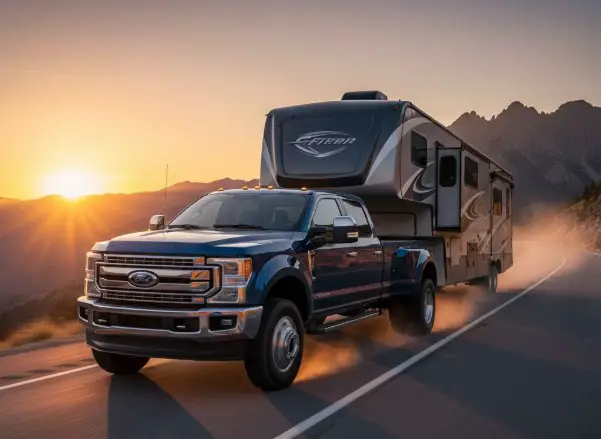
To satisfy the immediate query, the F-350 boasts staggering peak capabilities when properly configured. The maximum gooseneck towing capacity reaches an incredible 38,000 pounds, while its maximum payload capacity tops out at a best-in-class 8,000 pounds. These headline-grabbing numbers are a testament to the truck’s robust engineering, but they are achieved under very specific, and often mutually exclusive, conditions. For instance, the truck configured for maximum payload is not the same truck configured for maximum towing.
Ford F-350 Super Duty
A Visual Guide to Towing Capacity
Maximum Gooseneck Towing Capacity
The Ford F-350 Super Duty is engineered for the most demanding jobs. When properly configured with the High-Output Power Stroke® V8 Turbo Diesel, it achieves a class-leading maximum gooseneck towing capacity. This infographic breaks down how different configurations affect its hauling power.
The Power Behind the Pull: Engine Options
The foundation of the F-350’s capability lies in its powerful engine lineup. Each engine offers a different balance of horsepower and torque, directly impacting towing performance. Higher torque, in particular, is crucial for getting heavy loads moving.
Conventional Towing Capacities
Conventional towing utilizes a hitch on the truck’s frame. While the most common method, it has lower limits than 5th-wheel or gooseneck setups. The diesel engines offer a significant advantage here for heavier trailers.
5th-Wheel Towing Capacities
A 5th-wheel hitch mounts in the truck bed over the rear axle, allowing for greater stability and much higher towing capacities. This is the preferred method for large RVs and heavy-duty commercial trailers.
Gooseneck Towing: The Ultimate Capacity
Similar to a 5th-wheel, a gooseneck hitch also mounts in the bed, providing maximum stability and unlocking the F-350’s highest towing potential. The High-Output diesel engine is required to reach the peak 40,000 lbs capacity.
Key Factors That Influence Towing
Drivetrain (4×2 vs. 4×4)
Typically, 4×2 (RWD) trucks have slightly higher towing capacities because the 4×4 system adds weight, which reduces the gross combined weight rating (GCWR) available for the trailer.
Cab & Bed Size
Larger cabs (Crew Cab) and longer beds add weight to the truck itself. A lighter configuration, like a Regular Cab, often yields the highest possible tow rating because more of the GCWR is allocated to the trailer.
Axle Ratio
A higher numerical axle ratio (e.g., 4.30 vs. 3.73) provides more torque to the wheels, increasing the truck’s ability to pull heavy loads from a standstill. This is often a required option for achieving maximum tow ratings.
This guide will dissect every factor that contributes to the F-350’s final tow rating, providing detailed charts and expert analysis to help you navigate the configuration process.
| Capability Metric | Maximum Rating (lbs.) | Required Configuration |
| Max Conventional Towing | 28,000 | 6.7L High-Output Power Stroke® V8 Diesel, Dual Rear Wheel (DRW), 4×4, Crew Cab |
| Max 5th-Wheel/Gooseneck Towing | 38,000 | 6.7L High-Output Power Stroke® V8 Diesel, Dual Rear Wheel (DRW), Regular Cab, Gooseneck Hitch |
| Max Payload Capacity | 8,000 | 6.8L Gas V8, Dual Rear Wheel (DRW), Regular Cab, 4×2, Heavy-Duty Payload Package |
Powering the Pull: A Breakdown of 2025 F-350 Engine Options
At the core of the F-350’s capability is its powertrain. Ford offers four distinct engine options for the 2025 model year, each designed to excel in different applications. All engines are paired with a sophisticated 10-speed TorqShift® automatic transmission that ensures power is delivered smoothly and efficiently across the entire powerband.
- 6.8L Gas V8: This is the standard engine for most of the F-350 lineup. It produces a formidable 405 horsepower and 445 lb-ft of torque. While it has the lowest torque figure of the group, its relatively light weight is a key factor in enabling the F-350 to achieve its maximum payload capacity of 8,000 pounds, making it an excellent choice for applications focused on in-bed hauling.
- 7.3L Gas V8 (“Godzilla”): As the upgraded gasoline option, the 7.3L V8 offers a significant boost in performance, delivering 430 horsepower and 485 lb-ft of torque. This engine strikes a compelling balance between raw power for towing and the payload advantages of a gasoline powertrain, making it a versatile choice for a wide range of demanding tasks.
- 6.7L Power Stroke® V8 Turbo Diesel: A legend in the heavy-duty world, the standard Power Stroke® diesel is engineered for serious towing. It generates 475 horsepower and a massive 1,050 lb-ft of torque, with that pulling power available low in the RPM range where it’s most needed to get heavy trailers moving.
- 6.7L High-Output (H.O.) Power Stroke® V8 Turbo Diesel: For those who require the absolute pinnacle of towing performance, the High-Output Power Stroke® is the undisputed champion. This engine is tuned to produce a class-leading 500 horsepower and an astounding 1,200 lb-ft of torque. It is the mandatory choice for achieving the F-350’s maximum tow ratings of up to 38,000 pounds.
The selection of an engine is the first and most critical step in defining a truck’s capabilities. However, it’s not simply a matter of choosing the most powerful option. The substantial weight of the diesel engines, while necessary for generating extreme torque, increases the truck’s curb weight. As will be explored later, this directly impacts the available payload capacity, creating a crucial trade-off between hauling and towing prowess.
| Engine | Type | Horsepower | Torque | Key Advantage |
| 6.8L V8 | Gasoline | 405 hp | 445 lb-ft | Enables Maximum Payload Capacity |
| 7.3L V8 | Gasoline | 430 hp | 485 lb-ft | Balanced Power & Strong Payload |
| 6.7L Power Stroke® | Turbo Diesel | 475 hp | 1,050 lb-ft | Exceptional Heavy Towing |
| 6.7L H.O. Power Stroke® | Turbo Diesel | 500 hp | 1,200 lb-ft | Ultimate/Extreme Towing |
The Complete 2025 Ford F-350 Towing Capacity Charts
The following tables provide a comprehensive breakdown of the 2025 Ford F-350’s towing capabilities. To find the specific rating for a particular configuration, locate the row that matches the desired engine, axle ratio, drivetrain, and cab/bed size. These figures represent the maximum loaded trailer weight and are sourced directly from Ford’s official towing guide to ensure accuracy.
Conventional Towing Capacity
Conventional towing, also known as “bumper pull,” utilizes a hitch receiver mounted to the truck’s frame. This is the most common method for towing utility trailers, many travel trailers, and large boats.
| Engine | Axle Ratio | Drivetrain | Cab/Bed Config. | Max Towing (lbs.) |
| 6.8L V8 | 3.73 | 4×2 | Regular Cab / 8′ Box | 14,700 |
| 6.8L V8 | 4.30 | 4×2 | Regular Cab / 8′ Box | 18,100 |
| 6.8L V8 (DRW) | 4.30 | 4×2 | Regular Cab / 8′ Box | 18,700 |
| 7.3L V8 | 3.73 | 4×4 | Crew Cab / 8′ Box | 17,800 |
| 7.3L V8 | 4.30 | 4×2 | Crew Cab / 8′ Box | 19,500 |
| 7.3L V8 (DRW) | 4.30 | 4×2 | Regular Cab / 8′ Box | 22,000 |
| 6.7L Power Stroke® | 3.31 | 4×4 | Crew Cab / 8′ Box | 22,900 |
| 6.7L Power Stroke® | 3.55 | 4×2 | SuperCab / 8′ Box | 23,200 |
| 6.7L Power Stroke® (DRW) | 4.10 | 4×4 | Crew Cab / 8′ Box | 27,000 |
| 6.7L H.O. Power Stroke® | 3.55 | 4×4 | Crew Cab / 8′ Box | 25,000 |
| 6.7L H.O. Power Stroke® (DRW) | 4.10 | 4×4 | Crew Cab / 8′ Box | 28,000 |
5th-Wheel & Gooseneck Towing Capacity
For the heaviest loads, 5th-wheel and gooseneck hitches are required. These systems mount in the truck’s bed directly over the rear axle, which allows for significantly higher weight capacities and provides a more stable, integrated towing experience compared to a conventional hitch. This method is standard for large RVs, horse trailers, and commercial flatbeds.
| Engine | Axle Ratio | Drivetrain | Cab/Bed Config. | Max Towing (lbs.) |
| 6.8L V8 (SRW) | 4.30 | 4×2 | Regular Cab / 8′ Box | 18,000 |
| 6.8L V8 (DRW) | 4.30 | 4×2 | Regular Cab / 8′ Box | 18,900 |
| 7.3L V8 (SRW) | 4.30 | 4×2 | Regular Cab / 8′ Box | 22,400 |
| 7.3L V8 (DRW) | 4.30 | 4×2 | Regular Cab / 8′ Box | 22,500 |
| 6.7L Power Stroke® (SRW) | 3.55 | 4×2 | Regular Cab / 8′ Box | 23,800 |
| 6.7L Power Stroke® (DRW) | 4.10 | 4×2 | Regular Cab / 8′ Box | 36,500 |
| 6.7L H.O. Power Stroke® (SRW) | 3.55 | 4×2 | Regular Cab / 8′ Box | 27,600 |
| 6.7L H.O. Power Stroke® (DRW) | 4.10 | 4×2 | Regular Cab / 8′ Box | 38,000 |
Decoding the Numbers: Key Factors That Define Your F-350’s True Towing Limit
The charts above clearly illustrate that a truck’s tow rating is not a fixed value. It is the result of a series of interconnected engineering choices. Understanding these factors is the key to configuring a truck that is perfectly suited—and perfectly safe—for your workload.
Single Rear Wheel (SRW) vs. Dually (DRW)
The most visually obvious and impactful choice is the rear axle configuration.
- SRW (Single Rear Wheel): This is the standard setup with one wheel on each side of the rear axle. SRW trucks are more maneuverable, have a narrower profile that is easier to park and navigate in tight spaces, and generally offer a more comfortable ride when unloaded. They are perfectly capable for a vast range of towing tasks.
- DRW (Dual Rear Wheel or “Dually”): This setup features two wheels on each side of the rear axle. The primary benefit is a massive increase in stability and weight-bearing capacity. The load is distributed across four rear tires instead of two, creating a wider, more planted base that drastically reduces trailer sway and improves control with extremely heavy loads. This makes a DRW configuration almost mandatory for safely towing the heaviest 5th-wheel RVs and commercial trailers. The trade-offs include a higher purchase price, increased maintenance costs (six tires instead of four), and the challenges of maneuvering a wider vehicle in daily driving situations.
Axle Ratios Explained
The axle ratio is one of the most critical yet least understood components of a tow vehicle’s specification sheet. It describes the ratio between the revolutions of the driveshaft and the revolutions of the axle. A higher numerical ratio, such as 4.30:1, means the driveshaft turns 4.3 times for every single turn of the wheels.
Think of it like the gears on a bicycle. A lower gear (higher numerical ratio) makes it much easier to start pedaling from a stop or climb a steep hill, but you have to pedal much faster to maintain speed. A higher gear (lower numerical ratio) is great for cruising efficiently on flat ground but makes starting difficult. For a truck, a higher axle ratio like 4.10 or 4.30 acts as a torque multiplier, giving the truck superior leverage to get a heavy load moving from a standstill.
This is why the highest tow ratings are always paired with higher numerical axle ratios. The compromise is that the engine must run at a higher RPM at highway speeds, which can negatively impact fuel economy. A lower ratio like 3.55 offers a better balance for trucks that see more unloaded highway miles.
Drivetrain (4×2 vs. 4×4)
The choice between a two-wheel-drive (4×2) and a four-wheel-drive (4×4) system also affects towing. A 4×4 system provides significantly better traction on low-grip surfaces like wet boat ramps, muddy construction sites, or snowy roads. However, the additional components of the 4×4 system (front differential, transfer case, front driveshaft) add several hundred pounds to the truck’s curb weight. This extra weight slightly reduces the maximum towing and payload capacity compared to an identical 4×2 model.
Cab Size and Wheelbase
The F-350 is available in Regular Cab, SuperCab, and Crew Cab configurations, with either a 6.75-foot or 8-foot bed. These choices determine the truck’s wheelbase—the distance between the front and rear axles. A longer wheelbase, such as that on a Crew Cab with an 8-foot bed, provides greater inherent stability when towing a long trailer. The extended length helps to counteract the leveraging forces a trailer can exert on the truck, reducing the potential for trailer sway, a common concern among towers.
Ultimately, configuring the ideal F-350 is an exercise in balancing competing priorities. The truck that can tow 38,000 pounds is a Regular Cab DRW diesel with a high axle ratio—a specialized workhorse that may not be practical for daily driving. A user must realistically assess their primary use case. If the truck spends 95% of its time as a commuter and 5% towing a 15,000-pound trailer, a more balanced configuration like an SRW diesel with a 3.55 axle ratio might be the more logical and economical choice.
Towing vs. Payload: The Critical Balancing Act You Can’t Ignore
One of the most common points of confusion for heavy-duty truck buyers is the relationship between towing capacity and payload capacity. They are not independent figures; they are intrinsically linked, and for many, the payload rating is the more critical number.
First, it is essential to define the terms:
- Towing Capacity: The maximum weight a truck can pull behind it.
- Payload Capacity: The maximum weight a truck can carry in its bed and cab, including passengers, cargo, and the trailer’s tongue weight.
The payload capacity is calculated with a simple formula: Payload=GVWR−CurbWeight. The Gross Vehicle Weight Rating (GVWR) is the maximum allowable weight of the truck itself when fully loaded, and the curb weight is the weight of the empty truck.
This formula reveals a crucial trade-off. The powerful 6.7L Power Stroke® diesel engines are significantly heavier than their gasoline counterparts. This increased engine weight raises the truck’s curb weight. Since the GVWR is fixed for a given configuration, a higher curb weight results in a lower available payload.
This is why the F-350’s maximum 8,000-pound payload is achieved with the lighter 6.8L gas engine, while the High-Output diesel model, the undisputed towing champion, has a lower maximum payload of 6,935 pounds.
This becomes critically important when towing a 5th-wheel or gooseneck trailer. The downward force the trailer exerts on the in-bed hitch, known as pin weight, counts directly against the truck’s payload capacity. For these trailers, a safe pin weight is typically 15-25% of the total loaded trailer weight.
Consider this real-world scenario: An F-350 DRW has a tow rating of 30,000 pounds and a payload capacity of 6,500 pounds listed on its door jamb sticker. The owner wants to tow a 28,000-pound 5th-wheel RV. At a 20% pin weight, that RV will place 5,600 pounds of force directly into the truck’s bed. Add 500 pounds for passengers and 200 pounds for gear in the cab, and the total payload is 6,300 pounds—safely within the 6,500-pound limit. However, if that same trailer were loaded differently, resulting in a 25% pin weight (7,000 pounds), the truck would be 500 pounds over its payload capacity, even though it is well under its tow rating.
For this reason, for those towing heavy 5th-wheel trailers, the payload capacity listed on the vehicle’s Tire and Loading Information label is often the true limiting factor, not the advertised tow rating.
| Configuration Goal | Engine | Drivetrain/Axle | Max Payload (lbs.) | Max Towing (lbs.) |
| Maximize Payload | 6.8L Gas V8 | 4×2 / DRW | 8,000 | 18,900 |
| Maximize Towing | 6.7L H.O. Diesel | 4×2 / DRW | 6,935 | 38,000 |
Mastering the Lingo: A Glossary of Essential Towing Terms
To tow safely and legally, it is vital to understand the terminology used by manufacturers and regulators. Exceeding any of these ratings can lead to mechanical failure, dangerous driving conditions, and legal liability.
- GVWR (Gross Vehicle Weight Rating): The absolute maximum permitted weight of the fully-loaded truck, including the vehicle itself, all fluids, passengers, and all cargo in the cab and bed (including trailer tongue/pin weight). This rating is found on the Safety Compliance Certification Label on the driver’s side doorjamb.
- GCWR (Gross Combined Weight Rating): The absolute maximum permitted weight of the fully-loaded truck and the fully-loaded trailer combined. You must never exceed this total weight.
- Curb Weight: The weight of the truck with all standard equipment and a full tank of fuel, but with no passengers or cargo.
- Payload Capacity: The maximum weight of all passengers, cargo, and equipment that can be carried in a truck’s cab and bed. It is calculated by subtracting the truck’s curb weight from its GVWR.
- Tongue Weight / Pin Weight: The downward force that the trailer’s coupler exerts on the truck’s hitch. For safe towing, this should be 10-15% of the total trailer weight for a conventional trailer and 15-25% for a 5th-wheel or gooseneck trailer. This weight counts as payload.
Ford’s Smart Towing Technology: Your Digital Co-Pilot
Beyond raw power, the 2025 F-350 is equipped with a suite of advanced technologies designed to simplify the often-stressful task of towing heavy loads. These features act as a digital co-pilot, enhancing both safety and convenience.
- Pro Trailer Backup Assist™ & Pro Trailer Hitch Assist™: Reversing a trailer is notoriously difficult. This available system allows the driver to steer the trailer using a simple knob on the dashboard. The driver turns the knob in the direction they want the trailer to go, and the truck automatically handles the complex steering inputs. Pro Trailer Hitch Assist can automatically control the truck’s steering, throttle, and braking to align the hitch ball directly under the trailer coupler, streamlining the connection process.
- Onboard Scales & Smart Hitch: This innovative feature helps prevent overloading by estimating the weight of the cargo in the bed in real-time. The weight can be viewed on the center touchscreen, through the FordPass™ app, or via unique LED indicators in the taillights. The integrated Smart Hitch system measures the trailer’s tongue weight and provides guidance on the screen to help you properly distribute the trailer’s load for optimal balance and safety.
- Essential Towing Packages: To unlock the F-350’s full potential, specific factory packages are required. The 5th-Wheel/Gooseneck Prep Package is crucial for heavy towers, as it provides the under-bed frame mounting hardware necessary to install an in-bed hitch system. When considering these advanced features, it’s wise to review all available options to ensure your truck is perfectly equipped from the factory. For those planning a purchase, can help budget for these essential technologies.
What Can the 2025 F-350 Actually Tow?
Translating towing capacity numbers into real-world objects helps to contextualize the F-350’s immense strength. Here are some common heavy loads and the F-350 configurations they would likely require :
- Large 5th-Wheel RV: A luxurious 42-foot, triple-axle fifth-wheel camper can have a loaded weight of 18,000 to 22,000 pounds. This demands a diesel F-350, and a DRW configuration is highly recommended for the added stability required to safely manage such a large trailer.
- Multi-Horse Gooseneck Trailer: A four-horse gooseneck trailer with living quarters can easily weigh over 14,000 pounds when fully loaded with horses, hay, and gear. Any F-350 configuration can handle this, but a diesel SRW would provide effortless performance.
- Heavy Equipment: Transporting a large skid steer and attachments on a heavy-duty flatbed trailer can result in a combined weight of 13,000 to 15,000 pounds. For larger equipment like a small bulldozer or medium backhoe, which can exceed 20,000 pounds, a diesel DRW F-350 is the appropriate tool for the job.
- Large Boat: A 35-foot cabin cruiser on its trailer can weigh more than 16,000 pounds. This requires the significant torque of a Power Stroke® diesel engine to pull confidently, especially up steep boat ramps.
Frequently Asked Questions (FAQs)
What is the absolute maximum a 2025 Ford F-350 can tow?
The absolute maximum towing capacity for the 2025 Ford F-350 is 38,000 pounds. This rating is only achievable with a very specific configuration: the 6.7L High-Output Power Stroke® V8 Turbo Diesel engine, a dual-rear-wheel (DRW) axle, a Regular Cab, and a gooseneck hitch.
Do I need a dually (DRW) to tow a large RV?
While a Single Rear Wheel (SRW) F-350 can tow many travel trailers and smaller fifth-wheels, a Dual Rear Wheel (DRW) truck is highly recommended for any trailer exceeding 18,000 pounds or those with a large surface area. The dually’s wider stance provides a dramatic increase in stability and safety, especially in crosswinds or emergency maneuvers, making it the safer choice for the largest RVs.
What’s the difference between 5th-wheel and gooseneck towing?
Both are heavy-duty, in-bed hitch systems that place the trailer’s weight over the truck’s rear axle for superior stability. The primary difference is the connection mechanism. 5th-wheel hitches use a large, articulated plate and jaws that lock onto a “kingpin” on the trailer, common for RVs, and are known for providing a smoother, quieter ride. Gooseneck hitches use a simple ball mounted in the bed that connects to a coupler on the trailer, a design favored in agricultural and commercial applications for its simplicity and for leaving more usable bed space when the trailer is disconnected.
Why is the payload on my truck’s door sticker lower than the brochure says?
The payload capacity listed in a brochure represents the maximum possible value for that model, typically on a base-trim, 4×2, gas-engine truck with no options. The payload sticker on your driver’s side doorjamb (the Tire and Loading Information Label) is specific to your vehicle as it was built. Every option added—from the heavier diesel engine and 4×4 system to a sunroof or a higher trim package like King Ranch or Platinum—adds to the truck’s curb weight, which in turn reduces the available payload.
Do I need a special license (CDL) to tow with an F-350?
It depends on the total weight of your truck and trailer. Regulations vary by state, but federal guidelines often require a Commercial Driver’s License (CDL) when the Gross Combined Weight Rating (GCWR) of the truck and trailer exceeds 26,001 pounds. Many F-350 configurations, when paired with a heavy trailer, can easily surpass this threshold. It is crucial to check the specific regulations in your state to ensure compliance. If you’re ready to find the perfect truck for your needs.
Final Verdict: Configuring Your Ultimate Towing Machine
The 2025 Ford F-350 Super Duty is unequivocally a titan of towing and hauling capability. Its potential is vast, but unlocking that potential requires a deliberate and informed approach to its configuration. The “best” F-350 is not the one with the highest numbers on a chart, but the one that is perfectly tailored to the demands of its owner.
The decision-making process can be distilled into a clear framework:
- Prioritize Your Primary Need: Is your main task hauling heavy loads in the bed (payload) or pulling heavy trailers (towing)? Your answer will guide your engine choice, with gasoline engines favoring payload and diesel engines dominating towing.
- Quantify Your Load: Be realistic about the maximum weight you will need to tow. This will determine whether the maneuverability of an SRW is sufficient or if the uncompromising stability of a DRW is required.
- Optimize for Your Driving: Select an axle ratio that provides the pulling power you need without unduly compromising fuel efficiency during the miles you spend unloaded.