
Car Outside Temperature Sensor Problems: Symptoms, Locations & Fixes 2026

If your car shows the wrong outside temperature, stays stuck on one reading, displays an extremely low temperature, or does not show an outside temperature at all, the ambient air temperature sensor may be malfunctioning.
However, a bad sensor is not always the cause.
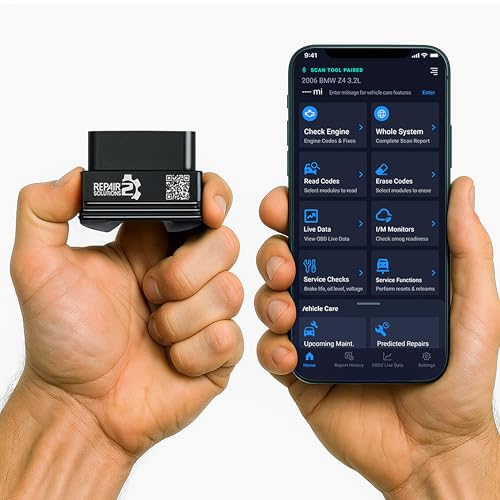



Outside-temperature readings can also be affected by vehicle speed, heat from the radiator, direct sunlight, damaged wiring, a disconnected sensor, front-bumper repairs, or simply the way the vehicle’s computer filters and updates the temperature reading.
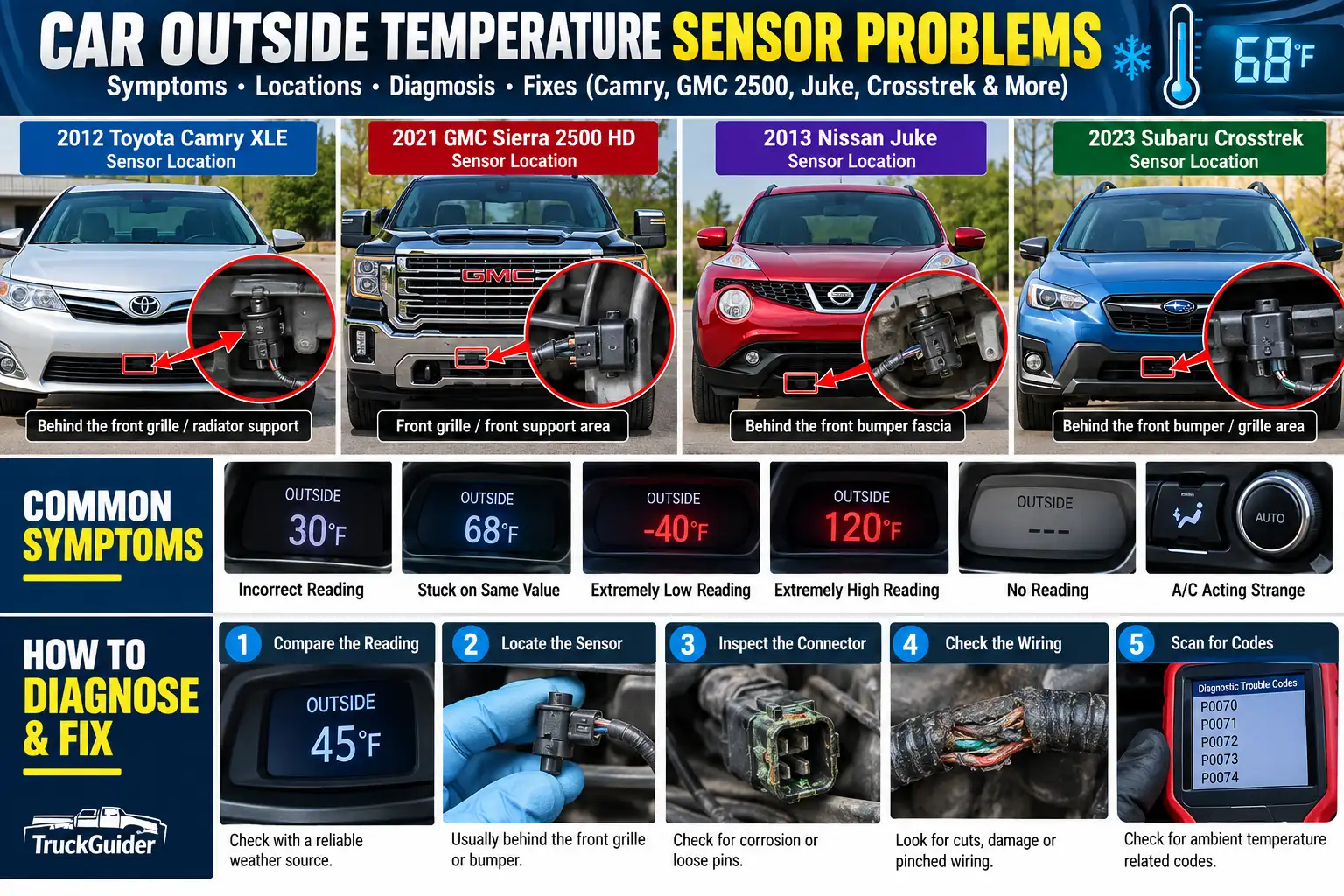
This guide explains how a car outside temperature sensor works, common symptoms and causes, how to diagnose the problem, and what to check on specific vehicles including the 2012 Toyota Camry XLE, 2021 GMC Sierra 2500 HD, 2013 Nissan Juke, and 2023 Subaru Crosstrek.
Quick Answer: Why Is My Car Outside Temperature Sensor Not Working?
If your outside temperature display is incorrect or not updating, the most common causes are:
- Failed ambient air temperature sensor
- Disconnected sensor connector
- Broken or damaged sensor wiring
- Corroded electrical terminals
- Front-end accident or bumper damage
- Sensor positioned incorrectly after repairs
- Road debris damaging the sensor
- Heat from the radiator affecting the reading
- Delayed temperature updating programmed into the vehicle
- Instrument cluster or climate-control module issue
In many vehicles, the ambient temperature sensor is located behind the front grille or bumper where outside air can flow across it.
A temperature reading that remains extremely low—often around -40°F/-40°C on some systems—can indicate an open sensor circuit, disconnected connector, or wiring fault rather than the actual temperature.
What Is an Outside Temperature Sensor?
The outside temperature sensor is also called an:
- Ambient air temperature sensor
- Ambient temperature sensor
- Outside air temperature sensor
- Exterior temperature sensor
It is normally a small thermistor that changes electrical resistance according to the surrounding air temperature.
The vehicle’s control system converts that signal into the temperature displayed on the dashboard or information screen.
Toyota describes its outer ambient temperature sensor as a component that measures exterior air temperature and sends that information to connected vehicle systems.
Depending on the vehicle, ambient temperature information may also be used by:
- Automatic climate control
- A/C operation
- Defrosting logic
- Instrument cluster
- Ice or freezing-temperature warnings
- Other body-control functions
That means a failed outside temperature sensor can sometimes cause more than an incorrect dashboard reading.
Common Symptoms of a Bad Outside Temperature Sensor
1. Outside Temperature Reading Is Wrong
The dashboard might show 30°F when the actual temperature is 70°F, for example.
A small difference does not automatically mean the sensor has failed. Sensor location, vehicle heat, sunlight, road temperature, and driving conditions can temporarily affect the displayed value.
Large and persistent differences deserve further diagnosis.
2. Temperature Display Is Stuck
The thermometer may stay at the same temperature even after weather conditions change significantly.
Before replacing the sensor, drive the vehicle at normal road speed for several minutes. Some vehicles intentionally delay changes to the outside-temperature display.
3. Extremely Low Temperature Reading
An unrealistic reading such as approximately -40°F can indicate that the control module is seeing an open circuit.
Possible causes include:
- Sensor unplugged
- Broken wire
- Corroded connector
- Failed sensor
A P0073-related Camry diagnostic guide, for example, notes that an extreme fixed low reading can accompany an open ambient-temperature sensor circuit.
4. Extremely High Temperature Reading
A shorted sensor circuit or electrical fault can cause an unusually high reading.
Do not immediately replace the sensor without inspecting its connector and wiring.
5. Temperature Changes Very Slowly
Slow updating can actually be normal.
Manufacturers sometimes filter the reading so heat from the engine, radiator, pavement, or stopped traffic does not immediately cause an inaccurate temperature increase.
6. Automatic Climate Control Acts Strangely
Because some automatic HVAC systems use outside-temperature information, a bad ambient sensor may contribute to:
- Incorrect automatic fan behavior
- Weak cooling
- Unexpected heating
- A/C compressor operating differently than expected
GM states that its OE ambient temperature sensors are used with automatic climate-control systems and can restore outside-temperature display operation when the original sensor has failed.
What Causes an Outside Temperature Sensor to Fail?
Road Debris
Because the sensor is frequently installed near the front grille, stones, dirt, insects, water, and other road debris can damage it.
Front-End Collision
Even a relatively minor bumper impact can damage:
- The sensor
- Its mounting bracket
- Connector
- Harness wiring
Bumper or Grille Repair
If your outside temperature stopped working immediately after bumper, grille, radiator, condenser, or collision repair, check whether the sensor was accidentally left disconnected.
Wiring Damage
Inspect the harness for:
- Cuts
- Pinched wiring
- Broken insulation
- Loose terminals
- Corrosion
- Previous repair damage
Moisture and Corrosion
The sensor operates near the front of the vehicle and is continuously exposed to environmental conditions.
Water entering a damaged connector can increase resistance or interrupt the circuit.
Failed Thermistor
The sensor itself can eventually fail internally.
How to Diagnose Car Outside Temperature Sensor Problems
Before buying a replacement sensor, perform these checks.


Step 1: Compare the Reading With Actual Outdoor Temperature
Check a reliable nearby weather reading.
Do not expect the vehicle to match another thermometer exactly.
A few degrees of difference can be normal.
Step 2: Drive the Vehicle
Drive approximately 10–15 minutes at normal road speed.
If the temperature begins correcting itself, the system may be functioning normally.
This is especially important after:
- Leaving a garage
- Driving through a tunnel
- Parking in direct sunlight
- Idling for a long time
- Starting after the vehicle has been parked
Step 3: Locate the Ambient Temperature Sensor
Start near the:
- Front grille
- Radiator support
- Front bumper
- A/C condenser area
Exact location varies by make, model, year, engine, and equipment package.
Step 4: Inspect the Sensor
Check whether it is:
- Missing
- Broken
- Hanging loose
- Covered with debris
- Installed near an abnormal heat source
Step 5: Inspect the Connector
Disconnect the connector only when safe to do so.
Look for:
- Green corrosion
- Bent terminals
- Water
- Loose pins
- Broken locking tabs
Step 6: Inspect the Wiring Harness
Pay particular attention if the vehicle recently had:
- Collision repairs
- Grille replacement
- Radiator replacement
- Condenser replacement
- Bumper work
Step 7: Scan for Diagnostic Trouble Codes
Some vehicles can store ambient-temperature-related faults.
Possible generic OBD-II codes include:
- P0070 – Ambient Air Temperature Sensor Circuit
- P0071 – Ambient Air Temperature Sensor Range/Performance
- P0072 – Ambient Air Temperature Sensor Circuit Low
- P0073 – Ambient Air Temperature Sensor Circuit High
- P0074 – Ambient Air Temperature Sensor Circuit Intermittent
Code availability and diagnostic strategy vary by vehicle.
Outside Temp Not Working on a 2012 Camry XLE
One of the most common related searches is:
“outside temp not working 2012 Camry XLE”
For the 2012 Toyota Camry, the first things to inspect are the ambient temperature sensor, its connector, and the wiring near the front of the vehicle.
The ambient sensor on the XV50-generation Camry is located in the front grille/radiator-support area, where it can measure incoming outside air.
Common 2012 Camry Outside Temperature Problems
Possible causes include:
- Failed ambient temperature sensor
- Sensor disconnected during bumper work
- Damaged connector
- Broken wiring near the grille
- Corrosion inside the connector
- Sensor damaged by road debris
- Instrument-cluster or communication problem
What Should You Check First?
Look through or behind the front grille and inspect the sensor.
If your Camry recently had front bumper, condenser, grille, radiator, or collision repair, checking the connector should be one of your first steps.
If the Display Shows -40°F
A fixed extreme-low reading can indicate an open circuit.
Check whether the sensor connector has been disconnected before purchasing a new sensor.
If the Temperature Is Only Slightly Incorrect
Drive the vehicle before diagnosing it as a failed sensor.
Heat around the front of the vehicle can influence readings while parked or moving slowly.
2021 GMC 2500 Outside Temperature Sensor Location and Not Working
Owners also search for:
“2021 GMC 2500 outside temperature sensor location”
On the GMC Sierra 2500 HD, the ambient air temperature sensor is generally located toward the front grille/front support area, positioned where outside airflow can reach the sensor.
Repair information for Sierra HD models describes the sensor as being installed behind or around the grille/front-support area, although the exact attachment point can vary according to grille, engine and equipment configuration.
GM’s current parts catalog also lists an OE ambient air temperature sensor application covering the 2021 Sierra 2500 HD.
If Your 2021 GMC 2500 Outside Temperature Is Not Working
Check:
- Sensor connector behind the grille
- Front wiring harness
- Broken mounting clips
- Collision damage
- Corrosion
- Harness damage near grille or radiator components
If the display is dramatically incorrect, using a scan tool to compare the computer’s ambient-temperature data with the dashboard reading can help determine whether the fault begins at the sensor or farther downstream.




Which Sensor Is Affected by Outside Temperature on a 2013 Nissan Juke?
For the 2013 Nissan Juke, the sensor responsible for measuring actual outdoor air temperature is the ambient temperature sensor.
It should not be confused with the Juke’s:
- Cabin temperature sensor
- Sunload sensor
- Automatic light sensor
- Engine coolant temperature sensor
These sensors perform different functions.
The 2013 Juke service information places the ambient sensor behind the front bumper fascia. Removing the sensor involves accessing the bumper-fascia area, releasing the retaining tab, and disconnecting its electrical connector.
Why a 2013 Juke Temperature Reading May Seem Stuck
The Juke’s display does not simply show every instantaneous change detected by the sensor.
Service information states that the combination meter calculates ambient temperature using several signals, including the ambient sensor and vehicle speed. It also notes that the indicated temperature is not increased when vehicle speed is below about 20 km/h (12 mph).
This filtering helps prevent engine heat and stopped traffic from creating misleading outside-temperature readings.
Therefore, if your Juke’s temperature reading appears stuck while parked, idling, or traveling slowly, drive the vehicle at normal road speed before assuming the sensor has failed.
2023 Crosstrek Thermometer Stuck: Is the Sensor Bad?
Another useful long-tail query is:
“2023 Crosstrek thermometer stuck”
A temperature display that seems temporarily stuck on a 2023 Subaru Crosstrek does not automatically mean the sensor is defective.
Subaru specifically states that the outside-temperature indication can be delayed:
- While the vehicle is parked
- While driving at low speed
- When outside temperature changes suddenly
- When entering or exiting underground parking
- When passing through a tunnel
- After starting the engine following a period of parking
What Should You Do?
Drive the Crosstrek normally for several minutes and watch whether the reading gradually updates.
If it begins changing, the system is probably behaving as designed.
If the reading remains completely unchanged through significantly different temperatures and extended normal-speed driving, inspect the ambient sensor circuit.
Possible problems include:
- Failed ambient sensor
- Loose connector
- Damaged front harness
- Collision damage
- Electrical connection fault
- Control-module or display issue
Crosstrek Ice Warning
The 2023 Crosstrek can also display an icy-road warning around 37°F (3°C). Subaru cautions that the warning and outside-temperature reading should be treated as a guide rather than a direct measurement of road-surface temperature.
Can You Reset an Outside Temperature Sensor?
Usually there is no universal “ambient temperature sensor reset” procedure that works across all cars.
In many vehicles, the temperature display recalculates automatically after:
- Starting the vehicle
- Driving at sufficient speed
- Receiving a plausible sensor signal
- Completing a vehicle-specific update strategy
If the sensor or wiring is actually defective, resetting the vehicle will not permanently solve the problem.
Do not disconnect the battery simply to reset the thermometer unless the manufacturer’s repair procedure specifically requires it, because battery disconnection can reset other vehicle settings.
Can a Bad Ambient Temperature Sensor Affect the A/C?
Yes, on some vehicles.
Automatic climate-control systems can use outside-temperature data when deciding how aggressively to heat or cool the cabin.
GM specifically identifies its ambient air temperature sensors as components used with automatic climate-control systems.
A wildly inaccurate outside-temperature signal may therefore contribute to unusual HVAC behavior.
However, poor A/C performance can have many other causes, including:
- Low refrigerant
- Compressor problems
- Pressure sensor faults
- Blend-door actuator problems
- Cabin temperature sensor problems
- HVAC control-module faults
Do not replace the ambient sensor based only on weak A/C performance.
Can a Bad Outside Temperature Sensor Affect the Engine?
Usually, the most noticeable symptoms involve the temperature display or climate-control system.
However, modern vehicles share sensor information between multiple modules, so the exact effect depends on the vehicle design.
An engine drivability problem should not automatically be blamed on the exterior-temperature sensor without checking diagnostic codes and live sensor data.
How Much Does an Outside Temperature Sensor Cost to Replace?
The ambient-temperature sensor itself is generally a relatively inexpensive component.
The total repair cost depends more heavily on:
- Vehicle model
- Sensor accessibility
- Whether grille or bumper removal is required
- Wiring damage
- Shop labor rates
If the sensor can be reached through the grille, replacement may be relatively straightforward.


If the bumper must be removed, labor can increase substantially.
Always verify the correct sensor using the VIN before ordering parts.
Outside Temperature Sensor Troubleshooting Chart
| Problem | Most Likely Areas to Check |
|---|---|
| Temperature stuck | Drive vehicle first, then inspect sensor and wiring |
| Shows extremely low value | Open circuit, disconnected sensor, damaged wiring |
| Shows extremely high value | Short circuit or sensor fault |
| Wrong after bumper repair | Disconnected or misplaced sensor |
| Reading high while parked | Heat soak, sunlight, radiator/pavement heat |
| Reading changes slowly | May be normal filtering |
| Temperature missing completely | Sensor circuit, connector, cluster or module |
| A/C behaving strangely | Sensor plus complete HVAC diagnosis needed |
Frequently Asked Questions
Why is my car’s outside temperature wrong?
Temporary differences can result from sunlight, heat around the engine, pavement temperature, slow driving, or the vehicle’s built-in temperature filtering.
A persistent large difference may indicate a failed sensor or wiring problem.
Where is the outside temperature sensor located?
On many cars and trucks it is located behind the front bumper or grille near the radiator or condenser.
The exact location varies by vehicle.
Why does my outside temperature display stay at the same number?
Some vehicles deliberately prevent rapid temperature changes while stopped or moving slowly.
Drive normally for several minutes before diagnosing a fault.
Why is my outside temperature showing -40 degrees?
On many vehicle electronics systems, an extreme fixed low value can indicate an open sensor circuit.
Inspect the sensor connector and wiring before replacing components.
Where is the outside temperature sensor on a 2012 Toyota Camry XLE?
It is located toward the front of the vehicle, behind the grille/radiator-support area. Inspect the sensor and connector especially if the vehicle recently had front-end repairs.
Where is the outside temperature sensor on a 2021 GMC Sierra 2500?
It is generally located around the front grille/front-support area where it is exposed to incoming airflow. Exact placement can vary according to vehicle configuration.
Which sensor measures outside temperature on a 2013 Nissan Juke?
The ambient temperature sensor measures exterior temperature. It is located behind the front bumper fascia.
Why is my 2023 Subaru Crosstrek thermometer stuck?
It may simply be delayed. Subaru states that temperature updates may be delayed while parked, driving slowly, after startup, or after sudden environmental temperature changes. If the reading never changes after extended normal driving, inspect the sensor and circuit.
Final Thoughts
A car outside temperature sensor that appears stuck or inaccurate does not always need replacement.
Start by driving the vehicle long enough for the temperature display to update. If the reading remains obviously incorrect, inspect the ambient temperature sensor, connector, mounting position and wiring before buying new parts.
For the vehicles discussed here:
- 2012 Toyota Camry XLE: inspect the ambient sensor behind the front grille/radiator-support area.
- 2021 GMC Sierra 2500 HD: inspect the sensor and wiring around the front grille/support area.
- 2013 Nissan Juke: the ambient temperature sensor is behind the front bumper fascia, and the displayed temperature is influenced by vehicle speed.
- 2023 Subaru Crosstrek: a delayed or temporarily stuck temperature reading can be normal under several driving conditions.
If the sensor and wiring appear normal but the displayed temperature is still incorrect, use a compatible diagnostic scanner to inspect ambient-temperature live data and stored fault codes before replacing additional components.


