Ford Wrench Light Reset: The Complete 2025 Guide to Causes & Fixes

Don’t Panic—Here’s What Your Ford’s Wrench Light Is Telling You
The sudden appearance of an amber warning light on a vehicle’s dashboard can be an unsettling experience for any driver. When that light is the Ford-specific wrench symbol, it often brings a wave of uncertainty. This guide is designed to eliminate that anxiety by providing clear, comprehensive, and data-driven answers.
The wrench light is not just a generic warning; it is a specific communication from the vehicle, signaling a particular category of issues that require attention.
This report will demystify the Ford wrench light, explaining precisely what it means, detailing the most common reasons for its illumination, and providing actionable steps for diagnosis, reset procedures, and potential repairs. It will serve as a complete roadmap, guiding Ford owners from the initial moment of concern to a state of informed action.
The following sections will explore the critical differences between the wrench light and the more common Check Engine Light, identify the top causes, outline an immediate action plan, detail proper reset methods, and provide data-backed estimates for potential repair costs.
The Ultimate Guide to the Ford Wrench Light
This guide explores the common causes behind the powertrain warning light and provides visual charts to help you diagnose the issue and decide on the next steps.
Primary Causes of the Wrench Light
While many issues can trigger the light, most instances are related to a few common culprits. The most frequent is a simple maintenance reminder, followed by electronic throttle body faults.
DIY Reset Outcomes
How often does a simple DIY reset permanently solve the problem? This chart shows the typical success rate for resets performed for non-critical faults.
Average Diagnostic Cost
If you can’t solve the issue, a professional diagnosis is necessary. Costs can vary between dealerships and independent auto shops.
How to Choose Your Next Step
Follow this decision flow to determine the safest and most effective course of action when your Ford’s wrench light comes on.
YES, Severe Symptoms Present
Do NOT attempt a reset. This indicates a critical powertrain fault. Driving could cause further damage.
Action: See a mechanic immediately.
NO, Car Drives Normally
The issue is likely minor, such as a maintenance reminder or a temporary sensor glitch.
Action: Proceed to attempt a DIY reset.
Reset Method Effectiveness
Which DIY reset method is most likely to work? The pedal method is broadly applicable, while using an OBD-II tool offers the highest success rate.
Decoding the Wrench: What is the Ford Powertrain Malfunction Light?
The yellow or amber wrench icon on the dashboard is officially known as the Powertrain Malfunction Indicator Light. This warning system is exclusive to vehicles manufactured by Ford and its related brands, like Lincoln and Mercury. Its primary function is to alert the driver that the Onboard Diagnostics II (OBD-II) system has detected a fault related to the vehicle’s powertrain or drivetrain.
This is a broad category of components responsible for delivering power from the engine to the wheels, including the engine itself, the transmission, the electronic throttle control system, and, on equipped models, the four-wheel-drive (4WD) or all-wheel-drive (AWD) systems.
The Critical Distinction: Wrench Light vs. Check Engine Light
While both the wrench light and the Check Engine Light (CEL) serve as warnings from the vehicle’s computer, they are not interchangeable. The CEL is a universal symbol across all modern vehicles and primarily monitors faults related to the engine management and emissions systems. A loose gas cap, a failing oxygen sensor, or an engine misfire are common triggers for the CEL.
The Ford wrench light, however, is more specifically focused on issues that directly impact drivability and performance. The appearance of the wrench light often signals a more immediate threat to the vehicle’s operational capability. While a CEL might indicate a problem that affects long-term emissions, the wrench light frequently points to a fault that could affect acceleration, gear shifting, or overall power delivery, making it a warning that demands more urgent attention.
A key difference also lies in the diagnostic codes. The CEL is triggered by standard OBD-II codes (e.g., P-codes for powertrain, B-codes for body) that are accessible by nearly any generic code reader. The wrench light, conversely, can be triggered by Ford-specific codes that basic scanners may not be able to read, often requiring more advanced diagnostic tools to access information from modules like the Transmission Control Module (TCM).
To clarify these differences, the following table provides a direct comparison.
Ford Wrench Light vs. Check Engine Light
| Feature | Ford Wrench Light | Check Engine Light (CEL) |
| Primary Focus | Powertrain, Drivetrain, Throttle Control | Engine Management & Emissions System |
| Typical Triggers | Transmission faults, throttle body issues, 4WD errors | Faulty O2 sensors, loose gas cap, misfires |
| Impact | Often affects immediate drivability (e.g., limp mode) | Can range from minor to severe engine issues |
| Vehicle Specificity | Ford, Lincoln, Mercury vehicles only | Universal across all modern vehicles |
| Code Accessibility | May set Ford-specific codes not readable by basic scanners | Sets standard OBD-II codes (P, B, C, U) |
Top 7 Reasons Your Ford Wrench Light is Illuminated
While numerous issues can trigger the powertrain malfunction light, most faults are related to the electronic throttle control system or the transmission.1 Understanding the most common culprits can help diagnose the problem more effectively.
1. Electronic Throttle Control (ETC) System Faults
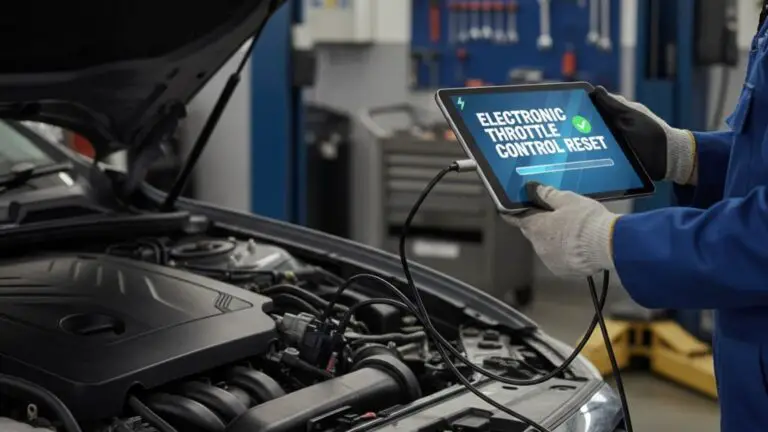
One of the most frequent causes of an illuminated wrench light is a malfunction within the Electronic Throttle Control (ETC) system, also known as “drive-by-wire”.6 In this system, there is no physical cable connecting the accelerator pedal to the engine’s throttle. Instead, sensors on the pedal send an electronic signal to the Powertrain Control Module (PCM), which then commands a motor on the throttle body to open or close the throttle plate.
A fault in the accelerator pedal sensor, the throttle position sensor, or the throttle body itself can disrupt this communication and trigger the light. For symptoms and more details, see our guide to common Ford F-150 problems.
2. Transmission and Drivetrain Issues
The PCM constantly monitors the transmission for proper operation. Any detected anomaly, such as harsh shifting, slipping gears, a failing torque converter, or issues with the transmission solenoids, can activate the wrench light. Low or contaminated transmission fluid can also lead to performance issues that the system flags as a fault.
3. Low Battery Voltage or Electrical Problems
The vehicle’s powertrain relies on a stable supply of electricity. A weak, failing, or dead battery can provide insufficient voltage to the PCM and other critical modules, causing them to behave erratically and log a fault code. Beyond the battery itself, the problem can stem from loose or corroded battery terminals, a failing alternator, or damaged wiring harnesses that disrupt communication between components.
4. Faulty Powertrain Sensors
A modern Ford powertrain is a complex network of sensors that measure everything from vehicle speed and engine RPM to coolant temperature and gear position. If one of these critical sensors fails or if its connection becomes loose or corroded, it can send inaccurate data to the PCM. The computer interprets this faulty data as a system malfunction and illuminates the wrench light to alert the driver.
5. 4WD/AWD System Errors
For Ford trucks and SUVs equipped with four-wheel-drive or all-wheel-drive, the wrench light also serves as a warning for faults within that system. This could involve issues with the transfer case, locking hubs, or the electronic modules that control the 4×4 engagement.
6. Overdue Scheduled Maintenance
On certain Ford models, the wrench light can have a dual purpose and may illuminate as a simple maintenance reminder, most often signaling that an oil change is due. In these cases, the light is not indicating a powertrain fault but is instead tied to the vehicle’s Intelligent Oil-Life Monitor system.
7. Special Considerations for Power Stroke Diesels
Owners of Ford Power Stroke diesel trucks should be aware of several specific issues that can trigger the wrench light. These include a clogged engine oil cooler, which is often diagnosed when the temperature difference between the engine oil and coolant exceeds 20°F. Other common diesel-specific triggers are turbocharger overboost conditions (caused by a stuck turbo or sensor problems) and, in some cases, extremely low fuel levels, which may cause the truck to enter a power-saving mode.
Your Immediate Action Plan: What to Do When the Light Comes On
Seeing the wrench light appear mid-drive requires a calm and methodical response. The vehicle’s behavior is the most important indicator of the problem’s severity.
Step 1: Stay Calm and Assess Performance
The first action is not to panic but to observe. Pay close attention to any changes in the vehicle’s performance. Is the engine shaking or making unusual noises? Is acceleration sluggish or unresponsive? Are the gear shifts harsh, delayed, or erratic? Noting these symptoms will be invaluable for a later diagnosis.
Step 2: Understanding “Limp Mode” (Fail-Safe Mode)
In response to a critical powertrain fault, a Ford vehicle may enter a self-preservation state known as “limp mode” or “fail-safe mode”. This is a protective feature where the vehicle’s computer intentionally restricts engine power and limits RPMs to prevent catastrophic damage to the engine or transmission.
The symptoms of limp mode are unmistakable: the vehicle will have severely reduced acceleration and will struggle or be unable to reach normal highway speeds. This mode is a definitive signal from the vehicle that the detected fault is serious and that driving should cease as soon as it is safe to do so.
Step 3: When to Pull Over vs. When to Proceed with Caution
The correct course of action depends entirely on the vehicle’s symptoms:
- Pull Over Immediately If: The wrench light is flashing, or if the vehicle enters limp mode, exhibits severe engine shaking, makes loud grinding or clunking noises, or shows any other significant performance degradation. In these scenarios, continuing to drive risks extensive and costly damage. The safest choice is to pull over, turn off the engine, and arrange for the vehicle to be towed to a qualified mechanic.
- Proceed to a Mechanic If: The wrench light is steady and the vehicle appears to be driving normally with no noticeable performance issues. While the situation may be less critical, it should not be ignored. Drive cautiously, avoid heavy acceleration or towing, and schedule a diagnostic appointment as soon as possible.
How to Reset the Ford Wrench Light: A Step-by-Step Guide
It is possible to reset the wrench light, but it is critical to understand the difference between clearing a light and fixing the problem that caused it.
Crucial Disclaimer: A Reset is NOT a Repair
Before attempting any reset procedure, it is imperative to recognize that turning off the warning light does not solve the underlying issue. Simply clearing the light without performing a proper diagnosis and repair is a temporary and potentially dangerous measure. The fault that triggered the light still exists, and ignoring it can allow a minor problem, like a faulty sensor, to escalate into a major failure, such as a destroyed transmission. The light will almost certainly reappear once the onboard computer detects the fault again.
Method 1: Manual Reset (The “Pedal Method”)
This procedure is widely discussed in owner forums and is most commonly associated with resetting the vehicle’s oil life monitor after an oil change. While some owners report it can clear an intermittent wrench light, its effectiveness for genuine powertrain faults is inconsistent and should be approached with caution.
The existence of this method creates a significant risk. An owner with a serious transmission fault might perform this reset, see the light disappear, and assume the problem is fixed. Continuing to drive under these conditions could lead to severe mechanical damage. Therefore, even if this manual reset works, it is strongly advised to have the vehicle’s codes professionally read to understand why the light came on in the first place.
Procedure:
- With the vehicle parked, turn the ignition to the “On” position without starting the engine. For vehicles with a key, this is typically position two. For push-button start models, press the START/STOP button once without depressing the brake pedal. Some models may require pressing and holding the button for two seconds.
- Simultaneously press both the accelerator pedal and the brake pedal to the floor and hold them down.
- Continue to hold both pedals for approximately 25-30 seconds.
- The instrument cluster display may show a message like “Service oil reset in progress” or, eventually, “Reset complete”.
- Once the confirmation message appears, release both pedals.
- Turn the ignition completely off. Start the vehicle normally to confirm if the wrench light has been extinguished.
Method 2: Using an OBD-II Scanner (The Correct Approach)
Using an Onboard Diagnostics II (OBD-II) scanner is the proper and most reliable method for resetting the wrench light, and it should only be performed after the underlying fault has been repaired.
Steps:
- Locate the OBD-II port, which is a 16-pin trapezoidal connector typically found under the dashboard on the driver’s side.28
- With the ignition off, plug the scanner into the port.
- Turn the ignition to the “On” position without starting the engine.
- Follow the scanner’s on-screen prompts to establish communication with the vehicle’s computer.
- Navigate to the menu option for reading codes, often labeled “Read Codes” or “DTCs.” It is essential to write down any and all stored codes before proceeding. These codes are the key to diagnosing the problem.
- After recording the codes, navigate to the “Clear Codes,” “Erase Codes,” or “Reset” function and select it.
- The scanner will ask for confirmation. Confirm the action to erase the codes.
- The wrench light on the dashboard should turn off. Turn the ignition off, remove the scanner, and then start the vehicle to ensure the light remains off.
A common point of frustration for DIY mechanics is when the wrench light is on, but a basic, inexpensive OBD-II scanner reports “No Codes Found.” This does not mean there is no problem. It typically means the fault has set a manufacturer-specific code (e.g., from the Transmission Control Module) that the generic scanner is not equipped to read.
To properly diagnose these issues, a more advanced scanner is needed, such as one compatible with Ford-specific software like FORScan, or a professional-grade tool used by mechanics. For more information, see this guide on(https://truckguider.com/best-obd2-scanners-for-trucks/).
Beyond the Reset: Diagnosing the Real Problem with DTCs
Resetting the light is easy; finding the cause is the crucial part. Diagnostic Trouble Codes (DTCs) are the language the vehicle uses to report a problem. They are the essential first step in any accurate diagnosis, pointing a technician toward the specific system—and often the specific circuit—that is malfunctioning.
The following table lists common DTCs that are known to trigger the Ford wrench light, categorized by the system they relate to.
Common DTCs That Trigger the Ford Wrench Light
| DTC Category | Example Codes | Common Meaning | Associated System |
| Throttle Control | P2101, P2122, P2135, P2138 | Throttle Actuator/Pedal Position Sensor Performance/Correlation Fault | Electronic Throttle Control (ETC) |
| Transmission | P0700, P0720, P0730, P0841 | Transmission Control System Malfunction, Output Speed Sensor Fault, Incorrect Gear Ratio | Automatic Transmission |
| Communication | U0100, U0107, U0073 | Lost Communication with ECM/PCM, Lost Communication with Throttle Actuator Module | Vehicle Communication Bus |
A professional diagnosis goes far beyond simply reading a code. After retrieving the DTCs, a qualified technician will perform a series of tests to pinpoint the exact failure. This process often includes visually inspecting sensors and wiring harnesses for damage, using a multimeter to test electrical connections, and using a high-end scan tool to monitor live data from the transmission and throttle body to ensure they are performing to specification.
Estimating the Repair Bill: Potential Costs for Common Fixes
The cost to repair a Ford wrench light issue can vary dramatically, from a simple fix to a major component replacement. The following estimates are based on national averages and can fluctuate based on vehicle model, year, location, and the specific repair shop. For the most accurate pricing, it is always best to get a detailed quote from a certified mechanic.
Estimated Repair Costs for Common Wrench Light Faults
| Repair | Ford F-150 (Est. Cost) | Ford Escape (Est. Cost) | Ford Focus (Est. Cost) |
| Throttle Body Replacement | $404 – $508 | $308 – $395 | $419 – $616 |
| Transmission Solenoid Replacement | $300 – $700 | $300 – $700 | $300 – $700 |
| Transmission Rebuild | $2,500 – $4,000+ | $2,500 – $4,000+ | $2,500 – $4,000+ |
| Full Transmission Replacement | $3,000 – $7,000+ | $3,000 – $7,000+ | $3,000 – $7,000+ |
Conclusion: Your Next Steps for a Reliable Ride
The Ford wrench light is a sophisticated warning system designed to protect a vehicle from serious damage by alerting the driver to powertrain-related faults. While its appearance can be alarming, understanding its function is the first step toward a proper resolution.
The key takeaways are clear: the wrench light signals a more immediate drivability concern than the standard Check Engine Light and should be addressed promptly. While manual reset procedures exist, they are primarily intended for maintenance reminders and should not be used to ignore a potential mechanical or electrical fault. A reset is never a substitute for a repair.
The only reliable path to a solution is a thorough diagnosis that begins with reading the specific Diagnostic Trouble Codes stored in the vehicle’s computer. By following this informed approach, Ford owners can move past the initial anxiety of a warning light and take the correct, decisive actions needed to ensure their vehicle remains safe, reliable, and ready for the road ahead.
Frequently Asked Questions (FAQs)
Q1: Can I drive my Ford with the wrench light on?
A: The answer depends on the vehicle’s symptoms. If the wrench light is on but the vehicle is driving completely normally—with no strange noises, poor acceleration, or rough shifting—it is generally acceptable to drive cautiously to a nearby mechanic for diagnosis. However, if the light is flashing or the vehicle has entered “limp mode” (severely reduced power), is shaking, or is making loud noises, it is crucial to pull over in a safe location and have the vehicle towed to prevent catastrophic damage.
Q2: Why did the wrench light turn on and then go away?
A: This scenario typically indicates an intermittent fault. The vehicle’s computer detected a problem during one drive cycle, but the conditions that caused the fault were not present on a subsequent startup. This could be due to a loose electrical connection, a sensor that is beginning to fail, or a momentary transmission slip. Even though the light went out, a “stored” or “history” code is likely saved in the computer’s memory. It is highly recommended to have these codes read, as intermittent faults can eventually become permanent, more serious problems.
Q3: Does the wrench light always mean a major transmission problem?
A: No, it does not always indicate a catastrophic transmission failure. While transmission issues are a common cause, the light can also be triggered by a range of other, often less severe, problems. These include faults with the electronic throttle body, a failing accelerator pedal sensor, low battery voltage, or a bad powertrain sensor. A proper diagnosis is necessary to distinguish between a minor issue and a major repair.
Q4: Will disconnecting the battery reset the Ford wrench light?
A: Disconnecting the negative battery terminal for 15-20 minutes can often reset the vehicle’s computer systems, including the modules that store fault codes. This may temporarily turn off the wrench light. However, just like the manual pedal reset, this action does not fix the underlying problem. If the fault condition still exists, the light will illuminate again once the computer completes its diagnostic checks. This method is not a recommended repair procedure.
Q5: What’s the best OBD-II scanner for reading Ford-specific wrench light codes?
A: For a DIY diagnosis of the wrench light, a basic OBD-II code reader may not be sufficient, as it often cannot access manufacturer-specific codes. The best option is a scanner that explicitly states it can read Ford-specific codes from various modules, including the Powertrain Control Module (PCM), Transmission Control Module (TCM), and Anti-lock Brake System (ABS). Enthusiasts and advanced DIYers often recommend using an adapter compatible with FORScan, a powerful software program designed specifically for Ford, Lincoln, and Mazda vehicles that can access these deeper diagnostic codes.