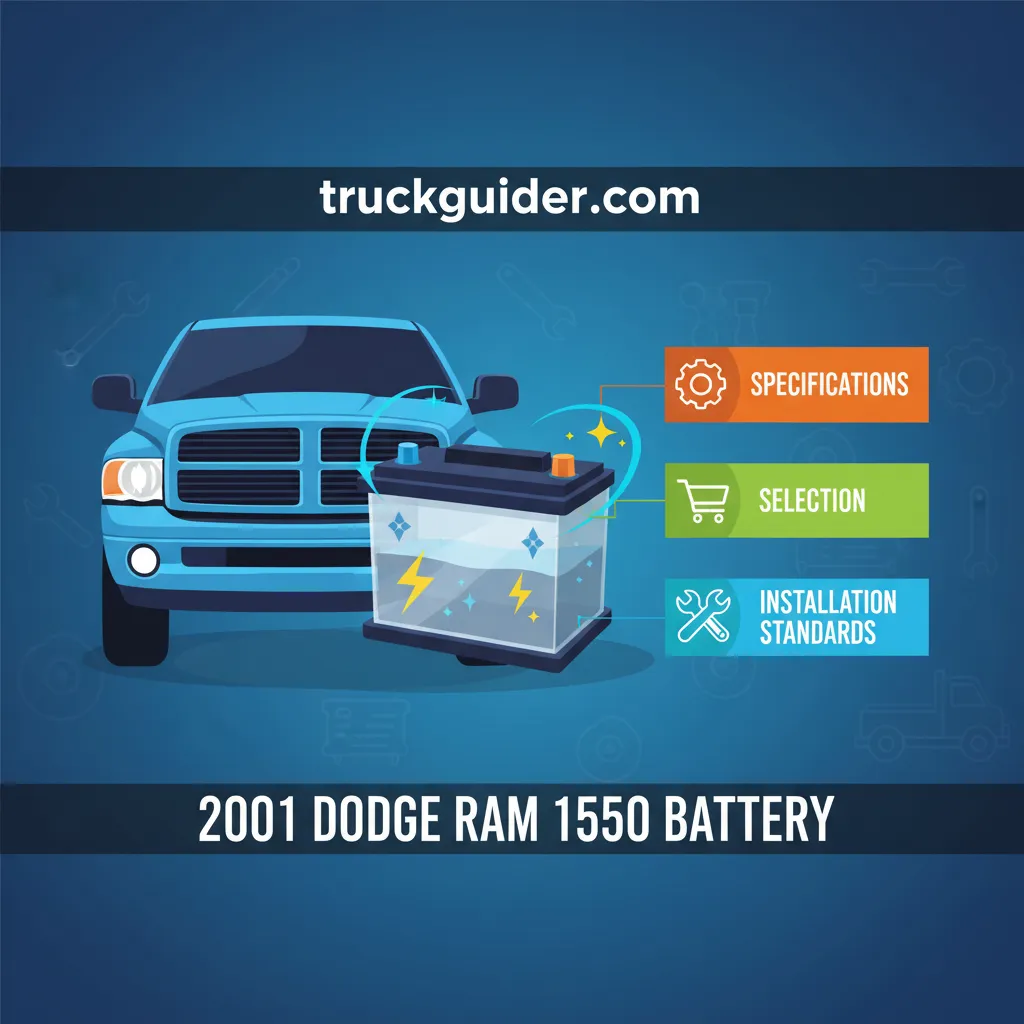
2001 Dodge Ram 1500 Battery Specifications, Selection [2026]

For a 2001 Dodge Ram 1500 owner, there is nothing more frustrating than the heavy, hollow click of a dead starter when you have work to do. These second-generation Ram trucks are legendary for their durability, but as they age, the electrical demands placed on their systems increase significantly. Between the high-compression demands of the Magnum V8 engines and the heat-soaked environment of a crowded engine bay, your battery is the single most critical point of failure in your daily operations.
As these trucks cross the two-decade mark, the original wiring harnesses often develop higher resistance, and aftermarket accessories—from trailer brake controllers to upgraded audio systems—place immense stress on the charging circuit. This often leads to sudden failure or debilitating poor cold-weather performance. This comprehensive guide provides expert technical specifications, professional step-by-step installation instructions, and reliable selection criteria to ensure your truck remains a trusted tool in your arsenal, regardless of the conditions.
Determining Correct Battery Group Sizes and CCA Requirements
📤 Share Image
Selecting the right battery for a 2001 Dodge Ram 1500 begins with understanding the physical dimensions of the battery tray and the electrical requirements of the engine under your hood. Dodge utilized two primary BCI (Battery Council International) group sizes for this model year: Group 27 and Group 34. While they look similar to the untrained eye, their specifications and fitment profiles differ in ways that impact long-term quality and professional reliability.
Analysis of Group 27 vs. Group 34
The Group 27 battery is the physically larger unit, typically measuring approximately 12 inches in length. It was the standard for trucks equipped with the heavy-duty cooling or towing packages. The Group 34 is shorter (about 10 inches) and is often found in base models. Because the battery tray in the 2001 Ram 1500 is designed to accommodate the larger footprint, I always recommend installing a Group 27 even if your truck came with a Group 34. The extra internal volume of a Group 27 allows for more lead plate surface area, which translates directly to higher Reserve Capacity (RC).
Minimum Cold Cranking Amps (CCA) by Engine
CCA is the measurement of how much current a battery can deliver at 0°F for 30 seconds while maintaining at least 7.2 volts. The requirements for the 2001 Ram vary by powerplant:
- 3.9L V6: Requires a minimum of 600 CCA. This engine is relatively easy to turn over, but a higher rating ensures longevity during freezing winters.
- 5.2L V8 (318 cu in): Requires a minimum of 700 CCA. As a high-mileage engine, the 5.2L often needs more initial torque to overcome internal friction.
- 5.9L V8 (360 cu in): Requires a minimum of 750 CCA. This engine was frequently used for towing and heavy hauling; using a battery with lower than 750 CCA in a 5.9L Ram is a recipe for premature failure.
If you operate your Ram in regions where temperatures regularly drop below 10°F, ignore the factory minimums. Opt for a complete high-output unit rated at 800-850 CCA. Chemical reactions inside the battery slow down significantly in the cold, while the oil in your Magnum engine thickens, creating a “perfect storm” that requires maximum amperage to overcome.
Evaluating Battery Chemistry Options: AGM vs. Flooded Lead-Acid
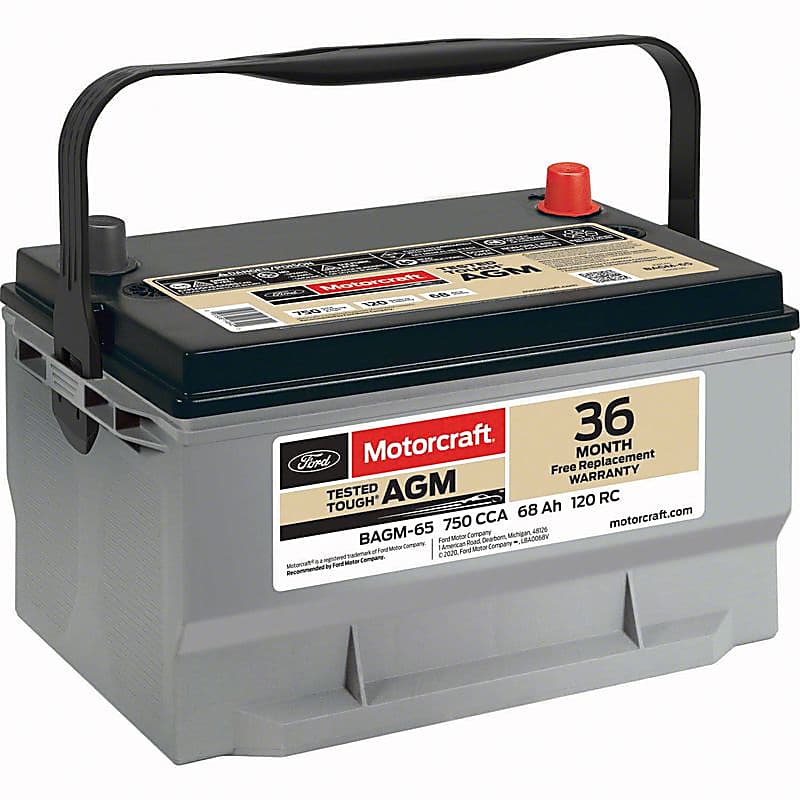
In the realm of professional truck maintenance, you have two primary choices for battery chemistry: traditional Flooded Lead-Acid (FLA) or Absorbent Glass Mat (AGM). Choosing the right one depends on how you use your truck and your budget for long-term reliability.
The Flooded Lead-Acid Advantage
Standard flooded batteries are the most common choice for the 2001 Ram. They are cost-effective and provide adequate power for a standard daily driver. However, they are susceptible to “sloshing” and vibration damage. On a 20-year-old truck with potentially worn motor mounts, engine vibration can cause the active material on flooded battery plates to flake off, leading to internal shorts.
Why AGM is the Professional Standard
AGM batteries use a fiberglass mat to “wick” the electrolyte, making them spill-proof and exceptionally resistant to vibration. This is a complete game-changer for Rams used off-road or on construction sites. AGM units also handle deep discharges better than flooded cells, which is vital if your truck sits for weeks at a time or has a slow parasitic draw from an old security system.
Professional Step-by-Step Replacement Procedure
Replacing the battery in a 2001 Ram 1500 is straightforward, but doing it with expert precision prevents electrical surges and ensures the safety of the Powertrain Control Module (PCM). You will typically need a 10mm wrench or a 1/2-inch socket for the terminals and a longer extension with a 13mm socket for the battery hold-down bolt.
📋
Installation Standards
Wear eye protection. Use a “Memory Saver” tool plugged into the OBD-II port or cigarette lighter to maintain PCM settings. This prevents the truck from having to “re-learn” its idle parameters, which can sometimes cause stalling after a battery swap in older Rams.
Always disconnect the Negative (Black) cable first. If your wrench touches the metal body of the truck while loosening the positive terminal first, it will create a massive short circuit. By removing the negative first, you break the ground path, making the rest of the job safe.
Remove the old battery and inspect the plastic tray. Neutralize any spilled acid with a baking soda and water solution. Use a wire brush to clean the cable terminals until the metal is shiny. Apply a thin layer of professional-grade anti-corrosion spray or dielectric grease.
Do not throw your old battery in the trash. Over 99% of automotive lead-acid batteries are recyclable. Take the “core” back to the retailer where you purchased the new unit to receive your core deposit refund (typically $15-$25) and ensure the lead and plastic are properly recycled.
Troubleshooting Electrical Issues and Terminal Integrity
Sometimes, the battery isn’t the primary culprit. In the 2001 Ram 1500, several common electrical “ghosts” can mimic a dead battery. A professional diagnosis involves more than just looking at the date code on the label.
Diagnosing the “Slow Crank”
If the truck cranks slowly but eventually starts, you may have a failing alternator or excessive resistance in your cables. Use a multimeter to check the battery’s resting voltage. A healthy 12V battery should read approximately 12.6V when the engine is off and it is fully charged. If you see 12.2V or less, the battery is undercharged.
The Multimeter Charging Test
Start the engine and probe the battery terminals again. The alternator should be delivering between 13.8V and 14.4V. If the voltage remains at 12.6V or drops while the engine is running, your alternator’s voltage regulator or internal brushes have failed, and a new battery will only be a temporary fix.
Testing for Parasitic Draw
If your battery dies overnight, you likely have a parasitic draw. This is common in Rams with aftermarket trailer wiring that has become corroded or shorted. To test this, set your multimeter to Amps (mA), disconnect the negative terminal, and place the meter in series between the terminal and the post. Anything over 50mA of draw with the truck off and doors closed indicates a circuit that is “staying awake” and draining your power.
By The Numbers: Battery Health
Full Static Charge
Avg Alternator Output
Minimum Cranking Volt
Selecting Trusted Brands and Understanding Warranties
Not all batteries are created equal, even if their labels suggest identical CCA ratings. In the United States, most batteries are produced by three major manufacturers: Clarios, East Penn, and Stryten. However, the internal quality standards vary wildly between their budget and premium lines.
Top-Tier Brand Recommendations
For a 2001 Ram 1500, I recommend Interstate Batteries (specifically the MTP line) or Odyssey for those seeking AGM performance. Deka (produced by East Penn) is another highly trusted brand known for heavy-duty plate construction. These manufacturers prioritize lead purity, which is the primary factor in how many charge-discharge cycles a battery can survive.
Deciphering Warranty Language
Do not be fooled by “60-month” or “84-month” stickers. These are almost always prorated warranties, meaning the manufacturer gives you a declining discount on a new battery rather than a free replacement. Look for a “Free Replacement” period of at least 3 years. A 3-year free replacement warranty is far more valuable to the owner than a 5-year prorated plan, as it covers the full cost of failure during the battery’s most likely window of breakdown.
✅ Pros of Fresh Units
- Maximum electrolyte potency
- Full manufacturer warranty
- No internal sulfation
- Clean, oxidation-free posts
❌ Cons of Old Stock
- Reduced effective lifespan
- Lead plate degradation
- Lower initial CCA output
- Self-discharge damage
Always check the date code on the battery before purchase. It is usually a small round sticker or a heat-stamped code on the plastic. A battery that has been sitting on a shelf for more than 6 months without a charge can suffer from sulfation, which can reduce its effective lifespan by up to 20% before it ever touches your truck’s terminals.
Conclusion
Maintaining the electrical heart of your 2001 Dodge Ram 1500 is one of the most cost-effective ways to ensure its long-term viability. By matching the BCI Group size (27 preferred) and exceeding the minimum CCA requirements for your specific engine, you provide your truck with the foundation it needs to perform. I strongly recommend upgrading to AGM technology if your budget allows, as the vibration resistance is invaluable for these aging Chrysler platforms. Always follow professional safety protocols, keep your terminals clean, and verify your charging system’s health. Before your next trip, perform a load test on your current battery to identify potential failure before it leaves you stranded on the job site or in the wilderness.
Frequently Asked Questions
What is the exact battery group size for a 2001 Dodge Ram 1500?
The 2001 Dodge Ram 1500 typically uses a BCI Group 27 or Group 34 battery. The Group 27 is slightly larger and offers higher capacity, while the Group 34 is a common fit that meets the necessary CCA requirements. Always check your existing battery tray dimensions and terminal orientation before purchasing.
How many Cold Cranking Amps (CCA) does my 5.9L V8 Ram need?
For the 5.9L V8 engine, a minimum of 750 CCA is recommended to ensure reliable starting in diverse weather conditions. Using a battery with 800 or 850 CCA is often preferred in colder climates to provide an extra margin of safety for the high-displacement engine’s internal resistance.
Can I use an AGM battery in my 2001 Dodge Ram 1500?
Yes, you can upgrade to an AGM (Absorbent Glass Mat) battery. AGM units are highly recommended for the Ram 1500 because they are more resistant to the vibrations of truck use and can handle deeper discharge cycles without permanent damage compared to standard flooded lead-acid batteries.
Why does my battery terminal keep corroding on my Dodge truck?
Terminal corrosion is often caused by hydrogen gas venting from the battery and reacting with the lead and surrounding moisture. This is more common in older trucks with high-mileage alternators that may be slightly overcharging. Cleaning the terminals and applying a professional-grade anti-corrosion sealant can prevent this buildup.
How long should a quality battery last in a 2001 Ram 1500?
A high-quality, professional-grade battery typically lasts between 3 to 5 years. Factors such as extreme heat, excessive vibration, and the health of your charging system (alternator and belt) will significantly influence this lifespan. Regular maintenance and ensuring the hold-down bracket is tight can extend the battery’s life.
![Ram 1500 Steering Wheel Cover Size: Specs & Fitment Guide [2026]](https://truckguider.com/wp-content/uploads/2026/03/ram-1500-steering-wheel-cover-size-featured-1.webp)