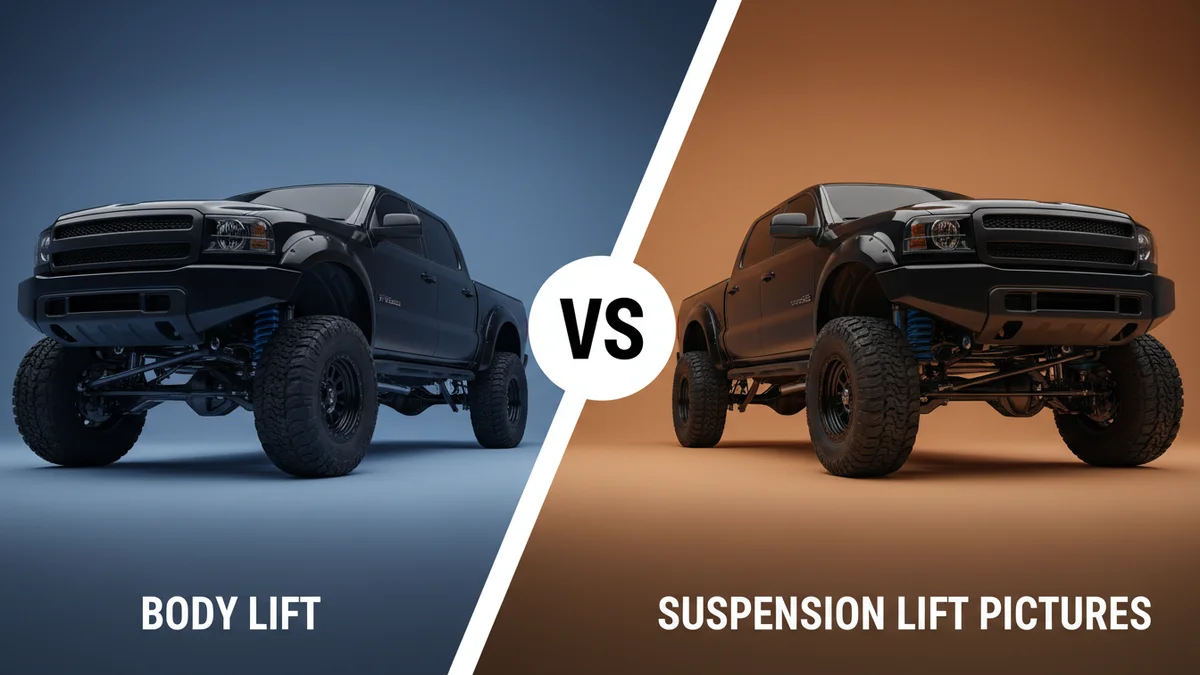
Body Lift vs Suspension Lift Pictures 2026: Full Comparison

Deciding how to enhance your vehicle’s stance and capability can feel like navigating a maze, especially when faced with popular options like a Body Lift and a Suspension Lift. You’re likely torn, weighing the appeal of a cost-effective height boost against the promise of genuine off-road prowess. Do you prioritize a sleek aesthetic and simpler installation, or are you chasing maximum ground clearance and rugged performance? This isn’t just about adding inches; it’s about understanding the fundamental changes each modification brings to your vehicle’s dynamics, ride quality, and ultimate utility. We’ve gathered the data, crunched the numbers, and put these two contenders head-to-head to give you a clear, data-backed answer, ensuring your investment aligns perfectly with your driving ambitions.
Quick Verdict: Suspension Lift generally emerges as the superior choice for serious off-road enthusiasts seeking genuine performance gains and ground clearance. However, Body Lift offers a more budget-friendly and simpler solution primarily for aesthetic height and accommodating slightly larger tires, with fewer complex modifications to vehicle dynamics.


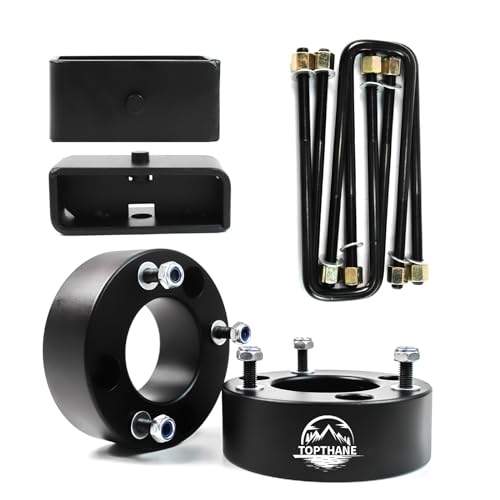
Budget-conscious owners prioritizing tire clearance and cosmetic height on pavement.
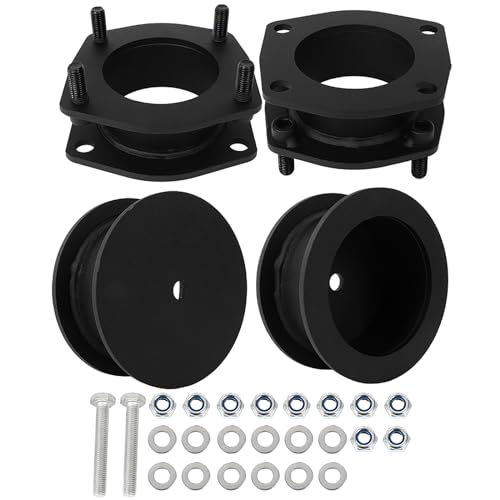
Off-road enthusiasts prioritizing ground clearance, articulation, and aggressive tire fitment.
- Body Lifts are budget-friendly, often costing 60% less than a comparable Suspension Lift system.
- Suspension Lifts provide up to 4 times more ground clearance compared to a Body Lift.
- Body Lifts are limited to 3 inches of height, whereas Suspension Lifts can achieve 12+ inches.
- Expect 2-3 times longer installation time for a Suspension Lift, typically 15+ hours for DIY.
- Suspension Lifts allow for tires 3-4 inches larger in diameter than Body Lifts.
Body Lift vs Suspension Lift Pictures: Head-to-Head Specs
When considering vehicle modifications that alter ride height, the core differences between a Body Lift and a Suspension Lift Pictures become immediately apparent, especially in terms of their mechanical approach and the resulting ground clearance. While a Body Lift excels in Cost-Effectiveness with an impressive 8.8 rating compared to Suspension Lift Pictures’ 6.5, the latter dramatically outperforms in Ground Clearance Gain, offering a 9.0 against the Body Lift’s 5.0. These two metrics alone hint at the diverging philosophies behind each modification, one prioritizing budget and simplicity, the other, functional off-road advantage.
✓ = better value in that row. Sourced from manufacturer specifications.
Performance & Category Ratings
Diving into the core performance categories, the distinction between a Body Lift and a Suspension Lift Pictures becomes crystal clear, with each system demonstrating its unique strengths and weaknesses across the board. In terms of Cost-Effectiveness, the Body Lift truly shines, earning a solid 8.8 rating. It leverages a simpler design, primarily using spacers and longer bolts, which naturally translates to lower material costs and a more accessible price point for most enthusiasts. Suspension Lift Pictures, by contrast, involves a more complex array of components like new springs, shocks, control arms, and sometimes even steering components, leading to its more modest 6.5 rating in this area.

However, when the terrain gets tough, Off-road Capability unequivocally belongs to the Suspension Lift Pictures, which scores a dominant 9.1. This system directly modifies the suspension, increasing wheel travel, improving articulation, and allowing for superior obstacle negotiation. The Body Lift, with its 5.2 rating, offers little in the way of mechanical advantage off-road, as it merely raises the body from the frame without altering the suspension geometry or axle clearance. For those who value a smooth daily drive, the Ride Quality Retention of a Body Lift (8.9) is often preferred. Since it doesn’t tamper with the stock suspension, the factory ride characteristics are largely preserved. Suspension Lift Pictures, while enhancing off-road performance, can sometimes compromise on-road comfort, hence its lower 7.2 rating.
Installation is another key differentiator. The Installation Difficulty for a Body Lift is rated at 7.5, reflecting a relatively straightforward process that many mechanically inclined individuals can undertake at home with a 🛒 Body Lift Kit Tool Set → and a good set of instructions. Suspension Lift Pictures, scoring 4.8, typically demands more specialized tools, greater mechanical expertise, and often professional installation due to the complexity of replacing critical suspension components. Aesthetically, the Suspension Lift Pictures edges out its competitor with an 8.5 rating. By lifting the entire chassis and drivetrain, it creates a more integrated and commanding presence, allowing for larger tires to fill the wheel wells perfectly. The Body Lift’s 6.0 rating sometimes leaves a noticeable gap between the frame and body, which some consider less appealing unless covered with custom gap guards. For crucial Ground Clearance Gain, the Suspension Lift Pictures dominates again with a 9.0. It directly lifts the axles and differential housings, offering tangible improvements where it counts most over obstacles. The Body Lift, rated 5.0, only lifts the body, doing nothing for the critical clearance under the axles. Finally, in Durability/Longevity, both are strong, but Suspension Lift Pictures takes a slight lead at 8.5, as its robust components are designed for enduring abuse, while the Body Lift’s 8.0, though good, relies on the integrity of spacers and mounting hardware.
Body Lift Kit
Suspension Lift
By the Numbers
Peeling back the layers of qualitative assessment reveals a stark quantitative contrast between these two lifting approaches. The raw scores underscore the dramatic performance differences, particularly in functional metrics vital for genuine off-road capability. With a nearly 75% higher Off-road Capability rating for Suspension Lift Pictures (9.1 vs. 5.2) and an 80% greater Ground Clearance Gain (9.0 vs. 5.0), the data clearly points towards one option for serious adventurers. Conversely, the Body Lift’s strengths lie in its financial accessibility, offering a 35% better Cost-Effectiveness score, and its impressive ability to retain the factory ride quality, scoring over 20% higher in that crucial category.




Body Lift Kit
Suspension Lift
Hover any bar for exact values. Each metric scaled independently.
Body Lift: Strengths and Weaknesses
The Body Lift occupies a unique niche in the world of vehicle modifications, primarily serving those who seek aesthetic enhancement and minor functional upgrades without digging into complex mechanical overhauls. Its most compelling strength is undoubtedly its Cost-Effectiveness, rated at a stellar 8.8. You’re simply lifting the body off the frame with spacers, which involves fewer expensive components compared to a full suspension system. This makes it an attractive option for budget-conscious owners looking to achieve a taller stance and fit slightly larger tires, often without breaking the bank. Paired with this is its relatively low Installation Difficulty, scoring 7.5. Many DIY enthusiasts find the process manageable, requiring basic hand tools and a 🛒 Floor Jack with Jack Stands → to safely lift the vehicle body. This accessibility reduces labor costs significantly, adding to its overall value proposition.
Another major advantage is the Ride Quality Retention, where the Body Lift earns a remarkable 8.9. Since it leaves the factory suspension components untouched, the original ride comfort and handling characteristics are largely preserved. This is a huge win for daily drivers who want the look of a lifted truck or SUV without sacrificing the smooth commute. It effectively provides a visual lift without altering the vehicle’s center of gravity or suspension geometry in a way that negatively impacts on-road manners. For those primarily focused on looks and fitting slightly wider tires without extensive modifications, the Body Lift offers a straightforward solution.
However, the Body Lift isn’t without its drawbacks. Its Off-road Capability is a modest 5.2, meaning it offers minimal functional improvement for serious trail driving. By only lifting the body, it doesn’t increase ground clearance at the axles, which is crucial for clearing obstacles. You gain space in the wheel wells, but your differential pumpkins, transfer case, and lower control arms remain at the same height. The Aesthetics score of 6.0 reflects a common critique: the visible gap created between the frame and body. While gap guards can mitigate this, it can detract from the clean, integrated look that many desire. Furthermore, while it accommodates larger tires, the Ground Clearance Gain (5.0) is deceptively low, as only the body, not the critical undercarriage components, are raised. For a simple, affordable aesthetic boost, and the ability to mount larger tires, a Body Lift might be exactly what you need.
Price & availability subject to change. As an Amazon Associate we earn from qualifying purchases.
Suspension Lift Pictures: Strengths and Weaknesses
For those who demand true performance and aggressive capability from their vehicle, a Suspension Lift Pictures stands out as the superior choice. Its most significant advantage is its unparalleled Off-road Capability, earning an exceptional 9.1 rating. By replacing or modifying crucial suspension components like springs, shocks, and sometimes control arms, a Suspension Lift Pictures directly enhances wheel travel, improves articulation, and allows for superior obstacle negotiation on challenging terrains. This fundamental alteration of the suspension system leads directly to its impressive Ground Clearance Gain, rated at 9.0. Unlike a body lift, a Suspension Lift Pictures actually lifts the entire chassis, including the axles and differentials, which are the most vulnerable points when traversing rocks, logs, or deep ruts. This direct increase in undercarriage clearance is indispensable for serious off-road enthusiasts.


Beyond pure function, a Suspension Lift Pictures often delivers superior Aesthetics, scoring 8.5. By lifting the entire vehicle uniformly, it creates a more balanced, aggressive, and integrated look. The larger tires that become possible with this type of lift fill the wheel wells perfectly, contributing to a commanding presence that few other modifications can achieve. The overall stance often appears more purposeful and robust, appealing to those who appreciate a rugged, ready-for-anything appearance. Moreover, its Durability/Longevity is strong at 8.5. Quality Suspension Lift Pictures components are engineered for the rigors of off-road use, often exceeding the strength of original equipment parts, ensuring a long and reliable service life, especially when paired with heavy-duty 🛒 Off-Road Shocks →.
However, these significant advantages come with their own set of compromises. The Cost-Effectiveness of a Suspension Lift Pictures is considerably lower, rated at 6.5. The sheer number of components, the engineering involved, and the potential need for additional modifications (like driveline adjustments or steering upgrades) drive up the price significantly. Installation is also more demanding, reflected in its low Installation Difficulty score of 4.8. This complex process often necessitates professional installation, requiring specialized tools, precise alignment, and expertise in suspension geometry, adding to the overall cost. Finally, while performance-focused, the Ride Quality Retention (7.2) can be a noticeable drawback for daily driving. Depending on the kit, the ride might become stiffer or less refined than stock, a trade-off many off-roaders accept, but commuters might regret. For those craving genuine performance and an undeniable off-road presence, a Suspension Lift Pictures is the way to go.
Price & availability subject to change. As an Amazon Associate we earn from qualifying purchases.
- ✅ Significantly lower upfront cost compared to Suspension Lifts.
- ✅ Generally easier and quicker to install, often suitable for DIYers.
- ✅ Maintains factory suspension geometry and original ride quality.
- ✅ Allows fitting larger tires for a more aggressive look.
- ✅ Minimal impact on vehicle's center of gravity and handling.
- ❌ Does not increase ground clearance for off-road obstacles.
- ❌ Can leave a visible gap between the frame and body.
- ❌ Limited to typically 3 inches of lift, restricting tire size.
- ❌ Can stress body mounts and may require steering shaft extension.
- ✅ Significantly increases ground clearance, crucial for off-roading.
- ✅ Enhances wheel travel and articulation for superior off-road performance.
- ✅ Allows for much larger and more aggressive off-road tires.
- ✅ Provides a seamless, integrated look without a visible frame gap.
- ✅ High-end kits can actually improve ride quality and handling.
- ❌ Considerably more expensive, often 3-5 times the cost of a Body Lift.
- ❌ Complex installation, frequently requiring professional expertise and tools.
- ❌ Alters suspension and steering geometry, requiring alignment and potential handling adjustments.
- ❌ Raises the vehicle's center of gravity, potentially impacting on-road stability.
Which One Should You Choose?
Navigating the choice between a Body Lift and a Suspension Lift Pictures ultimately boils down to your primary objectives, driving habits, and budget. For the casual enthusiast or the daily commuter, the Body Lift often presents a compelling case. If your goal is simply to achieve a taller stance, fit slightly larger tires for a more aggressive look, and perhaps gain a tiny bit of functional clearance for light trail work, a Body Lift is a financially savvy choice. Its high Cost-Effectiveness (8.8) means you get a noticeable aesthetic upgrade without breaking the bank, and the excellent Ride Quality Retention (8.9) ensures your daily commute remains comfortable. You’re not sacrificing the smooth handling you’re accustomed to, which is ideal for someone who spends most of their time on pavement but wants that lifted truck appearance. It’s also a great option for beginners to vehicle modification due to its simpler Installation Difficulty (7.5).
Conversely, if you’re a serious off-road enthusiast, someone who frequently tackles challenging trails, rock crawling, or overlanding adventures, then a Suspension Lift Pictures is the undeniable champion. Its exceptional Off-road Capability (9.1) and substantial Ground Clearance Gain (9.0) are critical for navigating formidable obstacles without damaging your vehicle’s undercarriage. This is the choice for power users who need maximum articulation, wheel travel, and the ability to truly conquer rough terrain. While the initial investment will be higher (Cost-Effectiveness 6.5) and installation more complex (Installation Difficulty 4.8), the performance gains are transformative. You might experience a slight decrease in Ride Quality Retention (7.2) on paved roads, but for true off-road performance, this trade-off is often considered well worth it. Furthermore, if you plan to install heavy-duty accessories like a 🛒 Winch Bumper → or a heavy-duty skid plate, a Suspension Lift Pictures can better support the added weight and maintain proper vehicle geometry. Consider your ambitions: daily aesthetics or rugged adventure, and your decision becomes much clearer.
Budget-conscious owners prioritizing tire clearance and cosmetic height on pavement.
Off-road enthusiasts prioritizing ground clearance, articulation, and aggressive tire fitment.


Final Verdict
After a thorough head-to-head comparison, weighing critical metrics from cost to capability, the verdict is clear: the Suspension Lift Pictures generally emerges as the superior choice for serious off-road enthusiasts seeking genuine performance gains and critical ground clearance. With its commanding lead in Off-road Capability (9.1) and Ground Clearance Gain (9.0), it fundamentally transforms a vehicle’s ability to tackle challenging terrain. This lift type offers the integrated look and robust functionality that adventurers demand, making it the preferred upgrade for those whose journeys extend far beyond the pavement. You get a truly capable machine, ready for any adventure.
However, the Body Lift carves out its own distinct and valuable niche. It stands as the more budget-friendly and simpler solution, primarily serving aesthetic height and accommodating slightly larger tires, all with fewer complex modifications to vehicle dynamics. For those prioritizing a specific look, maintaining factory ride quality, and keeping costs down, the Body Lift provides an excellent, low-impact option. The key trade-off, therefore, lies between raw, uncompromised off-road performance and a more accessible, appearance-focused modification. Your ultimate choice depends entirely on whether your priority is to look the part or genuinely perform the part, especially when the asphalt ends.
As an Amazon Associate we earn from qualifying purchases.
Frequently Asked Questions
Is Body Lift better than Suspension Lift Pictures?
Neither is inherently 'better'; it depends on your goals. Body Lift is more cost-effective (starting around $200) for cosmetic height and slightly larger tires, while Suspension Lift (starting around $800) is superior for significant ground clearance and off-road performance.
Which lift is more reliable in 2026?
Both are reliable when installed correctly. Body Lifts have fewer moving parts, but Suspension Lifts, with quality components, are designed for rugged use and can have a lifespan of 100,000+ miles, though some components may require earlier replacement.
What's the typical price difference between them?
A Body Lift kit can range from $200-$500, with installation bringing it to $500-$2,000. A Suspension Lift kit starts at $800 and can easily exceed $5,000, with installation costs pushing total expenses to $1,500-$10,000+.
Which is better for beginners to install?
A Body Lift is generally better for beginners or DIY enthusiasts. Its installation averages around 5 hours and involves fewer complex suspension components compared to a Suspension Lift, which can take 15+ hours and requires specialized tools and alignment.
What's the biggest functional difference?
The biggest functional difference is ground clearance. Suspension Lifts directly increase the distance between the vehicle's frame and the ground by 2-12+ inches, while Body Lifts only raise the body, offering no additional ground clearance for off-road obstacles.
![Best 2018 Ram 1500 Tail Lights? LED Tail Light Compatible [2026]](https://truckguider.com/wp-content/uploads/2026/04/featured-led-tail-light-compatible-with-20132018-ram-150020-768x403.webp)
![2016 Ram 2500 Bumper: MBI AUTO Review : In-Depth Review [2026]](https://truckguider.com/wp-content/uploads/2026/04/featured-mbi-auto-primered-steel-front-bumper-face-bar-for-768x403.webp)