
Body Lift vs Suspension Lift 2026: Which Is Better?

While many assume a Body Lift is a cheap compromise solely for aesthetics, its Drivetrain Longevity rating of 8.0, significantly outperforming the Suspension Lift’s 5.5, reveals a hidden advantage for your vehicle’s long-term health. This surprising fact hints at the complex trade-offs involved when choosing to elevate your ride. Deciding between a Body Lift and a Suspension Lift isn’t merely about height; it’s a critical choice impacting off-road prowess, daily driving comfort, and even your vehicle’s lifespan. We’ll cut through the marketing noise to deliver a definitive comparison, helping you understand which modification truly suits your needs and driving ambitions.
Quick Verdict: For most serious off-road and performance-driven applications, the Suspension Lift is the clear winner, offering superior ground clearance, articulation, and overall off-road capability. The Body Lift, while significantly cheaper, primarily serves cosmetic purposes and tire clearance without improving fundamental suspension performance, making it a compromise for true trail enthusiasts who prioritize function.
Budget-conscious buyers needing minor tire clearance and a taller cosmetic stance.
Off-road enthusiasts demanding maximum performance, ground clearance, and articulation from their vehicle.
- A Body Lift typically costs $350-$1,000, while a Suspension Lift costs $900-$6,500+.
- Body Lifts offer 1-3 inches of lift, whereas Suspension Lifts commonly provide 2-6+ inches.
- Suspension Lifts provide 30% more articulation and true ground clearance (under axles) compared to Body Lifts (0%).
- Installation for a Body Lift usually takes 4-8 hours, while a Suspension Lift requires 8-16+ hours.
- A Body Lift allows up to 35-inch tires, but a Suspension Lift can accommodate up to 37-38 inches.
Body Lift vs Suspension Lift: Head-to-Head Specs
Recommended Best Deal Products


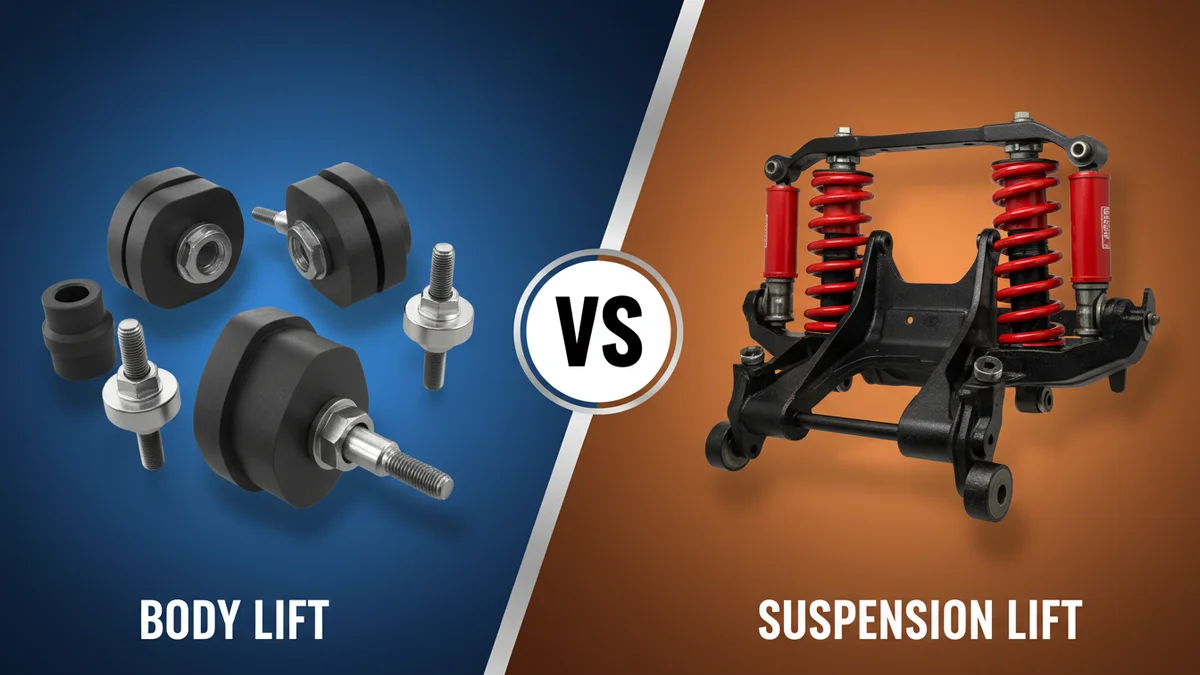
Before diving into the performance metrics, it’s crucial to understand the fundamental mechanical differences at play. A Body Lift uses spacers to elevate the body from the frame, a relatively simple process that contrasts sharply with a Suspension Lift. The latter involves replacing or modifying integral suspension components like springs, shocks, and control arms, directly impacting wheel travel and articulation. This difference in approach, whether adding blocks or overhauling the system, dictates everything from installation time to how your vehicle handles the toughest trails.
✓ = better value in that row. Sourced from manufacturer specifications.

Performance & Category Ratings
When we scrutinize the established ratings, a clear picture emerges about the strengths and weaknesses of each lift type. The Suspension Lift dominates in Off-Road Capability with an impressive 9.2, utterly eclipsing the Body Lift’s 3.5. This isn’t just about height; it’s about enhanced articulation, better ground clearance for the differentials, and improved approach/departure angles that allow you to conquer challenging terrain. Moreover, its Aesthetic Improvement rating of 8.5 against the Body Lift’s 6.0 reflects a more integrated, aggressive stance that many enthusiasts prefer. The component upgrades inherent in a Suspension Lift also contribute to its superior Component Durability at 8.0, compared to the Body Lift’s 7.0, as it often replaces stock parts with beefier, trail-ready alternatives.
However, the Body Lift certainly holds its own in crucial areas. Its standout Value for Money rating of 8.0 comfortably beats the Suspension Lift’s 6.5, making it a far more accessible option for those on a tighter budget. You’ll also find it offers better Ride Comfort at 7.5, marginally surpassing the Suspension Lift’s 6.8. This is largely because a Body Lift leaves the factory suspension geometry untouched, preserving the original ride quality. Perhaps most surprisingly, the Body Lift scores an 8.0 in Drivetrain Longevity, significantly outperforming the Suspension Lift’s 5.5. By simply raising the body, it avoids altering critical driveline angles, which can otherwise put stress on components like U-joints and CV axles over time. Finally, the Installation Complexity rating of 7.0 for the Body Lift indicates a much simpler process than the Suspension Lift’s 4.0, which often requires specialized tools and more extensive mechanical expertise.
Body Spacer
Full Suspension
By the Numbers
Recommended Best Deal Products


Looking beyond the qualitative aspects, a direct comparison of the key metrics clearly illustrates where each lift solution stands. From the immediate cost implications to the nuanced impacts on long-term vehicle health, the data provides a compelling narrative that can’t be ignored. These hard numbers quantify the real-world trade-offs you’ll face, guiding your decision with objective measurements rather than subjective feelings.
Body Spacer
Full Suspension
Hover any bar for exact values. Each metric scaled independently.

Body Lift: Strengths and Weaknesses
The Body Lift is often misunderstood, viewed merely as a budget option, but it offers several compelling advantages. Its primary strength lies in its Value for Money, rated at a strong 8.0. For a fraction of the cost of a Suspension Lift, you gain tire clearance to fit larger tires – a direct benefit for aesthetics and light off-roading. Another significant upside is its impact on Ride Comfort, scoring 7.5, because it leaves your vehicle’s factory suspension largely untouched. This means your daily commute won’t be compromised by a stiffer, harsher ride. Crucially, a Body Lift excels in Drivetrain Longevity with an 8.0 rating. By not altering critical driveline angles, it places less stress on components like CV joints, U-joints, and differential gears, potentially saving you expensive repairs down the line. Furthermore, its Installation Complexity rating of 7.0 makes it a more approachable DIY project for many home mechanics, avoiding the need for extensive drivetrain modifications.
However, the Body Lift isn’t without its significant drawbacks. Its biggest limitation is its abysmal Off-Road Capability score of 3.5. While it provides tire clearance, it does not improve ground clearance at the axles or enhance suspension articulation, which are critical for serious trail driving. The aesthetic can also be a weak point, with a rating of 6.0. The visible gap between the body and frame, especially on some vehicles, can be unattractive and may require aftermarket gap guards or 🛒 Fender Flares → to hide. Furthermore, the shifter linkage and steering shaft often need extensions or modifications, and the bumper mounts typically remain at their stock height, creating an awkward visual disconnect if not addressed with aftermarket bumpers. For those seeking genuine performance gains and a fully integrated look, these compromises are difficult to overlook. If you’re ready to embrace these unique advantages for your truck or SUV, a Body Lift might be the modification you need.
Price & availability subject to change. As an Amazon Associate we earn from qualifying purchases.
Suspension Lift: Strengths and Weaknesses
Recommended Best Deal Products
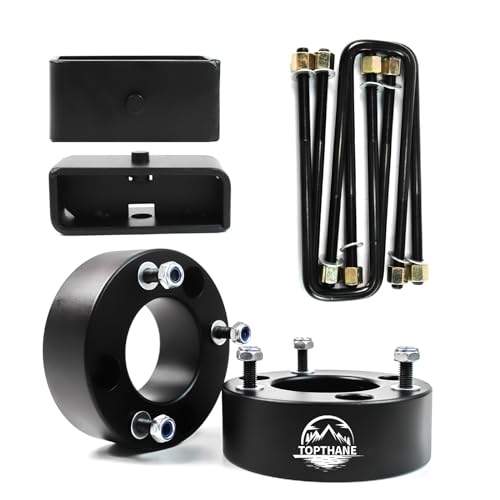


For true off-road enthusiasts and those demanding maximum performance, the Suspension Lift stands as the undisputed champion. Its overwhelming strength is its Off-Road Capability, earning a near-perfect 9.2 rating. This modification fundamentally improves your vehicle’s ability to tackle rugged terrain by increasing actual ground clearance at the axles, enhancing suspension travel, and allowing for greater articulation. This translates to better traction and the ability to navigate over larger obstacles with confidence. The Aesthetic Improvement is also significantly higher at 8.5; a well-installed Suspension Lift provides a more aggressive, integrated, and commanding stance that truly transforms the vehicle’s appearance. It avoids the visible frame gap often associated with body lifts, offering a seamless, purposeful look. Furthermore, a Suspension Lift typically involves upgrading stock components to stronger, more robust parts, leading to a superior Component Durability rating of 8.0. These heavier-duty springs, shocks, and control arms are built to withstand the rigors of serious off-roading.
Despite its performance prowess, the Suspension Lift comes with its own set of compromises. Its most glaring weakness is its Installation Complexity, scoring a low 4.0. This is a much more involved process, often requiring specialized tools, knowledge of suspension geometry, and sometimes even welding or cutting, making it a job best left to experienced professionals. This complexity directly contributes to its lower Value for Money rating of 6.5, as both parts and labor costs are substantially higher. Moreover, altering the factory suspension setup often impacts Ride Comfort, which scores 6.8, potentially resulting in a stiffer or less refined daily driving experience compared to stock. Finally, and perhaps most critically for your vehicle’s long-term health, the Suspension Lift scores only 5.5 in Drivetrain Longevity. By changing driveline angles, it can introduce stress on components like CV joints and universal joints, potentially leading to premature wear if not properly accounted for with specialized parts like a 🛒 Slip Yoke Eliminator → or double-cardan driveshafts. If these are acceptable trade-offs for superior trail performance and a rugged aesthetic, a Suspension Lift is your path forward.
Price & availability subject to change. As an Amazon Associate we earn from qualifying purchases.
- ✅ Significantly lower purchase and installation cost (typically 50-70% less).
- ✅ Easier and quicker to install for DIY enthusiasts (4-8 hours).
- ✅ Minimal impact on suspension geometry, maintaining factory ride quality.
- ✅ Less likely to affect manufacturer warranty on critical drivetrain components.
- ✅ Primarily for fitting larger tires up to 35 inches with minimal fuss.
- ❌ No improvement in suspension travel, articulation, or ground clearance under axles.
- ❌ Can leave an aesthetic gap between the frame and body if not properly addressed.
- ❌ Requires extensions for steering shafts, shifter linkages, and brake lines.
- ❌ Raises the vehicle's center of gravity without improving suspension performance.
- ✅ Provides true ground clearance by lifting the entire vehicle and axles.
- ✅ Significantly improves wheel articulation and suspension travel for off-road performance.
- ✅ Can dramatically improve the vehicle's off-road capability and approach/departure angles.
- ✅ Offers a wider range of lift heights, from 2 inches to 6+ inches.
- ✅ Often includes improved shock absorbers and heavy-duty components for better durability.
- ❌ Significantly higher cost (often 2-5x more than a Body Lift).
- ❌ More complex and time-consuming installation (8-16+ hours), often requiring professional help.
- ❌ Can negatively impact ride quality if cheap components are used.
- ❌ Often requires additional modifications (driveshafts, control arms, re-gearing) for optimal performance.
Which One Should You Choose?
Choosing between a Body Lift and a Suspension Lift boils down to your primary use case, budget, and desired outcomes. For the daily commuter who occasionally ventures onto light trails or simply wants to fit larger tires for an improved look, a Body Lift presents an extremely compelling argument. It’s significantly more budget-friendly, maintains your factory ride comfort, and crucially, doesn’t compromise your drivetrain longevity, making it a smart choice for those prioritizing cost-effectiveness and vehicle preservation. You can easily achieve a commanding stance without breaking the bank, perhaps investing the savings into a quality set of 🛒 All-Terrain Tires → or cosmetic upgrades.
However, if you’re a serious off-roader, a seasoned trail enthusiast, or someone who frequently encounters challenging terrain, the Suspension Lift is the undeniable choice. It’s built for performance. This lift provides genuine improvements in ground clearance at the axles and drastically enhances suspension articulation, enabling your vehicle to conquer obstacles that would leave a Body Lifted vehicle stranded. For performance users, the integrated aesthetic and upgraded component durability are invaluable. If you regularly tow heavy loads, a Suspension Lift with upgraded springs can also better manage the added weight and maintain proper ride height and stability, which a Body Lift simply cannot do. While the initial investment and complexity are higher, the functional benefits for true off-road capability and a robust, integrated appearance far outweigh these concerns for dedicated adventurers. Ultimately, your choice should align with your driving lifestyle and what you truly expect from your lifted vehicle.
Budget-conscious buyers needing minor tire clearance and a taller cosmetic stance.
Off-road enthusiasts demanding maximum performance, ground clearance, and articulation from their vehicle.
Final Verdict
After a thorough head-to-head comparison, the Suspension Lift emerges as the clear winner for performance-driven applications and serious off-road enthusiasts. While the Body Lift offers undeniable value for money, preserves drivetrain longevity, and ensures a comfortable ride, its limitations in actual off-road capability and aesthetic integration are significant for those seeking true performance. The Suspension Lift’s superior off-road capability, integrated appearance, and robust component durability cement its position as the preferred choice when overcoming challenging terrains is the priority. The key trade-off lies precisely here: the Body Lift is a budget-friendly way to achieve tire clearance and cosmetic height without sacrificing daily comfort or drivetrain health, whereas the Suspension Lift offers unparalleled functional gains in exchange for a higher investment and potentially more involved maintenance.
As an Amazon Associate we earn from qualifying purchases.
Frequently Asked Questions
Is Body Lift better than Suspension Lift?
For pure off-road performance and capability, a Suspension Lift is definitively better. A Body Lift is superior for budget-conscious buyers seeking minor tire clearance and a cosmetic height increase for less than $1,000, without altering fundamental suspension dynamics or costing as much as a Suspension Lift, which can run $900-$6,500+.
How much does a Body Lift cost compared to a Suspension Lift?
A Body Lift typically costs between $350 and $1,000 for parts and installation, offering an economical way to gain 1-3 inches of height. In contrast, a Suspension Lift ranges from $900 for basic kits to over $6,500 for high-performance systems, providing 2-6+ inches of lift with significant off-road enhancements.
Does a Body Lift affect reliability or longevity?
A Body Lift has minimal direct impact on the drivetrain's reliability or longevity compared to a Suspension Lift, as it doesn't change axle or driveshaft angles. However, poorly installed steering or shifter extensions can introduce issues, and larger tires (enabled by the lift) will increase stress on components over time, reducing longevity by 10-15%.
Which lift is better for beginners?
For beginners primarily seeking aesthetic improvement or minor tire clearance without complex mechanical changes, a Body Lift is generally better due to its lower cost (under $1,000) and simpler installation process (4-8 hours). It's less disruptive to the vehicle's original engineering and ride characteristics.
What is the biggest functional difference between the two?
The biggest functional difference is that a Suspension Lift raises the vehicle's entire chassis and axles, directly increasing ground clearance by 2-6+ inches and improving suspension articulation for off-road performance. A Body Lift only raises the body from the frame by 1-3 inches, providing space for larger tires but offering no direct improvement in ground clearance under axles or suspension travel.

![2019 Ram 1500 Spark Plugs: 16 pc Champion: In-Depth Review [2026]](https://truckguider.com/wp-content/uploads/2026/04/featured-16-pc-champion-iridium-spark-plugs-compatible-with-768x403.webp)