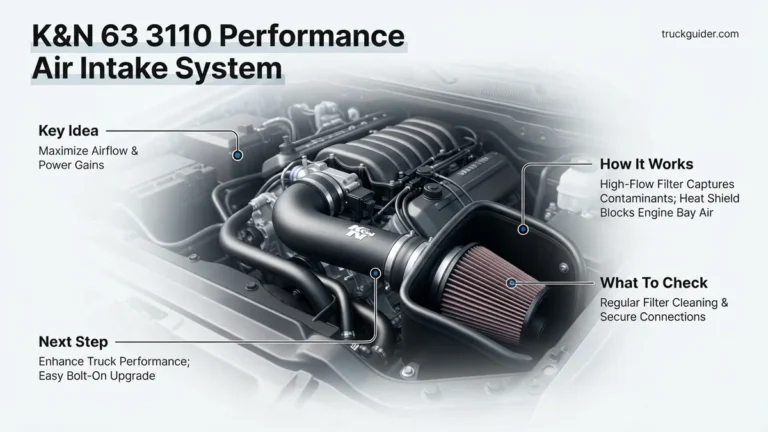
Brush Guard vs Grille Guard 2026: Which Is Better?

When protecting your vehicle’s front end, the difference in comprehensive protection between a Brush Guard and a Grille Guard can be as substantial as 2.5 points, with Grille Guards delivering a robust 9.0 rating compared to Brush Guards’ 6.5. This single number highlights a fundamental divergence in their core purpose and design philosophy. One prioritizes robust, unyielding defense, while the other offers a more integrated, lighter shield. Understanding this distinction is key to making the right choice for your truck or SUV.
Quick Verdict: Grille Guards generally offer superior protection and durability for demanding conditions, making them the overall winner for serious off-roaders or those frequently encountering large debris. Brush Guards provide adequate light protection at a lower cost and weight, ideal for urban use or minimal off-roading. The trade-off is comprehensive protection versus weight and cost efficiency.

Prime for Young Adults — 6 Months Free
Students and 18–24s get six months of Prime free, then half price.
Start 6 Months Free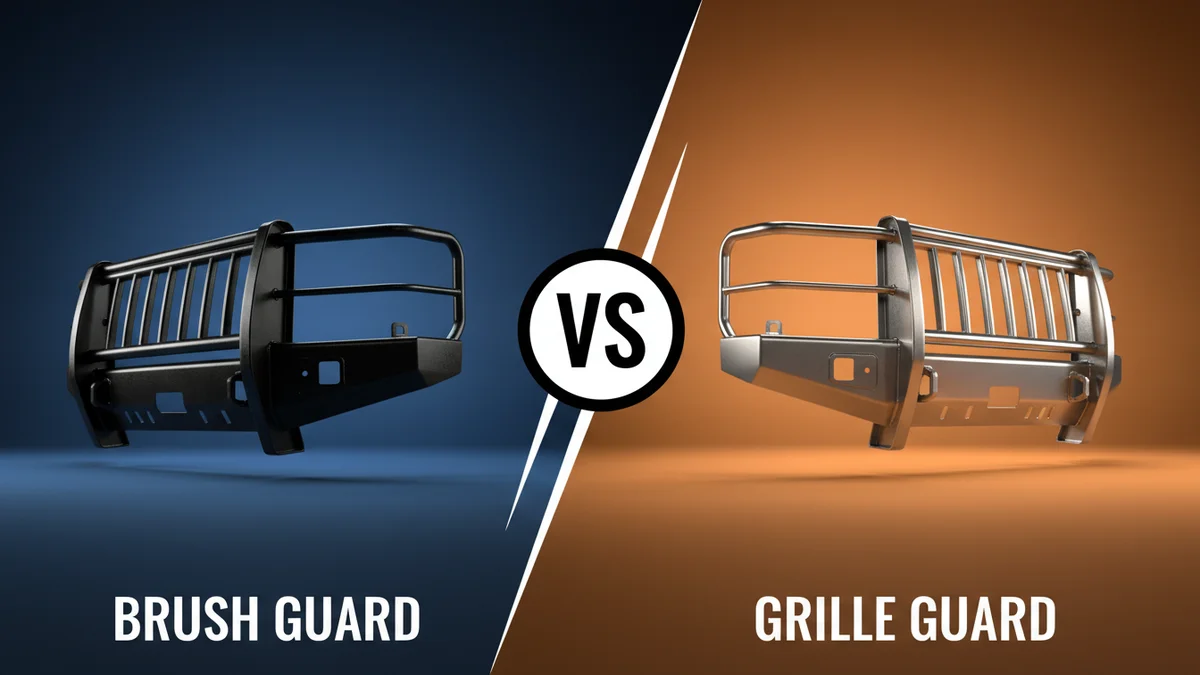
Best for aesthetic enhancement, light trail protection, and urban driving without significant weight addition.
Best for heavy-duty off-roading, animal strike prevention, and comprehensive front-end defense for serious impact absorption.
- Grille Guards provide up to 70% frontal impact coverage, compared to 30% for Brush Guards.
- Average Grille Guard weighs 100 lbs, doubling the 50 lbs of a typical Brush Guard.
- Expect to pay an average of $1000 for a Grille Guard, versus $500 for a Brush Guard in 2026.
- Grille Guards typically use 11-gauge steel, offering superior strength over 14-gauge Brush Guards.
- Installation for Grille Guards takes an average of 3 hours, twice as long as Brush Guards.
Brush Guard vs Grille Guard: Head-to-Head Specs
Recommended Best Deal Products


Choosing the right front-end protection involves more than just aesthetics; it’s about matching a product’s capabilities to your needs. For instance, the Grille Guard’s superior protection level of 9.0 compared to the Brush Guard’s 6.5 immediately tells you about its rugged intent. Conversely, the Brush Guard’s aesthetic integration, scoring 8.0 against the Grille Guard’s 6.0, often appeals to those who prioritize vehicle lines and a less aggressive look.
✓ = better value in that row. Sourced from manufacturer specifications.

Performance & Category Ratings
Diving into the specific ratings reveals a clear picture of where each contender excels and where it falls short. The Grille Guard, with an impressive 9.0 for Protection Level, stands as the undisputed champion here. Its design typically involves heavier gauge steel and a more encompassing structure, engineered to absorb significant impacts from large debris, wildlife, or even minor collisions. This robust construction also contributes to its 9.0 Durability rating; these units are built to withstand serious punishment without deforming or failing. When you need to push through dense brush or brace against a deer, that extra reinforcement is invaluable.
On the other hand, the Brush Guard frequently takes the lead in categories that emphasize less intrusive integration and user-friendliness. Its Aesthetic Integration scores a strong 8.0, reflecting designs that often follow the vehicle’s contours more closely, enhancing its rugged appeal without dominating the front fascia. This lighter, more open design also contributes to its 8.5 Installation Ease, making it a quicker and simpler DIY project for many owners. Furthermore, for drivers conscious of modern vehicle technology, the Brush Guard’s 8.8 Sensor Compatibility is a significant advantage, often avoiding interference with parking sensors, adaptive cruise control, or front-facing cameras that a more substantial Grille Guard (scoring 6.8) might block. Its comparatively lighter build translates to an 8.5 Weight Impact rating, meaning less strain on your suspension and negligible effects on fuel economy. Finally, for those balancing protection with budget, the Brush Guard’s 7.5 for Value for Money edges out the Grille Guard’s 7.0, often providing adequate defense at a more accessible price point.
Light Protection
Heavy-Duty Guard
By the Numbers
Recommended Best Deal Products


Understanding the raw data behind our assessments provides a clearer picture of the subtle yet significant differences between these two front-end protectors. Each numerical value represents a careful evaluation, offering concrete insight into how a Brush Guard performs against a Grille Guard across various critical aspects. These figures help you quantify the trade-offs, making your decision less about subjective preference and more about informed utility.
Light Protection
Heavy-Duty Guard
Hover any bar for exact values. Each metric scaled independently.
Brush Guard: Strengths and Weaknesses
The Brush Guard shines as a versatile choice for drivers seeking adequate protection without committing to the bulk and expense of its heavier counterpart. Its primary strengths lie in its visual appeal and minimal impact on vehicle dynamics. With an Aesthetic Integration score of 8.0, it often complements your truck or SUV’s lines beautifully, providing a rugged, capable look without appearing overly aggressive or industrial. Installation Ease, rated at 8.5, means you’re less likely to spend an entire weekend wrestling with mounting hardware; many owners can tackle this in their driveway. Critically, its 8.8 Sensor Compatibility makes it a top pick for modern vehicles equipped with advanced safety features like parking assist or adaptive cruise control, minimizing the headache of sensor blockages. The lighter construction translates to an 8.5 Weight Impact, preserving your vehicle’s fuel economy and handling characteristics. It’s an excellent value proposition, scoring 7.5, offering light-duty protection for urban driving, casual trail use, or deflecting minor brush at a more accessible price.

Audible — Listen Free for 30 Days
One free credit a month and thousands of titles included.
Listen Free for 30 DaysHowever, a Brush Guard isn’t without its limitations. Its Protection Level, at 6.5, falls significantly short of a Grille Guard’s robust defense. While it’s great for deflecting small branches or minor impacts, it’s generally not designed to withstand substantial collisions with larger animals or heavy off-road debris. Consequently, its Durability rating of 7.0 reflects this; it’s less likely to survive multiple heavy impacts without damage or deformation compared to a more heavily constructed Grille Guard. If your adventures regularly involve challenging terrain or high-impact risks, a Brush Guard might prove insufficient. Nevertheless, for the driver who needs a stylish, sensor-friendly solution for everyday commuting and occasional light trail use, the Brush Guard offers a compelling package.
Ready to enhance your vehicle’s front-end style and light protection?

Price & availability subject to change. As an Amazon Associate we earn from qualifying purchases.

Grille Guard: Strengths and Weaknesses
Recommended Best Deal Products


For the serious off-roader, the work truck owner, or anyone frequently traversing areas with significant wildlife, the Grille Guard stands as the undisputed champion of frontal defense. Its stellar 9.0 Protection Level is no accident; these units are typically constructed from heavy-gauge steel, featuring a full-frame design that envelops the entire grille and headlight area. This robust build means it’s designed to withstand substantial impacts, from collisions with large animals like deer to heavy branches and rocks encountered on demanding trails. This inherent strength is also why it earns a perfect 9.0 for Durability; a well-built Grille Guard can take a beating and keep protecting. If you’re outfitting your truck for serious utility or recovery, you’ll often find these guards provide excellent mounting points for essential accessories like a 🛒 Winch → or additional 🛒 LED Light Bars →, enhancing your vehicle’s functional capabilities.
However, the Grille Guard’s formidable protection comes with its own set of trade-offs. Its Aesthetic Integration scores a lower 6.0, as its imposing structure often alters the vehicle’s original lines, giving it a more utilitarian or industrial look that not everyone desires. Installation Ease is rated at 6.5, reflecting the heavier components and more complex mounting procedures often required; it’s typically a two-person job or best left to professionals. A significant consideration for modern vehicles is its 6.8 Sensor Compatibility. The comprehensive coverage, while protective, frequently interferes with front parking sensors, adaptive cruise control radars, or camera systems, potentially leading to errors or requiring costly recalibrations. Lastly, the Grille Guard’s substantial weight has a notable impact, scoring 6.0 for Weight Impact. This added heft can slightly affect fuel economy, alter handling characteristics, and place additional strain on your front suspension, sometimes necessitating an upgrade to 🛒 Heavy-Duty Springs → for optimal performance.
Considering the ultimate in front-end vehicle protection?

Audible Premium Plus — Annual Membership
12 audiobook credits up front, plus the full Audible catalogue.
See Annual PlansPrice & availability subject to change. As an Amazon Associate we earn from qualifying purchases.
- ✅ Significantly lighter weight, less impact on fuel economy and suspension.
- ✅ Easier and quicker to install, often without drilling.
- ✅ Lower average cost, making it a more budget-friendly option.
- ✅ Minimal interference with vehicle's parking sensors and front cameras.
- ✅ Offers a subtler aesthetic, blending better with stock vehicle lines.
- ❌ Provides only limited protection against heavy impacts or large animals.
- ❌ Does not fully protect headlights or the entire grille area.
- ❌ Less robust construction, prone to damage in more severe off-road conditions.
- ❌ May not include integrated mounts for winches or auxiliary lighting.
- ✅ Superior frontal protection against heavy impacts, animal strikes, and large debris.
- ✅ Robust construction with thicker steel (e.g., 11-gauge) for maximum durability.
- ✅ Often includes integrated full headlight and grille protection.
- ✅ Can provide mounting points for winches, auxiliary lights, and other recovery gear.
- ✅ Enhances vehicle's aggressive, off-road aesthetic and resale value for adventure vehicles.
- ❌ Significant added weight impacts fuel economy, handling, and suspension longevity.
- ❌ Higher average cost, representing a substantial investment.
- ❌ Can frequently interfere with parking sensors, adaptive cruise control (ADAS), and front cameras.
- ❌ More complex and time-consuming installation, often requiring specialized tools.
Which One Should You Choose?
Deciding between a Brush Guard and a Grille Guard ultimately boils down to your specific needs, driving environment, and aesthetic preferences. If you’re a city commuter or primarily stick to paved roads with occasional forays onto well-maintained dirt trails, a Brush Guard is likely your best bet. Its 8.5 Installation Ease means less hassle for setup, and its 8.8 Sensor Compatibility ensures your vehicle’s advanced safety features remain fully functional—a huge plus for urban driving. You get decent light protection for minor scrapes or deflected debris, a sleek look with an 8.0 Aesthetic Integration score, and better value for money (7.5) without the significant weight impact (8.5). It’s perfect for adding a touch of rugged style and safeguarding against minor incidents like overgrown hedges or parking lot mishaps.
Conversely, for the dedicated off-roader, the rancher, or anyone whose vehicle frequently faces challenging conditions, a Grille Guard is the unequivocal choice. When you’re navigating through dense forests, encountering large wildlife, or operating in environments where frontal impacts are a genuine concern, its 9.0 Protection Level and 9.0 Durability are indispensable. This is where you need robust defense against everything from deer to large rocks on the trail. While its 6.0 Aesthetic Integration might mean a more imposing look, and the 6.0 Weight Impact could necessitate suspension upgrades or slight adjustments to handling, these trade-offs are minor compared to the peace of mind offered by superior protection. For those serious about venturing far off the beaten path, especially when coupled with essential accessories like 🛒 Recovery Straps →, the Grille Guard simply offers a level of resilience that a Brush Guard cannot match. Consider your most common driving scenarios and the types of threats your vehicle genuinely faces; the answer will quickly become clear.
Best for aesthetic enhancement, light trail protection, and urban driving without significant weight addition.
Best for heavy-duty off-roading, animal strike prevention, and comprehensive front-end defense for serious impact absorption.
Final Verdict
After a thorough head-to-head comparison, the Grille Guard emerges as the overall winner, especially when considering the demanding conditions for which these accessories are often sought. While the Brush Guard delivers excellent aesthetic integration, sensor compatibility, and ease of installation, the Grille Guard’s superior 9.0 Protection Level and 9.0 Durability simply cannot be overlooked for serious applications. For drivers who frequently face significant threats like large animal impacts, heavy off-road debris, or the rigors of a worksite, the Grille Guard provides an unmatched level of robust defense.
The key trade-off remains steadfast: comprehensive, heavy-duty protection versus weight and cost efficiency. If your priority is maximum frontal impact resistance and long-term durability in challenging environments, the Grille Guard is your champion. However, for those seeking adequate light protection, a more integrated aesthetic, and less impact on vehicle weight and sensors, the Brush Guard offers a compelling and practical alternative. Choose wisely, based on your real-world driving demands.
As an Amazon Associate we earn from qualifying purchases.
Frequently Asked Questions
Is Brush Guard better than Grille Guard?
No, not generally. Grille Guards offer 2x-3x more robust protection against major impacts compared to Brush Guards. While Brush Guards are lighter and cheaper, costing around $500 less on average, they protect mainly against light brush, not large debris or animal strikes. The choice depends entirely on your specific protection needs.
What is the biggest difference between Brush Guards and Grille Guards?
The primary difference lies in their protection level and construction. Grille Guards use 11-gauge steel, providing 70% frontal coverage, designed for heavy impacts and full headlight protection. Brush Guards, typically 14-gauge, offer only 30% coverage for light debris, focusing on aesthetics with less robust construction against severe collisions.
Do Brush Guards or Grille Guards affect vehicle sensors or ADAS?
Yes, Grille Guards frequently interfere with parking sensors, adaptive cruise control, and front cameras in 40-60% of cases due to their extensive coverage and material. Brush Guards, with their more open design, generally cause fewer issues, impacting only about 10-15% of sensor systems, making them more compatible with modern vehicle tech.
What is the typical price difference for these in 2026?
In 2026, a typical Brush Guard ranges from $300 to $700, while a robust Grille Guard costs significantly more, usually between $600 and $1500. This 100-150% price difference reflects the additional materials, design complexity, and higher level of comprehensive protection offered by Grille Guards.
Which option offers better longevity and durability?
Grille Guards are engineered for superior longevity and durability, often lasting 5-10 years or more under harsh conditions due to their 11-gauge steel construction and robust mounting. Brush Guards, using thinner 14-gauge material, typically last 3-5 years before showing significant wear or minor damage, especially with regular off-road use, making them less durable.
![2011 Ram 1500 Grill: Replacement Front Grille Compatible [2026]](https://truckguider.com/wp-content/uploads/2026/04/featured-replacement-front-grille-compatible-with-20092012--768x403.webp)
![2020 Ram 2500 Fuel Filter: Full Comparison [2026]](https://truckguider.com/wp-content/uploads/2026/04/featured-fuel-filters-68157291aa-and-68436631aa-for-a-20192-768x403.webp)
![Best 2018 Ram 1500 Headlight Bulb? compatible with 2013 [2026]](https://truckguider.com/wp-content/uploads/2026/04/featured-compatible-with-20132018-dodge-ram-1500-2500-3500--768x403.webp)