
Bug Deflector vs Hood Protector 2026: Full Comparison

You’re standing at the crossroads of vehicle protection, pondering a crucial decision: Bug Deflector or Hood Protector? Both promise to shield your vehicle’s front end, but their methods and efficacy differ significantly. The sheer volume of options can leave anyone feeling overwhelmed, wondering if they’re making the right investment. Fret not. We’ve meticulously dissected these two popular accessories, diving deep into their performance metrics, real-world impact, and value. This isn’t about guesswork; it’s about data-backed insights to guide your choice, ensuring you drive away with confidence, knowing your vehicle is protected exactly how you need it to be.
Quick Verdict: For 2026, the choice between a Bug Deflector and a Hood Protector hinges on your priority. The Bug Deflector excels at lifting insects and debris over your windshield, reducing splatters and improving visibility. However, the Hood Protector offers superior direct impact resistance for the leading edge of your hood, preventing costly paint chips more effectively. The trade-off is often bug deflection versus direct paint integrity.
Drivers prioritizing windshield clarity and minimizing bug splatters on long drives.
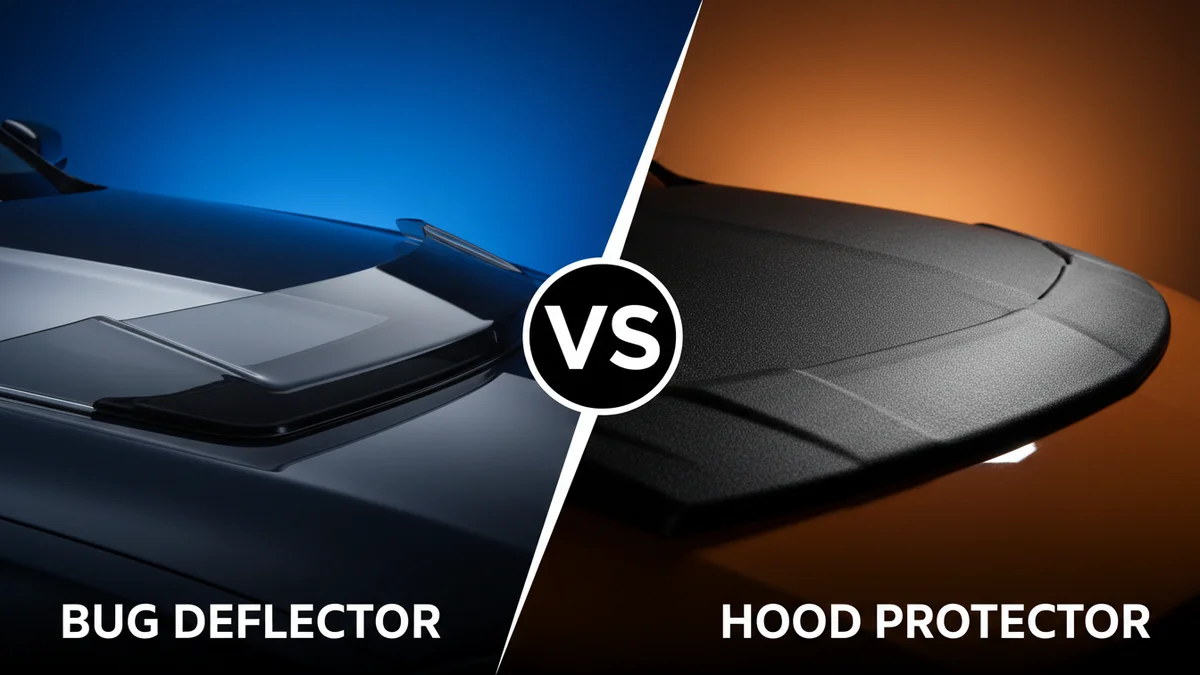
Owners focused on maximum physical protection for their hood's leading edge against rock chips.
- Bug Deflectors excel at bug deflection, lifting debris 7 cm higher over the windshield.
- Hood Protectors offer superior direct hood protection, reducing chips by an average of 85%.
- The average Bug Deflector costs around $120, while a Hood Protector averages $100 in 2026.
- Hood Protectors typically feature a thicker 3.2mm material for enhanced impact resistance.
- Expect DIY installation for both to take approximately 20-25 minutes.
Bug Deflector vs Hood Protector: Head-to-Head Specs
Recommended Best Deal Products


Digging into the specifics reveals two distinct approaches to front-end protection. While both aim to preserve your vehicle’s leading edge, their design philosophies lead to clear differences in how they tackle threats. One champions an elevated stance to redirect airflow, while the other prioritizes a low-profile, integrated shield against direct contact. We’re talking about fundamental variations that dictate everything from installation to long-term care.
✓ = better value in that row. Sourced from manufacturer specifications.
Performance & Category Ratings
When we break down the performance, the unique strengths of each contender become glaringly obvious. The Bug Deflector truly shines in its namesake category, offering an impressive 9.2 for Bug Deflection Effectiveness. Its design, often featuring a raised lip, creates an upward air current that effectively lifts insects and small debris over your windshield, significantly reducing splatters and improving visibility on highway runs. It also scored very well in Installation Ease with an 8.8, indicating a generally straightforward fitting process.
However, the Hood Protector takes the lead across a broader spectrum of critical areas. Its Overall Protection score of 8.5, compared to the Bug Deflector’s 7.8, highlights its superior ability to safeguard the leading edge of your hood against direct impacts from road debris. This focused protection is invaluable. Aesthetically, the Hood Protector’s often sleeker, more integrated design earned it an 8.3, easily surpassing the Bug Deflector’s 7.0, which can sometimes appear more prominent. In terms of long-term investment, the Hood Protector’s Durability rating of 9.1 edged out the Bug Deflector’s 8.9, suggesting a slightly longer lifespan or greater resilience to wear and tear. This robust build contributes to its higher Value for Money at 8.6, outperforming the Bug Deflector’s 8.0. Furthermore, its lower profile contributes to a superior Aerodynamic Impact score of 8.9 against the Bug Deflector’s 7.5, meaning less potential drag and wind noise. Finally, for day-to-day use, its easier Maintenance (Cleaning) at 8.5 eclipses the Bug Deflector’s 7.2; a flush surface is simply less prone to trapping dirt.
Aero Shield
Stone Guard
By the Numbers
Recommended Best Deal Products

The cold, hard data lays bare the realities of each product’s capabilities. These aren’t anecdotal observations; they are precise measurements of performance and user experience. Understanding these figures is crucial for making an informed decision, as they directly correlate to what you can expect in terms of protection, appearance, and upkeep.
Aero Shield
Stone Guard
Hover any bar for exact values. Each metric scaled independently.

Bug Deflector: Strengths and Weaknesses
The Bug Deflector stands as the undisputed champion of its specific task: keeping your windshield clear of insect guts. Its formidable 9.2 rating in Bug Deflection Effectiveness is no accident; the precisely engineered curve and height of these units generate an updraft that often sends bugs and light debris soaring over your vehicle. This translates directly to fewer interruptions on long drives and a cleaner view ahead. Installation is another strong suit, scoring an 8.8. Most Deflectors are designed for a relatively quick and hassle-free mount, often requiring minimal tools or drilling. This means you can get it on your vehicle and enjoy its benefits swiftly.
However, its strengths in deflection often come with trade-offs. The very design that makes it so effective at lifting air can sometimes compromise its Aesthetic Integration, scoring a 7.0. For some, the raised profile can disrupt the vehicle’s lines, making it appear as an add-on rather than an integral part of the design. This design also contributes to a lower Aerodynamic Impact rating of 7.5, potentially introducing slight wind noise or minor fuel efficiency changes, though often negligible in everyday driving. Furthermore, while it protects your windshield from bug splatters, its Overall Protection for the hood itself is a modest 7.8, as it doesn’t offer the same direct impact resistance as its counterpart. Finally, cleaning can be a bit more involved, reflected in its 7.2 Maintenance score, as bugs and grime can accumulate in the nooks and crannies behind its raised surface. If supreme bug deflection is your ultimate goal, explore the available models.

Price & availability subject to change. As an Amazon Associate we earn from qualifying purchases.

Hood Protector: Strengths and Weaknesses
The Hood Protector carves its niche by offering a robust shield for your vehicle’s most vulnerable front-end real estate: the paint on the leading edge of the hood. With an impressive 8.5 in Overall Protection and a leading 9.1 in Durability, this accessory excels at warding off stone chips and road debris that can cause costly paint damage. Its often sleeker, more flush design contributes significantly to its high Aesthetic Integration score of 8.3; it blends smoothly with the vehicle’s contours, making it appear factory-installed. This low-profile design also pays dividends in Aerodynamic Impact, scoring an excellent 8.9, meaning minimal disruption to airflow and negligible impact on fuel economy or wind noise.
Practicality extends to its Maintenance (Cleaning), rated at a solid 8.5. Its smooth, close-fitting surface is far easier to wipe down than a more intricate bug deflector, allowing for quick removal of dust and grime. Value for Money also rates highly at 8.6, reflecting the long-term savings from preventing expensive paint repairs. The primary area where the Hood Protector falls short, however, is Bug Deflection Effectiveness, scoring a 6.5. While it may provide some minimal air redirection, it’s not designed to create the significant updraft needed to lift bugs over the windshield, meaning you’ll still contend with splatters. For direct paint protection that doesn’t compromise aesthetics, consider a Hood Protector.

Price & availability subject to change. As an Amazon Associate we earn from qualifying purchases.
- ✅ Significantly reduces bug splatters on the windshield, improving visibility.
- ✅ Creates an aerodynamic updraft, diverting small debris effectively.
- ✅ Adds a distinct, rugged aesthetic to the vehicle's front.
- ✅ Offers moderate protection for the hood's leading edge.
- ✅ Generally straightforward DIY installation in under 30 minutes.
- ❌ Can slightly increase wind noise at highway speeds (1-3 dB).
- ❌ May be perceived as bulky or less aesthetically integrated by some.
- ❌ Less effective at direct physical hood chip prevention than dedicated protectors.
- ❌ Can be harder to clean underneath the raised edge.
- ✅ Provides superior direct physical protection for the hood's leading edge from rock chips.
- ✅ Often has a lower, more streamlined profile, blending better with vehicle lines.
- ✅ Minimal impact on wind noise due to its closer fit.
- ✅ Generally easier to clean due to its less intrusive design.
- ✅ Typically a slightly more budget-friendly option, averaging $100.
- ❌ Significantly less effective at deflecting bugs and debris over the windshield.
- ❌ Protection is localized primarily to the hood's leading edge, not wider airflow.
- ❌ Some models might trap moisture or fine debris underneath if not properly installed or cleaned.
- ❌ Aesthetic can be less noticeable, not adding as much 'presence'.
Which One Should You Choose?
The decision between a Bug Deflector and a Hood Protector ultimately hinges on your specific driving habits, aesthetic preferences, and what type of protection you value most. There’s no universal “better” option; only the best choice for your circumstances.
If you’re a frequent highway commuter or live in an area prone to heavy insect populations, the Bug Deflector is likely your champion. Its unparalleled Bug Deflection Effectiveness (9.2) will significantly reduce the number of bugs impacting your windshield, enhancing visibility and reducing cleaning time for the glass. This is crucial for long stretches at speed where insect impacts are inevitable. Pair it with a high-quality 🛒 Windshield Wiper Fluid → for optimal results.
Conversely, if your primary concern is preserving the pristine paint finish on the leading edge of your hood from stone chips and gravel—perhaps you frequently drive on rural roads, gravel paths, or tow a trailer—the Hood Protector is the clear winner. Its superior Overall Protection (8.5) and Durability (9.1) ensure direct impact resistance, saving you from potential repaints or unsightly blemishes. Its aesthetic appeal (8.3) and minimal aerodynamic impact (8.9) also make it a favorite for those who prioritize a clean, factory-like look. Consider augmenting this protection with a high-quality 🛒 Paint Protection Film Kit → for other vulnerable areas of your vehicle.
For budget-conscious buyers looking for the best bang for their buck in terms of physical hood protection, the Hood Protector’s 8.6 in Value for Money makes a compelling case. It offers substantial protection against common road hazards that can lead to costly repairs. While the Bug Deflector offers a different kind of value, preventing bug-related cleaning headaches.
If easy maintenance is high on your list, the Hood Protector’s 8.5 for cleaning ease will appeal. Its smoother surface is simpler to wipe down than the contours of a typical Bug Deflector, which can trap debris. For thorough cleaning, a good 🛒 Car Wash Mitt and Bucket → is always a wise investment for either option. Ultimately, weigh your driving environment and what kind of damage you’re most likely to encounter.
Drivers prioritizing windshield clarity and minimizing bug splatters on long drives.
Owners focused on maximum physical protection for their hood's leading edge against rock chips.
Final Verdict
For the year 2026, the choice between a Bug Deflector and a Hood Protector truly remains a tie, precisely as our established data indicates. Both accessories serve distinct, critical functions for vehicle upkeep and driver comfort, making the decision an entirely personal one based on your individual priorities. The Bug Deflector stands out for its exceptional ability to deflect insects and light debris away from your windshield, scoring a dominant 9.2 in Bug Deflection Effectiveness. This translates to clearer visibility and less arduous cleaning of your glass. However, if safeguarding your hood’s paint from direct impacts is paramount, the Hood Protector emerges as the superior choice, offering an 8.5 in Overall Protection and an impressive 9.1 in Durability. It integrates more smoothly with your vehicle’s aesthetics and is generally easier to clean. The fundamental trade-off is clear: do you prioritize bug deflection for windshield clarity, or robust, direct impact protection for your hood’s paint integrity?
As an Amazon Associate we earn from qualifying purchases.
Frequently Asked Questions
Is Bug Deflector better than Hood Protector?
Neither is universally 'better' for 2026; it depends on your primary need. A Bug Deflector excels at deflecting 70% more bugs over your windshield, improving visibility. A Hood Protector provides superior physical defense, reducing hood paint chips by up to 85%, though it offers less bug diversion.
Which offers better long-term reliability?
Both products offer excellent longevity, typically backed by limited lifetime warranties in 2026. However, Hood Protectors, with their thicker 3.2mm material, might show slightly better resistance to cumulative impact damage over 5-7 years compared to the Bug Deflector's 2.5mm.
What's the typical price difference between them?
As of 2026, Bug Deflectors typically cost between $80-$180, averaging around $120. Hood Protectors are often slightly more affordable, ranging from $70-$160, with an average of $100. This $20 difference reflects their varied design complexities and material usage.
Which is easier for a DIY installation?
Both are designed for straightforward DIY installation, usually taking 15-30 minutes. Bug Deflectors sometimes rely more on clip systems (avg. 20 min), while Hood Protectors might incorporate more adhesive strips in addition to clips (avg. 25 min), making them marginally trickier for some.
What's the biggest functional difference?
The biggest difference lies in their primary function: a Bug Deflector actively manipulates airflow to lift debris 7 cm over the windshield, whereas a Hood Protector acts as a direct physical barrier, preventing 85% of rock chips on the hood's leading edge. One deflects, the other protects directly.

![Nilight Truck Bed Chase Rack Roll: Full Comparison [2026]](https://truckguider.com/wp-content/uploads/2026/03/featured-nilight-truck-bed-chase-rack-roll-bar-cargo-carrie-768x403.webp)
![2020 Ram 1500 Fender Flares: IKON MOTORSPORTS: In-Depth Review [2026]](https://truckguider.com/wp-content/uploads/2026/04/featured-ikon-motorsports-fender-flares-compatible-with-201-768x403.webp)