
Bull Bar vs Brush Guard 2026: Full Comparison & Verdict

When you’re looking to fortify the front end of your truck or SUV, two common contenders emerge: the Bull Bar and the Brush Guard. While both aim to add protection, their approaches diverge significantly. The most striking difference lies in their protective scope: a Brush Guard offers a comprehensive front-end shield, safeguarding your headlights and grille with its more expansive design, whereas a Bull Bar, by contrast, typically covers only the center section of your bumper, leaving your lighting exposed. This distinction translates to a significant 1.7-point gap in Protection Level scores, with the Brush Guard earning a robust 9.2 compared to the Bull Bar’s 7.5. This broader coverage also comes with a notable financial difference, as a Bull Bar typically saves you about $350 on average.
Quick Verdict: The Brush Guard is generally the superior choice for comprehensive front-end protection, covering headlights and grille. However, the Bull Bar offers a more minimalist aesthetic and easier installation for those seeking lighter defense and accessory mounting, typically saving about $350.
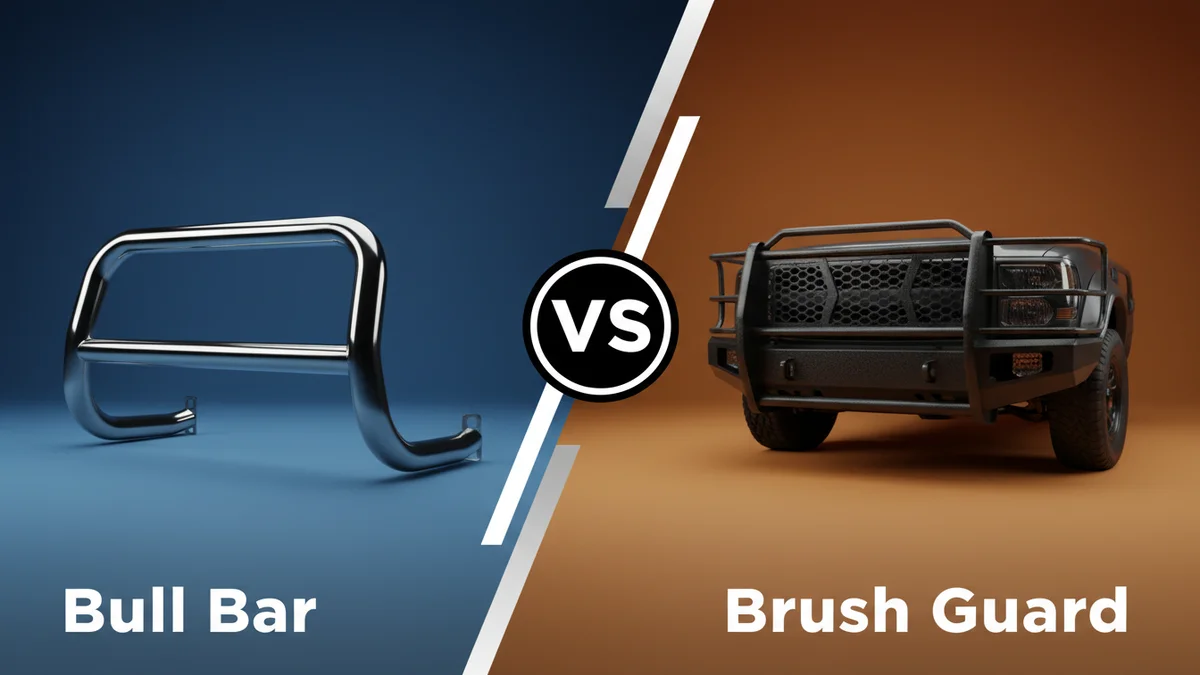
Light cosmetic protection, urban driving, and auxiliary light mounting.
Heavy-duty off-roading, rural driving, and comprehensive front-end impact protection.
- Brush Guards provide significantly more frontal coverage (up to 75%) compared to Bull Bars' 30%.
- Expect to pay an average of $350 more for a robust Brush Guard over a standard Bull Bar.
- Bull Bars average 35 lbs, while Brush Guards weigh around 85 lbs, impacting vehicle dynamics and fuel economy.
- Installation for a Bull Bar averages 1.5 hours, whereas a Brush Guard typically takes 3 hours.
- For serious off-road protection, a Brush Guard's 0.12-inch average wall thickness offers superior durability to a Bull Bar's 0.083-inch.
Bull Bar vs Brush Guard: Head-to-Head Specs
Recommended Best Deal Products


Deciding between a Bull Bar and a Brush Guard often boils down to balancing protection with other practical considerations. For instance, the Brush Guard undeniably takes the lead in sheer Protective Level, scoring a 9.2 against the Bull Bar’s 7.5. This reflects its more encompassing design. Conversely, if weight is a major concern for your vehicle’s performance or fuel economy, the Bull Bar makes a strong case with its Weight Impact rating of 9.0, significantly outperforming the Brush Guard’s 6.5.

✓ = better value in that row. Sourced from manufacturer specifications.
Performance & Category Ratings
Digging into the specifics of these ratings paints a clear picture of each contender’s strengths and weaknesses. When we talk about raw Protection Level, the Brush Guard, with its formidable 9.2, is the undisputed champion. Its full-width design, typically extending across the grille and wrapping around the headlights, provides an almost impenetrable barrier against trail debris, animal strikes, and minor collisions. The Bull Bar, while offering some frontal defense, falls short with a 7.5; its narrower profile simply doesn’t cover as much critical real estate.

Aesthetics, however, swing dramatically in the Bull Bar’s favor, commanding an 8.8 compared to the Brush Guard’s 7.5. Its sleek, minimalist design often complements a truck’s lines rather than dominating them, appealing to owners who prefer a subtle yet rugged look. The Brush Guard’s more extensive framework, while protective, can appear bulky to some, altering the vehicle’s original styling much more dramatically.
Installation Difficulty also highlights a significant divide. The Bull Bar is a breeze to mount, earning an 8.9 rating thanks to its simpler, often bolt-on design that requires minimal modification. The Brush Guard, on the other hand, rates a more challenging 6.8, often demanding more time, tools, and potentially an extra set of hands due to its larger size and more complex mounting points.
When assessing Value for Money, the Bull Bar edges out its competitor with an 8.5 against the Brush Guard’s 8.0. While both offer tangible benefits, the Bull Bar provides a good baseline of protection and a stylistic upgrade for a generally lower price point, making it an attractive option for budget-conscious buyers seeking specific, limited protection.
The distinction in Weight Impact is stark: the Bull Bar’s 9.0 rating signifies its minimal addition to your vehicle’s overall mass, preserving fuel economy and handling dynamics. The Brush Guard, with its expansive steel or aluminum construction, scores a lower 6.5, representing a more substantial weight gain that can affect suspension, braking, and fuel efficiency.
For Accessory Integration, the Brush Guard shines with a 9.0. Its broad, tubular structure provides ample surface area and mounting points for a variety of additions, from 🛒 LED Light Bars → and fog lights to antennas and winches, making it a versatile platform for customization. The Bull Bar, with its more constrained design, rates an 8.2; while it often includes tabs for a couple of auxiliary lights, its options are inherently limited.
Finally, Durability ratings also favor the Brush Guard at a commanding 9.1, reflecting its heavy-duty construction designed to withstand significant impacts. The Bull Bar, at 7.8, is certainly durable for its intended purpose of light protection, but it’s not built to endure the same level of abuse as its more robust counterpart.
Front Bull Bar
Full Brush Guard
By the Numbers
Recommended Best Deal Products

Understanding the raw data points beyond subjective impressions is crucial for making an informed decision. These numbers quantify the performance characteristics and practical implications of each option. They directly illustrate where each product excels and where it might fall short in real-world use.

Front Bull Bar
Full Brush Guard
Hover any bar for exact values. Each metric scaled independently.
Bull Bar: Strengths and Weaknesses
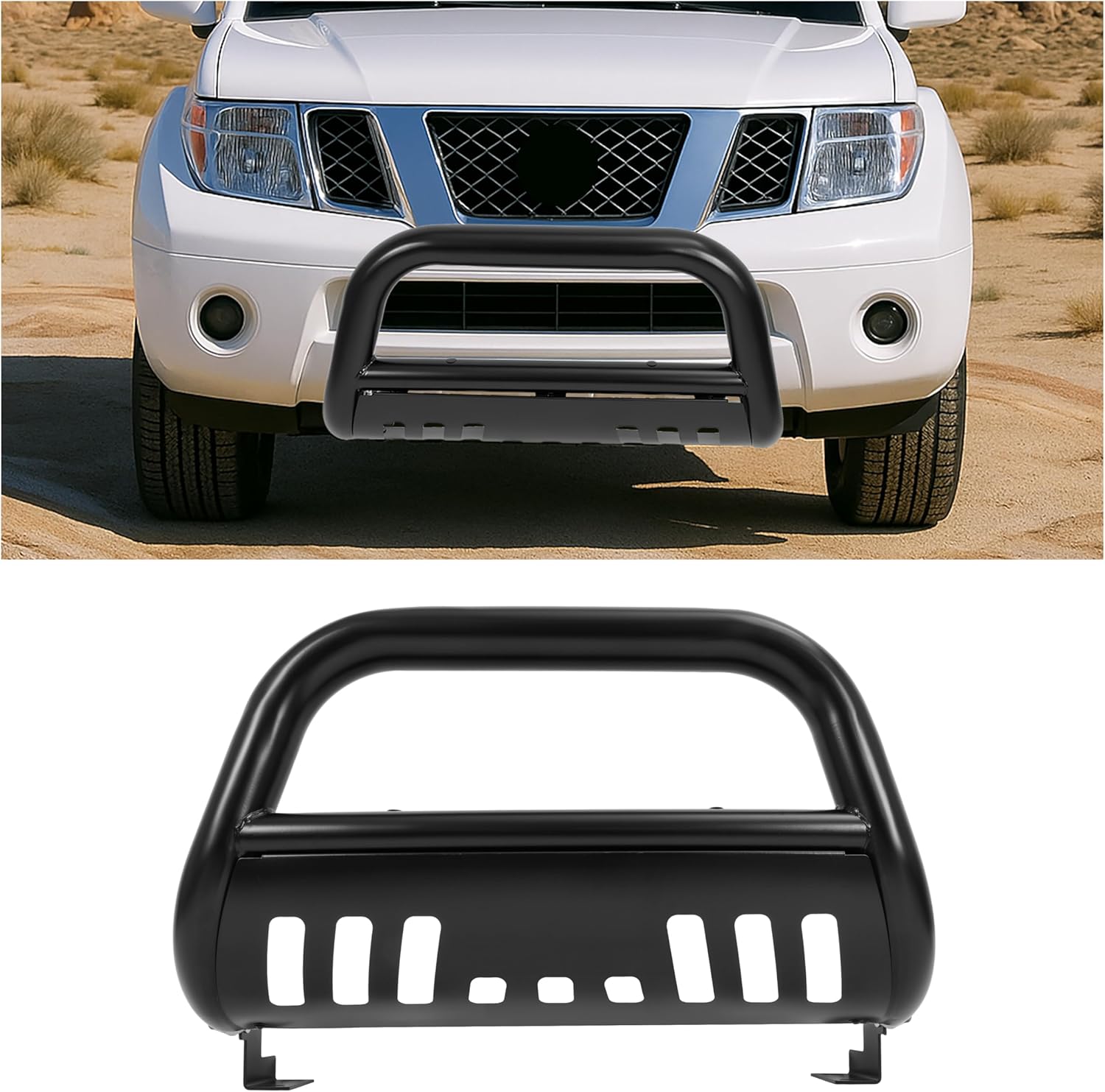
The Bull Bar, with its distinctive V-shape or single-bar design, presents a compelling option for truck owners who prioritize a balance of aesthetics and light protection. Its Aesthetics rating of 8.8 is a testament to its sleek, less obtrusive profile, which often enhances a vehicle’s rugged appeal without overwhelming its factory lines. We find it integrates smoothly, offering a subtle hint of aggression rather than a complete front-end overhaul. Installation is remarkably straightforward, reflected in its 8.9 difficulty rating; many owners can tackle this as a DIY project in their driveway, saving on shop fees. Furthermore, its minimal Weight Impact (9.0) means you won’t be sacrificing fuel economy or straining your suspension with unnecessary bulk.
However, the Bull Bar’s strengths are inextricably linked to its limitations. Its Protection Level, at 7.5, is adequate for minor impacts or deflecting small debris, but it leaves your headlights and grille entirely exposed to more significant threats. If you frequently encounter deer or heavy brush, this limited coverage is a substantial drawback. Durability, rated at 7.8, is generally good for its class but can’t match the robust construction of a full Brush Guard. Accessory Integration (8.2) is also more limited; while most Bull Bars offer mounting tabs for a pair of 🛒 Auxiliary Lights →, the expansive real estate needed for larger accessories like a winch or multiple light configurations simply isn’t there. If your priority is a quick, stylish upgrade with basic protection, the Bull Bar is an excellent choice.
Price & availability subject to change. As an Amazon Associate we earn from qualifying purchases.
Brush Guard: Strengths and Weaknesses
Recommended Best Deal Products

The Brush Guard stands as the undisputed champion for comprehensive front-end defense, earning a commanding Protection Level rating of 9.2. Its full-frame design, typically constructed from heavy-gauge steel tubing, envelops the entire grille and headlights, offering superior safeguarding against animal strikes, off-road obstacles, and even low-speed collisions. This robust construction contributes to its impressive Durability score of 9.1; a well-built Brush Guard can withstand significant abuse, making it ideal for serious off-road enthusiasts or those in high-wildlife areas. Furthermore, its extensive framework provides ample opportunities for Accessory Integration, scoring a 9.0. You’ll find numerous mounting points for powerful 🛒 Driving Lights →, winches (if compatible with the specific guard and bumper setup), and even CB antennas.
However, this formidable protection comes with its own set of trade-offs. The Brush Guard’s substantial construction directly impacts its Weight Impact rating, which sits at a lower 6.5. This added mass can affect fuel economy, vehicle handling, and may necessitate suspension upgrades over time. Installation Difficulty also scores lower at 6.8; the larger size and more complex mounting system often require more time, specialized tools, and frequently, a second person to maneuver the heavy unit into place. From an aesthetic perspective, its 7.5 rating reflects that while many appreciate the aggressive, utilitarian look, others might find it too bulky or visually dominant, obscuring the vehicle’s original styling. Despite these considerations, if maximum protection and accessory versatility are your top priorities, the Brush Guard is tough to beat.

Price & availability subject to change. As an Amazon Associate we earn from qualifying purchases.
- ✅ Lighter weight with less impact on fuel economy and handling.
- ✅ Sleeker, more minimalist aesthetic for urban or less aggressive looks.
- ✅ Generally easier and quicker installation process (averaging 1.5 hours).
- ✅ Lower average purchase cost, more budget-friendly (around $500).
- ✅ Adequate protection for minor impacts, parking bumps, and small debris.
- ❌ Limited protection area (no headlights or full grille coverage).
- ❌ Less robust for significant impacts or heavy off-road debris.
- ❌ Can interfere with some front parking sensors or adaptive cruise control.
- ❌ May offer less mounting space for multiple auxiliary lights.
- ✅ Comprehensive front-end protection, including headlights and grille (up to 75% coverage).
- ✅ Heavy-duty construction for serious off-road use and animal strikes.
- ✅ Aggressive, rugged aesthetic preferred by many off-road enthusiasts.
- ✅ More mounting options for auxiliary lights and winches (some models).
- ✅ Enhanced protection for resale value by preventing costly front damage.
- ❌ Significantly heavier (averaging 85 lbs), potentially affecting fuel economy and suspension.
- ❌ Higher average purchase ($850) and installation costs (3 hours).
- ❌ More complex and time-consuming installation process.
- ❌ Can impede access to the engine bay for routine maintenance.
Which One Should You Choose?
Making the right choice between a Bull Bar and a Brush Guard ultimately depends on your specific needs, your driving environment, and your aesthetic preferences. There isn’t a universally “better” option; instead, there’s a better fit for you.
If you’re primarily a commuter who occasionally ventures onto gravel roads, or if you simply want a stylistic upgrade with a touch of added front-end protection against minor bumps and scrapes, the Bull Bar is likely your ideal match. Its high Aesthetics rating (8.8) ensures your vehicle maintains a sleek, integrated look, while the 8.9 for Installation Difficulty means you could have it mounted in an afternoon. You’ll appreciate its minimal Weight Impact (9.0), which won’t noticeably affect your daily commute’s fuel efficiency. Plus, its lower cost, typically saving you around $350, makes it a more budget-friendly entry point for vehicle customization.
However, if you’re a power user—someone who tackles challenging off-road trails, frequently drives in areas prone to animal crossings, or uses your truck for demanding work that puts it in harm’s way—then the Brush Guard is the clear victor. Its exceptional Protection Level (9.2) and Durability (9.1) offer peace of mind, knowing your grille, headlights, and front end are comprehensively shielded from significant impacts. For those who require extensive accessory integration, such as multiple lights, a winch, or even a 🛒 Recovery Hook → setup, the Brush Guard’s 9.0 rating provides abundant mounting options that a Bull Bar simply cannot replicate. Yes, it’s heavier (Weight Impact 6.5) and more challenging to install (6.8), but for the serious adventurer or worker, these trade-offs are minor compared to the superior functionality and robust protection it delivers.
Consider your priorities: a minimalist look and light defense for urban driving, or a heavy-duty shield capable of taking on the wilderness?
Light cosmetic protection, urban driving, and auxiliary light mounting.
Heavy-duty off-roading, rural driving, and comprehensive front-end impact protection.
Final Verdict
After a thorough head-to-head comparison, the Brush Guard emerges as the overall winner in the quest for superior front-end protection. While the Bull Bar offers a compelling package for light defense, minimalist aesthetics, and an easier installation, its protective capabilities simply can’t compete with the comprehensive coverage provided by a Brush Guard. The Brush Guard’s impressive scores in Protection Level (9.2), Accessory Integration (9.0), and Durability (9.1) make it the undisputed choice for anyone seeking maximum safeguarding for their vehicle’s crucial front components, including headlights and grille.
The core trade-off remains distinct: you sacrifice some aesthetics and ease of installation, along with a higher initial cost, for unparalleled protection and versatility with a Brush Guard. Conversely, the Bull Bar provides a more subtle upgrade, easier setup, and a lighter impact on your wallet and vehicle weight. Ultimately, if your primary concern is robust, all-encompassing frontal defense against significant hazards, the Brush Guard is the smart, dominant choice.
As an Amazon Associate we earn from qualifying purchases.
Frequently Asked Questions
Is Bull Bar better than Brush Guard?
For comprehensive front-end protection against significant impacts and off-road debris, the Brush Guard is generally superior, covering up to 75% of the front fascia. However, for lighter protection and a more minimalist look, the Bull Bar is better, often costing $350 less and easier to install.
What's the main difference in protection?
The primary difference lies in coverage. A Bull Bar typically protects only the central grille and lower bumper area, around 30% of the front. A Brush Guard extends to protect the entire grille and headlights, offering up to 75% coverage and greater structural integrity.
Do they affect fuel economy?
Yes, both can. A Bull Bar adds an average of 35 lbs and minimal aerodynamic drag, with negligible impact. A Brush Guard, weighing around 85 lbs and presenting a larger frontal area, can reduce fuel efficiency by 1-3% depending on vehicle type and driving conditions.
Are they legal everywhere?
Regulations vary by region. In 2026, many areas may restrict designs that protrude excessively or have sharp edges due to pedestrian safety concerns. Always check local laws; for example, some European countries have stricter rules than the US, often requiring specific certifications.
Which is easier to install?
The Bull Bar is generally much easier to install, often taking a DIY enthusiast about 1.5 hours with basic tools. A Brush Guard typically requires 3 hours or more due to its larger size, heavier weight, and more complex mounting points to ensure robust protection.
![2013 Ram 1500 Hood: Full Comparison [2026]](https://truckguider.com/wp-content/uploads/2026/04/featured-hood-cmpatible-with-20132018-ram-1500-sport-681602-768x403.webp)
![Best 2008 Dodge Ram 2500 Headlights [2026]](https://truckguider.com/wp-content/uploads/2026/04/featured-headlight-assembly-pair-for-20062008-dodge-ram-150-768x403.webp)
![GZYF Car Auto Front Bumper Park Review: Full Comparison [2026]](https://truckguider.com/wp-content/uploads/2026/04/featured-gzyf-car-auto-front-bumper-park-assist-sensor-beze-768x403.webp)