RAM 2500 Towing Capacity Guide: Specs by Engine & Year

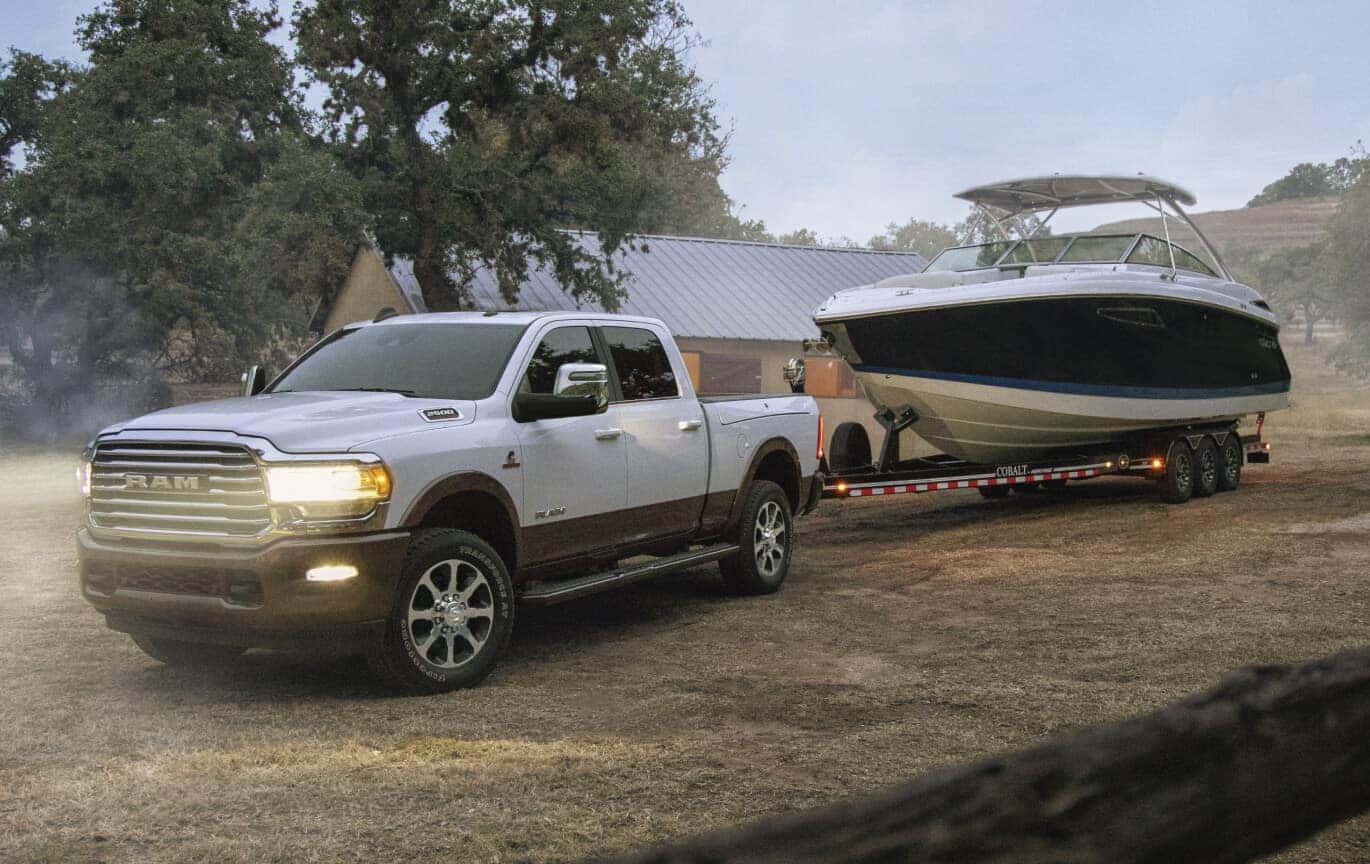
The RAM 2500 towing capacity reaches a maximum of 20,000 pounds when equipped with the 6.7L Cummins Turbo Diesel engine. Choosing the 6.4L HEMI V8 provides a respectable max tow rating of up to 17,730 pounds, though actual limits vary based on axle ratio, cab configuration, and drivetrain.
🎯 Key Takeaways
- Max towing of 20,000 lbs requires the 6.7L Cummins Diesel engine.
- The 6.4L HEMI V8 offers a higher payload capacity than the diesel.
- Upgrading to a 4.10 axle ratio significantly increases gas engine towing limits.
- Regular cab 4×2 configurations typically offer the highest raw towing numbers.
- Always check the door jamb sticker for your specific vehicle’s GVWR.
The maximum towing capacity of a RAM 2500 currently peaks at 20,000 pounds when properly equipped with the 6.7L Cummins Turbo Diesel. However, that headline figure is not a blanket rating for every truck in the lineup. Depending on your choice of engine, axle ratio, and cab configuration, your actual towing limit could vary by as much as 6,000 pounds. Knowing your specific numbers is essential for staying within legal limits and ensuring your truck’s transmission and suspension can handle the load over long distances.
Practically speaking, matching your trailer weight to the right configuration prevents premature mechanical wear and dangerous trailer sway. A truck rated for 14,000 pounds will struggle significantly with a 17,000-pound fifth-wheel, even if it “feels” like it can pull it. This guide breaks down the data points for newer models (2019–2024) to help you identify the exact towing capacity of your RAM 2500 based on its mechanical DNA.
RAM 2500 Towing Specs: 6.7L Cummins vs. 6.4L HEMI
The most significant factor in your RAM 2500’s towing capacity is what sits under the hood. While the 6.4L HEMI V8 is a powerhouse for payload and shorter hauls, the 6.7L Cummins Turbo Diesel is designed for maximum pulling weight and sustained torque. The choice between these two engines fundamentally changes your Gross Combined Weight Rating (GCWR).
The 6.4L HEMI V8 Gas Engine
The 6.4L HEMI is the standard engine for the RAM 2500. It produces 410 horsepower and 429 lb-ft of torque. Because this engine is lighter than the diesel alternative, it often allows for a higher payload capacity, but its maximum towing is lower. For the 2019–2024 model years, the towing capacity for the gas engine typically breaks down as follows:
- 6.4L HEMI with 3.73 Axle Ratio: Maximum towing capacity is approximately 14,370 to 14,970 lbs.
- 6.4L HEMI with 4.10 Axle Ratio: Maximum towing capacity jumps to approximately 17,370 to 17,730 lbs.
If you are towing heavy trailers frequently, the 4.10 axle ratio is a mandatory upgrade. It allows the engine to stay in its power band more effectively, though it will slightly decrease your fuel economy when driving empty.
The 6.7L Cummins Turbo Diesel
The 6.7L Cummins inline-six is the gold standard for heavy-duty towing, delivering 370 horsepower and a massive 850 lb-ft of torque. This torque is available at much lower RPMs, making it easier to get heavy loads moving from a dead stop. In the RAM 2500, the Cummins is paired exclusively with the 3.73 axle ratio, as the 4.10 is typically reserved for the 3500 series in diesel configurations.
- 6.7L Cummins with 3.73 Axle Ratio: Maximum towing capacity ranges from 19,010 to 20,000 lbs.
The 20,000-pound ceiling is usually reached with a Regular Cab 4×2 configuration. As you add weight to the truck itself (like 4×4 systems or larger cabs), that 20,000-pound limit begins to drop. It is also important to note that while the 2500 can pull these weights, you must monitor your Rear Gross Axle Weight Rating (RGAWR) carefully, as the diesel engine’s heavy weight eats into your available tongue weight capacity.
How Cab Configuration and Drivetrain Affect Towing Limits
A common mistake is assuming that two trucks with the same engine and axle ratio will have the same towing capacity. In reality, every pound you add to the truck’s “curb weight” is a pound you must subtract from its “towing capacity.” The RAM 2500’s total capacity is limited by its GCWR; therefore, the heavier the truck, the less it can legally tow.
Drivetrain: 4×2 vs. 4×4
The 4×4 system is essential for boat ramps, construction sites, or snowy climates, but it comes with a weight penalty. A 4×4 system adds roughly 400 to 600 pounds of mechanical components to the chassis, including a transfer case, front drive shaft, and front differential.
- 4×2 (Rear-Wheel Drive): Offers the highest towing capacities because the truck is lighter.
- 4×4 (Four-Wheel Drive): Reduces the maximum towing capacity by approximately 400–500 lbs compared to an identical 4×2 model.
Cab Size: Regular, Crew, and Mega Cab
The physical size of the cab is the second major variable. RAM offers three distinct sizes, each impacting the truck’s weight and wheelbase. The more interior space and luxury you have, the less you can haul at the hitch.
- Regular Cab: This is the “workhorse” configuration. With only two doors and a smaller footprint, it is the lightest version of the RAM 2500, which is why the 20,000-lb max towing rating is almost always tied to a Regular Cab model.
- Crew Cab: This is the most popular choice for families and teams. It adds significant weight over the Regular Cab, typically reducing towing capacity by 800 to 1,000 lbs.
- Mega Cab: The Mega Cab offers the most interior volume in its class, but it only comes in 4×4 configurations for newer models. Because it is the heaviest cab style, a Mega Cab RAM 2500 will usually have the lowest maximum towing capacity in the lineup, often topping out around 14,000 lbs for gas or 17,500 lbs for diesel.
When calculating your needs, always look at the door jamb sticker on the specific VIN you are considering. While these general charts provide the limits, your specific truck’s trim level (like a heavy Limited vs. a light Tradesman) will further refine these numbers by several hundred pounds.
Understanding GCWR, GVWR, and Payload for Safe Towing
When you look at the RAM 2500’s marketing materials, it is easy to get hyper-focused on that “Max Towing” number. However, safe towing involves more than just pulling a trailer; it is about managing the total weight your truck’s frame, suspension, and tires can handle. To tow safely, you need to understand three key acronyms: GVWR, GCWR, and Payload.
Decoding the Numbers: GVWR vs. GCWR
The Gross Vehicle Weight Rating (GVWR) is the absolute maximum your RAM 2500 can weigh when it is fully loaded. This includes the truck itself, a full tank of fuel, all passengers, any gear in the bed, and the tongue weight of your trailer. Most modern RAM 2500 models hover around a 10,000-lb GVWR to stay within specific registration classes.
The Gross Combined Weight Rating (GCWR) is the maximum allowable weight of the entire setup—truck and trailer combined. If your GCWR is 25,000 lbs and your truck weighs 8,000 lbs, you cannot tow more than 17,000 lbs, even if the “max towing” spec says otherwise. Always remember:
- Check your door jamb: Every RAM has a specific sticker listing its exact weight ratings.
- Don’t forget the passengers: Adding four grown men to the cab can subtract 800+ lbs from your available towing capacity.
- Scale it: Visiting a CAT scale at a truck stop is the only way to know your true numbers.
Why Payload is Often the Real Limit
In many cases, your RAM 2500 will run out of Payload Capacity before it hits its maximum towing limit. Payload is the weight you can carry in or on the truck. Because a trailer exerts downward force on the hitch (tongue weight), that weight counts toward your payload. For a conventional trailer, tongue weight should be 10–15% of the total trailer weight. If you are towing a 15,000-lb trailer, you are putting roughly 1,500 to 2,250 lbs of pressure directly onto your rear axle. If your payload capacity is only 2,500 lbs, you don’t have much room left for passengers or gear.
Conventional vs. Gooseneck Towing Capacities for the 2500
How you connect your trailer to your RAM 2500 significantly impacts how much you can haul and how the truck handles on the highway. While the RAM 2500 is a heavy-duty beast, it behaves differently depending on whether you are using a standard rear hitch or an in-bed setup.
The Hitch Makes the Difference
Conventional towing refers to using a standard receiver hitch at the rear of the truck. This is common for campers, boat trailers, and utility trailers. While convenient, this setup puts more leverage on the rear axle, which can lead to “squat” if not managed with a weight-distribution hitch. Most RAM 2500 models are rated for lower maximums when towing conventionally compared to in-bed options.
Gooseneck or 5th-wheel towing involves mounting the hitch directly over the rear axle in the truck bed. This is where the RAM 2500 truly shines. By placing the trailer’s weight directly over the axle, you increase stability and often unlock the truck’s maximum rated towing capacity. Key advantages include:
- Better Weight Distribution: Reduces front-end lift and improves steering control.
- Tighter Turning Radius: Essential for navigating tight campgrounds or job sites.
- Increased Capacity: Gooseneck setups typically allow for the highest possible trailer weights listed in the RAM specs.
When to Use a Gooseneck Setup
If you are frequently hauling heavy machinery, large horse trailers, or massive luxury 5th-wheel RVs, the gooseneck is the way to go. The RAM 2500 often features an available “5th-Wheel/Gooseneck Prep Group,” which includes the necessary mounting points and an integrated 7-pin connector in the bed. For anything over 12,000–15,000 lbs, moving the weight into the bed provides a much smoother and safer driving experience, especially in windy conditions or on steep mountain passes.
Final Thoughts on RAM 2500 Towing
The RAM 2500 is a versatile powerhouse, but its true towing capacity depends on a mix of engine choice, axle ratios, and hitch configurations. Whether you opt for the torque-heavy Cummins diesel or the high-payload HEMI V8, always keep your GVWR and payload limits in mind to ensure a safe journey. Remember that the “max” numbers are just the starting point—your specific configuration and cargo are what determine your real-world limits.
Next Steps: First, check the driver-side door jamb of your truck to find your specific payload and GVWR. Second, if you’re planning on heavy hauling, consider upgrading to a weight-distribution hitch or an in-bed gooseneck system. Now that you have the specs, you’re ready to hit the road with confidence. Happy towing!
💬 Quick Questions & Answers
What is the max towing capacity of a RAM 2500?
The maximum towing capacity is 20,000 pounds for newer models equipped with the 6.7L Cummins Turbo Diesel engine.
Does the RAM 2500 Diesel tow more than the gas version?
Yes, the Cummins Diesel typically allows for about 2,000 to 3,000 pounds more towing capacity than the 6.4L HEMI V8.
Can a RAM 2500 tow a 5th wheel?
Yes, when properly equipped with a fifth-wheel/gooseneck prep package, it can handle large trailers up to its 20,000-lb max rating.
How does 4WD affect towing capacity?
Opting for 4WD usually decreases the maximum towing capacity slightly because the added weight of the drivetrain components reduces the available GCWR.
What is the payload capacity of a RAM 2500?
Payload varies by configuration but typically ranges between 3,000 and 4,000 pounds, with gas models often having higher payload than diesels.
❓ Frequently Asked Questions
What are the main differences in towing between the 6.4L HEMI and 6.7L Cummins?
The Cummins Diesel provides superior torque (850 lb-ft) for heavy-duty pulling and mountain driving, reaching a 20,000-lb limit. The 6.4L HEMI gas engine is better for payload-heavy tasks and lighter trailers, topping out around 17,730 lbs.
Why does the axle ratio matter for RAM 2500 towing?
A higher axle ratio, such as 4.10, provides more mechanical advantage to the wheels, allowing the truck to move heavier loads from a standstill. This is especially important for gas engines to reach their maximum advertised towing potential.
How do I find the specific towing capacity for my older Dodge 2500?
For older models, capacities were lower, usually ranging from 12,000 to 14,000 pounds. You should reference the owner’s manual or use the VIN lookup tool on the official RAM Trucks website for historical data.
Is the Mega Cab better for towing than the Crew Cab?
Actually, the Mega Cab is heavier, which slightly reduces the maximum towing and payload capacity compared to a Regular or Crew Cab. The extra weight of the larger cabin subtracts from the Gross Combined Weight Rating (GCWR).
What is the difference between conventional and gooseneck towing on a 2500?
Conventional towing uses a hitch at the rear bumper and is usually capped lower for stability. Gooseneck or 5th-wheel towing places the weight over the rear axle, allowing for the truck’s full capacity to be utilized safely.
Does the RAM 2500 require a CDL for maximum towing?
Generally no, but if your truck and trailer’s combined GVWR exceeds 26,001 pounds and the trailer is over 10,000 pounds, some states may require a non-commercial Class A license.