Dodge Ram 1500 Throttle Body Problems: Diagnosed & Resolved

A flickering Electronic Throttle Control (ETC) light or a stuttering engine can turn a smooth RAM 1500 drive into a stressful ordeal. Drivers often misdiagnose these issues as simple dirt or sensor failures, leading to unnecessary component replacements or further damage to delicate internal gears. This guide covers how to safely diagnose, clean, and recalibrate your electronic throttle body to get your truck running perfectly again.


Identifying Common Dodge Ram 1500 Throttle Body Problems
The modern RAM 1500 utilizes a “Drive-by-Wire” system where the physical link between the gas pedal and the engine has been replaced by electronic signals. The Powertrain Control Module (PCM) receives input from your pedal and commands the throttle actuator motor to open the throttle plate to a precise angle.
Why the Electronic Throttle Control Warning Light Appears
When the system detects a discrepancy between the requested throttle position and the actual sensor feedback, it triggers the ETC light (a lightning bolt icon between two parentheses). This is often caused by the accumulation of oil vapor and combustion byproducts. Over time, these deposits interfere with the throttle plate’s ability to seat properly, causing the PCM to detect an “out-of-range” condition.

Signs of Carbon Buildup and Poor Airflow
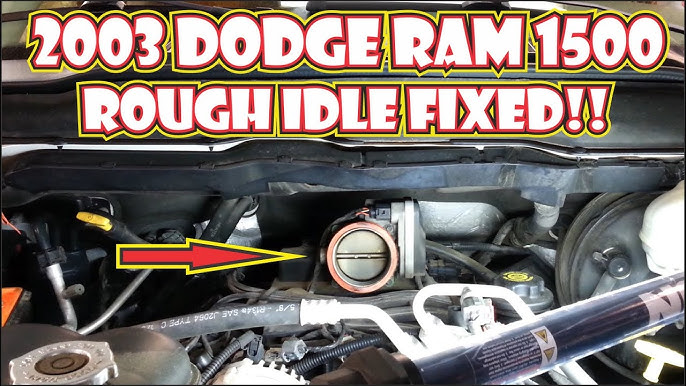
Carbon buildup on the back of the throttle plate is a primary cause of rough idling. As the debris accumulates, the throttle body struggles to maintain a consistent idle air volume, leading to engine surges or hesitations. If you notice your truck idling erratically at stoplights or stuttering during moderate acceleration, carbon contamination is the most likely culprit.
Understanding Limp Mode and Power Loss
The RAM 1500 electronic throttle system can trigger ‘Limp Mode’ to protect the engine when it detects a fault. In this state, the PCM severely restricts engine RPM to prevent erratic throttle behavior from causing an accident. If you experience sudden, severe power loss accompanied by an ETC light, the system has effectively “locked” the throttle to ensure you can reach a safe location at low speeds.
Industry Data Summary
Idle issues resolved via cleaning
Common Idle Control Code
How to Diagnose Dodge Ram 1500 Throttle Body Problems
Systematic diagnosis is required to differentiate between a dirty throttle body and deeper electrical gremlins. Do not blindly replace parts until you have verified the root cause.
Throttle Body vs. Accelerator Pedal Position Sensor (APPS)
Diagnostics must distinguish between an internal throttle body fault and an Accelerator Pedal Position Sensor (APPS) fault. If the truck ignores pedal input entirely, the issue often resides in the pedal sensor. If the truck idles roughly but responds to the pedal, the issue is likely within the throttle body assembly itself.
Reading Diagnostic Trouble Codes (DTCs)
Use an OBD-II scanner to identify specific trouble codes.
P0121: Throttle Position Sensor (TPS) Range/Performance issue, often indicating the plate is not hitting its target.
P0507: Idle Control System RPM Higher than Expected; this frequently occurs after carbon buildup prevents the plate from sealing fully.
Voltage Checks: Use a multimeter to verify a stable 5-volt reference signal at the throttle body connector. Fluctuating voltage suggests wiring damage or a failing PCM output.
Safety Precautions for Handling Internal Gears
Physical movement of the throttle plate by hand while the unit is powered can damage the internal plastic gears. These gears are precision-matched to the actuator motor; forcing them can strip teeth or cause the motor to lose its “home” position permanently.
Step-by-Step Repair and Cleaning for RAM 1500 Throttle Bodies
Once you have determined that physical cleaning is the solution, follow this procedure carefully to avoid damaging the unit.


Tools Required for Throttle Body Maintenance
10mm socket and ratchet.
Flathead screwdriver (for air intake clamps).
High-quality throttle body cleaner (sensor-safe).
Clean, lint-free microfiber rags.
Torque wrench for reinstallation.
Proper Removal and Cleaning Techniques
Disconnect the negative battery terminal to prevent accidental shorting and to clear the PCM’s volatile memory.
Remove the air intake tube. Unplug the electrical connector and unscrew the four mounting bolts. Gently remove the unit, ensuring the old gasket is not reused if it appears brittle or deformed.
Spray cleaner onto the cloth, not directly into the electronics. Gently wipe the back of the throttle plate and the bore wall. Never use a wire brush, as scratching the bore can ruin the airflow characteristics.
Avoiding Damage to Internal Electronics and Seals
Using aggressive cleaners that damage internal electronics or sensor seals is a critical pitfall. Harsh solvents can penetrate the plastic housing and destroy the sensitive TPS internal contacts. Stick to cleaners explicitly labeled as “sensor-safe” to ensure the longevity of the electronic components.
Do not push the throttle plate open with your finger. Doing so forces the actuator motor and can strip the internal plastic gears, necessitating an entire throttle body replacement.
Completing the Dodge Ram 1500 Throttle Relearn Procedure
After cleaning, the PCM will still be programmed to compensate for the “dirt” that was previously in the throttle bore. You must reset these parameters.
The Importance of PCM Calibration After Service
Electronic throttle bodies require a relearn procedure after cleaning or replacement. Neglecting to perform a software relearn after replacing the unit causes irregular idling, as the PCM attempts to use old, outdated airflow correction maps.
Executing the Manual Throttle Relearn Sequence
1. Turn the ignition to the “ON” position (do not start the engine).
2. Wait 10 seconds for the PCM to run its initial diagnostics.
3. Turn the ignition off for 10 seconds.
4. Start the engine and let it idle until it reaches normal operating temperature.
5. During this time, the PCM will sweep the throttle plate through its range to re-establish the “fully closed” and “wide open” positions.


Troubleshooting a Failed Idle Calibration
If the idle remains high or surges after the manual sequence, use a high-end OBD-II scan tool to force an “Idle Air Reset” or “Throttle Relearn” function. This clears the learned baseline in the PCM, forcing the computer to re-learn the idle from scratch based on the now-clean intake airflow.
Advanced Troubleshooting: When Dodge Ram 1500 Throttle Body Problems Persist
If your truck still experiences issues after cleaning and recalibrating, you must look elsewhere in the induction system.
Checking for Vacuum Leaks and Intake Issues
Assuming every rough idle is a throttle body issue when it could be a vacuum leak is a common diagnostic error. Inspect the rubber air intake tube for cracks and the intake manifold gaskets for leaks. A simple spray of soapy water near the manifold mating surfaces while the engine is running can reveal leaks; if the idle changes, you have found a vacuum leak.
Inspecting Wiring Harness and Connector Pins
Electrical corrosion is common in trucks exposed to harsh environments. Inspect the harness connector for bent pins or green oxidation. If the wiring is sound, ensure the ground connections for the PCM and the throttle body are clean and secure.
Upgrading to Aftermarket Performance Throttle Bodies
If you are upgrading to an aftermarket performance throttle body, remember that these units often require a different PCM calibration to function correctly. Without a proper tune, an aftermarket unit may cause more diagnostic headaches than it solves. Stick to OEM specifications unless you are prepared to adjust your engine’s software mapping.
When cleaning, pay close attention to the IAT (Intake Air Temperature) sensor if it is mounted near the throttle assembly. A dirty or faulty IAT sensor can feed the PCM incorrect air density data, which often mimics throttle body performance issues.
Summary and Final Recommendations
Dodge Ram 1500 throttle body problems are rarely terminal. By keeping the throttle bore clean and ensuring the PCM is properly calibrated, you can avoid unnecessary and costly parts replacements.
Always prioritize the relearn procedure after any throttle body work to ensure the PCM matches the current hardware state.
Never force the throttle plate open by hand; this is the most common way to turn a simple cleaning job into a total component failure.
Use only approved, sensor-safe cleaners to protect the delicate internal electronics from chemical degradation.
Rule out vacuum leaks before condemning the throttle body; a small air leak will always cause issues, regardless of how clean the throttle body is.
If your RAM 1500 continues to display warning lights after these steps, consult a certified technician to inspect your PCM or wiring harness for deeper faults. Proper diagnostic testing will save you time and money by isolating the exact point of failure in your truck’s electronic system.


Dodge Ram 1500 Throttle Body Problems: Frequently Asked Questions
Can I clean the throttle body without removing it?
Yes, you can perform a ‘light’ cleaning by removing the intake boot and using a clean rag with throttle-body-specific cleaner. However, this method is limited because it prevents you from cleaning the back side of the butterfly valve, where the majority of carbon deposits collect. For a permanent fix, complete removal is recommended to ensure all passages and the valve edges are thoroughly cleaned.
Why is my electronic throttle control warning light on?
The lightning bolt icon indicates a fault in the electronic throttle system. This can be triggered by the PCM detecting a discrepancy between the pedal position and the actual throttle plate angle. It is a safety feature intended to prevent unintended acceleration. Common causes include dirty sensors, electrical shorts in the wiring, or a complete failure of the internal throttle body motor actuator.
How do I know if the throttle body is bad or if it’s just the pedal sensor?
Diagnostic scanners are the best tool for this. By looking at ‘Live Data’ on an OBD-II scanner, you can monitor both ‘APP’ (Accelerator Pedal Position) and ‘TPS’ (Throttle Position Sensor) values. If the pedal sensor data looks smooth and linear while the throttle body position data is jittery or unresponsive, the throttle body is likely the problem. If both show erratic readings, the issue may be electrical or PCM-related.
Does the PCM need to be reset after replacing the throttle body?
Yes, the PCM must learn the new ‘zero’ and ‘wide open’ positions of the replacement throttle plate. If you do not perform a relearn, you will likely experience high idle, erratic surging, or the vehicle entering ‘limp mode’ immediately after installation. Always follow the specific ignition-cycling procedure provided in your owner’s manual to finalize the calibration process for your engine.
How often should the throttle body be cleaned on a Ram 1500?
For most Ram 1500 owners, cleaning the throttle body every 30,000 to 50,000 miles is sufficient to prevent carbon-related issues. If your truck is used primarily for short-distance city driving or in dusty environments, you may need to clean it more frequently. Keeping your air filter clean is the easiest way to slow the accumulation of oil vapors and debris in the throttle housing.