Dodge Ram On-Board Diagnostics, Reset Protocols, and Drive Cycle Validation

The Epistemology of the Malfunction Indicator Lamp
The modern automotive ecosystem is defined by a complex symbiosis of mechanical engineering and digital oversight. At the forefront of this interface on the Dodge Ram platform—spanning the legacy 2nd Generation workhorses to the technologically sophisticated 5th Generation distinct from the “Dodge” nomenclature—sits the Malfunction Indicator Lamp (MIL), colloquially known as the “check engine light.”
To the untrained operator, this amber illumination is merely a binary signal of distress. However, to the automotive technician and the informed owner, it represents the visible output of a continuous, sophisticated auditing process performed by the vehicle’s Powertrain Control Module (PCM).
The functioning of the MIL is not arbitrary; it is governed by rigid protocols established under On-Board Diagnostics II (OBD-II) standards, which were universally mandated for vehicles sold in the United States post-1996. The Dodge Ram’s implementation of these standards involves a network of sensors—from oxygen sensors measuring exhaust stoichiometry to piezoelectric knock sensors detecting pre-ignition—reporting to central processing units.
When a parameter exceeds its pre-programmed threshold, the PCM does not simply light a bulb; it records a specific alphanumeric fault code (DTC) and captures a “Freeze Frame” of the engine’s operational data at the precise moment of failure.
This report serves as an exhaustive technical dossier on the management of these diagnostic events. It moves beyond the superficial advice of “checking the gas cap” to explore the theoretical and practical underpinnings of resetting the system. We will dissect the difference between volatile and non-volatile memory in automotive computers, the specific fuse-pull procedures for various Ram generations, and the critical, often-overlooked “drive cycle” protocols required to permanently validate repairs and satisfy emissions monitors.
Furthermore, we will analyze the distinct diagnostic requirements of the Hemi V8 gasoline engines versus the Cummins 6.7L Turbo Diesel platforms, providing a holistic reference for maintaining the operational integrity of these trucks.
Master the Check Engine Light on Your Ram
Don’t panic. Whether it’s a loose gas cap or a misfire, learn the data-backed methods to diagnose and reset the CEL on Ram 1500, 2500, and 3500 trucks (Gen 3, 4, & 5).
Decoding the Dashboard
Before you reset, you must understand why the light is on. Resetting the computer doesn’t fix a broken part. If the underlying issue persists, the light will return—usually within 50 miles. Based on aggregated service data for Dodge Ram trucks (2009-2023), these are the most common culprits.
Can I drive with the light on?
Solid Light: Yes, but check it soon. It usually
indicates an emissions issue.
Flashing Light:
Top 5 Dodge Ram Fault Codes (Frequency)
Source: Aggregated Repair Database 2024
P0456: Small Evap Leak (Gas Cap) • P0300: Random Misfire • P0440: General Evap Failure
How to Reset the Light
There are three primary ways to turn off the Check Engine Light (CEL). While the Scanner method is recommended for accuracy, the Battery disconnect is the most common DIY approach for older trucks.
The safest method. It clears the code from memory without wiping your truck’s “learned” driving parameters.
- Locate Port: Under dashboard, driver’s side.
- Ignition On: Turn key to ‘Run’ (engine off).
- Scan: Press ‘Read Codes’ on device.
- Erase: Select ‘Erase/Clear Codes’.
Effective but aggressive. This resets the radio, clock, and transmission shift points.
- Disconnect: Remove Negative (-) cable.
- Drain Power: Press horn for 30 seconds or wait 15 mins.
- Reconnect: Secure the cable tightly.
- Relearn: Drive normally for 50 miles.
Warning: May reset Uconnect settings.
Good if you can’t reach battery terminals or lack tools. Targets the ECU specifically.
- Locate Box: Open fuse box under hood.
- Find Fuse: Look for “PCM” or “ECU” (often Fuse 31).
- Remove: Pull fuse, wait 20 minutes.
- Replace: Reinsert fuse and start truck.
Root Causes of CEL Illumination
It’s Not Always Catastrophic
Data shows that nearly 40% of all check engine lights on Ram trucks are caused by the Evaporative Emissions System (EVAP). This is often as simple as a loose gas cap or a cracked vacuum hose—cheap fixes that don’t require a mechanic.
Pro Tip: If your code is P0456 (Small Leak), remove your gas cap, inspect the rubber O-ring for cracks, clean it, and tighten it until it clicks. Drive for 3 days. The light often clears itself.
The Drive Cycle: Making It Stick
After resetting the light, the truck’s computer (PCM) status is “Not Ready.” You cannot pass a smog check in this state. You must complete a “Drive Cycle” to verify the fix.
1. Cold Start
Start engine when cold (below 90°F). Let idle for 5 minutes (A/C and Defrost OFF).
2. Highway Cruise
Drive at steady 55 MPH for 5 minutes. Do not use cruise control. This tests the O2 sensors and Catalyst.
3. Deceleration
Coast down from 55 to 20 MPH without touching brake or gas. This tests the EGR system.
4. Acceleration
Accelerate moderately (3/4 throttle) back up to 55 MPH. Repeat steps if necessary.
Theoretical Framework of OBD-II Reset Methodologies
The concept of “resetting” a check engine light is frequently misunderstood as a repair in itself. In reality, a reset is an administrative command to the vehicle’s computer to clear its current log of errors. This action has profound implications for the vehicle’s behavior, affecting everything from idle stability to shift quality. There are three primary methodologies for achieving this, each with distinct mechanisms and levels of efficacy.
The Hard Reset: Battery Isolation and Capacitive Discharge
The most ubiquitous method for resetting the PCM on a Ram truck involves the physical interruption of its power supply. This method, often referred to as a “hard reset,” relies on the volatility of the PCM’s Random Access Memory (RAM).
The Mechanism of Volatility
The PCM utilizes volatile memory to store “Keep Alive” data. This includes the current table of Diagnostic Trouble Codes (DTCs), the status of readiness monitors, and importantly, the “Adaptive Memory” (discussed in Section 2.1.3). This memory requires a continuous flow of low-voltage electricity to maintain data integrity. When this stream is severed, the data decays.
To execute a hard reset on a Ram 1500, the standard procedure dictates the disconnection of the negative battery cable. However, simply pulling the cable is insufficient due to the presence of capacitors within the electronic control modules. These capacitors act as temporary energy reservoirs, designed to smooth out voltage fluctuations and prevent data loss during momentary power dips (such as cranking the engine).
Duration and Discharge Procedures
Research indicates that a wait time of approximately 20 minutes is the standard recommendation to ensure complete capacitive discharge. During this interval, the stored energy bleeds off, and the voltage potential across the memory chips drops below the threshold required for data retention.
For older model trucks or in scenarios where a 20-minute wait is impractical, a “forced discharge” technique is sometimes cited. This involves disconnecting both the positive and negative cables from the battery terminals and touching the cable ends together (being explicitly careful that they are not connected to the battery). This creates a closed circuit that instantly drains the residual energy from the system’s capacitors. Alternatively, depressing the brake pedal while the battery is disconnected can activate the brake light circuit, acting as a load to consume remaining power.
The Cost of the Hard Reset: Adaptive Strategy Loss
While effective at extinguishing the MIL, the hard reset is a “blunt instrument” that wipes more than just the error codes. It erases the Adaptive Memory, which contains the “learned values” the computer has adopted over thousands of miles.
- Fuel Trims: The PCM adjusts fuel injector pulse width to compensate for minor vacuum leaks, engine wear, or injector clogging. A hard reset reverts these to factory base maps.
- Transmission Shift Adaptives: The Transmission Control Module (TCM) learns the hydraulic volume integrity (CVI) and the driver’s throttle habits to smooth out shifts.
- Idle Control: The throttle body position for a stable idle is learned.
Consequently, after a battery disconnect, a Ram truck will often exhibit a period of rough idling, erratic shifting, or suboptimal fuel economy for the first 50 to 100 miles as it enters a “re-learning” phase. Furthermore, auxiliary systems such as radio presets, seat memory positions, and security alarm configurations are frequently lost or reset to default, necessitating a tedious reconfiguration process by the owner.
The Surgical Strike: Fuse Pull Methodologies
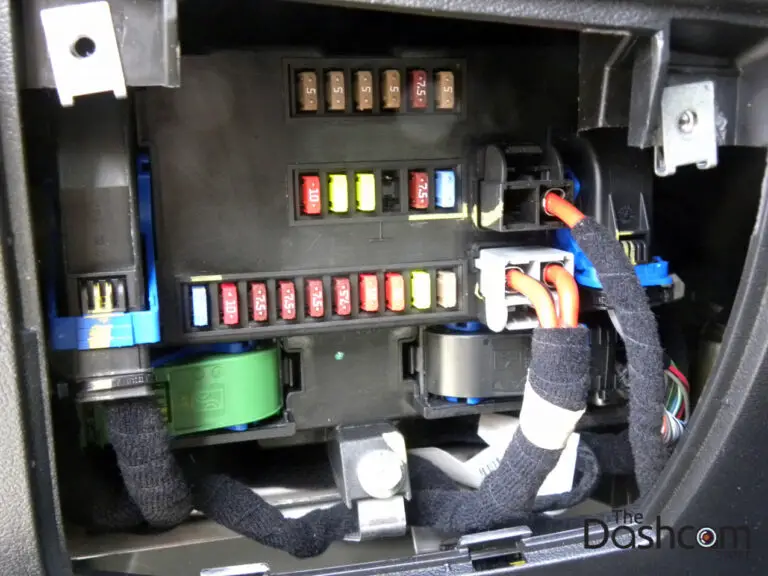
To mitigate the collateral damage of a full battery disconnect (e.g., losing Uconnect settings), a more targeted approach involves removing the specific fuse that supplies power to the PCM. This isolates the engine computer while leaving the Body Control Module (BCM) and infotainment systems powered.
The Efficacy of Fuse Removal
Pulling the PCM fuse achieves the same memory-clearing result as the battery disconnect but with surgical precision. By cutting the “Battery Feed” or “Direct Battery” line to the PCM, the volatile memory is starved of power. The waiting period of 10-15 minutes remains applicable to allow local capacitors within the PCM to discharge.
Risks and Identification
The primary challenge with this method is the complexity of modern power distribution centers. A Ram truck may have separate fuses for “PCM Power,” “ASD (Auto Shutdown) Relay,” and “Module Power.” Pulling the wrong fuse can trigger communication errors between modules or fail to reset the light. Furthermore, the labeling of fuses varies wildly between generations (discussed in Section 5), requiring the owner to possess an accurate diagram for their specific Model Year.
The Digital Solution: OBD-II Scanner Reset
The most professional and recommended methodology involves using an OBD-II diagnostic tool to issue a Mode $04 command.
Mode $04: “Clear/Reset Emission-Related Diagnostic Information”
When a user selects “Erase Codes” on a scanner, the tool sends a specific hexadecimal command to the PCM via the CAN bus. The PCM processes this command and actively deletes the DTCs and Freeze Frame data from its memory.
Advantages Over Power Interruption
- Preservation of Adaptives: sophisticated scan tools can clear fault codes without wiping the adaptive fuel trims or transmission shift learning. This avoids the post-reset “rough running” period.
- Diagnostic Integrity: This method forces the user to see the code before deleting it. It prevents the “blind reset” where an owner ignores a potentially catastrophic lean condition or misfire.
- Safety: It eliminates the risk of sparking associated with manipulating battery cables or damaging delicate fuse box terminals.
Myth-Busting: The Accelerator Pedal Reset
A persistent myth in the Ram community suggests that the check engine light can be reset by a specific sequence of accelerator pedal manipulations (e.g., “turn key on, press pedal three times”). It is crucial to clarify that this procedure is generally for resetting the Oil Change Indicator, not the OBD-II emissions system.6
While an Electronic Throttle Control (ETC) light (a lightning bolt symbol) might effectively be calibrated by a pedal procedure—teaching the PCM the range of motion for the butterfly valve—this does not issue a command to clear P-codes (powertrain codes) like a catalyst inefficiency or EVAP leak.12 The belief that this clears the check engine light is often coincidental; if the fault was intermittent, it may have cleared itself after the requisite number of warm-up cycles (discussed in Section 3.2), which happened to coincide with the user attempting the pedal trick.
Taxonomy of Diagnostic Trouble Codes (DTCs)
To effectively manage a check engine light, one must understand that not all codes are treated equally by the Ram’s diagnostic operating system. The lifecycle of a code involves three distinct stages: Pending, Confirmed (Stored), and Permanent.
The Staging Area: Pending Codes (Mode $07)
A Pending Code represents a potential issue that has not yet been corroborated. The OBD-II system is designed to avoid false alarms. If a sensor reports a value outside the acceptable range for a single sampling event (a “glitch”), the PCM records a Pending Code but does not illuminate the MIL.
- Reset Behavior: If the fault does not recur within a set number of drive cycles (usually one or two), the Pending Code is automatically erased from memory without the driver ever knowing it existed.
- Diagnostic Utility: Mechanics often look at Pending Codes to catch developing problems before they trigger a hard failure.14
The Active Fault: Confirmed/Stored Codes (Mode $03)
When a Pending Code condition is detected on two consecutive trips (or immediately, in the case of severe faults like misfires that damage the catalytic converter), the code is promoted to “Confirmed” status.
- System Reaction: The MIL illuminates solid. Freeze Frame data is locked into memory to preserve the context of the failure (RPM, Temp, Load).
- Self-Healing Capability: If the condition that caused the code is repaired (e.g., a loose gas cap is tightened), the MIL may not turn off immediately. The system generally requires three consecutive “Good Trips”—trips where the diagnostic monitor runs and passes—to extinguish the lamp. However, the code will remain in the “History” for 40 warm-up cycles before being fully purged.
The Regulatory Lock: Permanent Codes (Mode $0A)
Introduced around 2010 to prevent emissions cheating, Permanent DTCs are stored in Non-Volatile Random Access Memory (NVRAM).
- The Critical Distinction: Permanent codes cannot be cleared by disconnecting the battery or using a scanner.
- Clearance Protocol: The only way to remove a Permanent Code is for the PCM to run the specific monitor associated with that fault and determine that the system is passing. This requires driving the vehicle through a precise “Universal Drive Cycle” (detailed in Section 6). This prevents an owner from clearing codes in the parking lot of an emissions testing station to fraudulently pass the test. The inspector’s equipment will see the Permanent Code and fail the vehicle immediately.
Generational Analysis: Procedures and Fuse Locations
The method of interacting with a Ram truck’s diagnostic system is heavily dependent on its production era. The transition from the 2nd Generation (1994-2001) to the current 5th Generation (2019-Present) reflects a shift from simple circuit logic to integrated network computing.
Generation 2 (1994-2001) and Generation 3 (2002-2008)
These trucks operate on the JTEC (Jeep Truck Engine Controller) and later the NGC (Next Generation Controller) architectures.
The “Key Dance” Retrieval Method
One of the most celebrated features of these earlier Ram generations is the built-in diagnostic capability known as the “Key Dance.”
- Procedure: Insert the key and cycle the ignition switch from OFF to ON (not Start) three times in rapid succession (OFF-ON-OFF-ON-OFF-ON) within five seconds.
- Result: The odometer digital display will blank out and then display the P-codes stored in memory (e.g., “P0455”, “P0300”) followed by the message “done”.
- Reset: The battery disconnect method (20 minutes) is highly effective on these generations, as they lack the non-volatile permanent code storage of later models.
Generation 4 (2009-2018) and Ram 1500 Classic
This era introduced the Totally Integrated Power Module (TIPM), a sophisticated but occasionally temperamental power distribution unit.
TIPM and Fuse Locations
The fuse box in Gen 4 trucks is located in the engine bay, near the battery. However, the internal layout changed multiple times (notably between 2012 and 2013).
- Fuse Identification: Owners must consult the diagram printed on the underside of the fuse box lid. Key fuses often include F78, F79, or similar ranges for the PCM/ECM in early Gen 4s, and different locations in 2013+ models.
- PCM Reset: While battery disconnection works, it is risky due to the TIPM’s sensitivity to voltage spikes. A high-quality scanner is the preferred reset method.
- Permanent Codes: These models (post-2010) are subject to Permanent Code protocols. A scanner reset will turn off the light, but the code will linger in the background until a drive cycle is completed.
Key Dance Limitations
In later Gen 4 models, particularly those with “Push Button Start,” the Key Dance became difficult or impossible to perform, necessitating the use of external OBD-II readers.
Generation 5 (2019-Present)
The 5th Generation represents a quantum leap in architecture, utilizing the “Atlantis” electrical structure and high-speed CAN-FD (Flexible Data-rate) buses.
Security Gateway (SGW) Module
Starting in 2018/2019, Ram implemented a Security Gateway Module to prevent cyber-attacks.
- Implication: Generic, inexpensive OBD-II scanners can usually read codes but are blocked from clearing them or performing active tests. The SGW acts as a firewall.
- Solution: Owners must use a scanner that is “AutoAuth” certified (requiring a subscription) or physically bypass the SGW using a “bypass cable” (for off-road/diagnostic use only) to clear codes electronically.
Gen 5 Fuse Mapping
The fuse box (Power Distribution Center) on Gen 5 trucks is located in the engine compartment.
- Fuse F54: Often identified as a 20 Amp (Yellow) fuse. While documentation sometimes links this to “Adjustable Pedals,” in the complex shared circuitry of the Gen 5, it is often associated with module logic power. However, reliance on a single “magic fuse” is ill-advised.
- PCM Fuses: Detailed diagrams for the 2019-2021 models indicate specific micro-fuses for the ECM (Engine Control Module). Due to the yearly changes, visually confirming the “ECM” label on the lid diagram is mandatory.
Table 1: Representative Fuse Assignments for Ram 1500 (Gen 5)
| Fuse ID | Amperage | Color | Description (Typical) |
| F51 | 10 Amp | Red | Ignition Node Module / Keyless Ignition |
| F53 | 20 Amp | Yellow | Trailer Tow – Left Turn/Stop |
| F54 | 20 Amp | Yellow | Adjustable Pedals / Module Power |
| F94 | 10 Amp | Red | Shifter / Transfer Case Module |
| F-ECM | Various | – | Consult Lid Diagram for specific “ECM” fuse |
Common Diagnostic Trouble Codes: Pathology and Resolution
Analyzing the snippets reveals a cluster of common issues that plague Ram owners. Understanding these specific codes is essential for interpreting why a light might return after a reset.
EVAP System Failures (P0440, P0456, P0457)
The Evaporative Emissions system is designed to trap fuel vapors. It is the most common source of “nuisance” check engine lights.
- P0457 (Loose Fuel Cap): This specific code often triggers a “Check Gas Cap” message on the dash before the MIL.
- Cause: The cap is loose, the seal is cracked, or the filler neck is dirty.
- Resolution: Tighten the cap. The system will self-check over the next few days. If the cap is tight but the code persists, the ESIM (Evaporative System Integrity Module)—a switch located on the charcoal canister near the fuel tank—is a notorious failure point on Gen 4/5 Rams.26 The ESIM sticks, preventing the system from detecting the necessary vacuum decay.
Air Intake and Sensor Faults (P01xx, P0106, P0107)
The 5.7L Hemi utilizes a Manifold Absolute Pressure (MAP) sensor rather than a Mass Air Flow (MAF) sensor for load calculation in many configurations.
- P0106/P0107 (MAP Sensor Performance): The MAP sensor sits on top of the intake manifold.
- Pathology: The PCV system on Hemi engines is known to vent oil vapor into the intake, which coats the MAP sensor in sludge. This causes delayed or inaccurate pressure readings, leading to rough idle and poor fuel economy.
- Fix: Before replacing, the sensor can often be removed and cleaned with specialized electronic/MAF cleaner.
Misfire Codes (P0300 series)
- P0300 (Random Misfire) / P030x (Cylinder Specific): Common on higher mileage Rams.
- Cause: Gen 4 Hemi engines (pre-2014) had a 30,000-mile service interval for spark plugs (copper core). Neglecting this leads to wide gaps and coil stress. 2014+ models moved to 100,000-mile iridium plugs.
- Camshaft Issues: A persistent single-cylinder misfire (e.g., P0303 or P0305) accompanied by a “ticking” sound can indicate the infamous “Hemi Tick”—a failed lifter roller that has wiped a camshaft lobe.
Diesel Specifics: 6.7L Cummins Codes
- P20EE (SCR NOx Catalyst Efficiency Below Threshold): Indicates the Selective Catalytic Reduction system is not converting NOx efficiently. Often caused by a dirty ammonia sensor or poor quality Diesel Exhaust Fluid (DEF).
- DPF Regeneration Codes: If the truck is strictly city-driven, the Diesel Particulate Filter (DPF) cannot heat up enough to burn off soot. This triggers a “Drive to Clean” message. If ignored, it sets a hard code requiring a “Forced Regen” with a dealer scan tool.
The Validation Phase: Drive Cycle Protocols
Once a repair is made and the code is cleared (reset), the vehicle enters a “Not Ready” state. To clear Permanent codes and pass emissions, the vehicle must complete a “Drive Cycle” to run its Readiness Monitors. The Ram PCM requires specific conditions to run these tests.
Pre-Conditioning Requirements
Before attempting a drive cycle, the following conditions must be met, or the PCM will abort the tests:
- Cold Soak: The vehicle must sit overnight (usually 8+ hours). The Engine Coolant Temperature (ECT) and Intake Air Temperature (IAT) must be within roughly 10°F of each other. This confirms a “Cold Start.”
- Fuel Level: The tank must be between 15% and 85% full.
- Why? The EVAP monitor works by creating a vacuum in the tank. If the tank is full, there is no vapor space to test. If it is empty, fuel slosh interferes with pressure readings.
- Battery Voltage: Must be stable (above 11.0V).
The Universal Drive Trace (Gasoline Engines)
This procedure covers the Catalyst, EGR, EVAP, and O2 Sensor monitors for most Ram Hemi applications.
Table 2: Ram Hemi Drive Cycle Steps
| Step | Action | Duration | Target Monitor | Notes |
| 1 | Idle | 5 Min | O2 Heater / Closed Loop | Turn A/C and heavy loads OFF. |
| 2 | Steady Cruise | 8 Min | Catalyst / EGR | Maintain 40-60 MPH steady throttle. |
| 3 | Stop & Idle | 3 Min | Idle Control | Allow engine to stabilize. |
| 4 | Urban Drive | 2 Min | Transmission / VSS | Drive >20 MPH with varying throttle. |
| 5 | Deceleration | – | EGR / Fuel Cut-off | Coast from 55 to 20 MPH without braking. |
| 6 | Shutdown | 10 Min | O2 Heater | Key OFF. Do not open doors (sleep mode). |
6.7L Cummins Drive Cycle Specifics
The Diesel cycle is more demanding due to the thermal requirements of the aftertreatment system.
- Highway Requirement: The truck must be driven at highway speeds (50-55 MPH) for a significantly longer period (10-15 minutes) to generate high Exhaust Gas Temperatures (EGTs) required for passive DPF monitoring.
- RPM Control: Technical Service Bulletins suggest maintaining engine speed between 2000 and 2250 RPM during the cruise phase to ensure proper flow for the NOx sensors.
- Deceleration: Several coast-down events (60 MPH to 20 MPH) are required to test the Variable Geometry Turbo (VGT) and exhaust brake system performance.
The “Good Trip” and Code Clearance
For a Permanent Code to be erased, the PCM generally requires three consecutive Good Trips. A “Good Trip” is defined as a drive cycle where the enabling criteria (temps, fuel level, speed) were met, the specific monitor ran, and the monitor reported a “Pass” result.
Conversely, for a “Stored” code to clear itself without a scanner, the system typically requires 40 warm-up cycles without the fault recurring. A warm-up cycle is defined as engine temperature rising by at least 40°F and crossing a threshold of 160°F.
Troubleshooting and Myth Busting
7.1 “Just Drive It 50 Miles”
Verdict: Partially True.
The advice to “drive 50 miles” is a simplification of the drive cycle. If a user drives 50 miles of highway cruising, they satisfy the Catalyst and O2 monitors. However, if they do not perform the “Cold Soak” or the “Idle” phases, the EVAP and O2 Heater monitors may never run. A Ram can be driven 1,000 miles and still have “Not Ready” monitors if the specific conditions (e.g., fuel level) are never met.26
The Fuse Box Labeling Confusion
Many owners struggle to find the fuse because the lid diagram uses acronyms.
- Look For: “MINI” or “MICRO” fuses labeled ECM, PCM, MOD POW, or INJ/COIL.
- Avoid: Fuses labeled BCM (Body Control), ABS, or AIRBAG/ORC. Resetting the BCM can cause issues with key fobs and door locks.
Scanner Limitations
Owners often report that their scanner says “No Codes” but the light is on, or vice versa.
- Explanation: Cheap generic readers often only read “Global OBDII” codes. They may miss “Enhanced” codes (e.g., Transmission codes, ABS codes, or Body codes) that can request MIL illumination.
- Permanent Codes: Some older scanners cannot see Mode $0A (Permanent) codes, leading the owner to believe the system is clear when it is actually lurking in the background.
Conclusion
The management of the Check Engine Light on a Dodge Ram is a task that rewards precision and penalizes shortcuts. The evolution of the platform from the mechanical simplicity of the 2nd Generation to the digital fortress of the 5th Generation has fundamentally changed the rules of engagement.
While the “hard reset” (battery disconnect) remains a viable emergency measure for clearing volatile memory on older trucks, its utility is diminishing. On modern Rams, it disrupts adaptive learning strategies and infotainment configurations without successfully removing the Permanent Codes mandated by current emissions regulations.
The definitive path to resolution requires a shift in mindset: from “turning off the light” to “validating the repair.” This involves:
- Accurate Diagnosis: Using a scanner to identify Pending vs. Permanent codes.
- Targeted Repair: addressing the root cause (e.g., cleaning the MAP sensor or replacing the ESIM).
- Electronic Reset: Using a scanner to clear the active fault.
- Drive Cycle Validation: Performing the specific drive trace to force the PCM to self-certify the system.
By adhering to these protocols, Ram owners can ensure their vehicles remain not only light-free but also operating at the peak efficiency and reliability engineered into the platform.