Edge Pulsar Ram 1500 Problems: Analyzed & Resolved

Is your RAM 1500 acting up after installing an Edge Pulsar? Many enthusiasts turn to the Pulsar as a premier solution for unlocking hidden power, sharpening throttle response, and managing cylinder deactivation. However, performance modules are sophisticated electronics, and even minor installation oversights can trigger confusing error codes or unexpected vehicle behavior. In this guide, we break down the most common Edge Pulsar RAM 1500 problems, provide technical installation fixes, and clarify how to avoid major pitfalls when tuning your truck.


Identifying Common Edge Pulsar RAM 1500 Problems
Why Check Engine Lights Trigger After Installation
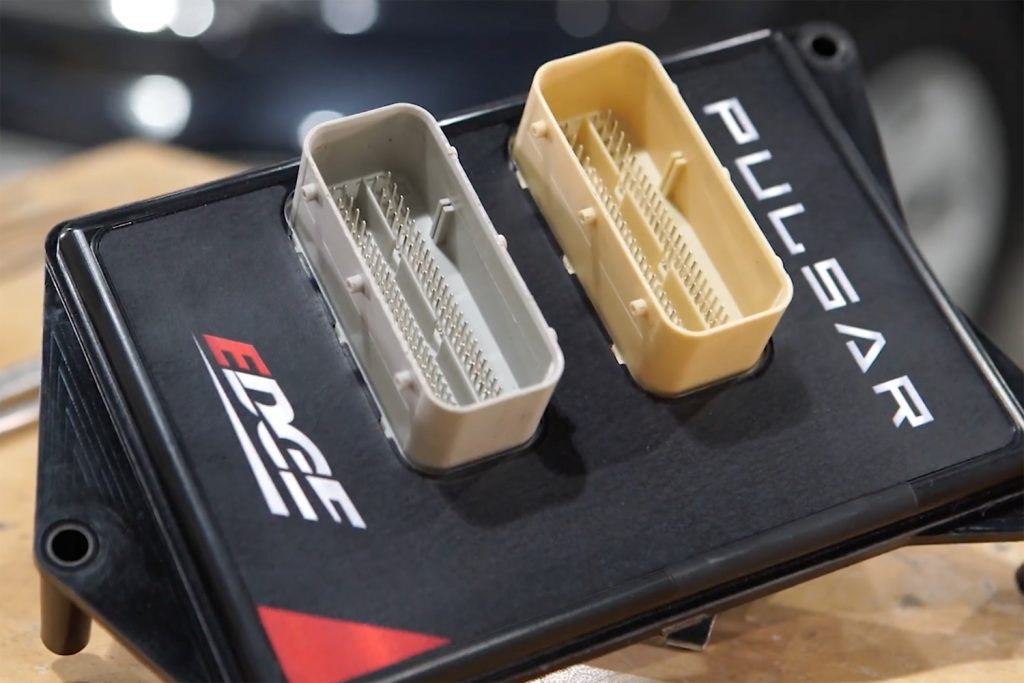
The Pulsar is an inline module, not a traditional PCM reflash. This means it sits between the factory wiring harness and the truck’s Powertrain Control Module (PCM), intercepting and modifying signals in real-time. If the system detects a signal discrepancy—often caused by a pin that isn’t fully seated or a momentary voltage spike during startup—it will trigger a Check Engine Light (CEL). This is rarely a sign of hardware failure; it is a fail-safe mechanism designed to protect the engine when the expected data parameters aren’t met.
The Difference Between Hardware Glitches and Software Errors
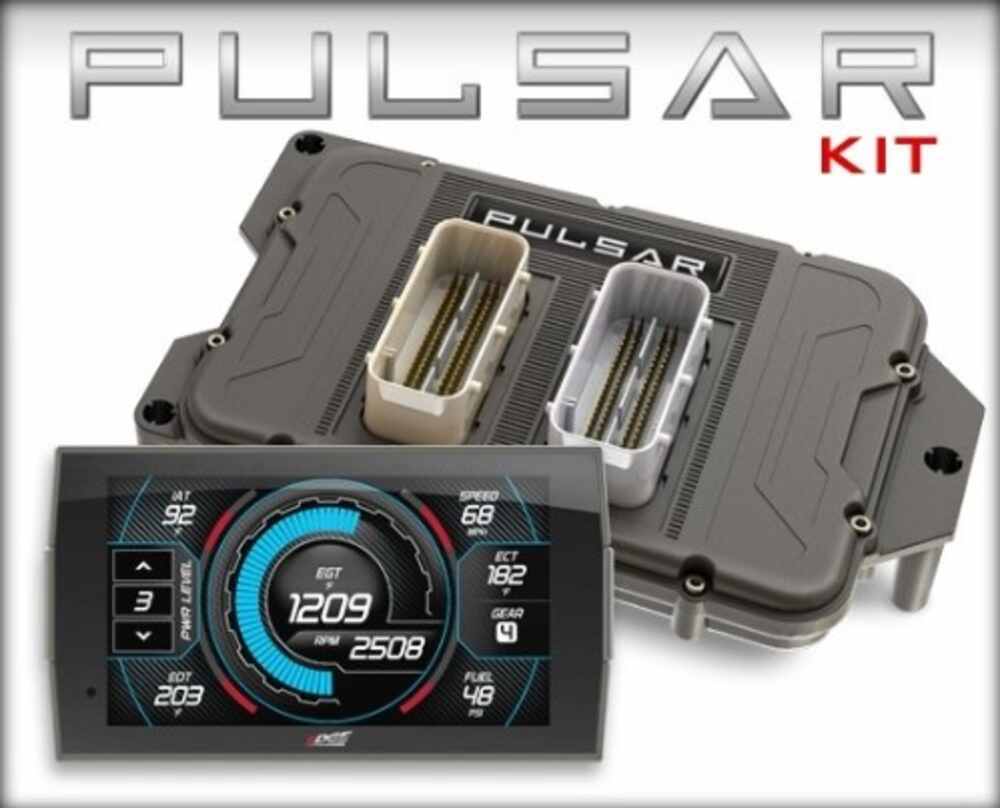
It is critical to distinguish between a hardware glitch and a software configuration issue. A hardware glitch typically manifests as “limp mode,” where the truck drastically reduces power to prevent damage. This is almost exclusively due to the module’s connectors not being fully engaged with the RAM 1500 PCM. Conversely, software errors, such as incorrect shift points or lingering MDS issues, usually stem from the user failing to allow the truck’s learning cycle to complete after changing performance levels.
Common Symptoms of Improper PCM Mounting
If your truck enters limp mode or throws multiple communication codes immediately after installation, the physical connection is the first suspect. Because the factory RAM 1500 PCM connectors have locking tabs, it is common for the Pulsar module to feel “tight” before the secondary lock is actually engaged. An incomplete connection leads to “phantom codes” where the PCM receives intermittent signals, causing the truck to misfire or hold gears inappropriately.
By The Numbers
Connection-based issues
Common error codes resolved by resets
How to Properly Install and Debug Edge Pulsar Performance Modules
📋
Step-by-Step Guide
Always disconnect the negative battery terminal for at least 15 minutes before touching the PCM. This drains residual capacitors in the ECU, preventing “hot” circuit faults during the installation process.
When attaching the Pulsar harness, listen for the audible ‘click’ of the locking tabs. If the gap between the connector and the housing exceeds 1mm, it is not fully seated. Use a small amount of dielectric grease if you struggle with fitment.


If the module is powered but the steering wheel controls aren’t responding, check the OBD-II pass-through connection. Ensure the pins are not bent and that the module is firmly clicked into the port.
If you encounter a communication error, do not immediately assume the unit is bad. “Deep cycle” your truck by reconnecting the battery, turning the ignition to the “ON” position (without starting), waiting 30 seconds, and then performing a full start. This forces the modules to re-handshake.
Edge Pulsar RAM 1500 Problems: Performance and Shifting Nuances
The Pulsar is designed to alter engine behavior by modifying timing and fueling parameters. Users often report “jerky” shifts, but this is frequently the result of the Pulsar’s aggressive performance mapping being misaligned with the driver’s current driving style. Unlike a Pedal Commander, which only manipulates throttle sensitivity, the Pulsar actually communicates with the PCM to change ignition timing and MDS (Multi-Displacement System) logic.
Avoiding Warranty Risks with Edge Pulsar RAM 1500 Problems
Is the Pulsar Truly Undetectable by Dealerships?
There is a pervasive myth that piggyback modules are completely invisible to dealer diagnostic tools. While the Pulsar does not perform a traditional “flash” of the PCM memory—meaning it does not trigger the common “calibration ID changed” flags—it can leave data traces. If a dealer performs a deep scan for historical engine performance, they may notice torque requests that fall outside the factory variance. To mitigate this risk, you must physically remove the device before any dealership service, especially for powertrain-related warranty work.
If your dealership is performing a mandatory firmware update or a PCM recall, the Pulsar must be removed. Leaving the module installed during a PCM update can cause a “brick” scenario, where the PCM fails to accept the flash because it is detecting unexpected resistance on the signal wires.
Understanding Flash Counters and Dealer Diagnostics
Dealerships track how many times the PCM has been programmed via “Flash Counters.” Because the Pulsar is an inline module, it does not increment this counter. This gives it a significant advantage over full ECU tuning. However, your behavior remains the biggest variable. By removing the unit, you effectively return the truck to its factory state, leaving no evidence of performance modification for the technician to log.
Conclusion: Resolving Performance Inconsistencies
The Pulsar is a robust piggyback system that offers unparalleled control over your RAM 1500, but it is not a “plug-and-forget” device. Most issues, from Check Engine Lights to erratic shifting, are simple matters of installation integrity or failing to reset the system after a change. Remember that your truck’s PCM is highly sensitive to input signals, and even a slightly loose connector can propagate errors throughout the vehicle’s network. Always prioritize a clean, verified install, and treat the module with the respect it deserves as a high-performance component. By removing the module prior to dealership visits, you preserve the integrity of your factory warranty while enjoying the benefits of improved throttle, fuel, and transmission performance.
Still seeing error codes after reseating the module? The most effective path forward is to verify your PCM firmware version against the Edge support database to ensure compatibility. If you have confirmed the installation is secure and the errors persist, contact Edge technical support with your specific PCM firmware version and the exact diagnostic codes present to expedite your resolution.
Edge Pulsar Ram 1500 Problems: Frequently Asked Questions
Will the Pulsar void my truck’s warranty?
Technically, the Magnuson-Moss Warranty Act protects consumers, but installing aftermarket tuners can provide dealerships grounds to deny powertrain warranty claims if they prove the modification caused the failure. Because the Pulsar is an inline module and not a traditional ‘flash’ tune, it is less invasive, but it is always recommended to remove it before visiting the dealership for service.
Can the dealership detect the Pulsar if I remove it?
The Pulsar is a ‘piggyback’ device, meaning it does not rewrite the PCM’s internal memory like a conventional flash tuner. When removed, it leaves no traditional footprint in the calibration file. However, if the device was installed during a recorded event, diagnostic data stored in other modules might suggest an anomaly, though this is rare.
Does the Pulsar affect transmission shifting?
Yes. The Edge Pulsar alters shift points and torque management parameters to improve the feel of the truck. If you notice harsh or ‘clunky’ shifting, it is often due to the module interacting with your specific driving habits. You can adjust the shift feel settings within the Pulsar menu to better align the power delivery with your daily driving requirements.
How do I switch between performance levels?
Switching levels is accomplished through the factory steering wheel controls. By navigating the menu on your instrument cluster, you can cycle through the pre-programmed performance levels. Always ensure the vehicle is in ‘Park’ or ‘Neutral’ with the ignition on to make these adjustments safely, and allow a few miles of driving for the system to adapt to your new settings.
Why is my check engine light on after installing the Pulsar?
A check engine light immediately after installation usually indicates a communication error between the Pulsar and the PCM. This is most commonly caused by a loose connection or a bent pin during the installation process. Re-check the seating of the PCM harness and ensure the device is firmly clipped into the factory connector before attempting a full ignition cycle.