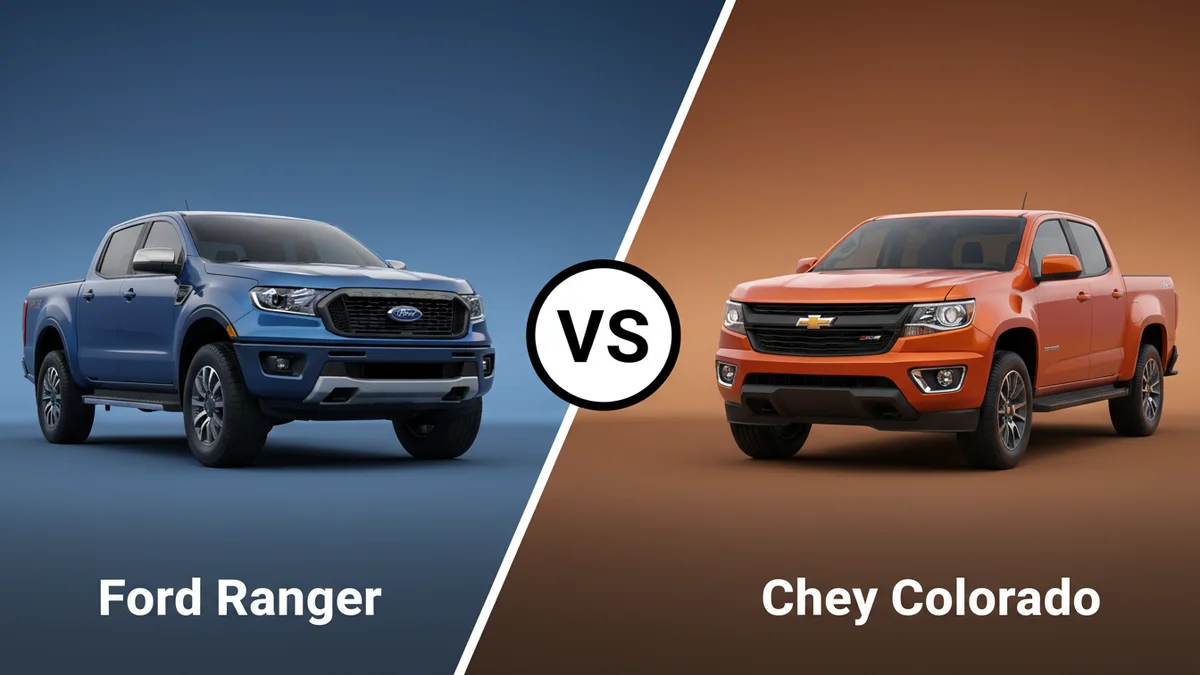
Ford Ranger vs Chevy Colorado (2026): Which Is Better?

The maximum torque available in the Chevrolet Colorado reaches a robust 430 lb-ft when equipped with its high-output engine, a significant 120 lb-ft advantage over the Ford Ranger’s single 310 lb-ft EcoBoost option. This disparity in brute force hints at the distinct personalities beneath their rugged exteriors, showcasing how two seemingly similar mid-size trucks can cater to vastly different priorities. We’re diving deep into what makes each truck a compelling choice in a fiercely competitive segment.
Quick Verdict: Both Ford Ranger and Chevy Colorado are strong choices — the right pick depends on your priorities. Bed covers are the most common first upgrade, so see our best tonneau cover for Ford Ranger and best tonneau cover for Chevy Colorado guides.

Prime for Young Adults — 6 Months Free
Students and 18–24s get six months of Prime free, then half price.
Start 6 Months FreePick Ford Ranger for overall value.
Pick Chevy Colorado for premium features.
Ford Ranger vs Chevy Colorado: Head-to-Head Specs
Recommended Best Deal Products


Digging into the raw numbers reveals where these two mid-size titans truly differ. While both trucks offer impressive capabilities, the Colorado often pulls ahead in outright power with its available 310 horsepower and segment-leading 430 lb-ft of torque, allowing it to claim a slight edge in maximum towing at 7,700 pounds. In contrast, the Ranger provides a highly efficient and capable 270-hp engine, offering a strong balance of performance and fuel economy, alongside a superior maximum payload capacity of 1,805 pounds.
Performance & Category Ratings
When we break down the performance and category ratings, a clear picture emerges, showing why the Ford Ranger and Chevy Colorado frequently trade blows. The Chevy Colorado decisively wins in raw Performance (Power). Its available 2.7L Turbo High-Output engine pumps out a formidable 310 horsepower and 430 lb-ft of torque. That’s a full 40 hp and 120 lb-ft more than the Ranger’s sole engine option, giving the Colorado a palpable edge in acceleration and muscle. This superior power directly translates to a victory in Towing Capacity, where the Colorado can pull up to 7,700 pounds, just edging out the Ranger’s respectable 7,500-pound limit.
The Colorado also earns top marks for Interior Quality/Comfort and Tech & Infotainment. Its cabin feels more contemporary, with a standard 11.3-inch infotainment screen that easily outshines the Ranger’s 10.1-inch unit, offering a more intuitive and visually appealing user experience. Additionally, the Colorado’s Ride & Handling often feels smoother and more refined, a benefit for long commutes or leisurely drives.
On the other side, the Ford Ranger dominates in Fuel Efficiency. Its proven 2.3L EcoBoost engine, while having less peak power, delivers a combined 22 MPG, a noticeable improvement over the Colorado’s 20 MPG with its high-output engine. The Ranger also takes the crown for Payload Capacity, offering an impressive 1,805 pounds compared to the Colorado’s 1,684 pounds. This makes it a better choice for those regularly hauling heavy gear in the bed. Finally, the Ranger delivers excellent Value for Money, often starting at a slightly lower price point while still packing in essential features.
Both trucks tie in Off-Road Capability and Safety Features. With dedicated trims like the Ranger Tremor and Colorado ZR2, both offer incredible prowess off the beaten path, equipped with advanced suspension, enhanced ground clearance, and specialized drive modes. Similarly, both Ford and Chevrolet offer comprehensive suites of active safety technologies, ensuring peace of mind on and off the road.
By the Numbers
Recommended Best Deal Products


Translating raw specifications into real-world utility helps to contextualize the Ford Ranger and Chevy Colorado’s distinct strengths. We’re looking at how differences in horsepower, torque, and towing capacity shape the driving experience and workhorse capabilities. These figures aren’t just abstract numbers; they directly impact how each truck performs when you’re merging onto a highway, navigating a steep trail, or hooking up a trailer for a weekend adventure.
Ford Ranger: Strengths and Weaknesses
The Ford Ranger stands as a testament to tried-and-true utility, offering a reputation for rugged durability that’s hard to ignore. Its greatest strength lies in its proven 2.3L EcoBoost engine. This single powertrain offers a compelling blend of 270 horsepower and 310 lb-ft of torque, delivering brisk acceleration and impressive fuel efficiency for a truck in this class, achieving a combined 22 MPG. It’s a workhorse, plain and simple, capable of towing up to 7,500 pounds and carrying an excellent 1,805 pounds of payload. This robust capability means you can confidently tackle tough jobs or weekend adventures without breaking a sweat. Furthermore, the Ranger’s off-road trims, like the Tremor, are incredibly capable, providing enhanced suspension and robust protection for serious trail excursions. For many, its no-nonsense approach and solid build quality offer immense peace of mind and long-term reliability.

Audible — Listen Free for 30 Days
One free credit a month and thousands of titles included.
Listen Free for 30 DaysHowever, the Ranger isn’t without its drawbacks. The most common criticism often points to its interior, which can feel a bit dated compared to its more recently redesigned rivals. While functional, the cabin plastics are impossible to ignore in some trims, and the overall design lacks the modern flair found in the Colorado. The single engine option limits choice for buyers who might desire more power or alternative fuel economy options. Its ride quality can also be described as firmer, which is great for hauling but less comfortable for daily commuting on rougher roads. While perfectly adequate, the base infotainment system and tech features might not feel as cutting-edge as what you’ll find in the Colorado.
Chevy Colorado: Strengths and Weaknesses
Recommended Best Deal Products

The Chevy Colorado truly shines in its powerful engine options, particularly the available 2.7L Turbo High-Output. This engine delivers a class-leading 310 horsepower and a massive 430 lb-ft of torque, providing an exhilarating driving experience and superior pulling power. This grunt translates directly to its segment-leading 7,700-pound maximum towing capacity, making it an ideal choice for those who frequently haul heavy trailers. Inside, the Colorado offers a modern and spacious interior that feels more contemporary and refined than the Ranger’s, especially in higher trims. Its large, standard 11.3-inch infotainment screen is intuitive and packed with features, pushing it ahead in technology and user experience. We found the Colorado also offers a smoother, more refined ride quality, making long journeys considerably more comfortable. Its off-road prowess, particularly in the formidable ZR2 trim, is legendary, offering serious capability for extreme terrain with features like front and rear electronic locking differentials.
Yet, the Colorado does have a few chinks in its armor. While the high-output engine is fantastic, its fuel economy suffers slightly, coming in at a combined 20 MPG compared to the Ranger’s 22 MPG. The base engine, while adequate, isn’t as impressive as the Ranger’s sole offering, and you have to pay to get the big power. Stepping up to the more desirable trims, especially those with the high-output engine and premium features, can see the Colorado’s price escalate quickly, potentially eroding its value proposition for budget-conscious buyers. Some might find the interior materials in the lower trims, while modern in design, still feature some harder plastics that don’t quite match the premium feel hinted at by its larger screens.
Which One Should You Choose?
Deciding between the Ford Ranger and Chevy Colorado largely boils down to your specific needs and priorities, as both are exceptionally capable trucks designed for different nuances of the mid-size segment.
If you’re a commuter who occasionally tows or hauls, the Ford Ranger might be your ideal pick. Its 2.3L EcoBoost engine offers a fantastic balance of usable power and better fuel economy (22 MPG combined), making it less painful at the pump during daily drives. Its superior payload capacity of 1,805 pounds also means it’s ready for weekend warrior duties like hauling gardening supplies or camping gear without complaint. For those who prioritize value for money and a robust, proven platform, the Ranger often provides a compelling package at a lower entry price. It’s a straightforward, dependable truck experience that focuses on getting the job done efficiently.
Conversely, if you’re a power user who frequently tows heavy loads or demands a more modern, tech-forward experience, the Chevy Colorado often stands out. With its available 310 horsepower and segment-leading 430 lb-ft of torque, it offers a higher maximum towing capacity of 7,700 pounds. This truck is built for serious work and play. Its more refined ride quality makes long hauls more comfortable, and the sophisticated, larger 11.3-inch infotainment system provides a premium cabin experience that might sway tech-savvy buyers. If you crave that extra bit of power, a more modern interior design, and a smoother on-road demeanor, even if it means a slight dip in fuel economy and a higher price tag for top trims, the Colorado is likely your answer.
For off-road enthusiasts, both offer incredible capabilities. The Colorado ZR2 is a formidable rock-crawling machine, while the Ranger Tremor offers robust performance for varied terrain. Your choice here might come down to brand loyalty or specific feature preferences like Colorado’s factory lift and electronic lockers versus Ranger’s specific suspension tuning.
Pick Ford Ranger for overall value.
Audible Premium Plus — Annual Membership
12 audiobook credits up front, plus the full Audible catalogue.
See Annual Plans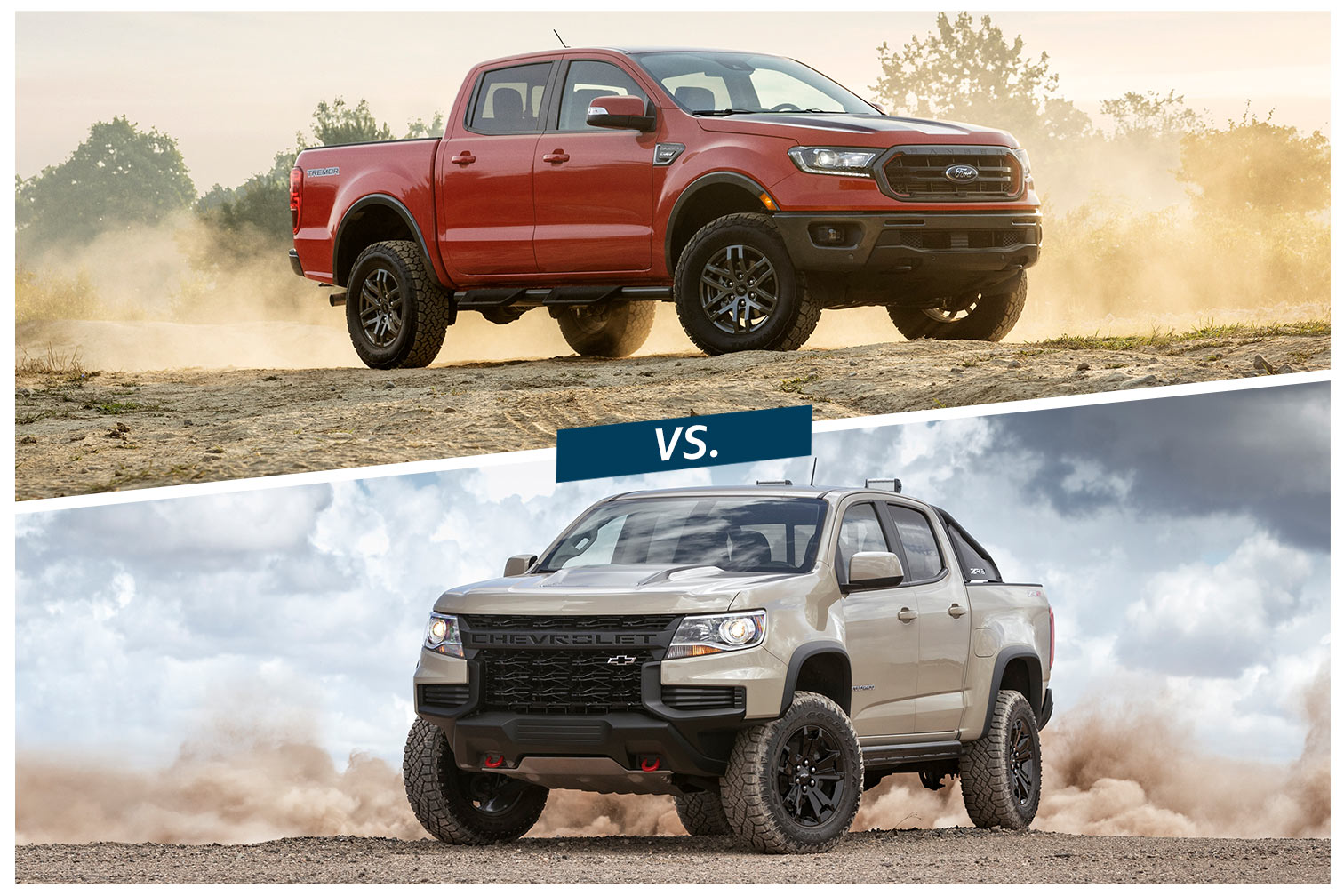
Pick Chevy Colorado for premium features.
Final Verdict
Ultimately, declaring an outright winner between the Ford Ranger and Chevy Colorado is like choosing between two exceptionally strong athletes with slightly different specialties – it’s a tie. Both are formidable contenders in the mid-size truck segment, and neither will leave you feeling shortchanged. The Ford Ranger is the dependable workhorse, prioritizing robust payload capacity, solid fuel efficiency from its proven EcoBoost engine, and a straightforward, no-nonsense approach to utility and value. It’s for the buyer who appreciates a durable, reliable truck that performs its duties without excessive flash.
The Chevy Colorado, on the other hand, steps forward with a more modern aesthetic, superior raw power, and a refined driving experience. Its class-leading torque and towing capacity, coupled with a spacious, tech-rich interior, cater to those who seek a more contemporary truck with a greater emphasis on creature comforts and top-tier performance. The key trade-off here is clear: Do you prioritize the Ranger’s steadfast reliability and value, or do you lean towards the Colorado’s cutting-edge power, modern cabin, and smoother ride? Your ideal truck will be the one that best aligns with your specific daily demands and adventurous aspirations.
![Review: Full Comparison [2026]](https://truckguider.com/wp-content/uploads/2026/04/featured-rear-step-bumper-assembly-compatible-with-20132018-768x403.webp)