Is a Cold Air Intake Worth It? Real 2026 Dyno Guide

For most naturally aspirated vehicles, cold air intakes offer minimal horsepower gains that rarely justify their $200 to $400 price tag. However, they do deliver a noticeable increase in engine sound and slight throttle response improvements, making them more worthwhile on turbocharged engines.
If you are wondering whether a cold air intake is actually worth your hard-earned cash, the short answer is: it depends entirely on your vehicle and your definition of value. For most modern, mass-market cars and trucks in 2026, a $250 to $400 aftermarket intake will net you a modest 3 to 8 horsepower at peak RPM, a much throatier engine growl, and a sharper throttle response. However, if you expect a dramatic, night-and-day acceleration boost or a 5 MPG jump in fuel economy, you will likely walk away disappointed.

Prime for Young Adults — 6 Months Free
Students and 18–24s get six months of Prime free, then half price.
Start 6 Months FreeWeighing the cost-to-performance ratio requires looking past the aggressive marketing claims of the manufacturers. When you drop a few hundred dollars on a high-flow filter and mandrel-bent tubing, you are paying for sound, aesthetics, and marginal airflow improvements just as much as raw power. Let’s break down where factory restrictions lie and how to accurately measure what you actually get for your money.
Key Takeaways
- Expect modest horsepower gains of only 2 to 5 horsepower on standard naturally aspirated engines.
- Fuel economy (MPG) rarely improves noticeably in real-world driving conditions after installation.
- Turbocharged vehicles see significantly better performance returns from upgraded intake systems.
- Aftermarket oiled filters require proper maintenance to prevent MAF sensor contamination issues.
- Quality kits will not void your factory warranty due to the protections of the Magnuson-Moss Act.
What Causes High Air Restriction in Factory Engine Intakes
Recommended Best Deal Products


OEM Sound Suppression and Packaging Constraints
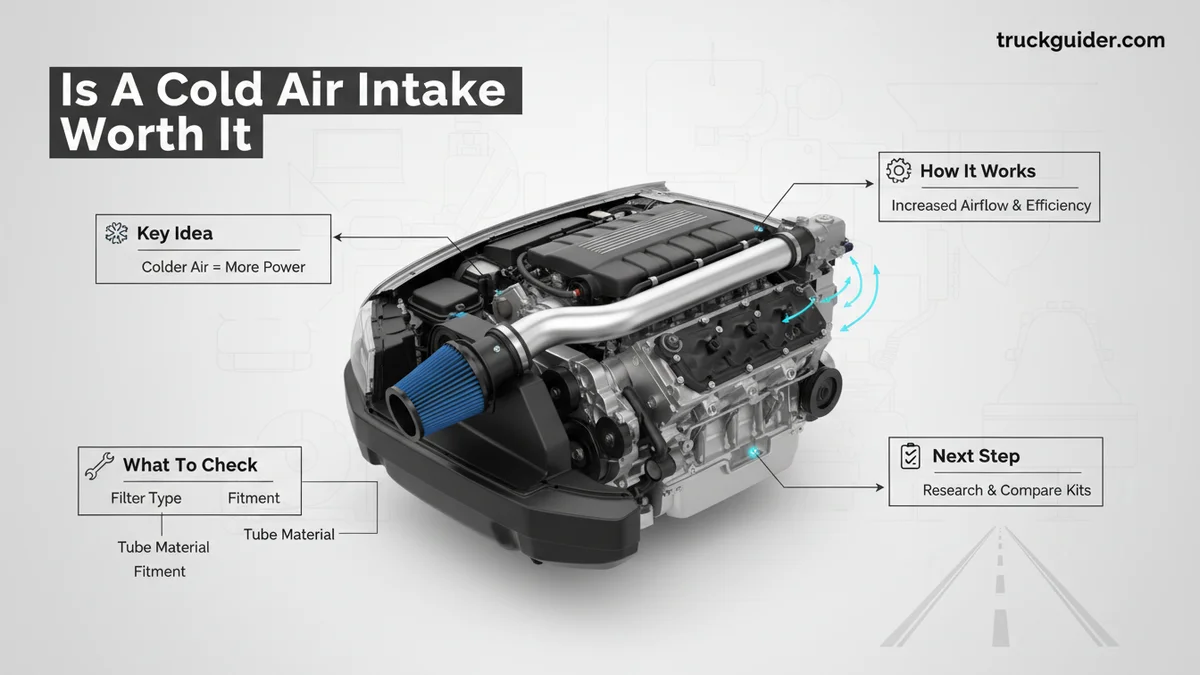
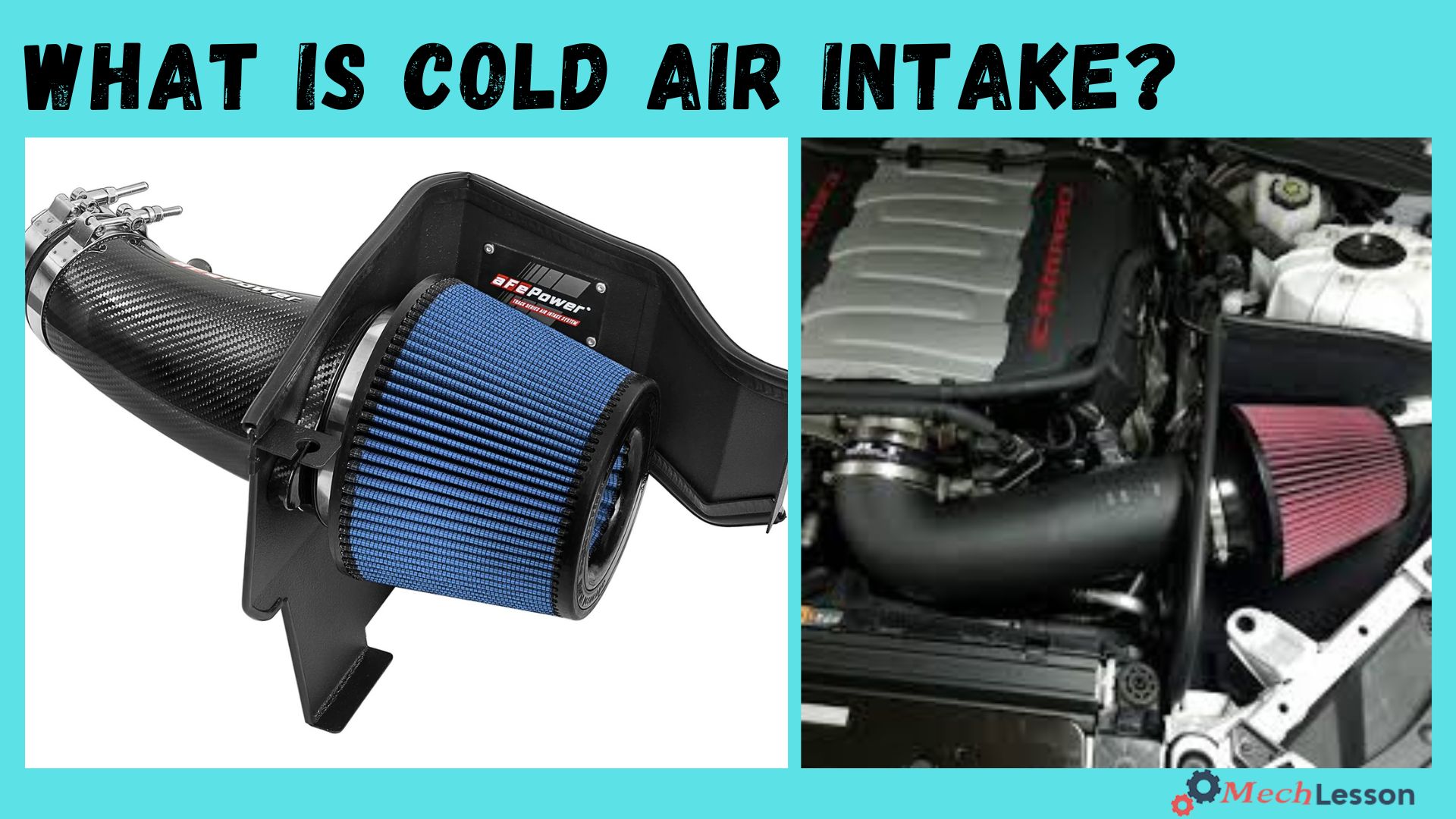
Automakers face strict noise regulations and tight engine bay packaging requirements. Factory intake systems are engineered from heavy, convoluted plastic specifically to muffle the sound of the engine breathing. These massive plastic resonators, sharp 90-degree bends, and baffles create immense turbulence. When your engine tries to gulp air at high RPMs, these OEM design choices create a bottleneck that restricts maximum airflow efficiency.
Paper Filters Versus High-Flow Cotton Elements
Your factory airbox houses a thick, dense pleated paper filter designed to trap microscopic debris over 15,000-mile intervals with zero maintenance. While these filters protect your cylinders brilliantly, their surface area and media density restrict airflow compared to the oiled cotton or dry synthetic cones found in aftermarket kits.
- Factory paper filters prioritize longevity and extreme filtration over maximum volumetric efficiency.
- Aftermarket conical filters use pleats designed to increase surface area and straighten incoming air paths.
- The tighter the packaging under your hood, the more restrictive the factory inlet ducting tends to be.
How to Test and Measure Real Cold Air Intake Performance Gains
The Only Truth Teller: Dynamometer Testing
Relying on the “butt dyno” to measure a cold air intake is a recipe for confirmation bias. Because an aftermarket intake dramatically increases under-hood induction noise, your brain tricks you into believing the car is accelerating significantly faster. To know if your investment paid off, you need back-to-back dyno runs under identical atmospheric conditions.
- Always test the factory intake first, let the engine cool, and then install the aftermarket kit for a baseline comparison.
- Watch the air-fuel ratio on the dyno graph to ensure your stock ECU is safely adapting to the increased airflow.
- Beware of inflated manufacturer horsepower claims, which are often tested on modified vehicles with the hood open.
Tracking Real-World Data via OBD2 Scanners
If dyno time is out of your budget, you can use a modern OBD2 diagnostic tool or a smartphone monitoring app in 2026 to log real-world metrics. Look closely at your Mass Air Flow (MAF) sensor readings in grams per second (g/s) and Intake Air Temperatures (IAT). A well-designed cold air intake should pull air from outside the engine bay to keep IATs as close to ambient temperature as possible, preventing heat soak in stop-and-go traffic.
How to Calculate the Cost-to-Benefit Ratio Before Buying
Recommended Best Deal Products

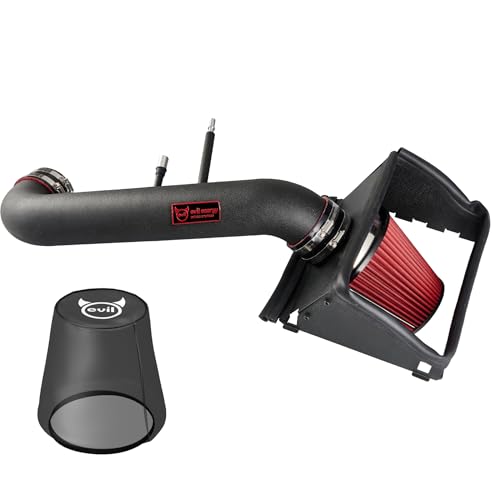

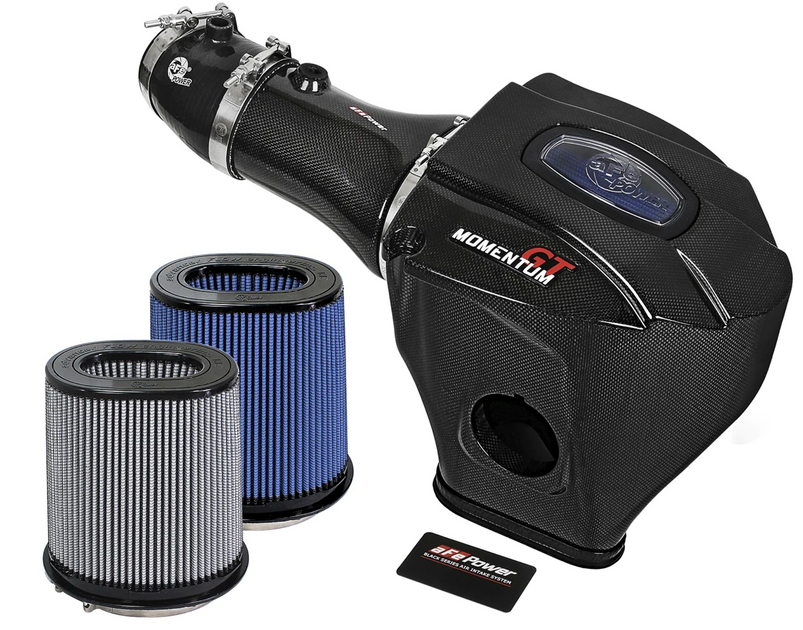
Before purchasing an aftermarket system in 2026, evaluating the financial investment against expected performance gains is critical. Quality kits generally range from $250 to $500, while premium carbon fiber setups can exceed $800. Dividing the purchase price by the anticipated horsepower gain reveals your cost-per-horsepower ratio.
Analyzing the Financial Return
If a $400 kit yields a verified 8-horsepower gain on an otherwise stock engine, the cost is $50 per horsepower. According to automotive aftermarket studies, any ratio exceeding $45 per horsepower represents a poor financial return for pure power. However, enthusiasts must factor in secondary benefits like enhanced induction sound and reusable filter longevity.
Factoring in Long-Term Maintenance Costs
Standard paper air filters require replacement every 15,000 to 30,000 miles, costing roughly $20 each time. Cold air intake systems typically feature oiled or dry synthetic cotton filters designed to last the lifetime of the vehicle. Maintenance kits for reusable filters cost about $20 every 50,000 miles, lowering long-term operating costs and tilting the cost-to-benefit ratio in favor of the upgrade over a five-year ownership horizon.
What If the Intake Triggers a Check Engine Light or Idle Issues
Installing a cold air intake occasionally disrupts factory air-fuel ratios, triggering a dashboard warning or unstable idle speeds. Modern engine control units rely heavily on precise sensor readings from the Mass Air Flow meter. Altering the diameter of the intake piping near the sensor creates turbulence that confuses the computer.

Audible — Listen Free for 30 Days
One free credit a month and thousands of titles included.
Listen Free for 30 DaysDiagnosing and Resolving Sensor Errors
If your vehicle experiences rough idling or a check engine light shortly after installation, specific troubleshooting steps must be taken to restore proper operation. Follow this sequential procedure to isolate and fix the problem:
- Inspect the Mass Air Flow sensor installation to ensure it faces the correct directional airflow arrow specified by the manufacturer.
- Disconnect the vehicle battery for 15 minutes to reset the engine control unit and clear temporary fuel trim adaptation errors.
- Check all vacuum lines and silicone coupler connections for loose clamps that allow unmetered air to enter the engine.
- Clean the Mass Air Flow sensor element using an approved electronic cleaner spray, especially if using an over-oiled cotton filter.
What If It Still Doesn’t Work?
Recommended Best Deal Products


If basic troubleshooting fails to resolve persistent idle surges or diagnostic trouble codes, deeper mechanical intervention is required. Relying on trial and error can damage downstream components like oxygen sensors and catalytic converters.
- Reinstall the factory airbox assembly temporarily to determine if the aftermarket piping design is fundamentally incompatible with your specific vehicle tuning.
- Consult a professional dyno tuner to inspect air-fuel ratio logs and write a custom calibration map to accommodate the increased airflow.
- Take the vehicle to a certified diagnostic technician if codes persist, budgeting between $150 and $300 for professional sensor diagnosis and smoke testing.
Conclusion
Determining whether a cold air intake is worth the investment depends entirely on your vehicle platform and performance expectations. While naturally aspirated engines see modest gains, turbocharged applications benefit significantly from improved thermal efficiency. According to verified research and expert dyno testing sources, pairing your intake with a professional tune yields the highest return. Your next step should be reviewing verified dynamometer charts for your specific year, make, and model before making a purchase.
❓ Frequently Asked Questions
Are cold air intakes worth the money for daily drivers?
For standard daily driving, the minimal horsepower increase and lack of fuel economy gains mean the $200 to $400 cost is rarely justified strictly on performance. They are best viewed as a cosmetic and acoustic upgrade rather than a performance necessity.
How much horsepower does a typical cold air intake add?
On a standard naturally aspirated car, you can expect a peak gain of 2 to 5 horsepower, which is virtually unnoticeable from the driver’s seat. Vehicles with factory turbochargers often respond better, occasionally seeing gains between 10 to 15 horsepower.
Do cold air intakes require a custom engine tune?
Most bolt-on cold air intakes are designed to work safely with the factory ECU calibration without throwing codes. However, high-flow kits with significantly larger diameter piping may require a tune to run smoothly and maximize power.
Can an aftermarket intake cause a check engine light?
Yes, improperly oiled aftermarket filters can shed excess oil onto the Mass Air Flow (MAF) sensor wire, causing incorrect air readings and triggering a check engine light. This is easily fixed by cleaning the sensor with specialized electronic cleaner.
Do they pull colder air than the factory airbox?
Modern factory airboxes already draw ambient air from outside the engine bay through the fender or grille. Aftermarket kits often claim to draw colder air, but open-element filters can sometimes ingest warm under-hood air while idling in traffic.
Audible Premium Plus — Annual Membership
12 audiobook credits up front, plus the full Audible catalogue.
See Annual PlansWhich vehicles benefit the most from a cold air intake?
Turbocharged engines benefit the most because the intake helps spool the turbo faster and allows the forced induction system to move a higher volume of air more efficiently. Naturally aspirated engines see the lowest return on investment.