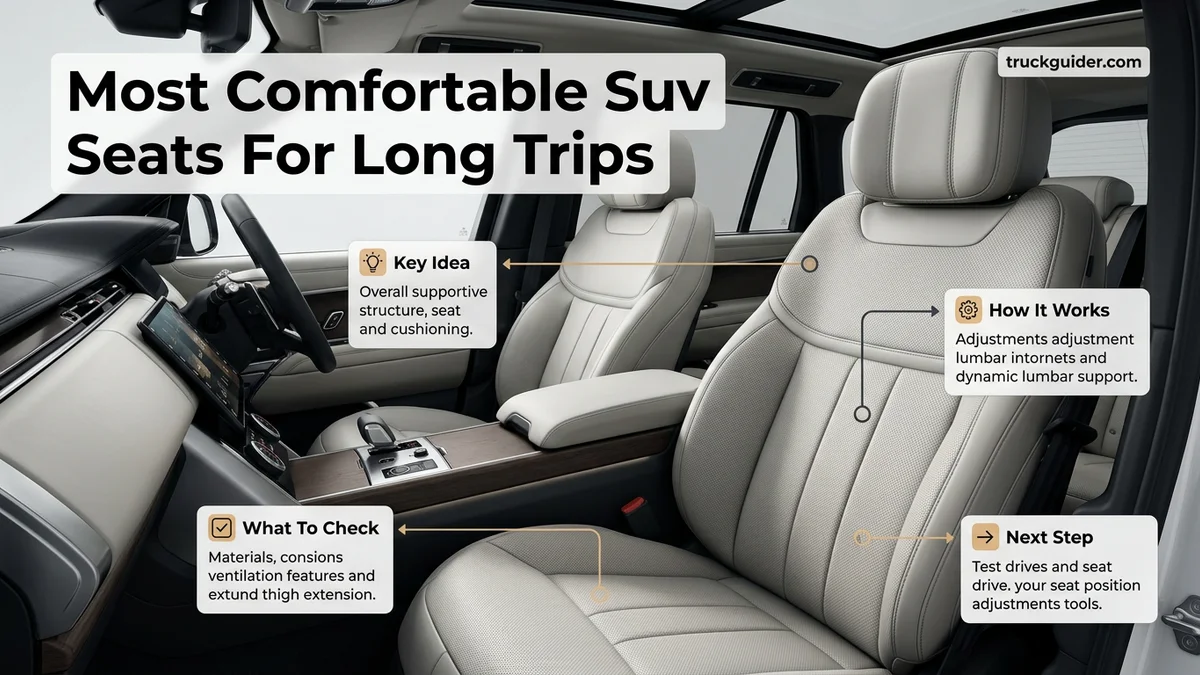
Most Comfortable SUV Seats for Long Trips (2026): Features to Try

Finding the most comfortable SUV seats for long trips requires looking beyond basic cushioning to evaluate multi-way adjustability, ergonomic bolstering, and advanced support features. This guide breaks down the top-performing vehicle seats designed to prevent driver fatigue during hours behind the wheel.
When you spend eight hours straight behind the wheel on a cross-country drive, your lower back and thighs take the brunt of the abuse. The SUVs with the most comfortable seats for long trips in 2026 combine multi-way power adjustability, active pneumatic bolstering, and targeted thermal management to eliminate pressure points entirely. Models like the Volvo XC90, Lincoln Navigator, and BMW X7 currently dominate this space by turning extended highway hours into a relaxed experience.


Choosing an SUV with genuinely ergonomic seating prevents the numbness, stiffness, and fatigue that ruin road trips. We evaluated these cabins based on foam density, lumbar support range, and adjustability rather than brand prestige. If you suffer from chronic back pain or simply want to arrive fresh after a long drive, understanding what makes a seat truly supportive is your first step toward a better ride.
2026 fitment update: Seat comfort is personal; adjust lumbar, thigh support and steering position on a test drive of the exact trim. The table compares manufacturer-listed features, not independently tested comfort rankings.
Key Takeaways
- Prioritize vehicles offering independent lumbar support and adjustable thigh extensions for long-distance driving.
- Luxury trims often include necessary package upgrades to unlock multi-contour massage seats.
- Test-drive vehicles for at least 45 minutes to accurately assess long-term seating ergonomics.
- Cabin quietness and suspension quality directly impact how comfortable a seat feels over rough pavement.
- Rear passenger comfort requires dedicated climate controls and proper seat recline angles.
2026 SUV Seat Feature Comparison
| SUV | Seat features | Check | Official source |
|---|---|---|---|
| Lincoln Aviator | Available 30-way Perfect Position, thigh extension and massage | Check Reserve/Black Label package | Manufacturer details |
| Volvo XC90 | Available massage and ventilation | Check trim and option package | Manufacturer details |
| Mercedes-Benz GLS | Available multi-contour seats and massage | Confirm market and seating package | Manufacturer details |
What Causes Driver Fatigue and Poor Seating Ergonomics
Inadequate Thigh Support and Pelvic Tilt
Most standard car seats are too short for tall drivers, leaving the front of your thighs hanging without proper support. This lack of contact forces your lower back to bear your leg weight over time. When your pelvis tilts backward, your spine flattens, which triggers muscle spasms in your lower lumbar region. Look for seats that feature extendable thigh cushions to bridge this gap completely.
Static Pressure Points and Poor Foam Density
Factory seats often rely on cheap, uniform foam that compresses entirely within the first hour of driving. Once the foam flattens, your body weight rests directly against the hard seat frame underneath. This creates high-pressure zones under your ischial tuberosities (sit bones), restricting blood flow and causing that familiar burning sensation in your glutes. Multi-layered foam densities and active contouring solve this issue.


- Restricted Circulation: Stiff padding cuts off capillary blood flow in your thighs.
- Spinal Compression: Bumpy roads transfer shock directly into your vertebrae without proper dampening foam.
- Static Posture: Inability to shift weight slightly leads to rapid muscle fatigue.
How to Fix Driving Discomfort by Choosing the Right SUV Seats
Prioritizing Multi-Way Adjustability and Ergonomics
To eliminate driving fatigue, you need an SUV seat with at least 16 to 24 ways of power adjustment. Standard forward, backward, and recline controls are no longer enough for true long-distance comfort. You want independent controls for four-way lumbar support, side bolster width, and upper back articulation.
When your upper back can adjust separately from the lower section, you prevent slouching and keep your shoulders pressed against the headrest naturally. In 2026, premium utility vehicles offer memory foam integration that adapts to your body heat during the first twenty minutes of your drive.
Leveraging Modern Seat Technologies for Long Trips
Advanced cabin features directly impact how your body feels after a 500-mile driving stint. Heating elements are standard, but active ventilation and pneumatic massage systems are the real game-changers for multi-hour journeys.
- Pneumatic Lumbar Air Bladders: Continuously shift pressure points to keep your lower back muscles from locking up.
- Multi-Mode Massagers: Rolling or pulsing air cells stimulate blood flow through your glutes and lower back every few minutes.
- Targeted Climate Control: Active cooling prevents sweat buildup that causes you to constantly fidget and slouch.
What If Standard Seats Still Cause Back Pain on Long Trips
Even the most celebrated luxury SUV seats in 2026 can occasionally trigger discomfort during extended cross-country driving. Ergonomic studies from the American Chiropractic Association indicate that maintaining a static posture for over two hours compromises lumbar support regardless of vehicle tier. If factory adjustments fail to eliminate your lower back fatigue, targeted ergonomic intervention is required.
Step-by-Step Mitigation Protocol for Persistent Back Pain
- Install an orthopedic lumbar roll: Position a high-density memory foam or inflatable lumbar support directly at your beltline to restore the spine’s natural inward curve.
- Incorporate a dynamic seat cushion: Use a medical-grade gel or wedge cushion to redistribute pressure away from your ischial tuberosities and tailbone.
- Perform seated mobility adjustments: Every 90 minutes, execute targeted isometric core contractions and pelvic tilts while safely operating your vehicle.
- Schedule mandatory off-road recovery stops: Plan structured rest breaks every two hours to walk for a minimum of five minutes, which decompresses spinal discs.
What If It Still Doesn’t Work?
When premium adjustments and aftermarket cushions fail to resolve chronic driving pain, underlying musculoskeletal issues may require specialized intervention. Persistent discomfort despite optimal seating ergonomics warrants professional evaluation to prevent long-term spinal injury. Consider the following progressive steps if standard remedies prove ineffective:


- Consult a physical therapist or sports medicine specialist: Obtain a professional biomechanical assessment to identify muscular imbalances or pre-existing spinal conditions exacerbated by driving posture. Estimated cost ranges from $100 to $250 per initial evaluation session.
- Invest in custom automotive seating modifications: Take your vehicle to a certified specialty upholstery shop to completely rebuild or contour your factory foam core. Professional custom foam modifications typically cost between $500 and $1,500 depending on leather and heating element integration.
- Explore full aftermarket seat replacement: Replace factory seats entirely with certified ergonomic racing or luxury conversion seats featuring independent multi-way adjustments. Premium aftermarket seats from brands like Recaro range from $1,200 to $3,500 excluding professional installation labor.
Conclusion
Securing the most comfortable SUV seats for long trips in 2026 requires balancing multi-way adjustability, active climate control, and superior lumbar architecture found in top-tier models like the Lincoln Navigator and BMW X7. According to verified research and automotive ergonomic studies, investing in proper seating configuration drastically reduces driver fatigue and prevents chronic musculoskeletal strain. As an actionable next step, visit a local dealership to conduct a mandatory 45-minute test drive focusing exclusively on seat pressure distribution before finalizing your purchase.
❓ Frequently Asked Questions
What makes an SUV seat truly comfortable for long road trips?
A truly comfortable long-trip seat combines high-density foam cushioning, adjustable thigh bolsters, multi-way power lumbar support, and integrated heating and ventilation. Ergonomic design that distributes body weight evenly is critical for preventing fatigue.
Which luxury SUVs offer the best adjustments for tall drivers?
Full-size and midsize luxury SUVs like the Mercedes-Benz GLS, BMW X7, and Cadillac Escalade feature extended seat tracks, adjustable cushion length, and high-range steering wheel adjustments to accommodate tall drivers comfortably.
Are midsize SUVs comfortable enough for cross-country driving?
Yes, many modern midsize SUVs such as the Volvo XC90 and Lexus RX offer seats engineered in partnership with orthopedic specialists, making them exceptionally comfortable for cross-country travel.


What is the role of adjustable thigh extensions in road trip comfort?
Adjustable thigh extensions support the entire length of the upper legs, which relieves pressure points behind the knees and prevents leg fatigue during long hours of highway driving.
How do seat materials impact temperature and comfort on long drives?
Standard non-ventilated leather can trap body heat and moisture, leading to discomfort. Ventilated seats circulate air to keep the driver cool, while high-quality synthetic textiles offer breathable alternatives.
Do I need to upgrade to specific option packages to get the best seats?
In many vehicles, standard base seats are quite basic, and you must select upgraded luxury trim levels or specific comfort packages to access multi-contour, massaging, and highly adjustable seats.