Ram 1500 5.7 HEMI Specs: The Guide (2019-2026)

For decades, the sound of a HEMI V8 has been synonymous with American muscle and capability. In the fiercely competitive half-ton pickup segment, the 5.7L HEMI V8, also known by its 345 cubic-inch displacement, has long been the heart and soul of the Ram 1500. It’s an engine celebrated not just for its raw power, but for its distinctive character—a deep, rumbling exhaust note and a responsive, torque-rich power delivery that defines the modern truck experience.
This engine has powered millions of trucks, becoming a benchmark for reliability and performance. Its story is one of consistent evolution, adapting to modern demands for efficiency without sacrificing its core identity. This was never more apparent than after its brief discontinuation for the 2025 model year in favor of a new twin-turbo inline-six. Following immense customer demand, Ram announced the return of the legendary 5.7L HEMI for the 2026 model year, cementing its status as an icon that truck buyers refuse to let go.
This guide provides an exhaustive, data-driven look at the specifications, technology, and real-world performance of the modern 5.7L HEMI V8, focusing on the 2019 model year through its celebrated 2026 return.
At-a-Glance Specifications
For those seeking the most critical numbers, the table below summarizes the key performance metrics of the 5.7L HEMI V8 as equipped in recent Ram 1500 models.
| Specification | Value |
| Engine Type | 90-Degree V8, Pushrod OHV |
| Displacement | 5.7 Liters / 345 Cubic Inches |
| Horsepower | 395 hp @ 5,600 RPM |
| Torque | 410 lb-ft @ 3,950 RPM |
| Max Towing Capacity | Up to 12,750 lbs (with eTorque) |
| Max Payload Capacity | Up to 1,930 lbs |
| Key Technology | eTorque Mild Hybrid, MDS |
A close look at the data reveals a fascinating strategy. While competitors have engaged in a horsepower war, Ram has kept the HEMI’s core output of 395 horsepower and 410 lb-ft of torque remarkably consistent for over a decade. This isn’t a sign of technological stagnation. Instead, it reflects a deliberate engineering focus on refining the entire powertrain experience.
Rather than chasing a higher peak horsepower number, which often compromises low-end torque or requires more complex and costly engine architecture, Ram invested in technologies like the eTorque mild-hybrid system. This system enhances the truck’s real-world drivability by adding supplemental torque directly at launch—the most critical phase of acceleration for a pickup—without altering the engine’s proven and reliable foundation.
This positions the 5.7L HEMI as a known quantity, a trusted workhorse whose value is measured not just in peak numbers, but in its blend of proven capability, enhanced responsiveness, and the unmistakable sound and feel that the newer, more powerful engines simply cannot replicate.
The Heart of the Ram 1500
A Deep Dive into the Legendary 5.7L HEMI V8 Engine
Peak Horsepower
395
@ 5,600 RPM
Peak Torque
410
LB-FT @ 3,950 RPM
Core Engine Specs
- Displacement: 5.7 Liters (345 ci)
- Configuration: 90° V8
- Valvetrain: OHV, 16-Valve
- Key Tech: VVT, MDS
- Compression Ratio: 10.5:1
HEMI Power vs. Competitors
The 5.7L HEMI delivers a robust balance of horsepower and torque, positioning it competitively against other V8 offerings in the half-ton truck segment.
The eTorque Mild-Hybrid System
Optional on the 5.7L HEMI, the eTorque system replaces the traditional alternator with a belt-driven motor-generator unit. This provides several benefits, including a significant low-end torque boost for smoother acceleration and improved fuel efficiency by enabling a more seamless engine start-stop function.
Engine Power
Combustion engine provides primary power
eTorque Assist
+130 lb-ft of launch torque from motor-generator
Drivetrain
Blended power for smooth, strong acceleration
Maximum Towing Capability
When properly configured, the Ram 1500 with the 5.7L HEMI (especially with eTorque) is a formidable tower. Here’s how its maximum conventional towing capacity stacks up against key rivals.
eTorque Fuel Economy Gain
The eTorque system provides a noticeable improvement in combined fuel economy, primarily through its advanced start-stop capability and electrical assistance.
Evolution of the 5.7L HEMI
While the fundamental architecture of the modern 5.7L HEMI has been refined over the years, its core output figures have remained remarkably consistent, a testament to its solid engineering. The most significant recent advancements have been the integration and wider availability of the eTorque system.
Core Capability: Towing, Payload, and Performance Metrics
The primary function of a full-size truck engine is to do work. The 5.7L HEMI’s specifications are engineered to provide formidable capability for towing heavy loads and hauling significant payload, making it a versatile choice for both work and recreation.

Horsepower and Torque Deep Dive
The HEMI’s official rating is 395 horsepower at 5,600 RPM and 410 lb-ft of torque at 3,950 RPM. While the horsepower figure ensures strong performance at higher speeds for merging and passing, it is the substantial torque figure, available in the middle of the rev range, that truly defines the engine’s character. This strong mid-range torque curve provides the muscle needed for pulling heavy trailers from a standstill and maintaining speed on steep grades, delivering a confident and seemingly effortless towing experience.
Towing Capacity: The eTorque Advantage
A Ram 1500’s towing capacity is not a single number; it is highly dependent on the truck’s configuration, including cab size, bed length, drivetrain (4×2 or 4×4), axle ratio, and, most importantly, the presence of the eTorque mild-hybrid system.
The headline figure of 12,750 pounds is the absolute maximum towing capacity, and it is achievable only on specific configurations: typically a Quad Cab 4×2 model in the Tradesman or Lone Star trims equipped with the 5.7L HEMI with eTorque and the optional 3.92 axle ratio.
The eTorque system’s contribution to towing is significant and consistent. By providing up to 130 lb-ft of supplemental torque from a standstill, it helps the truck overcome the immense inertia of a heavy trailer, a key factor in official towing calculations. This results in a substantial increase in the certified tow rating compared to the non-eTorque version of the same engine.
The table below illustrates the maximum towing capacities for the 5.7L HEMI with and without eTorque across recent model years, demonstrating the clear advantage the mild-hybrid system provides.
| Model Year | Max Towing (5.7L HEMI) | Max Towing (5.7L HEMI w/ eTorque) |
| 2024 | N/A | 12,750 lbs |
| 2023 | N/A | 12,750 lbs |
| 2022 | 11,610 lbs | 12,750 lbs |
| 2021 | 11,610 lbs | 12,750 lbs |
| 2020 | 11,610 lbs | 12,750 lbs |
| 2019 | 11,610 lbs | 12,750 lbs |
Payload Capacity Explained
Payload capacity—the maximum weight of cargo and passengers a truck can carry—is primarily determined by the strength of its frame, suspension, axles, and tires. For Ram 1500 models equipped with the 5.7L HEMI, maximum payload ratings typically range from approximately 1,800 pounds to a high of 1,930 pounds, depending on the specific configuration. Lighter configurations, such as a 4×2 regular cab, will generally offer higher payload ratings than a fully-loaded 4×4 crew cab.
Interestingly, while the eTorque system dramatically increases towing capacity, it can have a neutral or even slightly negative impact on payload. The system’s 48-volt battery pack and motor-generator add weight to the truck. Since payload is calculated as Gross Vehicle Weight Rating (GVWR) minus the truck’s curb weight, any added component weight directly reduces the available payload capacity. This creates a clear decision point for buyers: those who prioritize maximizing in-bed hauling should pay close attention to specific payload ratings, while those focused on towing will find the eTorque system indispensable.
| Model Year | Max Payload (5.7L HEMI) | Max Payload (5.7L HEMI w/ eTorque) |
| 2024 | N/A | 1,850 lbs |
| 2023 | 1,900 lbs | 1,820 lbs |
| 2022 | 1,900 lbs | 1,820 lbs |
| 2021 | 1,930 lbs | 1,840 lbs |
| 2020 | 1,900 lbs | 1,820 lbs |
| 2019 | 1,900 lbs | 1,830 lbs |
The HEMI Architecture: A Technical Deep Dive
Beneath the engine cover lies a design that blends classic American V8 principles with modern technology. Understanding its architecture is key to appreciating both its strengths and its well-documented quirks.
Engine Block and Construction
The foundation of the 5.7L HEMI is its robust cast-iron engine block. It features a deep-skirt design where the block material extends below the crankshaft centerline, and it incorporates cross-bolted main bearing caps. Both of these features add significant rigidity to the bottom end, providing a strong and stable foundation for the rotating assembly, which is crucial for durability under heavy loads.
Atop the iron block sit aluminum cylinder heads. The use of aluminum reduces weight over the front axle, and its superior heat dissipation properties contribute to engine efficiency. The defining feature of these heads is the hemispherical combustion chamber, a design that gives the engine its famous name and promotes efficient airflow and combustion by allowing for large valves.
Bore, Stroke, and Compression
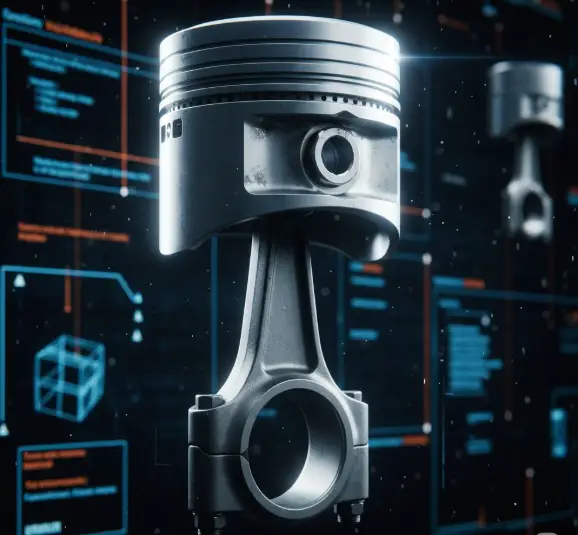
The engine’s internal dimensions define its performance characteristics. The 5.7L HEMI has a bore (cylinder diameter) of 3.917 inches (99.5 mm) and a stroke (piston travel distance) of 3.578 inches (90.9 mm). Because the bore is larger than the stroke, it is known as an “oversquare” engine. This design geometry generally favors horsepower production at higher engine speeds while still delivering the strong low-end torque essential for a truck.
The compression ratio is 10.5:1. This ratio represents a carefully engineered balance between power and efficiency. It is high enough to extract significant energy from each combustion event, yet it allows the engine to operate safely and efficiently on regular 87-octane unleaded gasoline, a major advantage for long-term cost of ownership compared to engines that require more expensive premium fuel.
Valvetrain and Rotating Assembly
The 5.7L HEMI utilizes a classic Overhead Valve (OHV) pushrod valvetrain. This design features a single camshaft located within the engine block. The camshaft’s lobes act on hydraulic roller lifters, which in turn move long metal pushrods. These pushrods activate rocker arms mounted on the cylinder head, which finally open and close the intake and exhaust valves.
There are two valves per cylinder. While more complex Dual Overhead Cam (DOHC) designs are common in other modern engines, the pushrod layout is prized for its simplicity, durability, and compact physical size, particularly its narrower width, which simplifies packaging in the engine bay.
The rotating assembly consists of a nodular iron crankshaft, powdered metal connecting rods, and hypereutectic cast aluminum alloy pistons. This combination is engineered for strength and durability in a demanding truck application.
Detailed Engine Specifications Table
The following table provides a consolidated view of the 5.7L HEMI’s core architectural specifications.
| Specification | Value |
| Engine Type | 90-Degree V8 |
| Displacement | 5.7 Liters (345 ci) |
| Block Material | Cast Iron |
| Cylinder Head Material | Aluminum |
| Valvetrain | Overhead Valve (OHV), 2 valves/cylinder |
| Bore | 3.917 in / 99.5 mm |
| Stroke | 3.578 in / 90.9 mm |
| Compression Ratio | 10.5:1 |
| Fuel System | Sequential Multi-Port Fuel Injection |
| Recommended Fuel | 87 Octane Regular Unleaded |
The decision to retain the “old-school” pushrod architecture is a critical engineering choice that directly shapes the engine’s character, its packaging, and its specific reliability profile. This design is compact and cost-effective, leveraging decades of proven technology. However, the long and complex path of the valvetrain—from the cam lobe to the lifter, up the pushrod, and over the rocker arm—creates a mechanical system that is inherently more sensitive to lubrication quality and oil pressure, especially at low RPMs.
This fundamental design characteristic is directly connected to the engine’s most infamous reliability issue, the “Hemi Tick,” which originates from failures within this intricate valvetrain system.
Key Technologies Explained: eTorque and MDS
Two key technologies define the modern 5.7L HEMI: the eTorque mild-hybrid system, which enhances performance and efficiency, and the Multi-Displacement System (MDS), which focuses solely on fuel conservation.
eTorque Mild-Hybrid System
The eTorque system is a clever piece of engineering that elevates the HEMI’s performance without the complexity and cost of a full hybrid powertrain. It functions by replacing the traditional 12-volt alternator with a powerful, belt-driven 48-volt motor-generator unit that is mounted to the front of the engine. This unit is connected to a compact, suitcase-sized 48-volt lithium-ion battery pack mounted to the rear wall of the truck’s cab.
The eTorque system performs several key functions:
- Torque Fill: Its most noticeable benefit is providing a supplemental torque boost during launch. The motor-generator can deliver up to 130 lb-ft of torque almost instantly to the crankshaft, smoothing out initial acceleration and helping to get heavy loads moving with less effort from the gasoline engine.
- Advanced Stop-Start: It enables a nearly seamless engine stop-start function. When the truck comes to a stop, the HEMI can shut off to save fuel. The eTorque motor-generator then restarts the engine much more quickly and smoothly than a traditional starter motor can.
- Regenerative Braking: During deceleration and braking, the motor-generator reverses its function, capturing kinetic energy and using it to recharge the 48-volt battery pack. This recaptured energy is then used to power the torque fill function and assist with the truck’s electrical loads.
Multi-Displacement System (MDS)
The Multi-Displacement System (MDS) is a cylinder deactivation technology designed to improve fuel economy during light-load driving conditions, such as steady-state highway cruising. The system is controlled by the engine’s computer, which constantly monitors driver inputs and engine load.
When conditions are appropriate, the MDS deactivates four of the eight cylinders—specifically cylinders 1, 4, 6, and 7. It accomplishes this by using engine oil pressure, directed by four electronic solenoids located in the engine valley. This pressurized oil flows to special lifters associated with the deactivated cylinders. The oil pressure decouples an internal pin within the lifter, preventing it from transferring the camshaft’s motion to the pushrod.
As a result, the intake and exhaust valves for those four cylinders remain closed, and fuel injection is cut off. The engine effectively operates as a V4, significantly reducing fuel consumption. The transition between 8-cylinder and 4-cylinder modes is designed to be seamless and occurs in just 40 milliseconds. Ram claims this technology can improve fuel economy by up to 20% in certain driving scenarios.
While ingenious, the MDS is at the center of the 5.7L HEMI’s biggest engineering conflict: the push for modern efficiency versus the realities of its mechanical design. The implementation of this system is directly linked to the engine’s most prevalent and costly failure point—the destruction of lifters and camshafts. The specialized MDS lifters rely on a complex oiling mechanism for both deactivation and lubrication of their internal roller bearings. During periods when the system is not actively cycling, such as during prolonged idling, these critical components can experience oil starvation.
This lack of lubrication causes the needle bearings in the lifter’s roller to fail. Once the roller seizes, it is dragged across the hardened camshaft lobe instead of rolling, quickly grinding it down and leading to the infamous “Hemi Tick” and, eventually, catastrophic engine damage. This explains why the failure is not just a random occurrence but a systemic vulnerability tied directly to the engine’s design and operating conditions.
Fuel Economy: Real-World MPG
The 5.7L HEMI’s fuel economy is a balance of V8 power and modern efficiency technologies. While it will never match the frugality of a smaller engine, the implementation of MDS and the eTorque system results in respectable EPA ratings for a full-size truck.
EPA Ratings Analysis
Official EPA estimates vary based on the truck’s drivetrain (4×2 or 4×4) and whether it is equipped with the eTorque system. Generally, the eTorque system provides a measurable benefit of 2-3 MPG in city driving, where its stop-start and regenerative braking functions are most effective. The penalty for opting for 4×4 is typically a loss of about 1 MPG in both city and highway ratings compared to a 4×2 configuration.
For recent model years, a popular configuration like a Ram 1500 4×4 with the 5.7L HEMI and eTorque is typically rated at 18 MPG city, 22 MPG highway, and 19 MPG combined. The non-eTorque 4×4 models were rated lower, around 15 MPG city and 21 MPG highway, highlighting the real-world benefit of the mild-hybrid system.
MPG Ratings Comparison Table
This table provides a clear comparison of EPA-estimated fuel economy across different configurations of the 5.7L HEMI engine.
| Drivetrain | Engine Variant | City MPG | Highway MPG |
| 4×2 | 5.7L HEMI | 15 | 22 |
| 4×4 | 5.7L HEMI | 15 | 21 |
| 4×2 | 5.7L HEMI w/ eTorque | 18 | 23 |
| 4×4 | 5.7L HEMI w/ eTorque | 18 | 22 |
Drivetrain: Transmission and Axle Ratios
The engine’s power is only useful if it can be effectively transmitted to the wheels. The Ram 1500’s drivetrain, consisting of its transmission and axle ratios, is a critical part of the performance equation.
The TorqueFlite 8-Speed Automatic
The 5.7L HEMI is exclusively paired with the highly regarded TorqueFlite 8-speed automatic transmission. This transmission, based on a design from the German company ZF, is known for its exceptionally smooth shifts, intelligent gear selection, and robust construction. The specific variants paired with the HEMI are typically the 8HP70 or the stronger 8HP75. Its wide spread of gear ratios allows the HEMI to stay in its optimal powerband during acceleration while also enabling low-RPM cruising on the highway for improved fuel economy.
The Critical Role of Axle Ratios
Perhaps the most misunderstood—and most critical—specification for truck performance is the axle ratio. The axle ratio represents the gear ratio within the truck’s differential, and it acts as a torque multiplier. A higher numerical ratio (e.g., 3.92) provides more torque multiplication, resulting in better acceleration and towing performance, but at the expense of slightly lower fuel economy. A lower numerical ratio (e.g., 3.21) provides less torque multiplication, which is better for fuel efficiency but reduces towing capability.
Ram 1500 models with the 5.7L HEMI are typically available with three axle ratios:
- 3.21: The standard, economy-focused ratio.
- 3.55: A balanced, middle-ground option.
- 3.92: The optional performance and max-towing ratio.
Choosing the right axle ratio is paramount. A truck equipped with the 3.92 axle ratio can have a towing capacity that is thousands of pounds higher than an identical truck with the 3.21 ratio. For example, one configuration of a Ram 1500 with the 5.7L HEMI can tow 8,550 pounds with the 3.21 axle, but that figure jumps to 10,700 pounds with the 3.92 axle—an increase of over 2,000 pounds from a single option change.
This powerfully illustrates why buyers who plan to tow heavy loads must select the 3.92 axle ratio to unlock the HEMI’s full potential. For those looking to maximize their truck’s capability, a detailed review of the available options is essential, and our guide to Ram 1500 Trim Levels Explained can provide further clarity.
Reliability and Common Problems: The Owner’s Guide
The 5.7L HEMI has earned a reputation as a durable workhorse, but like any complex piece of machinery, it is not without its well-documented issues. This section provides a transparent, owner-focused guide to the most common problems, drawing on expert analysis and extensive community feedback to help owners identify, prevent, and address these concerns.
Decoding the “Hemi Tick”
The most widely discussed issue is the “Hemi Tick,” a ticking or tapping sound from the engine bay. It is crucial to understand that not all ticks are created equal. There are three distinct sounds, each with a very different level of severity:
- Benign Injector Noise: A light, fast, and consistent clicking sound, often compared to a sewing machine, is the normal operating noise of the fuel injectors. This sound is present on healthy engines and is not a cause for concern.
- Exhaust Manifold Leak: A distinct “tick-tick-tick” that is often loudest when the engine is cold and may quiet down or disappear as the engine warms up. This is caused by broken exhaust manifold bolts, a very common issue due to the different expansion rates of the cast iron manifolds and aluminum cylinder heads. While it needs to be repaired to prevent exhaust leaks, it is not an internal engine problem.
- The Malignant Lifter/Cam Tick: This is the true, infamous “Hemi Tick.” It is a deeper, more metallic, and more pronounced ticking or knocking sound that originates from the top end of the engine. It does not go away when the engine warms up and is a direct symptom of a failing lifter and a damaged camshaft. This sound indicates a serious internal engine problem that requires immediate attention.
Lifter and Camshaft Failure: The Root Cause
The root cause of the most severe “Hemi Tick” is the catastrophic failure of the engine’s hydraulic roller lifters, which in turn destroys the camshaft. As detailed earlier, this failure is overwhelmingly linked to an oiling issue with the specialized MDS lifters, exacerbated by prolonged periods of engine idling at low RPMs, where oil pressure is at its lowest. Owner forums are filled with accounts of this failure, which often requires a costly repair that involves replacing the camshaft, all lifters, and related components, sometimes leading to a full engine replacement.
Preventive Maintenance for Longevity
While the design presents a vulnerability, owners can take proactive steps to significantly reduce the risk of lifter failure and ensure a long service life for their HEMI engine.
- Oil is Life: This is the single most important factor. Owners and expert mechanics overwhelmingly recommend using a high-quality, full-synthetic engine oil that meets Chrysler’s MS-6395 specification. Furthermore, it is critical to adhere to a strict oil change interval of no more than 5,000 miles, regardless of what the vehicle’s oil life monitor suggests.
- Limit Idle Time: Because the failure mechanism is linked to low oil pressure at idle, it is crucial to avoid extended periods of idling whenever possible. This is especially important for vehicles used in commercial or fleet applications where idling is common.
- Potential Upgrades: For owners seeking the ultimate peace of mind, the enthusiast community has identified effective aftermarket solutions. The most common recommendation is to replace the stock oil pump with a higher-volume unit from the 6.2L Hellcat engine or from an aftermarket supplier like Melling. These pumps provide significantly more oil flow at idle, ensuring proper lubrication of the valvetrain and mitigating the risk of oil starvation. For a comprehensive overview of service needs, refer to our
Ram 1500 Maintenance Schedule and Costsguide.
Evolution of the 5.7L HEMI: A Timeline
The modern 5.7L HEMI has undergone several key evolutions since its introduction, adapting to new technologies and performance demands.
The Beginning (2003-2008)
The Gen III 5.7L HEMI debuted in 2003 in Dodge Ram trucks, replacing the aging “Magnum” family of V8s (the 5.2L 318 and 5.9L 360) that could no longer meet tightening emissions standards. In its initial truck application, it produced 345 horsepower and 375 lb-ft of torque. This early version laid the foundation but lacked some of the refinements of the later models.
The “Eagle” Update (2009-Present)
For the 2009 model year, the engine received a significant overhaul, often referred to as the “Eagle” update. This was the most important revision in the engine’s history and introduced several key technologies:
- Variable Valve Timing (VVT): This system allowed the engine to advance or retard camshaft timing, optimizing performance and efficiency across the entire RPM range.
- Improved Cylinder Heads: The heads were redesigned for better airflow.
- Refined MDS: The cylinder deactivation system was improved for smoother operation.
This update is what boosted the engine’s output to the familiar 395 horsepower and 410 lb-ft of torque, figures that have remained the standard ever since. All Ram 1500s from 2009 to the present with the 5.7L engine use this “Eagle” version.
The Brief Hiatus and 2026 Return
In a move that surprised the industry, Ram announced that the 5.7L HEMI would be discontinued after the 2024 model year, replaced by a new, more powerful, and more efficient 3.0L “Hurricane” twin-turbocharged inline-six engine for the 2025 Ram 1500. However, the response from loyal customers and dealers was swift and overwhelming. The demand for the traditional V8 was so strong that Ram reversed its decision, announcing that the 5.7L HEMI V8 would return as an option for the 2026 model year. This remarkable turn of events underscores the powerful brand equity and emotional connection that buyers have with the HEMI name and the V8 experience.
Competitive Landscape: HEMI vs. The World
The 5.7L HEMI competes directly with the V8 offerings from its primary American rivals, Ford and Chevrolet. This classic showdown pits three distinct engineering philosophies against one another.
Ram 5.7L HEMI vs. Ford F-150 5.0L “Coyote” V8

Ford’s 5.0L “Coyote” V8 is the HEMI’s closest competitor in terms of output and capability. The Coyote is a more modern, complex engine, featuring a Dual Overhead Cam (DOHC) design with 32 valves. It produces slightly more horsepower at 400 hp and identical torque at 410 lb-ft. Its maximum towing capacity is also slightly higher, at up to 12,900 pounds when properly configured. The primary difference lies in their character; the DOHC Coyote tends to build power higher in the rev range, while the pushrod HEMI is known for its immediate, off-the-line grunt. For an in-depth analysis, our report provides a full breakdown.
Ram 5.7L HEMI vs. Chevy Silverado 5.3L EcoTec3 V8
Chevrolet’s 5.3L EcoTec3 V8 is another pushrod engine, making it a more direct architectural competitor to the HEMI. However, the HEMI holds a significant performance advantage. The Chevy 5.3L is rated at 355 horsepower and 383 lb-ft of torque, both of which are considerably lower than the Ram’s output. This power difference is reflected in its lower maximum towing capacity, which tops out around 11,300 pounds. Both engines utilize sophisticated cylinder deactivation systems (MDS for Ram, AFM/DFM for Chevy) to improve fuel economy.
V8 Engine Competitive Comparison Matrix
This matrix provides a side-by-side comparison of the key specifications for the V8 engines from the Big Three American truck manufacturers.
| Specification | Ram 1500 5.7L HEMI | Ford F-150 5.0L V8 | Chevy Silverado 5.3L V8 |
| Horsepower | 395 hp | 400 hp | 355 hp |
| Torque | 410 lb-ft | 410 lb-ft | 383 lb-ft |
| Max Towing | 12,750 lbs | 12,900 lbs | 11,300 lbs |
| Max Payload | ~1,850 lbs | ~2,225 lbs | ~2,285 lbs |
| Architecture | Pushrod OHV | DOHC | Pushrod OHV |
| Cylinder Deactivation | MDS | Yes | DFM |
| Recommended Fuel | 87 Octane | 87 Octane | 87 Octane |
Frequently Asked Questions (FAQs)
What are the main specs of the Ram 1500 5.7 HEMI?
The 5.7L HEMI V8 engine produces 395 horsepower and 410 lb-ft of torque. When equipped with the eTorque mild-hybrid system and properly configured, it can tow up to 12,750 pounds and has a maximum payload capacity of around 1,850 pounds.
Is the 5.7 HEMI with eTorque worth it?
For most buyers, yes. The eTorque system significantly increases the maximum towing capacity by over 1,000 pounds compared to the non-eTorque version. It also provides a noticeable improvement in city fuel economy (typically 2-3 MPG) and delivers a much smoother engine stop-start experience. If you plan to tow heavy loads frequently, the eTorque system is an essential option.
What causes the “Hemi Tick”?
The infamous “Hemi Tick” is most often caused by a failed hydraulic roller lifter, which then damages the camshaft. This is primarily linked to an oil lubrication issue in the valvetrain, often exacerbated by long periods of engine idling. Other, less severe ticking noises can be caused by normal fuel injector operation or a common exhaust manifold leak from a broken bolt.
How can I prevent Hemi lifter failure?
The best prevention methods include performing regular oil changes with high-quality full-synthetic oil every 5,000 miles, avoiding extended periods of engine idling, and ensuring the engine is properly warmed up before being subjected to heavy loads. Some owners also proactively install a higher-volume oil pump for added protection.
What is the best oil for a 5.7L HEMI?
The manufacturer recommends using a full-synthetic oil that meets the Chrysler MS-6395 specification. The specified weight is typically 5W-20. However, many owners and mechanics in the enthusiast community advocate for using a high-quality 5W-30 synthetic oil, especially in warmer climates or for trucks used for heavy towing, believing it provides better protection for the valvetrain components.
Which is better, the 5.7L HEMI or the new 3.0L Hurricane?
It depends on your priorities. The 3.0L Hurricane inline-six engine is technologically more advanced and produces significantly more horsepower and torque, resulting in faster acceleration. However, the 5.7L HEMI has a lower cost of entry, runs on less expensive regular-grade gasoline (the Hurricane recommends premium), and offers the classic V8 sound, feel, and proven track record that many truck buyers still prefer.
What is the maximum towing capacity of the 5.7L HEMI?
The absolute maximum towing capacity for a Ram 1500 equipped with the 5.7L HEMI V8 is 12,750 pounds. Achieving this requires a specific configuration: the engine must have the eTorque system, the truck must be equipped with the optional 3.92 axle ratio, and it typically must be a 4×2 Quad Cab model. Towing capacity will be lower for other configurations.