Ram 1500 Specs (2012-2025): The Full Guide to Engines, Towing & Generations

The Ram 1500’s journey from 2012 to 2025 is a story of relentless innovation. It marks the evolution from a newly independent brand to a segment leader that redefined expectations for a modern pickup truck, prioritizing ride quality, interior luxury, and powertrain technology. This period saw the brand challenge long-standing norms, introducing class-exclusive features that forced the entire industry to adapt.
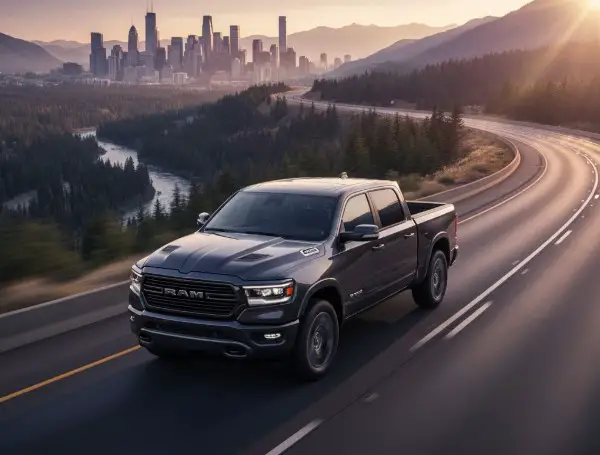
This definitive guide provides an exhaustive, year-by-year breakdown of the Ram 1500’s specifications. We will dissect the critical changes across two major generations, from the final years of the classic HEMI to the dawn of the new Hurricane era, empowering you with the data to compare models, understand key milestones, and make an informed decision.
A Truck Reimagined
The Data-Driven Evolution of the Ram 1500 (2012-2025)
From the introduction of class-exclusive coil-spring rear suspension to the dawn of the twin-turbo era, the Ram 1500 has consistently redefined the full-size truck segment. This infographic visualizes its remarkable journey through key performance specifications.
Generational Milestones: From Workhorse to Flagship
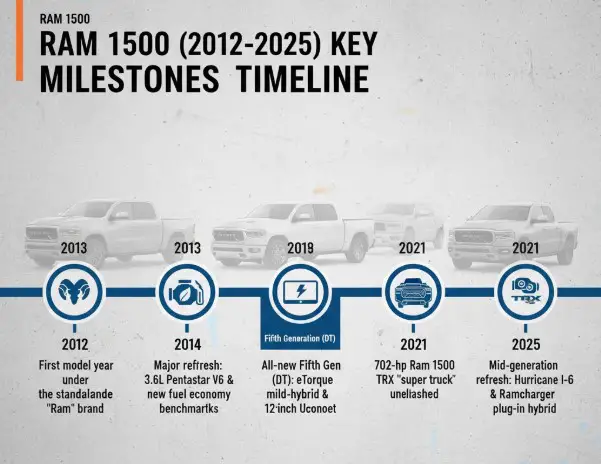
The period from 2012 to 2025 covers two major generations of the Ram 1500. The fourth generation (DS/DJ) set a new standard for ride comfort, while the fifth generation (DT) introduced hybrid technology and unprecedented luxury, culminating in the V8’s retirement and the arrival of the high-output Hurricane engine.
1
2013
Pentastar V6 and 8-Speed transmission debut, boosting efficiency.
2
2014
EcoDiesel V6 engine introduced, offering class-leading fuel economy.
3
2019
5th Gen (DT) launches with eTorque mild-hybrid system and a massive 12-inch touchscreen.
4
2021
The 702 HP Ram 1500 TRX “super-truck” is unleashed, setting a new performance benchmark.
5
2025
HEMI V8 is retired; replaced by the Twin-Turbo “Hurricane” I-6 engine family.
Powertrain Evolution: Peak Horsepower
Ram’s engine lineup has seen significant change, from the reliable Pentastar V6 and legendary HEMI V8 to the torquey EcoDiesel and the new high-output Hurricane I-6. This chart tracks the peak horsepower available for the primary engine options over time.
Peak 5th Gen Powertrain Mix
During its peak, the 5th generation Ram 1500’s sales were dominated by the 5.7L HEMI V8, prized for its power and sound. The Pentastar V6 remained a popular choice for fleet and value-oriented buyers, while the EcoDiesel carved out a niche for high-mileage drivers.
Maximum Towing Capacity Growth
A truck’s worth is often measured by its ability to work. The Ram 1500 has seen steady improvements in its maximum conventional towing capacity, thanks to a stronger frame, enhanced powertrain options, and advanced towing aids. The jump in 2019 reflects the significantly redesigned 5th generation platform.
The Apex Predator: 2021 Ram 1500 TRX
The launch of the TRX marked a pivotal moment, creating a new “hyper-truck” segment. With a supercharged V8 borrowed from Dodge’s Hellcat, it was engineered to dominate high-speed desert running. This comparison highlights its overwhelming performance advantages against its primary competitor at the time of launch.
702
Horsepower
650
lb-ft of Torque
4.5s
0-60 MPH
A New Era: The 2025 Ram 1500 Powertrain Lineup
The 2025 model year represents the most significant powertrain shift in over a decade. The entire HEMI V8 family is replaced by two variants of the 3.0L twin-turbocharged “Hurricane” inline-six engine, promising more power and greater efficiency. The Pentastar V6 with eTorque remains the standard engine.
| Engine | Horsepower | Torque | Key Feature |
|---|---|---|---|
| 3.6L Pentastar V6 eTorque | 305 hp | 269 lb-ft | Standard Base Engine |
| 3.0L Hurricane I-6 (S.O.) | 420 hp | 469 lb-ft | Standard Output |
| 3.0L Hurricane I-6 (H.O.) | 540 hp | 521 lb-ft | High Output / RHO Model |
Ram 1500 Generations at a Glance (2012-2025)
To fully understand the evolution of the Ram 1500’s specifications, it is essential to frame the 2012-2025 period within its two distinct product generations: the highly refined conclusion of the Fourth Generation and the revolutionary Fifth Generation.
The Fourth Generation (DS/DJ/D2): 2009-2018
Our timeline begins in 2012, a pivotal year as it was the first model produced after Ram was officially spun off from Dodge to become its own standalone truck brand. While the fourth generation launched in 2009, its most significant advancements occurred from 2013 onwards. This era is defined by the introduction of a class-exclusive multi-link coil spring rear suspension that delivered an unparalleled ride quality, along with major powertrain refinements that set the stage for its future success.
The Fifth Generation (DT): 2019-Present
The 2019 model year ushered in a revolutionary, ground-up redesign of the Ram 1500. Built on a new, lighter, and stronger frame, the fifth generation focused on elevating technology, efficiency, and interior luxury to new heights. Key innovations like the eTorque mild-hybrid system and a massive 12-inch touchscreen infotainment system cemented its status as the most comfortable and technologically advanced truck in its class. This generation also marks a historic powertrain shift, with the 2025 model retiring the legendary HEMI V8 in favor of a new engine family.
Ram 1500 (2012-2025) Key Milestones Timeline
The Fourth Generation (DS/DJ/D2) Specs: 2012-2018
The Baseline: 2012 Ram 1500 Specs
The 2012 Ram 1500 represents the starting point of our deep dive, establishing a performance baseline that makes the subsequent changes all the more impactful. It was a capable truck but featured a powertrain lineup that was on the verge of a major technological overhaul.
Engine Lineup
Three engine choices were available for the 2012 model year, representing the old guard of truck powertrains before the shift toward greater efficiency and more advanced transmissions.
- 3.7L Magnum V6: The base engine produced 215 horsepower and 235 lb-ft of torque. It was paired with an aging 4-speed automatic transmission, a component that was significantly outdated compared to the 6-speed automatics offered by competitors.
- 4.7L Flex-Fuel V8: This mid-tier option delivered a more robust 310 horsepower and 330 lb-ft of torque and was mated to a more contemporary 6-speed automatic transmission.
- 5.7L HEMI V8: The top-tier performance engine was the legendary 5.7L HEMI, producing 390 horsepower and 407 lb-ft of torque. It also used a 6-speed automatic and featured “Fuel Saver Technology” (Multi-Displacement System) that could shut down four cylinders under light loads to conserve fuel.
The presence of a 4-speed automatic in a full-size truck in 2012 was a significant competitive disadvantage, placing immense pressure on Ram to innovate. The 2012 model’s specifications serve as the perfect “before” picture, highlighting the necessity of the revolutionary changes that would arrive just one year later. A buyer considering a 2012 model should understand they are getting a truck from a different technological era than a 2013 model, despite their nearly identical appearances.
Capability and Fuel Economy
The 2012 Ram 1500 was a strong performer in its day, but its capability and efficiency figures underscore the room for improvement.
- Maximum Towing Capacity: When properly equipped with the 5.7L HEMI V8, the truck could tow up to 10,450 pounds. A specialized Tradesman HD model could even reach up to 11,500 pounds.
- Maximum Payload Capacity: The standard payload capacity peaked at 1,909 pounds, though the Tradesman HD model boasted an impressive 3,100-pound capacity.
- Fuel Economy: Efficiency was not a strong suit. The base V6 and the popular 5.7L HEMI V8 both delivered an EPA-estimated combined fuel economy of around 16 MPG, a figure that was ripe for improvement.
2012 Ram 1500 Engine Specifications
| Engine | Horsepower | Torque | Transmission | Est. Combined MPG |
| 3.7L V6 | 215 hp | 235 lb-ft | 4-Speed Automatic | 16 MPG |
| 4.7L V8 | 310 hp | 330 lb-ft | 6-Speed Automatic | 16 MPG |
| 5.7L HEMI V8 | 390 hp | 407 lb-ft | 6-Speed Automatic | 16 MPG |
The Great Leap Forward: 2013-2018 Specs
The 2013 model year marked a landmark refresh for the Ram 1500, introducing powertrain innovations that would define the truck for the remainder of its fourth generation. This was followed by another segment-shaking addition in 2014, solidifying Ram’s reputation as a leader in truck engineering.
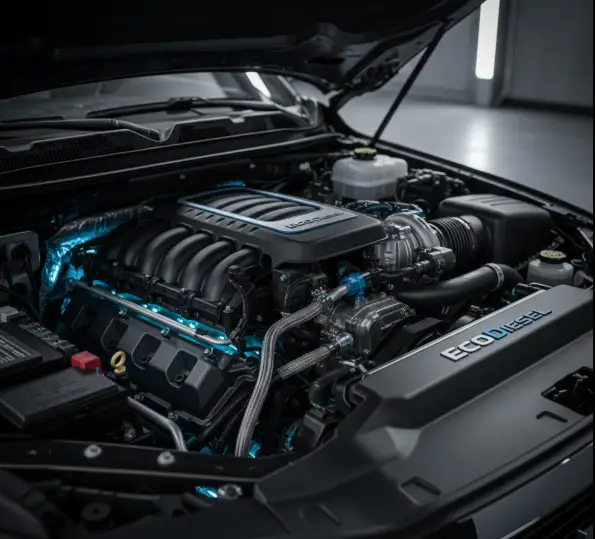
The 2013 Refresh: A New Era of Efficiency
For 2013, Ram retired the outdated 3.7L and 4.7L engines and introduced two game-changing pieces of technology.
- New Base Engine: The modern 3.6L Pentastar V6 became the new standard engine, delivering a significantly healthier 305 horsepower and 269 lb-ft of torque—an increase of 90 horsepower over the outgoing V6.
- New Transmission: The class-exclusive ZF-sourced 8-speed automatic transmission was introduced, representing a monumental leap forward. Paired with the Pentastar V6 and available on the HEMI V8, this transmission provided quicker acceleration, dramatically smoother shifts, and a major boost in fuel economy.
- HEMI Update: The 5.7L HEMI V8 received a slight power increase to 395 horsepower and 410 lb-ft of torque.
The 2014 EcoDiesel Arrival
In 2014, Ram again challenged the status quo with the introduction of the 3.0L EcoDiesel V6, a first for the half-ton truck segment. This engine prioritized torque and fuel efficiency over raw horsepower.
- Performance: The EcoDiesel produced 240 horsepower and a massive 420 lb-ft of torque at just 2,000 rpm, making it an exceptional engine for towing.
- Fuel Economy: Its efficiency was its main selling point, achieving an EPA-rated 28 MPG on the highway, a figure previously unheard of for a full-size pickup and one that surpassed even some smaller trucks.
While Ford was heavily invested in marketing its turbocharged gasoline EcoBoost engines, Ram pursued a different path. First, it optimized its entire lineup with a superior 8-speed transmission that benefited every buyer. Second, it offered a completely different fuel alternative with the EcoDiesel, targeting customers who valued maximum fuel economy and low-end torque.
This two-pronged strategy successfully carved out a distinct and compelling identity for the Ram 1500 in a fiercely competitive market.
Capability & Key Features (2013-2018)
This period saw Ram’s capability figures remain strong while the truck gained several signature features.
- Towing Capacity: Maximum towing capacity for the fourth generation peaked at 10,650 pounds.
- Payload Capacity: Maximum payload capacity remained robust, generally around 1,900 pounds, depending on the configuration.
- Signature Features: This era saw the widespread availability of two class-exclusive features:
- Active-Level Four-Corner Air Suspension: Introduced in 2013, this system could raise and lower the truck for better aerodynamics at highway speeds, easier entry/exit, and improved off-road clearance.
- RamBox Cargo Management System: These lockable, drainable storage bins built into the sides of the truck bed provided unique and secure storage solutions.
Ram 1500 Engine Specs (2014-2018)
| Engine | Horsepower | Torque | Transmission | Est. Combined MPG |
| 3.6L Pentastar V6 | 305 hp | 269 lb-ft | 8-Speed Automatic | ~20 MPG |
| 5.7L HEMI V8 | 395 hp | 410 lb-ft | 8-Speed Automatic | ~17 MPG |
| 3.0L EcoDiesel V6 | 240 hp | 420 lb-ft | 8-Speed Automatic | ~23 MPG |
The Fifth Generation (DT) Specs: 2019-2025
A New Benchmark: 2019-2024 Redesign Specs
The 2019 model year marked a complete transformation for the Ram 1500. The all-new fifth-generation (DT) truck was built on a stronger yet lighter frame, featured a more aerodynamic design, and introduced an interior that set a new benchmark for luxury and technology in the pickup segment.
The eTorque Mild-Hybrid System
The signature innovation of the fifth generation was the eTorque mild-hybrid system. This 48-volt belt-starter generator replaced the traditional alternator and became standard on the 3.6L Pentastar V6 and optional on the 5.7L HEMI V8. Its primary function was not to power the truck on electricity alone but to enhance the gasoline engine by providing short bursts of supplemental torque—up to 90 lb-ft on the V6 and 130 lb-ft on the V8. This resulted in smoother acceleration from a stop and enabled a more refined and seamless engine stop-start function, improving fuel efficiency in city driving.
Powertrain Lineup (2019-2024)
The fifth generation carried over and refined the successful engine portfolio from the previous generation, with eTorque as the key addition.
- 3.6L Pentastar V6 with eTorque: The new standard engine, rated at 305 horsepower and 269 lb-ft of torque.
- 5.7L HEMI V8: The legendary V8 remained available without the hybrid system, producing 395 horsepower and 410 lb-ft of torque.
- 5.7L HEMI V8 with eTorque: This became the premier powertrain choice, offering the same peak power as the standard HEMI but with the added benefits of the mild-hybrid system. This configuration was key to unlocking the Ram 1500’s highest tow ratings.
- 3.0L EcoDiesel V6 (Gen 3): After a brief hiatus, the EcoDiesel was reintroduced for the 2020 model year. This third-generation version saw its output increased to 260 horsepower and a class-leading 480 lb-ft of torque.
The Apex Predator: The Ram 1500 TRX (2021-2024)
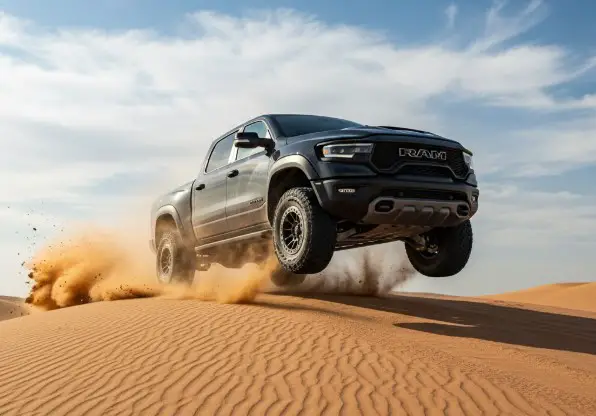
In 2021, Ram unleashed the TRX, a purpose-built, high-performance off-road “super truck” designed to dominate the Ford Raptor.
- Engine: At its heart was a monstrous 6.2L Supercharged HEMI V8, borrowed from Dodge’s Hellcat models, producing an astonishing 702 horsepower and 650 lb-ft of torque.
- Chassis and Suspension: The TRX was far more than just an engine swap. It featured a heavily reinforced frame, a wider track, and a sophisticated long-travel suspension system with Bilstein Black Hawk e2 adaptive dampers, all riding on 35-inch all-terrain tires. It was the undisputed king of factory-built performance trucks during its production run, which concluded after the 2024 model year.
Technology and Capability Milestones
The fifth generation’s innovations were less about raw engine power (the HEMI’s output was unchanged) and more about a holistic improvement in efficiency, technology, and user experience.
- Uconnect and Interior Tech: The optional 12-inch vertical touchscreen became the interior’s stunning centerpiece, repositioning the truck’s cabin as a luxury-tech space and influencing the entire industry. For the 2022 model year, the introduction of the faster Uconnect 5 system brought wireless Apple CarPlay and Android Auto connectivity.
- Multifunction Tailgate: Introduced as an option in 2019, this innovative 60/40 split, swing-out tailgate provided more versatile access to the cargo bed, even with a trailer attached.
- Towing and Payload: The stronger, high-strength steel frame allowed for a significant increase in capability.
- Maximum Towing Capacity: Reached a new peak of 12,750 pounds with the 5.7L HEMI with eTorque.
- Maximum Payload Capacity: Increased to a maximum of 2,300 pounds.
The Hurricane Era: 2025 and Beyond
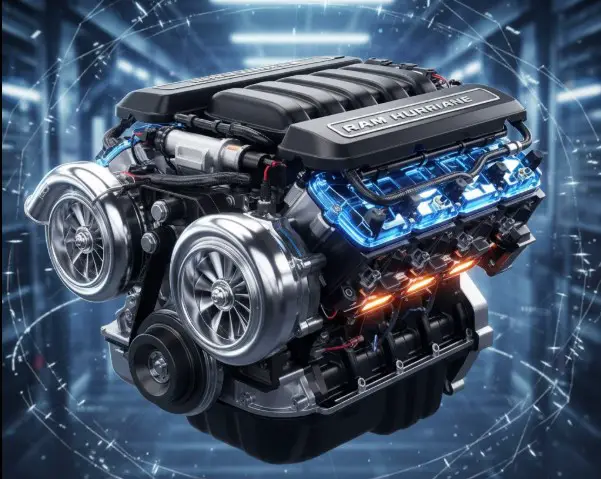
The 2025 model year marks the most significant powertrain shift in the Ram 1500’s modern history. While technically a mid-cycle refresh of the fifth generation, the changes under the hood are revolutionary, signaling a new direction for the brand and the truck segment as a whole.
The End of an Icon: Retirement of the HEMI V8
For the first time since the 2003 model year, the Ram 1500 is not offered with the iconic 5.7L HEMI V8. This move, along with the discontinuation of the 6.2L Supercharged V8 in the TRX after 2024, marks the end of an era for Ram’s V8-powered trucks. This decision was not driven by a lack of popularity but by the necessity of meeting increasingly stringent global emissions and fuel economy regulations.
The New Guard: 3.0L Hurricane Twin-Turbo Inline-Six
Replacing the HEMI V8 is a new family of 3.0L “Hurricane” twin-turbocharged inline-six engines. This downsized, forced-induction strategy is designed to deliver more power and greater efficiency than the larger, naturally aspirated V8 it replaces.
- 3.0L Hurricane (Standard Output): This version produces an impressive 420 horsepower and 469 lb-ft of torque, significantly outperforming the outgoing 395-hp HEMI V8.
- 3.0L Hurricane (High-Output): Available in upper trims, the H.O. variant delivers a staggering 540 horsepower and 521 lb-ft of torque, bringing near-performance-truck power to mainstream luxury models.
- The 3.6L Pentastar V6 with eTorque remains the standard base engine for the 2025 lineup.
Electrification: The 2025 Ram 1500 Ramcharger
Debuting for 2025 is the Ram 1500 Ramcharger, a groundbreaking plug-in hybrid (PHEV) that acts as a range-extended electric vehicle. It uses a 3.6L V6 engine not to drive the wheels, but to act as an onboard generator that recharges a 92 kWh battery pack. The truck is propelled exclusively by front and rear electric motors.
- Combined Output: This innovative system produces a combined 663 horsepower and 615 lb-ft of torque.
- Capability: The Ramcharger boasts a maximum towing capacity of 14,000 pounds and a targeted all-electric range of up to 145 miles, with a total range of up to 690 miles when the gas generator is used. It serves as a “bridge” technology, offering immense EV power without the range anxiety of a pure battery-electric truck.
2025 Capability
- Maximum Towing Capacity: The conventional 2025 Ram 1500 has a maximum towing capacity of 11,580 pounds with the standard-output Hurricane engine, a slight decrease from the peak of the outgoing eTorque HEMI.
- Maximum Payload Capacity: The maximum payload remains strong at 2,300 pounds.
2024 vs. 2025 Ram 1500 Powertrain Showdown
| Model Year | Engine | Horsepower | Torque | Max Towing |
| 2024 | 3.6L Pentastar V6 w/ eTorque | 305 hp | 271 lb-ft | 7,730 lbs |
| 2024 | 5.7L HEMI V8 w/ eTorque | 395 hp | 410 lb-ft | 12,750 lbs |
| 2024 | 6.2L Supercharged HEMI V8 (TRX) | 702 hp | 650 lb-ft | 8,100 lbs |
| 2025 | 3.6L Pentastar V6 w/ eTorque | 305 hp | 269 lb-ft | 8,110 lbs |
| 2025 | 3.0L Hurricane I-6 (S.O.) | 420 hp | 469 lb-ft | 11,580 lbs |
| 2025 | 3.0L Hurricane I-6 (H.O.) | 540 hp | 521 lb-ft | 9,920 lbs |
| 2025 | Ramcharger PHEV | 663 hp | 615 lb-ft | 14,000 lbs |
Master Specification Tables (2012-2025)
These tables provide a comprehensive, at-a-glance summary of the Ram 1500’s evolution over the past decade, serving as a quick reference for comparing key metrics across model years.
Ram 1500 Engine Evolution (2012-2025)
| Model Year(s) | Engine | Horsepower | Torque |
| 2012 | 3.7L Magnum V6 | 215 hp | 235 lb-ft |
| 2012 | 4.7L Flex-Fuel V8 | 310 hp | 330 lb-ft |
| 2012 | 5.7L HEMI V8 | 390 hp | 407 lb-ft |
| 2013-2018 | 3.6L Pentastar V6 | 305 hp | 269 lb-ft |
| 2013-2018 | 5.7L HEMI V8 | 395 hp | 410 lb-ft |
| 2014-2018 | 3.0L EcoDiesel V6 (Gen 2) | 240 hp | 420 lb-ft |
| 2019-2025 | 3.6L Pentastar V6 w/ eTorque | 305 hp | 269-271 lb-ft |
| 2019-2024 | 5.7L HEMI V8 | 395 hp | 410 lb-ft |
| 2019-2024 | 5.7L HEMI V8 w/ eTorque | 395 hp | 410 lb-ft |
| 2020-2023 | 3.0L EcoDiesel V6 (Gen 3) | 260 hp | 480 lb-ft |
| 2021-2024 | 6.2L Supercharged HEMI V8 (TRX) | 702 hp | 650 lb-ft |
| 2025 | 3.0L Hurricane I-6 (S.O.) | 420 hp | 469 lb-ft |
| 2025 | 3.0L Hurricane I-6 (H.O.) | 540 hp | 521 lb-ft |
| 2025 | Ramcharger PHEV | 663 hp | 615 lb-ft |
Ram 1500 Max Capability by Year (2012-2025)
| Model Year | Maximum Towing Capacity | Maximum Payload Capacity |
| 2012 | 10,450 lbs | 1,909 lbs |
| 2013 | 10,450 lbs | 1,930 lbs |
| 2014 | 10,450 lbs | 1,910 lbs |
| 2015 | 10,650 lbs | 1,900 lbs |
| 2016 | 10,650 lbs | ~1,900 lbs |
| 2017 | 10,620 lbs | 1,880 lbs |
| 2018 | 10,620 lbs | 1,880 lbs |
| 2019 | 12,750 lbs | 2,300 lbs |
| 2020 | 12,750 lbs | 2,300 lbs |
| 2021 | 12,750 lbs | 2,300 lbs |
| 2022 | 12,750 lbs | 2,320 lbs |
| 2023 | 12,750 lbs | 2,300 lbs |
| 2024 | 12,750 lbs | 2,300 lbs |
| 2025 | 11,580 lbs (14,000 lbs for Ramcharger) | 2,300 lbs (2,625 lbs for Ramcharger) |
A Legacy of Bold Moves
The Ram 1500’s evolution from 2012 to 2025 is a testament to a strategy of consistently challenging industry norms. It led the way with multi-link coil spring and air suspension for superior ride quality, was first to market with an 8-speed automatic and a modern light-duty diesel, and repeatedly set new standards for interior luxury and technology.
The journey began with the pivotal 2013 refresh that introduced the efficient Pentastar V6 and 8-speed transmission. It continued with the bold bet on diesel in 2014, the revolutionary redesign in 2019 that focused on interior tech and mild-hybrid efficiency, and culminated in the audacious 2025 leap away from the beloved HEMI V8. The move to the Hurricane engine and the introduction of the Ramcharger are the latest chapters in this legacy of making bold, forward-looking decisions that have kept the Ram 1500 at the forefront of the pickup truck world.
Whether you’re looking for a dependable workhorse or the most advanced truck on the road, the Ram 1500 has offered a compelling option for over a decade. To see how it stacks up against the competition, check out our detailed Ram 1500 vs. Ford F-150 Comparison or explore our guide to Understanding Truck Towing Ratings.
Frequently Asked Questions (FAQs)
What are the most reliable Ram 1500 model years?
While reliability can vary by individual vehicle, later model years of a generation tend to be strong choices as initial production issues are resolved. The later fourth-generation models (2016-2018) with the proven 3.6L Pentastar V6 and 5.7L HEMI V8 are often cited for their dependability. For the fifth generation, models from 2020-2023 are also well-regarded. The Ram 1500 Classic, which is based on the fourth-generation design, has received high reliability ratings from publications like RepairPal.
Which Ram 1500 engine is best for towing?
This depends on the model year. For 2019-2024 models, the 5.7L HEMI V8 with eTorque offered the highest towing capacity at 12,750 pounds. The 3.0L EcoDiesel V6 was also an excellent choice, offering slightly less maximum capacity (up to 12,560 pounds) but with superior fuel economy while towing. For 2025, the new Ramcharger PHEV boasts the highest rating at 14,000 pounds, while the standard-output 3.0L Hurricane engine provides the best towing among non-electrified models at 11,580 pounds.
What year did the Ram 1500 get the 8-speed transmission?
The 8-speed automatic transmission was first introduced for the 2013 model year. It was initially standard with the new 3.6L Pentastar V6 and became widely available with the 5.7L HEMI V8 in the years that followed, eventually replacing the 6-speed automatic entirely.
Why did Ram get rid of the HEMI V8 in the 1500?
Ram discontinued the 5.7L HEMI V8 in the 1500 model after the 2024 model year. This decision is part of a broader industry-wide shift toward smaller, more efficient, and lower-emission engines to meet stricter global environmental regulations. The new 3.0L Hurricane twin-turbo I-6 engines were engineered to produce more horsepower and torque than the outgoing V8, offering increased performance while improving fuel economy.
What is the difference between the Ram 1500 Classic and the newer Ram 1500?
When the all-new fifth-generation Ram 1500 was launched in 2019, Ram continued to produce the previous (fourth-generation) body style and sold it as the “Ram 1500 Classic.” The Classic serves as a more affordable, value-oriented option, often targeted at work and fleet applications. The standard Ram 1500 (2019-present) features the newer design, a more luxurious interior, advanced technology like the 12-inch screen, and the latest powertrains, including eTorque and the new Hurricane engines.
What is the Ram 1500 eTorque system?
eTorque is a mild-hybrid system that replaces a traditional alternator with a 48-volt battery-powered motor-generator. It provides a small amount of electric torque to assist the gasoline engine during acceleration from a stop. This results in smoother performance, a more refined engine stop-start experience, and improved fuel efficiency in city driving. It is not a full hybrid and cannot power the truck on electricity alone.