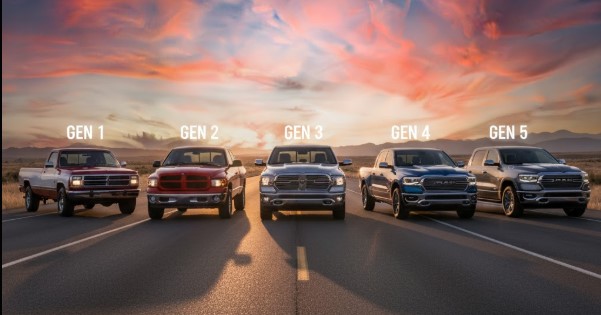
Ram 1500 vs Ram 2500 Specs (2025): The Definitive Data-Driven Comparison

Choosing between a Ram 1500 and a Ram 2500 is more than a simple vehicle purchase; it’s a decision about selecting the right tool for a specific job or lifestyle. The core question every prospective buyer faces is, “How much truck do I really need?”. The answer lies not just in brand preference but in a deep, data-driven understanding of what separates these two formidable pickups.
The 2025 Ram 1500 represents the pinnacle of the light-duty truck segment, a versatile machine engineered for a masterful balance of capability, daily-driving comfort, and cutting-edge technology—a combination so successful it earned the prestigious 2025 MotorTrend Truck of the Year award. It’s the ideal choice for those who need a capable hauler that doubles as a refined family vehicle.
In contrast, the 2025 Ram 2500 is a Heavy-Duty (HD) truck, a specialist built with a singular focus on immense towing and hauling power. It sacrifices some daily-driving comfort for the brute strength required by the most demanding commercial jobs and the largest recreational trailers.
This comprehensive report will dissect the specifications of both models, providing a clear, data-backed analysis of their powertrains, capability ratings, foundational chassis differences, trim hierarchies, and real-world ownership considerations. By examining the numbers and what they mean in practice, this guide will equip you to make a confident and informed decision.
| Metric | 2025 Ram 1500 | 2025 Ram 2500 |
| Truck Class | Light-Duty (Half-Ton) | Heavy-Duty (Three-Quarter-Ton) |
| Starting MSRP | ~$40,275 | ~$45,565 |
| Engine Options | 3.6L V6, 3.0L Twin-Turbo I6 | 6.4L V8 Gas, 6.7L I6 Turbo Diesel |
| Max Horsepower | 540 hp (3.0L Hurricane HO) | 430 hp (6.7L Cummins Diesel) |
| Max Torque | 521 lb-ft (3.0L Hurricane HO) | 1,075 lb-ft (6.7L Cummins Diesel) |
| Max Towing Capacity | 11,580 lbs | 20,000 lbs |
| Max Payload Capacity | 2,370 lbs | 4,420 lbs |
| Rear Suspension | Multi-link Coil Spring | 5-Link Coil Spring |
| Ideal Use Case | Daily Driving, Family Use, Recreational Towing | Commercial Work, Heavy Towing, Serious Hauling |
Ram 1500 vs. Ram 2500
Which Truck is Right for You?
Choosing between a Ram 1500 and a Ram 2500 comes down to one core question: what do you need your truck to do? The Ram 1500 is a versatile, light-duty truck perfect for daily driving and moderate workloads, while the Ram 2500 is a heavy-duty workhorse built for serious towing and hauling. This guide breaks down the key specs to help you decide.
At a Glance: Key Differences
Ram 1500
Light-Duty & Versatile
- Best For: Daily driving, light towing, family hauling.
- Ride Comfort: Superior, car-like ride with coil spring or air suspension.
- Chassis: Robust for its class, but optimized for comfort.
Ram 2500
Heavy-Duty Workhorse
- Best For: Heavy trailers, large campers, commercial jobs.
- Ride Comfort: Stiff and firm, built with leaf springs for maximum payload.
- Chassis: Significantly stronger and more rigid for extreme loads.
Performance Deep Dive: Capability
The most significant difference lies in raw capability. The Ram 2500 is in a different league for towing and hauling, designed for jobs the 1500 can’t handle. The chart below visualizes the maximum potential of each truck when properly equipped.
Under the Hood: Engine Power
Power delivery is tailored to each truck’s purpose. The 1500 focuses on a balance of power and efficiency, while the 2500 offers massive gas V8 power and the legendary torque of the Cummins Turbo Diesel for ultimate pulling strength.
Living With It: Daily Drivability
Beyond the numbers, how does each truck feel to drive every day? The Ram 1500 excels in comfort and ease of use, making it a more practical daily vehicle. The 2500 sacrifices some of this refinement for its incredible work-focused engineering.
The Bottom Line: Starting Price
While prices vary greatly with options, the heavy-duty 2500 naturally comes with a higher entry price due to its more robust construction and components.
Ram 1500
~$40,000
Starting MSRP
Ram 2500
~$47,000
Starting MSRP
Decision Guide
Still unsure? Follow this simple guide. Your primary workload is the most important factor in this decision.
Engine & Performance Breakdown: A Tale of Two Powertrain Philosophies
The fundamental difference in purpose between the 1500 and 2500 is most evident in their engine offerings. The 2025 model year marks a significant philosophical shift for the Ram 1500, while the Ram 2500 doubles down on its commitment to uncompromising, heavy-duty power.
The 2025 Ram 1500 Engine Lineup: The Hurricane Era Begins
For 2025, Ram has made a landmark decision to retire the long-serving 5.7L HEMI V8 from the 1500 lineup. In its place is a new family of 3.0L twin-turbocharged inline-six engines, dubbed the “Hurricane”. This strategic pivot reflects an industry-wide move toward smaller-displacement, forced-induction engines that can deliver superior power and greater efficiency than their larger, naturally aspirated predecessors.
- 3.6L Pentastar V6 with eTorque: This engine remains the reliable and efficient base powertrain, primarily found in the work-oriented Tradesman and Big Horn trims. It produces 305 horsepower and 269 lb-ft of torque, running on regular 87-octane gasoline, making it a cost-effective choice for fleet operators and budget-conscious buyers.
- 3.0L Hurricane I6 (Standard Output): This is the new workhorse of the lineup, offering a significant performance upgrade over the outgoing V8. It generates 420 horsepower and 469 lb-ft of torque, providing robust acceleration and towing power. This power comes with a recommendation for premium 91-octane fuel to achieve optimal performance.
- 3.0L Hurricane I6 (High Output): Reserved for the top-tier performance and luxury trims like the RHO, Limited, and Tungsten, the High-Output (HO) Hurricane is a true powerhouse. It delivers a staggering 540 horsepower and 521 lb-ft of torque, transforming the Ram 1500 into one of the quickest pickups on the market. This engine requires premium 91-octane fuel.
All Ram 1500 engines are paired with a smooth and responsive TorqueFlite eight-speed automatic transmission, a unit widely praised for its refinement.
| Engine | Horsepower | Torque | EPA-Estimated MPG (Combined 4WD) | Fuel Requirement |
| 3.6L Pentastar V6 eTorque | 305 hp | 269 lb-ft | 21 MPG | Regular 87-Octane |
| 3.0L Hurricane I6 (SO) | 420 hp | 469 lb-ft | 19 MPG | Premium 91-Octane (Recommended) |
| 3.0L Hurricane I6 (HO) | 540 hp | 521 lb-ft | 17 MPG | Premium 91-Octane (Required) |
The 2025 Ram 2500 Engine Lineup: Uncompromising Gas and Diesel Power
Where the Ram 1500 pursues a balance of power and efficiency, the Ram 2500’s powertrain philosophy is one of maximum brute force. The choices are simple and purpose-built: a large-displacement gas V8 for broad capability and the legendary Cummins Turbo Diesel for ultimate towing supremacy.
- 6.4L HEMI® V8: This is the standard engine across the Ram 2500 lineup, delivering a formidable 405 horsepower and 429 lb-ft of torque. It provides strong, reliable gas-powered performance for demanding tasks and runs on regular 87-octane gasoline, offering a lower initial purchase price and simpler maintenance than its diesel counterpart.
- 6.7L Cummins® High-Output Turbo Diesel I6: For those who need to tow the heaviest loads, the Cummins is the undisputed champion. Its defining metric is not horsepower (430 hp) but its colossal torque output, which stands at a class-leading 1,075 lb-ft. This engine is engineered to generate maximum pulling force at low RPMs, making it ideal for getting multi-ton trailers moving with confidence. It requires ultra-low sulfur diesel fuel.
The HEMI V8 is paired with an 8-speed automatic transmission. For 2025, the High-Output Cummins gets a new, more robust TorqueFlite HD eight-speed automatic transmission specifically engineered to handle its immense torque output, a significant upgrade that enhances refinement and capability.
| Engine | Horsepower | Torque | Estimated Highway MPG | Fuel Requirement |
| 6.4L HEMI® V8 | 405 hp | 429 lb-ft | ~18 MPG | Regular 87-Octane |
| 6.7L Cummins® HO Turbo Diesel | 430 hp | 1,075 lb-ft | ~21-25 MPG | Ultra-Low Sulfur Diesel |
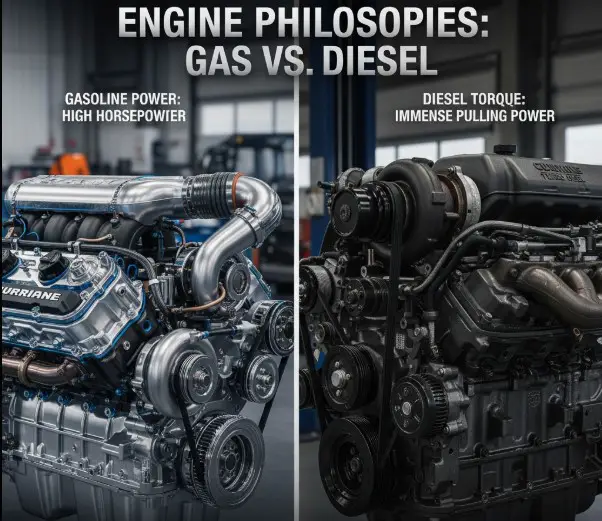
A glance at the specifications reveals what might seem like a paradox: the most powerful Ram 1500 boasts 540 horsepower, significantly more than the Ram 2500’s 430 horsepower maximum. This can be a point of confusion for buyers. The key is understanding the difference between horsepower and torque.
Horsepower, which is a function of torque and engine speed (RPM), is what makes a vehicle feel fast and athletic. The high-revving Hurricane HO engine allows the Ram 1500 RHO to accelerate from 0-60 mph in just 4.6 seconds, making it a true performance truck.
Torque, however, is the raw twisting force that gets a heavy, stationary object moving. The Ram 2500’s Cummins diesel produces its staggering 1,075 lb-ft of torque at a very low 1,800 RPM. This is the force that overcomes the immense inertia of a 10-ton trailer. The Ram 2500 isn’t designed to win a drag race; it’s designed to pull a house off its foundation. This distinction is the very essence of the light-duty vs. heavy-duty performance difference.
Furthermore, opting for the legendary Cummins diesel is a significant commitment. It is a costly upgrade, adding approximately $12,595 to the price of the truck. Beyond the initial cost, modern diesel engines with their complex emissions systems (like Diesel Particulate Filters or DPFs) require specific operating conditions. They need to work hard and be driven for long periods to allow these systems to “regenerate” and stay clean.
Frequent short, unloaded trips—typical of a daily commuter—can lead to premature clogging of the emissions system and potential maintenance issues. For buyers who don’t frequently tow heavy, the 6.4L HEMI V8 is often the more practical and cost-effective choice.
Towing & Payload Capacity: Defining the Limits of Work and Play
While engine specs describe a truck’s potential, towing and payload ratings define its real-world application. The gap in capability between the Ram 1500 and 2500 is not incremental; it represents a fundamental leap from a light-duty to a heavy-duty classification.
Ram 1500 Capability: The 2025 Ram 1500 offers impressive capability for its class.
- Maximum Towing: Up to 11,580 pounds, achieved with the Standard Output 3.0L Hurricane engine. Interestingly, the more powerful High-Output version has a slightly lower maximum towing capacity due to its performance-oriented tuning.
- Maximum Payload: Up to 2,370 pounds, available with the 3.6L Pentastar V6.
In practical terms, this makes the Ram 1500 perfectly suited for the vast majority of recreational towing needs. It can confidently handle medium-sized travel trailers, most ski boats, and utility trailers loaded with ATVs or landscaping materials. For more information on its specific ratings, a detailed(https://truckguider.com/ram-1500-towing-capacity/) can provide further clarity.
Ram 2500 Capability: The Ram 2500 operates in a completely different league of strength.
- Maximum Towing: Up to 20,000 pounds with the 6.7L Cummins Turbo Diesel. The standard 6.4L HEMI V8 is also incredibly capable, with a maximum towing capacity of 17,750 pounds.
- Maximum Payload: Up to 4,420 pounds with the 6.4L HEMI V8.
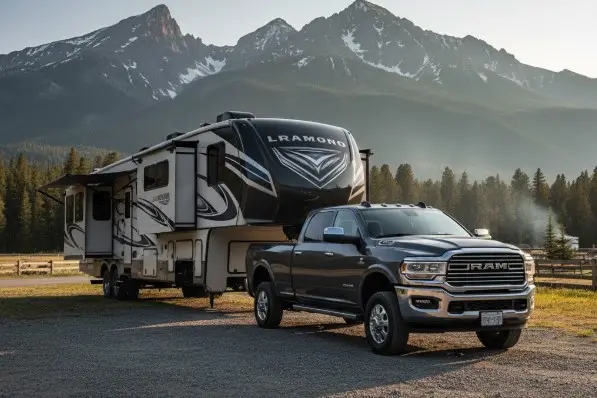
This level of capability is designed for serious work and the largest of recreational toys. It’s the required tool for towing large fifth-wheel RVs, gooseneck horse trailers, heavy construction equipment, and for use in demanding commercial fleets.
Both trucks can be equipped with an array of technologies to make hauling safer and less stressful, including integrated trailer brake controllers, 360-degree surround-view camera systems with trailer views, and Trailer Reverse Steering Control.
| Truck Model | Engine | Max Towing Capacity | Max Payload Capacity |
| Ram 1500 | 3.6L Pentastar V6 | 8,110 lbs | 2,370 lbs |
| Ram 1500 | 3.0L Hurricane I6 (SO) | 11,550 lbs | 1,980 lbs |
| Ram 1500 | 3.0L Hurricane I6 (HO) | 9,920 lbs | 1,520 lbs |
| Ram 2500 | 6.4L HEMI V8 | 17,750 lbs | 4,420 lbs |
| Ram 2500 | 6.7L Cummins HO Diesel | 20,000 lbs | 2,740 lbs |
The capability data reveals a crucial nuance that buyers often overlook: the inverse relationship between maximum towing and maximum payload in heavy-duty diesel trucks. While the Ram 2500 with the 6.7L Cummins offers the absolute highest towing capacity (20,000 lbs), its payload capacity (2,740 lbs) is significantly lower than that of the gas-powered 6.4L HEMI model (4,420 lbs).
This is a matter of simple physics. Every truck has a Gross Vehicle Weight Rating (GVWR), which is the maximum legal weight of the truck itself plus everything in it (passengers, cargo, and the tongue weight of a trailer). A truck’s payload capacity is calculated by subtracting its curb weight (how much the truck weighs empty) from its GVWR. The Cummins diesel engine, along with its robust transmission, cooling, and exhaust systems, is substantially heavier than the HEMI V8.
This added curb weight is subtracted directly from the available GVWR, leaving less payload capacity. Therefore, a contractor who primarily hauls heavy materials in the bed—such as pallets of concrete, large tool chests, or service bodies—would be better served by the gas-powered Ram 2500 to maximize in-bed hauling capability. The diesel is a specialized tool for maximizing towed weight.
Chassis, Suspension, and Ride Quality: The Foundation of Comfort and Strength
The enormous capability gap between the 1500 and 2500 is not merely a function of their engines; it is fundamentally rooted in their distinct chassis and suspension architecture.
The Ram 2500 is built on a larger, heavier, and more robust high-strength steel frame. Every component, from the axles to the brakes, is engineered to withstand the immense stresses of towing 10 tons and carrying 2 tons. This overbuilt nature is the source of its strength.
The most significant differentiator, however, lies in the suspension design—an area where Ram has strategically separated itself from the competition.
- Ram 1500 Suspension: The 1500 features a class-exclusive multi-link coil-spring rear suspension. This design, more commonly found on SUVs, is the primary reason for the Ram 1500’s widely acclaimed ride quality. It allows for more controlled and independent wheel movement, resulting in a smooth, composed ride that is far less “truck-like,” especially when the bed is empty. This makes it an exceptionally comfortable daily driver. An available four-corner air suspension can further enhance this comfort and provide adjustable ride height.
- Ram 2500 Suspension: The Ram 2500 also utilizes a coil-spring rear suspension (a heavy-duty five-link setup), which gives it a significant ride-quality advantage over competitors that still use traditional leaf springs. However, these components are tuned for one primary purpose: stability under extreme load. As a result, the ride is fundamentally much stiffer than the 1500’s. When unloaded, the Ram 2500 can feel firm and sometimes “bouncy,” a common characteristic of heavy-duty trucks. An available auto-leveling rear air suspension is offered, which is designed to automatically maintain a level stance when towing or hauling heavy loads, improving stability and headlight aim.
This difference in engineering leads to very different real-world experiences. For daily commuting, navigating tight parking lots, and family duties, the Ram 1500 is the undisputed winner in comfort and maneuverability. When a 15,000-pound trailer is hitched up, the Ram 2500’s firm suspension transforms from a potential comfort liability into a critical asset, providing the unwavering stability and control necessary to manage such a heavy load safely.
Ram’s decision to use coil-spring rear suspensions in both its light-duty and heavy-duty trucks is a key part of its brand identity. While traditional leaf springs are simple and proven for work, coil springs allow for a more refined ride. By engineering a heavy-duty coil spring system for the 2500, Ram made a strategic choice to offer the best possible ride quality in the HD segment. For a buyer who needs the capability of a three-quarter-ton truck but dreads the punishingly harsh ride of a traditional workhorse, the Ram 2500’s more compliant suspension is a powerful selling point.
Trims, Features, and Price: From Work Truck to Luxury Hauler
Both the Ram 1500 and 2500 lineups scale from Spartan, vinyl-floored work trucks to opulent luxury vehicles that rival premium European SUVs in terms of features and material quality.
Ram 1500 Trim Hierarchy
The 2025 Ram 1500 offers a broad, ten-trim lineup catering to nearly every possible use case :
- Work/Value Trims: Tradesman, Tradesman HFE (High Fuel Efficiency), and Big Horn/Lone Star.
- Luxury Trims: Laramie, Limited Longhorn, and Limited, which progressively add features like leather upholstery, larger screens, and premium audio systems.
- Off-Road Trims: The Rebel is a capable all-terrain off-roader, while the new RHO is a high-performance desert runner powered by the 540-hp Hurricane HO engine, effectively replacing the former TRX.
- Pinnacle Luxury: The new-for-2025 Tungsten trim sits at the absolute top of the lineup. It features ultra-premium quilted leather massaging seats, a 23-speaker Klipsch Reference Premiere audio system, and a host of exclusive luxury appointments, with a starting price exceeding $87,000.
| Trim Level | Starting MSRP |
| Tradesman | $40,275 |
| Tradesman HFE | $41,060 |
| Big Horn / Lone Star | $45,230 |
| Warlock | $54,505 |
| Laramie | $60,030 |
| Rebel | $64,440 |
| RHO | $69,995 |
| Limited | $75,450 |
| Limited Longhorn | $76,445 |
| Tungsten | $87,320 |
Ram 2500 Trim Hierarchy
The Ram 2500 lineup is more focused, offering seven distinct trims :
- Work/Value Trims: Tradesman and Big Horn/Lone Star.
- Luxury Trims: Laramie, Limited Longhorn, and Limited.
- Off-Road Trims: The Rebel offers all-terrain capability with the choice of gas or diesel engines. The Power Wagon is a highly specialized, gas-only rock-crawling machine featuring standard front and rear locking differentials, a disconnecting front sway bar, and an integrated WARN winch.
While both truck lines offer advanced technology like the Uconnect 5 system with massive available touchscreens (up to 14.5 inches), the Ram 1500 often serves as the debut platform for Ram’s latest innovations. For 2025, the 1500 offers features like a segment-first 10.25-inch front passenger screen and a more advanced hands-free active driving assist system, which are expected to migrate to the HD lineup in subsequent model years. A full breakdown of the different packages can be found in a detailed(https://truckguider.com/ram-2500-trim-levels-explained/).
| Trim Level | Starting MSRP |
| Tradesman | $45,565 |
| Big Horn / Lone Star | $49,465 |
| Laramie | $61,795 |
| Rebel | $68,940 |
| Power Wagon | $72,140 |
| Limited Longhorn | $73,410 |
| Limited | $73,460 |
The Verdict: Which Ram Truck Should You Buy?
The choice between the 2025 Ram 1500 and Ram 2500 is not a question of which truck is superior, but which is superior for your specific needs. The data clearly defines two distinct user profiles.
Choose the 2025 Ram 1500 if:
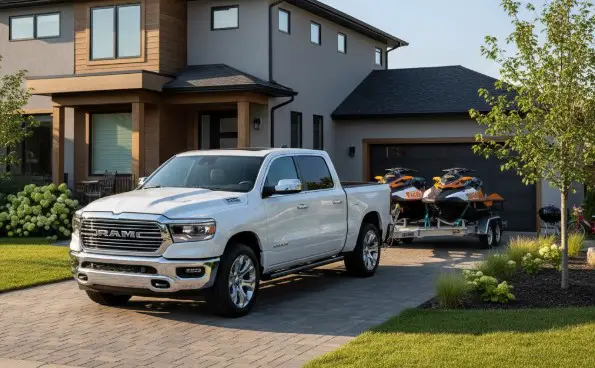
- You are a Daily Driver & Weekend Warrior. Your truck will serve as a primary vehicle for commuting, family transport, and errands. Your towing needs are occasional and consist of recreational items like a boat, a pair of jet skis, or a travel trailer under 10,000 pounds. You prioritize a smooth, quiet ride, better fuel economy, and access to the latest comfort and technology features. For this user, the Ram 1500’s capability is more than sufficient, while its significant advantages in daily livability make it the clear and logical choice.
Choose the 2025 Ram 2500 if:
- You are a Serious Hauler or Business Owner. Your livelihood or lifestyle involves regularly towing trailers that weigh more than 10,000 pounds. You haul heavy materials in the bed for work, own a large fifth-wheel RV, or need a truck for commercial applications like snow plowing. For you, maximum capability, durability, and towing stability are non-negotiable requirements. The compromises in daily ride comfort and fuel economy are an acceptable trade-off for the peace of mind and safety that come with using a tool purpose-built for the job.
Ultimately, the wisest approach is to buy the truck that fits your 95% reality, not your 5% fantasy. Overbuying a Ram 2500 for a single heavy tow each year will mean compromising on comfort and cost for the other 364 days. Conversely, attempting to save money by using a Ram 1500 for a task that demands a heavy-duty truck can compromise safety and lead to premature wear. Assess your needs honestly, and the right choice will become clear.
Frequently Asked Questions (FAQ)
Q1: How much worse is the fuel economy on the Ram 2500?
The Environmental Protection Agency (EPA) does not provide official fuel economy ratings for heavy-duty trucks. However, real-world testing and estimates provide a good picture. The 6.4L HEMI V8 typically returns around 14 MPG in the city and 18 MPG on the highway. The 6.7L Cummins diesel is more efficient, especially on the highway, with estimates around 16 MPG city and 21 MPG highway, with some tests showing up to 25 MPG when unloaded. This is a notable decrease from the Ram 1500, which can achieve a combined rating of up to 22 MPG with its base V6.
Q2: Will a Ram 2500 fit in a standard garage?
It is highly unlikely. A common configuration like a Crew Cab Ram 2500 with a long bed measures over 260 inches (21.7 feet) in length. Most standard residential garages in the U.S. are between 20 and 22 feet deep. The Ram 1500, with a maximum length of about 242 inches (20.1 feet), is a much tighter fit but has a better chance. Always measure your garage dimensions before purchasing a heavy-duty truck.
Q3: Which truck has a better ride quality?
The Ram 1500 has a significantly smoother, quieter, and more comfortable ride. Its SUV-like multi-link coil-spring rear suspension is tuned for comfort, especially when the bed is empty. The Ram 2500, while more comfortable than its leaf-sprung competitors, has a much stiffer suspension designed for stability under heavy load, which can feel bouncy and firm when unloaded.
Q4: Is the new Hurricane engine better than the old Hemi V8?
From a performance standpoint, yes. Both the Standard and High-Output versions of the 3.0L Hurricane inline-six produce significantly more horsepower and torque than the retired 5.7L HEMI V8. According to MotorTrend, the new engine is also lighter and helps the truck accelerate much faster. The primary trade-off is that the Hurricane engines require more expensive premium gasoline for optimal performance, whereas the old HEMI ran on regular.
Q5: Do I need the diesel Ram 2500, or is the gas V8 enough?
The standard 6.4L HEMI V8 has a maximum towing capacity of over 17,000 pounds, which is more than enough for the vast majority of even large travel trailers and boats. You only truly need the 6.7L Cummins diesel if you are towing at the absolute upper limits of the truck’s capacity (18,000-20,000 pounds), frequently tow in mountainous terrain where the extreme low-end torque provides a significant advantage, or prioritize the potential for better fuel economy while towing long distances.
Q6: What is the real-world difference between a Ram 1500 Rebel and a Ram 2500 Power Wagon?
While both are highly capable off-road, they are designed for different purposes. The Ram 1500 Rebel is a versatile all-terrain truck, well-suited for trails, mud, and higher-speed off-roading. The Ram 2500 Power Wagon is a specialized, heavy-duty rock crawler. It comes standard with features not found on the Rebel, such as a factory-installed winch, locking front and rear differentials, and an electronically disconnecting front sway bar for maximum wheel articulation on extreme obstacles. Due to its softer, off-road-focused suspension, the Power Wagon’s towing capacity is significantly lower than other Ram 2500 models.