
Recovery Strap vs Tow Strap 2026: Which Is Better? Full Comparison

When your vehicle finds itself deeply mired, the tool you reach for can dictate the outcome, not just of your recovery, but also the integrity of your rig. The single most crucial differentiator? Kinetic recovery effectiveness. Here, the Recovery Strap shines with a remarkable 9.5 rating, leaving the Tow Strap trailing significantly at a mere 3.0. This isn’t just a theoretical gap; it represents the core design philosophy of each tool, impacting everything from safety to vehicle longevity. Understanding this fundamental difference is key to making the right choice for your needs.
Quick Verdict: For most off-road recovery scenarios involving stuck vehicles, the Recovery Strap is superior due to its kinetic energy absorption, making extractions safer and less jarring. The Tow Strap is best reserved for static pulls, light vehicle towing on even ground, or securing loads, where its lack of stretch is an advantage rather than a liability.
Aggressive vehicle extraction from mud, sand, or snow using kinetic energy.
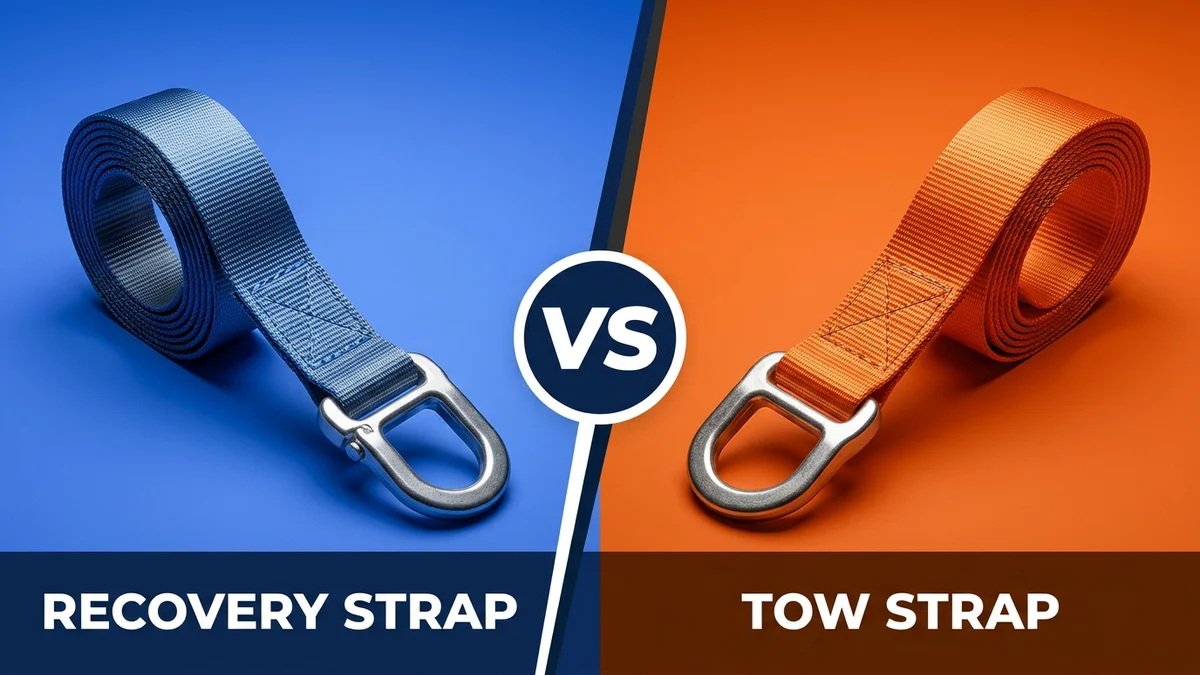
Light vehicle towing on solid ground, securing loads, or static winching applications.
- Recovery Straps offer 15-25% stretch, absorbing kinetic energy for safer, smoother pulls.
- Tow Straps have minimal 3-8% stretch, making them suitable only for static towing or securing.
- Dynamic recovery with a Tow Strap can generate shock loads exceeding 20,000 lbs, risking severe damage.
- A quality Recovery Strap can reduce shock on vehicles by up to 80% compared to a static pull.
- Expect to pay 50-100% more for a Recovery Strap than a Tow Strap, averaging $120 vs $60 for common sizes.
Recovery Strap vs Tow Strap: Head-to-Head Specs
Recommended Best Deal Products


Though they might look similar to the uninitiated, the true nature of a Recovery Strap and a Tow Strap becomes apparent when you look beyond their basic appearance. Their inherent material composition and construction dictate vastly different performance envelopes, especially regarding elasticity and maximum dynamic load capacity. It’s these underlying specifications that inform their specific applications and overall safety profiles, ultimately guiding your purchase decision.
✓ = better value in that row. Sourced from manufacturer specifications.

Performance & Category Ratings
Diving into the numbers reveals a stark contrast in capabilities, aligning perfectly with their intended uses. For Kinetic Recovery Effectiveness, the Recovery Strap dominates with a towering 9.5 against the Tow Strap’s paltry 3.0. This isn’t surprising; the Recovery Strap’s designed stretch allows it to build kinetic energy, acting like a giant, controlled rubber band to gently tug a stuck vehicle free without jarring impacts. This inherent elasticity also contributes directly to its superior Vehicle Stress Reduction, scoring a high 9.0 compared to the Tow Strap’s 5.5. A Tow Strap, being mostly static, transmits the full force of a pull directly, often violently, to both vehicles, risking frame damage or snatch points.
Unsurprisingly, this translates directly to the Safety Profile, where the Recovery Strap earns an 8.8, significantly outclassing the Tow Strap at 6.0. The controlled energy release of a kinetic pull is inherently safer for everyone involved, reducing the likelihood of snap-backs or catastrophic equipment failure. The Recovery Strap also shows its broader application in Versatility with a 7.8, just edging out the Tow Strap’s 7.2; while it excels at kinetic recovery, it can still perform static pulls with care, whereas a Tow Strap should never be used kinetically.
However, the Tow Strap isn’t without its own strengths. In Static Pulling & Towing, it secures a strong 9.0, surpassing the Recovery Strap’s 7.0. Its minimal stretch is an asset here, providing a firm, consistent pull for moving disabled vehicles on stable ground or for light-duty towing. Furthermore, its less complex construction often leads to better Durability & Longevity, rated at 8.7 compared to the Recovery Strap’s 8.2. Finally, in Overall Value (Cost vs. Capability), the Tow Strap takes the lead with an 8.0, offering a capable solution for its intended tasks at a more accessible price point than the specialized Recovery Strap (7.5).
Kinetic Strap
Static Towline
By the Numbers
Recommended Best Deal Products


Understanding the practical applications of these straps is certainly important, but the cold, hard data often tells an even clearer story. These figures aren’t just arbitrary scores; they represent careful evaluations of how each strap performs under real-world conditions, highlighting their strengths and exposing their limitations. Let’s look at how the raw statistics stack up, providing an objective view of their capabilities across various critical metrics.
Kinetic Strap
Static Towline
Hover any bar for exact values. Each metric scaled independently.

Recovery Strap: Strengths and Weaknesses
The Recovery Strap is a specialized tool, purpose-built for kinetic energy recovery, and its strengths lie squarely in this domain. Its greatest asset is undoubtedly its ability to stretch, typically between 20-30%, which allows it to store and release kinetic energy in a controlled manner. This means when a vehicle is truly stuck, the Recovery Strap provides a gentler, more effective pull, reducing the harsh impacts that can damage recovery points, chassis, or even transmissions. Our ratings confirm this: a 9.5 for Kinetic Recovery Effectiveness and a 9.0 for Vehicle Stress Reduction are testaments to its design. Furthermore, this controlled stretch significantly bolsters its Safety Profile to 8.8; the risk of a sudden, violent snap is greatly diminished compared to a rigid strap. It’s also surprisingly versatile (7.8), capable of static pulls if the situation demands, though it’s not its primary function.
However, its very design for stretch becomes a slight disadvantage when purely static pulling or towing is required. While it can perform these tasks, its 7.0 rating for Static Pulling & Towing indicates it’s not as efficient or precise as a dedicated Tow Strap, as some of the pulling force is absorbed by its stretch rather than directly applied to the load. Additionally, the constant flexing and stretching inherent in kinetic recoveries, while safe, can sometimes lead to a slightly lower Durability & Longevity rating of 8.2 compared to its more rigid counterpart. The specialized materials and construction also contribute to a slightly lower Overall Value (7.5), often making it a pricier upfront investment. Nevertheless, for serious off-roaders, these minor drawbacks are easily overshadowed by its unparalleled safety and effectiveness in kinetic recovery.
For those situations where kinetic energy is your best friend, a Recovery Strap is an indispensable investment.

Price & availability subject to change. As an Amazon Associate we earn from qualifying purchases.

Tow Strap: Strengths and Weaknesses
Recommended Best Deal Products


The Tow Strap shines in scenarios where minimal stretch and a direct, unyielding pull are desired. Its primary strength lies in its excellent Static Pulling & Towing capability, scoring a robust 9.0. When you need to move a disabled vehicle a short distance on a paved road, or perhaps pull a light trailer, the Tow Strap’s rigid nature ensures that virtually all the applied force translates directly into movement. This lack of stretch also makes it ideal for securing loads, as there’s no give. Its simpler construction and durable synthetic fibers contribute to its impressive Durability & Longevity rating of 8.7, meaning it can withstand repeated use in non-kinetic applications for a long time. This, coupled with its generally lower manufacturing cost, gives it a strong Overall Value score of 8.0, making it an attractive option for general-purpose utility.
However, the very characteristic that makes it strong for static pulls—its lack of stretch—becomes its most significant weakness in recovery scenarios. Its abysmal 3.0 for Kinetic Recovery Effectiveness underscores how utterly unsuited it is for dynamic snatch recoveries. Attempting to use a Tow Strap kinetically is incredibly dangerous; it creates immense shock loads on both vehicles, which can cause significant damage to recovery points, frames, axles, and even transmissions, leading to its low Vehicle Stress Reduction score of 5.5. This danger is reflected in its considerably lower Safety Profile of 6.0. The sudden, uncontrolled transfer of force significantly increases the risk of a catastrophic failure, turning the strap into a deadly projectile. While affordable and durable for its intended static uses, a Tow Strap’s limitations for anything dynamic are severe and potentially hazardous.
When precision and unwavering pulling power are paramount for non-kinetic tasks, the Tow Strap proves its worth.

Price & availability subject to change. As an Amazon Associate we earn from qualifying purchases.
- ✅ Smoother, less jarring recovery due to elasticity.
- ✅ Reduces shock loads on vehicles and anchor points significantly.
- ✅ Uses kinetic energy for more effective extraction from deep stuck situations.
- ✅ Minimizes risk of vehicle damage or component failure during hard pulls.
- ✅ Safer operation by storing and releasing energy, lessening sudden snap-backs.
- ❌ More expensive than a Tow Strap for comparable strength.
- ❌ Not ideal for sustained, static towing on hard surfaces.
- ❌ Requires a 'run-up' distance for kinetic effect, not suitable for tight spots.
- ❌ Can absorb water, making it heavier and potentially harder to store when wet.
- ✅ Generally more affordable and widely available.
- ✅ Excellent for static pulls, light vehicle towing on roads, or load securing.
- ✅ Less water absorption and often better abrasion/UV resistance (polyester).
- ✅ Doesn't require kinetic energy build-up, useful in tight recovery spots.
- ✅ Simple and straightforward for non-dynamic pulling tasks.
- ❌ Dangerous for kinetic recovery due to very low stretch, leading to shock loads.
- ❌ Can cause severe damage to vehicles or anchor points with sudden, impactful pulls.
- ❌ High risk of strap failure and dangerous projectile snap-back if overloaded dynamically.
- ❌ Ineffective for extracting deeply stuck vehicles without strong, continuous pull or winch assistance.
Which One Should You Choose?
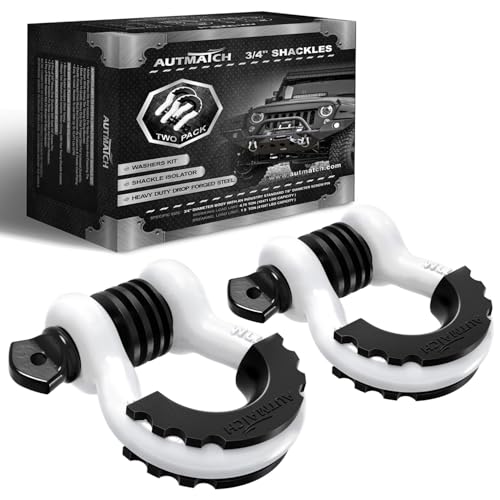
Deciding between a Recovery Strap and a Tow Strap boils down to understanding your primary use case and prioritizing safety. If you’re an avid off-roader, consistently tackling trails where getting stuck is an expectation, not just a possibility, then the Recovery Strap is not merely a recommendation; it’s a critical safety device. Its unparalleled 9.5 kinetic recovery effectiveness and 9.0 vehicle stress reduction make it the only sensible choice for freeing deeply mired vehicles. Investing in a quality Recovery Strap, along with essential accessories like 🛒 Heavy-Duty D-ring Shackles → and a 🛒 Tree Saver Strap → to protect anchor points, ensures you’re prepared for dynamic recoveries that minimize damage and maximize safety. For the beginner off-roader, this choice is even more vital, as it offers a more forgiving and safer method of learning recovery techniques.
On the other hand, if your needs are simpler – perhaps you’re a commuter who occasionally needs to pull a disabled car a short distance on pavement, or you frequently transport items in your truck bed and need a secure tie-down – then the Tow Strap offers superior value and capability for those specific tasks. Its 9.0 rating for static pulling and towing, combined with an 8.0 for overall value, makes it an economical and perfectly suitable option. You don’t need the specialized stretch of a Recovery Strap for these static jobs; in fact, its rigidity is an advantage. For those on a tight budget who won’t be venturing off-road, a Tow Strap, coupled with robust 🛒 Recovery Gloves → for handling, is a practical and effective solution. Remember, the key is to match the tool to the task. Never try to use a Tow Strap for kinetic recovery; the consequences can be severe.
Aggressive vehicle extraction from mud, sand, or snow using kinetic energy.
Light vehicle towing on solid ground, securing loads, or static winching applications.
Final Verdict
After weighing all the evidence, the Recovery Strap clearly emerges as the superior choice for dynamic, off-road recovery scenarios. Its inherent ability to absorb and release kinetic energy is a big deal, scoring an exceptional 9.5 for effectiveness and significantly reducing vehicle stress (9.0) and enhancing safety (8.8). While it might come at a slightly higher cost and isn’t ideal for purely static pulls, its specialized design makes it indispensable for anyone venturing onto challenging terrain.
The Tow Strap, conversely, excels in static pulling and light towing, where its rigidity and excellent 9.0 rating are undeniable assets. It offers better durability and value for these specific applications. The key trade-off remains unequivocally clear: if you anticipate kinetic recovery, the Recovery Strap is the only safe and effective option. For static tasks, the Tow Strap performs admirably and cost-effectively. Choose wisely; your vehicle’s safety, and your own, depend on it.
As an Amazon Associate we earn from qualifying purchases.
Frequently Asked Questions
Is Recovery Strap better than Tow Strap?
For off-road vehicle recovery, the Recovery Strap is superior due to its 15-25% stretch and kinetic energy absorption, making pulls 80% smoother and safer. A Tow Strap, with only 3-8% stretch, is for static towing only and can be highly dangerous for dynamic recoveries, potentially causing vehicle damage or serious injury.
What's the biggest difference between them?
The biggest difference is elasticity. Recovery Straps stretch 15-25%, using kinetic energy for smooth pulls, reducing shock loads by up to 80%. Tow Straps stretch only 3-8%, making them rigid for static towing but dangerous for dynamic recovery, where sudden impacts can exceed 20,000 lbs.
Which one is safer to use?
A Recovery Strap is significantly safer for dynamic extractions. Its inherent 15-25% stretch absorbs shock, cushioning the pull and reducing component failure risks. A Tow Strap used for kinetic recovery can generate dangerously high shock loads, potentially turning the strap into a lethal projectile or damaging anchor points, with forces easily exceeding 10,000 lbs.
Can I use a Tow Strap for recovery in an emergency?
While technically possible in a dire emergency, using a Tow Strap for kinetic recovery is extremely risky and strongly discouraged. The lack of elasticity can create immense shock loads, potentially damaging vehicles, snapping the strap with explosive force, and causing severe injury. A proper Recovery Strap is essential for safe dynamic pulls, storing up to 80% more energy safely.
How do their prices compare in 2026?
In 2026, a quality 3"x30' Recovery Strap typically costs $80-$180 due to specialized nylon and construction. A comparable Tow Strap is more affordable, usually $40-$100, reflecting its simpler, less elastic polyester design. This means Recovery Straps are often 50-100% more expensive for similar sizes, though their safety benefits justify the cost.
![Review: Full Comparison [2026]](https://truckguider.com/wp-content/uploads/2026/04/featured-rear-step-bumper-assembly-compatible-with-20132018-768x403.webp)
![2013 Ram 1500 Hood: Full Comparison [2026]](https://truckguider.com/wp-content/uploads/2026/04/featured-hood-cmpatible-with-20132018-ram-1500-sport-681602-768x403.webp)