Honda Ridgeline Years to Avoid and Best Used Models – Full Guide 2026

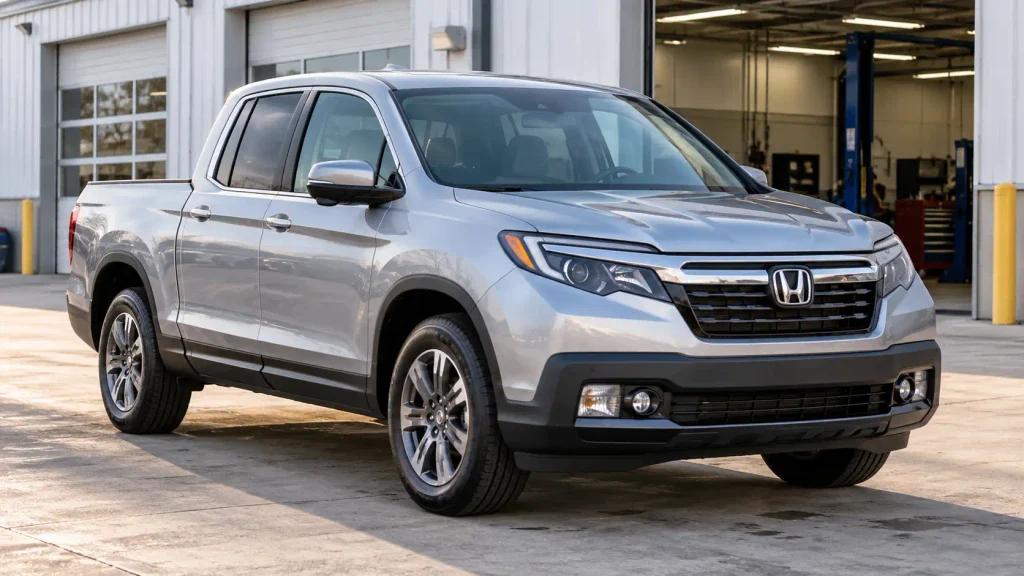
The Honda Ridgeline years to avoid as a first choice are 2006, 2017, and 2019. The 2007 and 2008 trucks also deserve extra scrutiny, especially if maintenance history is incomplete. Those recommendations reflect reported problems and documented safety issues, not a finding that every Ridgeline from those years will fail.
For buyers who want an older, lower-priced truck, 2009–2014 models are reasonable candidates after a thorough corrosion inspection. For a newer daily driver, consider 2020–2024 examples with documented service and completed safety recalls, while recognizing that recent model years have less long-term ownership history. The right truck depends on its VIN, condition, repairs, and intended use.
TruckGuider | Used Pickup Research
Honda Ridgeline Years to Avoid
Use model-year history to prioritize inspections, then make the buying decision from the VIN, service records, and actual truck condition.
2006
Avoid as a first choice
Early-model problem reports. Review engine history and inspect the rear frame for corrosion.
2007–2008
Inspect closely
Check transmission operation, electrical features, service records, and frame condition.
2009–2014
Consider with checks
Useful older-truck shortlist. Verify the rear-frame corrosion recall and maintenance history.
2017 & 2019
Avoid as a first choice
Check VIN-specific engine-bearing recall status, powertrain condition, and rear subframe.
2018
Inspect closely
Focus on the six-speed transmission, camera wiring, and applicable rear-subframe recall.
2020–2023
Consider with checks
Nine-speed automatic. Verify rear-subframe recall status and inspect all major systems.
2024–2026
Evaluate individually
Check records, recalls, warranty, and condition. Long-term reliability data remain limited.
US model-year note: There are no 2015 or 2016 Honda Ridgeline model years. Recall eligibility is VIN-specific; these categories are editorial buying priorities, not measured failure rates.
Three Checks Before You Buy
Check recall eligibility and request completed dealer repair records.
Review frame, rear subframe, engine, transmission, and maintenance.
Consider condition, needed repairs, asking price, and alternatives.
Make the Final Decision
Repairs documented, structure sound, and independent inspection satisfactory.
Service gaps, uncertain recall status, or a problem needing diagnosis.
Serious structural corrosion, unresolved major engine symptoms, or inspection refused.
What Determines a Used Honda Ridgeline Buying Decision


A Ridgeline’s model year tells you which problems deserve attention. It cannot tell you whether a particular truck has been maintained or repaired correctly. Evaluate these five factors before accepting a seller’s asking price:
- Generation and model year: The first generation covers 2006–2014. There were no 2015 or 2016 model-year Ridgelines in the United States. The second generation arrived for 2017.
- Service records: Look for documented engine oil changes, transmission service, timing-belt maintenance when due, and repairs performed by a qualified shop.
- Recall history: Check the 17-character vehicle identification number (VIN), not just a model-year list. A recall can cover only certain vehicles built during specified periods.
- Corrosion exposure: Trucks previously driven on heavily salted winter roads need underbody inspection even if the body panels look clean.
- Condition and use: A neglected low-mileage truck can be a worse purchase than a higher-mileage truck with a strong service history.
A clean title is useful, but it does not establish mechanical soundness or prove that every recall was completed.
Which Honda Ridgeline Years Deserve Extra Caution


The table below is a used-buying risk shortlist, not a statistically measured failure-rate ranking. Years with documented manufacturer safety concerns must be checked by VIN regardless of their place in the table.
| Model Years | Buying Assessment | Main Checks |
|---|---|---|
| 2006 | Avoid as a first choice | Engine condition, service history, rear-frame corrosion |
| 2007–2008 | Buy only after careful inspection | Transmission behavior, A/C, electrical systems, corrosion |
| 2009–2014 | Worth considering | Rear-frame recall, age-related wear, service records |
| 2017 | Avoid as a first choice | Engine-bearing recall, six-speed transmission, wiring, rear subframe |
| 2018 | Evaluate individually | Six-speed transmission, rear-camera wiring, rear subframe |
| 2019 | Avoid as a first choice | Engine-bearing recall, six-speed transmission, rear subframe |
| 2020–2023 | Consider with verified records | Nine-speed transmission operation, rear-subframe recall, electronics |
| 2024–2026 | Evaluate individually | VIN recall status, service history, limited long-term data |
Do not automatically reject a repaired 2017 or 2019 truck. First verify the specific repair, then compare its condition and price against an alternative without the same history.
Why 2006 to 2008 Ridgelines Need Careful Inspection


2006 Engine and Maintenance Concerns
The 2006 Ridgeline was the first model year and appears prominently in owner-complaint comparisons. Reports include engine problems, unusual tapping, electrical failures, and interior-component complaints.
Ask for maintenance records on the 3.5L V6, including timing-belt service when required by the maintenance schedule. On a cold start, listen for persistent knocking or abnormal tapping. If the engine misfires, overheats, or shows warning lights, request professional diagnosis rather than assuming the problem is minor.
2007 and 2008 Reported Problems
Early Ridgeline owner reports also describe air-conditioning failures, transmission complaints, and electrical issues. During the test drive, check all transmission ranges, confirm smooth acceleration, and test climate-control operation at idle and while moving.
These years are not automatic rejects. A properly serviced truck that passes an independent inspection may still be reasonable, particularly if it is priced to reflect its age.
Rear Frame Corrosion in Older Ridgelines
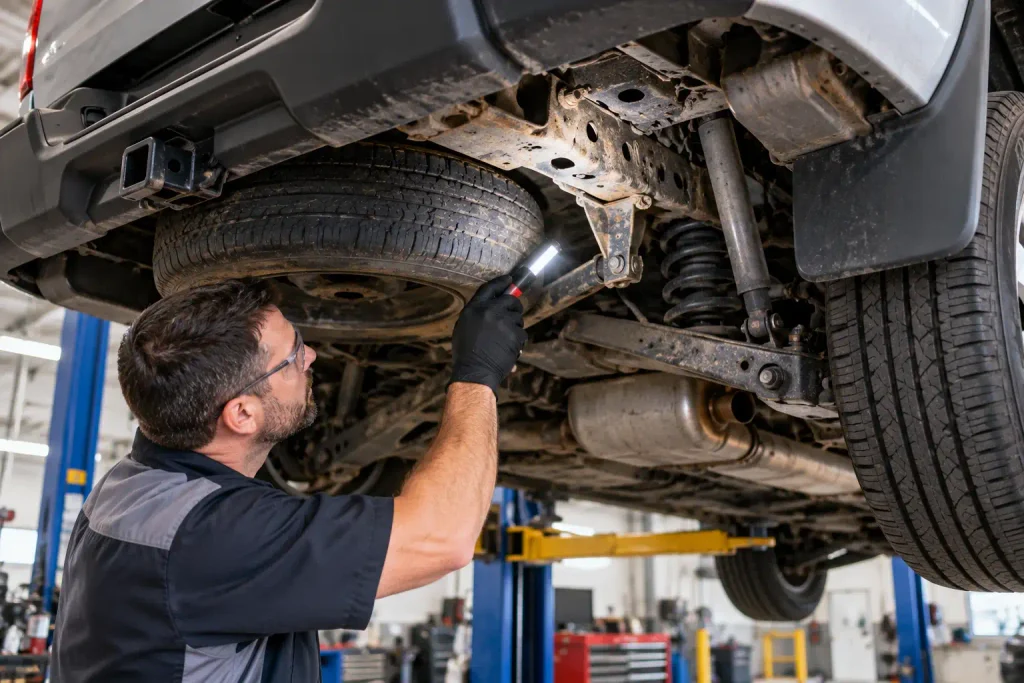
The most important structural check applies beyond those first three years. In June 2022, Honda announced a rear-frame corrosion recall covering more than 112,060 potentially affected 2006–2014 Ridgelines in 23 states. Road salt, dirt, and moisture can corrode the mounting area for the fuel-tank bands. Severe deterioration can compromise fuel-tank retention and create a fuel-leak risk.
A mechanic should inspect the relevant structural points on a lift. Do not treat surface rust and serious perforation as equivalent. If a recall-eligible truck has not received its required inspection or remedy, resolve that issue before purchase.
Why 2017 and 2019 Ridgelines Carry Higher Risk


2017 Engine and Powertrain Concerns
The 2017 Ridgeline launched the redesigned generation with a 3.5L V6 and six-speed automatic transmission. Used examples warrant careful attention to rough shifts, delayed engagement, persistent transmission warnings, and unexplained engine noises.
A 2017 truck may also have been affected by a manufacturer engine recall. Honda’s recall population was determined from manufacturing records, which means the model-year label alone is insufficient to identify an affected truck.
2019 Connecting Rod Bearing Recall
In November 2023, Honda documented a connecting-rod-bearing recall that includes certain 2017 and 2019 Ridgelines. Improperly manufactured crankshaft journals can cause premature bearing wear. Potential warning signs include abnormal engine noise, loss of output, stalling, or failure to restart.
The published recall covered 248,999 Honda and Acura vehicles across several models, not 248,999 Ridgelines. Honda’s remedy involves inspection and, when necessary, engine repair or replacement. A seller’s claim that an engine was “checked” is not enough; request a dealer record showing what was inspected and completed.
Rearview Camera and Tailgate Wiring
Honda also issued a safety recall for the 2017–2019 Ridgeline rearview-camera tailgate wire harness. Repeated tailgate operation can fatigue the wiring, potentially causing loss of the camera image. Honda’s 2022 filing identified 117,445 potentially involved Ridgelines.
Test the camera with the tailgate in both opening positions, but do not treat a functioning image as proof that a recall is complete.
Which 2009 to 2014 Ridgelines Are Safer Buys
If your budget favors the first generation, 2009–2014 Ridgelines make a sensible starting shortlist. They are generally less prominent in major problem-year comparisons than the 2006 launch model. That is an editorial buying preference, not a guarantee that every later first-generation truck is more reliable.
For a 2009–2011 truck, prioritize service records and a careful check of suspension, steering, cooling, and transmission operation. A truck with incomplete timing-belt records may require a significant maintenance allowance immediately after purchase.
For a 2012–2014 truck, inspect age-related wear just as seriously. These models also fall within Honda’s earlier rear-frame corrosion recall range, so a clean-looking exterior is not enough.
Our preference: Buy the best-documented, structurally sound example rather than paying extra solely for the newest first-generation model year. If the seller cannot establish maintenance and recall history, keep shopping.
Should You Buy a 2020 to 2026 Ridgeline
The 2020 Ridgeline is a meaningful dividing point. Honda replaced the earlier six-speed automatic with a standard nine-speed automatic, and made Honda Sensing driver-assistance features standard. That changes the questions buyers should ask about a used 2020 or newer truck.
A Major 2026 Recall Changes the Inspection Checklist
In June 2026, Honda announced a rear-subframe corrosion recall, NHTSA campaign 26V365, covering certain 2017–2023 Ridgelines. The issue involves corrosion at rear-suspension mounting points, particularly where road de-icing chemicals are used. Affected vehicles require dealer inspection and appropriate reinforcement or repair.
This is different from the 2006–2014 rear-frame and fuel-tank mounting recall. It means buyers should not assume that a 2020–2023 Ridgeline is free of corrosion-related recall concerns merely because it is newer.
Honda also recalled 187,290 potentially affected 2020–2024 Ridgelines for tailgate-camera wiring problems. Test the camera and tailgate functions, and confirm the repair history rather than relying on appearance or mileage.
How to Evaluate the Newest Models
For 2024–2026 trucks, compare remaining warranty coverage, original maintenance documentation, accident history, and active recalls. Their shorter time on the road limits any confident lifetime-reliability prediction.
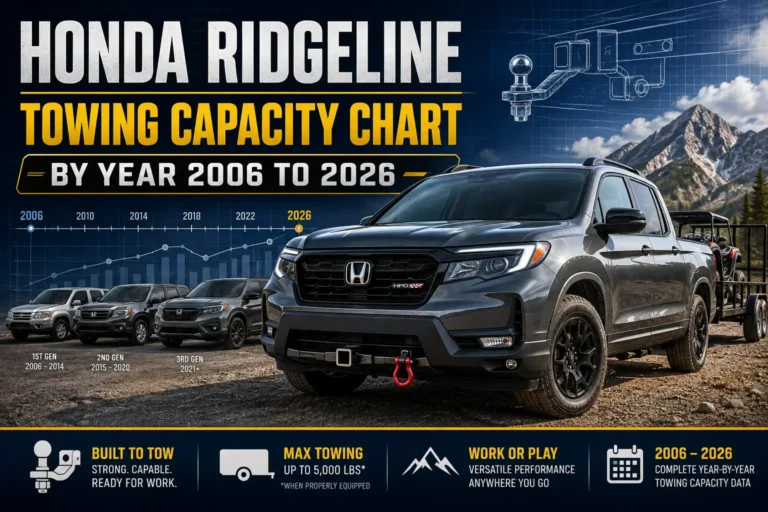
If towing is important, check the exact configuration rather than treating every Ridgeline as identical. TruckGuider’s Honda Ridgeline towing capacity chart by year explains why model year, drivetrain, payload, passengers, and trailer tongue weight matter.
When a Flagged Ridgeline Year Is Worth Buying
An avoided model year can become a reasonable option when verifiable repairs and a favorable inspection reduce the specific risks that prompted the warning.
- If a 2017 or 2019 engine recall was completed: Ask for the dealer repair order and confirm the VIN status. Then commission an independent engine and transmission assessment. Recall completion does not establish the condition of unrelated components.
- If a 2006–2014 truck has a documented corrosion remedy: Confirm what Honda inspected or repaired, and have the remaining underbody structure evaluated for damage outside the recall area.
- If a 2017–2023 truck has rear-subframe recall exposure: Verify whether the dealer inspection and required remedy are complete. Do not assume a pending remedy is acceptable merely because the truck drives normally.
- If a major repair is documented but the asking price is high: Compare the total ownership cost with other examples. Ask a local shop for a written estimate for any remaining work.
TruckGuider’s truck repair cost estimate guide can help organize the repair-budget conversation, but a shop-specific quote is more dependable for a particular truck.
How to Inspect a Used Honda Ridgeline Before Buying
Use this process before paying a deposit that cannot be refunded.
- Confirm the VIN. Match the number on the dashboard, door label, title, and sale documents. Check the model year and identify the correct generation.
- Check recalls and repair status. Use Honda’s official recall lookup and ask a Honda dealer to confirm completion records. TruckGuider’s recall and technical service bulletin lookup guide provides a second way to organize the research. A cleared VIN lookup is not a substitute for inspection.
- Review maintenance records. Ask specifically about oil changes, timing-belt service, coolant, transmission fluid, tires, brakes, and any prior engine or transmission replacement.
- Request a lift inspection. Have an independent mechanic check the rear frame, rear subframe, suspension mounts, fuel-tank supports, leaks, and evidence of prior collision repairs.
- Drive the truck cold and warm. Check starting, idle, acceleration, all gears, steering, braking, and unusual vibration. Warning lights or harsh shifts require a diagnosis, not a guess.
- Test every safety and utility feature. Confirm rearview-camera operation, tailgate locking and both opening modes, airbags’ warning-light self-check, climate control, and driver-assistance features where equipped.
Ask the mechanic to document the findings. If significant repairs are needed, seek a written estimate before negotiating. Do not operate a truck with a suspected structural or other serious safety defect merely to complete a test drive.
Which Ridgeline Should You Buy Based on Risk
Use the following decision matrix after reviewing the records and inspection results. Its outcomes reflect buying conditions, not projected failure percentages.
| Buyer Situation | Evidence to Check | Recommended Action |
|---|---|---|
| 2009–2014 with service records and sound structure | Rear-frame inspection and recall records | Consider buying at a condition-appropriate price |
| 2006–2008 with unknown history | Engine, transmission, corrosion, missing maintenance | Inspect further or choose a better-documented truck |
| Any older Ridgeline with severe structural corrosion | Independent structural assessment | Walk away unless a qualified repair and safe condition can be established |
| 2017 or 2019 with unresolved engine symptoms | VIN recall status, dealer records, diagnosis | Walk away until the issue is resolved and verified |
| 2017–2023 with potential subframe recall exposure | VIN eligibility and completed dealer remedy | Do not finalize until safety status is clarified |
| 2020–2026 with complete records and a clean inspection | Recall status, transmission operation, vehicle history | Consider buying after comparing price and intended use |
A lower price helps only when the remaining risk is understood and repairable. It does not make an unsafe truck a bargain.
When to Walk Away from a Used Ridgeline
Some problems justify ending negotiations regardless of model year. Serious frame corrosion, cracked suspension mounting points, or questionable structural repairs can create risks that a routine maintenance visit cannot resolve.
Persistent engine knocking, stalling, unaddressed transmission faults, or active safety warnings also require diagnosis before any purchase. Do not accept “they all do that” as an explanation for a symptom that has not been evaluated.
Walk away when a seller refuses an independent inspection, cannot substantiate a claimed engine replacement, or provides documents that do not match the VIN. Concealed accident damage and unexplained odometer inconsistencies deserve the same caution.
A used Ridgeline should earn your confidence through its condition and records, not the seller’s description.
Which Honda Ridgeline Is the Smartest Used Buy
For most budget-conscious shoppers, a well-maintained 2009–2014 Ridgeline is worth considering if its structure and recall history check out. For buyers who prefer newer equipment, 2020–2024 models are reasonable candidates after verifying the 2026 subframe recall where applicable, other recall work, and transmission condition.
The key Ridgeline years to avoid as a first choice remain 2006, 2017, and 2019, with 2007–2008 calling for additional caution. None of these judgments replaces a VIN check or professional inspection. Before making an offer, document every outstanding issue and compare the full repair-adjusted cost with another available truck. The safest purchase is the one whose risks are understood, not merely the one from a favored year.
Frequently Asked Questions About Honda Ridgeline Reliability
What Are the Worst Years for the Honda Ridgeline?
The 2006, 2017, and 2019 Ridgelines are the strongest initial avoid candidates based on reported problems and documented concerns. The 2007–2008 trucks also merit caution. A particular vehicle may still be a reasonable purchase when repairs, VIN recalls, and an independent inspection are satisfactory.
What Is the Most Reliable Honda Ridgeline Year?
There is no single model year proven to be the most reliable under every condition. 2009–2014 provides a practical older-truck shortlist, with 2012–2014 attractive to buyers who want later first-generation examples. Service history and corrosion condition matter more than a one-year ranking.
Does the Honda Ridgeline Have Transmission Problems?
Yes. Some owners of early first-generation and 2017–2019 Ridgelines have reported transmission faults. The 2020 model introduced a nine-speed automatic in place of the earlier six-speed. A warning light, slipping, or harsh shifting needs a qualified diagnosis before purchase, regardless of model year.
How Long Can a Honda Ridgeline Last?
A Ridgeline’s useful life depends on maintenance, corrosion exposure, driving conditions, and repairs. There is no manufacturer-guaranteed mileage that makes a used truck safe to purchase. Evaluate the actual engine, transmission, underbody, records, and inspection findings instead of relying on a claimed lifespan figure.
Is a Used Honda Ridgeline Worth Buying?
Yes, when the individual truck has a sound structure, appropriate service records, a reasonable price, and verified recall status. It suits buyers who value a comfortable midsize pickup for everyday driving and moderate hauling. Reject unresolved safety defects, even if the price appears attractive.