2003 Chevy Silverado Brake Line Diagram: Layouts, Fitting Specs, and Repair Insights

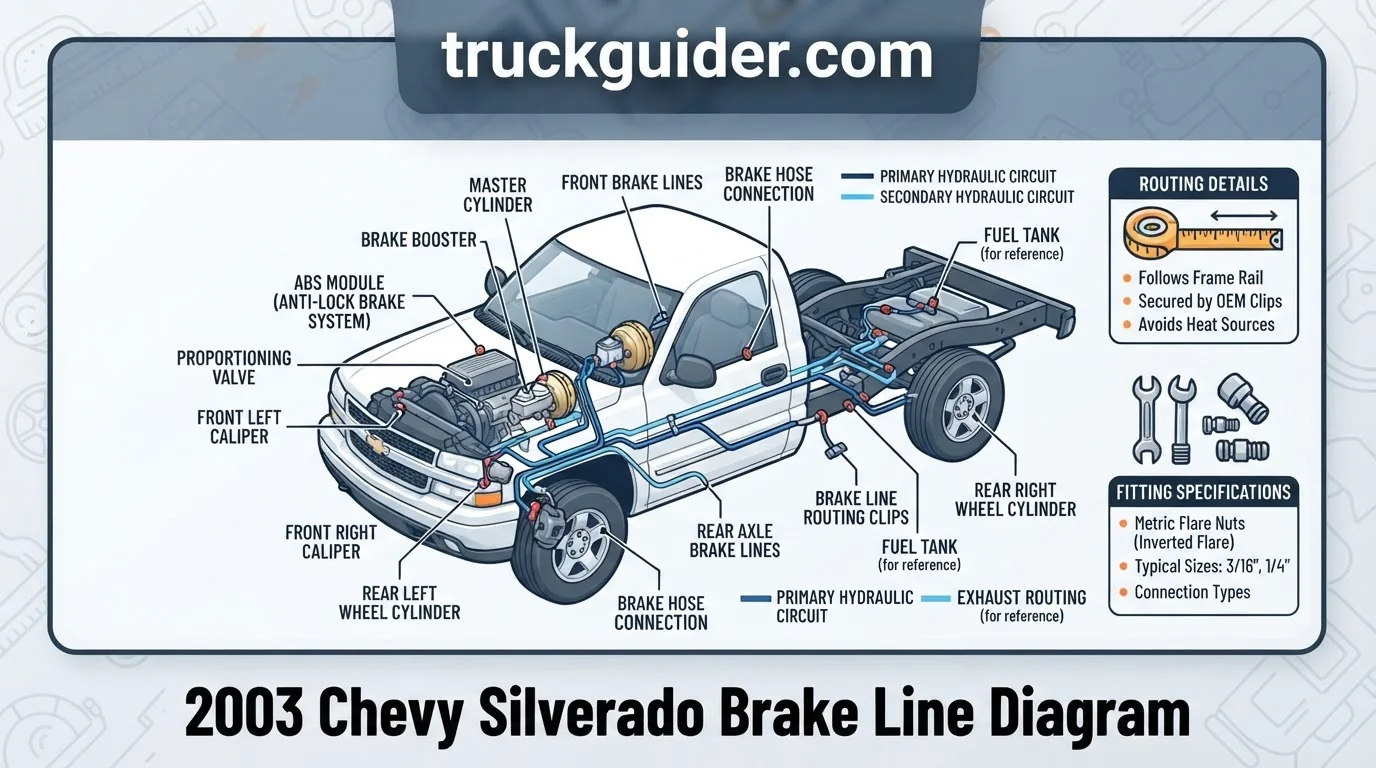
Finding a reliable 2003 Chevy Silverado brake line diagram is essential for owners addressing rust-related leaks or performing hydraulic system overhauls on the GMT800 platform. This information summarizes the routing, component placement, and safety considerations necessary to navigate the complex plumbing of your truck’s braking system, ensuring you can identify the correct lines for repair or full replacement.
Reference Data for 2003 Chevy Silverado Brake Line Configurations
Recommended Best Deal Products


How to Read This Chart
The information provided above serves as a foundational guide for technicians or DIY enthusiasts sourcing materials for a 2003 Chevy Silverado brake line diagram repair. The “Primary Metric” column refers to the outside diameter of the steel tubing, which is the industry standard for these trucks.
Please note that “Verify for exact configuration” is required because of variations in cab length (Regular vs. Crew Cab) and bed sizes, which change the length of the rear distribution lines. Always check your specific VIN via manufacturer parts databases to confirm fitting sizes, as mid-year production changes sometimes introduced different thread pitches on ABS module ports.
Understanding the 2003 Chevy Silverado Brake Line Routing
The hydraulic layout of the 2003 Silverado is a diagonal split system designed to maintain partial braking if one circuit fails. Starting at the master cylinder, two primary lines run to the ABS Electronic Brake Control Module (EBCM), typically mounted on the driver-side frame rail. From the EBCM, individual lines travel to each of the four wheel brake assemblies.
A common point of confusion in any 2003 Chevy Silverado brake line diagram is the path taken by the rear axle feed. This single line exits the EBCM, traverses the length of the frame to the driver-side rear wheel well, and enters a junction block (or T-fitting) where it splits into two smaller lines to service the left and right rear drum or disc brakes.
🔎 How to Find Your Brake System Details
Recommended Best Deal Products


To ensure the parts you order match your specific truck, you must perform a targeted visual and data-based inspection. Do not rely solely on generic internet diagrams, as they may not account for your specific wheelbase or GVWR (Gross Vehicle Weight Rating).
1. Locate the Service Parts Identification Sticker: This is usually found in the glove box or inside the driver-side door jamb. Look for RPO codes that denote brake configurations, such as “JB5” (standard) or “JB6” (heavy-duty).
2. Consult Your VIN: Input your 17-digit VIN into a reputable dealership parts portal. This will generate a specific diagram tailored to the assembly line build of your vehicle.
3. Physical Verification: Before cutting any old lines, use a caliper to measure the diameter of the existing steel tubing. The difference between 3/16″ and 1/4″ is significant and will prevent proper sealing if the wrong fitting is used.
✨ Key Benefits of Full-System Replacement
System Integrity
Replacing the entire line eliminates the risk of future pinhole leaks occurring adjacent to a temporary patch or splice, which is a common failure point.
Corrosion Resistance
Using high-quality NiCopp or stainless steel replacements ensures that you won’t need to consult a 2003 Chevy Silverado brake line diagram again for this issue.

📋
Step-by-Step Guide: Replacing Corroded Lines
Recommended Best Deal Products


Use a flare nut wrench to slowly crack the fittings open. Place a container under the vehicle to catch leaking brake fluid, as it is highly corrosive to paint and concrete.
Follow the original path shown in your diagrams. Use plastic retaining clips to secure the lines to the frame rails, ensuring they cannot vibrate against metal edges, which causes premature wear.
After installation, bleed the system starting from the wheel furthest from the master cylinder (typically passenger rear). If the ABS module was drained, you may require a scan tool to cycle the internal solenoids.
The 2003 Silverado uses a specific “EBCM” that is sensitive to air. If air enters the ABS pump during line replacement, a standard gravity bleed may not suffice, necessitating a scan tool that can trigger the automated bleed sequence.
Never attempt to patch a brake line using rubber hose or compression fittings intended for air or fuel. These cannot withstand the high pressure of a hydraulic braking system and will result in total brake failure.
What If It Still Doesn’t Work?
If you have replaced the lines and are still experiencing a soft pedal or ABS warning light, follow these diagnostic steps to narrow down the remaining variables:
1. Verify Master Cylinder Fluid Levels: Ensure the reservoir has not run dry during the bleeding process.
2. Check for External Seepage: Inspect every single flare nut you tightened for “weeping” fluid; even a tiny amount of air entry will result in a mushy pedal.
3. Scan for Fault Codes: If the ABS/Brake light remains on the dashboard, use a professional-grade OBDII scanner to read EBCM error codes.
4. Professional Assistance: If the pedal remains soft after a thorough bleed, you may have a faulty master cylinder or an internal failure in the ABS module.
For complex ABS issues, professional service is recommended. Costs can vary significantly based on labor rates, but expect to budget for a diagnostic fee plus the cost of a brake system flush.
Conclusion
Navigating a 2003 Chevy Silverado brake line diagram is a manageable task when you break the system into its primary distribution paths and wheel-specific feeds. By utilizing accurate material specifications and prioritizing high-quality, corrosion-resistant tubing, you can restore your vehicle’s braking performance to factory standards. Always remember that the brake system is the most critical safety feature of your truck; if you feel unsure about the integrity of your flares or connections, consult a certified technician. Your next step should be a thorough visual inspection of your existing lines to identify the exact source of any corrosion or leaks.
Key Takeaways
-
✓
Identify the correct brake line routing based on your specific wheelbase and cab configuration. -
✓
Understand the technical specs for standard SAE inverted flare fittings used on the GMT800 platform. -
✓
Learn the material differences between OEM steel and aftermarket stainless or nickel-copper lines. -
✓
Follow precise bleeding sequences to eliminate trapped air from the ABS module and master cylinder. -
✓
Verify your VIN-specific brake configuration before purchasing pre-bent line kits.
❓ Frequently Asked Questions
1
What is a 2003 Chevy Silverado brake line diagram?
A 2003 Chevy Silverado brake line diagram is a technical schematic showing the path of steel hard lines from the master cylinder to the ABS control module and individual wheel calipers. It provides necessary info on junction blocks, mounting points, and line lengths required for safe vehicle maintenance.
2
How does the brake line routing affect replacement?
The routing is specific to your Silverado’s cab style, bed length, and drivetrain. Because the GMT800 chassis utilizes complex bends around the frame rails and fuel tank, using the correct diagram ensures the new lines clear all moving suspension components and exhaust heat sources during installation.
3
Why is this info important for the 2003 model?
The 2003 Silverado is prone to brake line corrosion due to its age. Accessing specific repair facts helps you identify which segments are compromised and allows you to order the correct pre-bent line kits, which saves significant time compared to fabricating custom lines from raw tubing.
4
What are the benefits of stainless steel lines?
Stainless steel lines offer superior corrosion resistance compared to factory-installed mild steel, providing long-term reliability in harsh climates. These lines maintain their structural integrity longer, offering safety insights and facts that suggest a reduced likelihood of sudden brake failure due to rust-through.
5
How can I get started with brake line replacement?
Start by identifying your brake configuration via your VIN. Inspect the existing lines for heavy rust, then gather the necessary tools: line wrenches, penetrating oil, and a pressure bleeder. Consult the diagram to map the path of each line before disconnecting the old hardware to ensure a smooth installation.
6
What size are the brake line fittings on a 2003 Silverado?
Most fittings are 3/16-inch or 1/4-inch line with M10 or M12 metric inverted flare nuts; always verify by test-fitting.
![RAM 1500 Power Running Boards [2026]](https://truckguider.com/wp-content/uploads/2026/03/ram-1500-power-running-boards-featured.webp)