2006 Ram 2500 5.9 Cummins: Comprehensive Technical Analysis and Capability Report

The 2006 model year occupies a distinct and highly revered position within the lineage of heavy-duty pickup trucks. Representing the final full production year of the legendary 5.9-liter Cummins inline-six engine before stringent emissions regulations forced the transition to the 6.7-liter platform, the 2006 Ram 2500 is widely considered the zenith of pre-emissions diesel engineering.
This exhaustive report synthesizes mechanical architecture, common-rail injection system diagnostics, drivetrain configurations, towing capabilities, and documented reliability vulnerabilities to provide a definitive technical resource.


Engine Architecture and Technical Specifications
At the core of the 2006 Ram 2500’s enduring legacy is the 5.9L ISB (Interact System B) Cummins 24-valve turbodiesel engine. Renowned for its cast-iron deep-skirt block and extraordinary durability, the engine relies on a relatively simplistic yet highly robust architecture.
The 2006 iteration of the 5.9L Cummins represents the “High Output” common-rail generation, characterized by its substantial torque curve and refined combustion acoustics compared to earlier mechanically injected or VP44-equipped engines. The engine utilizes an Overhead Valve (OHV) configuration with 24 valves, which optimizes airflow and combustion efficiency.
The factory power output for the 2006 model year is defined by a distinct focus on low-end torque, an essential characteristic for heavy-duty towing applications. The 359-cubic-inch displacement operates with a 4.02-inch bore and a 4.72-inch stroke, yielding a 17.2:1 compression ratio. This configuration generates 325 horsepower at 2,900 RPM and a massive 610 lb-ft of torque at a mere 1,600 RPM.
The delivery of peak torque just above idle speed illustrates the engine’s industrial roots, ensuring that the vehicle can initiate forward momentum under maximum Gross Combined Weight Rating (GCWR) without excessive throttle input or transmission strain.
5.9L vs. 6.7L Cummins Comparison
Understanding the sustained market premium of the 2006 Ram 2500 requires a direct comparison with its successor, the 6.7L Cummins, which debuted midway through the 2007 model year. The comparison highlights a fundamental trade-off between raw reliability and modern technological capability.
The most critical distinction lies in the emissions control systems. The 2006 5.9L Cummins is virtually exempt from modern emissions-choking equipment; it relies solely on a standard catalytic converter to meet federal regulations of its era. Conversely, the 6.7L engine introduced Exhaust Gas Recirculation (EGR) and a Diesel Particulate Filter (DPF),
with later models adding Selective Catalytic Reduction (SCR) requiring Diesel Exhaust Fluid (DEF). These post-combustion treatments in the 6.7L are frequent failure points, often leading to clogged DPFs, sticking EGR valves, and reduced overall reliability.
While the 6.7L boasts a larger displacement (408.2 cubic inches) and higher factory output, this increased pressure comes at a structural cost. The 5.9L utilizes a 4.02-inch bore, leaving substantial material between the cylinders. When Cummins increased the bore to 4.21 inches for the 6.7L,
the sealing area between the cylinders was significantly reduced. Combined with higher internal cylinder pressures required to generate increased torque, the 6.7L is highly prone to blown head gaskets—a failure rarely observed on stock or moderately tuned 5.9L engines.
Furthermore, the turbocharger dynamics shifted drastically between the two platforms. The 2006 5.9L utilizes a Holset HE351CW Fixed Geometry Turbocharger (FGT). While this unit is exceptionally durable, it exhibits noticeable turbo lag at lower engine speeds. The 6.7L transitioned to the Holset HE351VE Variable Geometry Turbocharger (VGT),
which uses an internal sliding nozzle to alter exhaust gas velocity, effectively eliminating lag and acting as a powerful integrated exhaust brake. However, the VGT is highly susceptible to carbon and soot accumulation, causing the sliding mechanisms to bind and fail—an issue nonexistent on the simpler 5.9L platform.
| Feature / Metric | 5.9L Cummins (2003–2007) | 6.7L Cummins (2007.5+) |
| Displacement | 359 cubic inches | 408.2 cubic inches |
| Bore x Stroke | 4.02 in. x 4.72 in. | 4.21 in. x 4.88 in. |
| Compression Ratio | 17.2:1 | 17.3:1 |
| Factory Output | 325 hp / 610 lb-ft | 350 hp / 650 lb-ft |
| Turbocharger Type | Holset HE351CW (Fixed) | Holset HE351VE (Variable) |
| Emissions Systems | Catalytic Converter Only | EGR, DPF (later SCR/DEF) |
| Head Gasket Integrity | Highly Reliable | Prone to failure under load |
Drivetrain and Transmission Configurations
For the 2006 model year, the Ram 2500 5.9L Cummins was mated to one of two primary heavy-duty transmissions: the 48RE four-speed automatic or the G56 six-speed manual. The choice of transmission drastically alters the truck’s towing dynamics, maintenance requirements, and performance ceiling.
The 48RE 4-Speed Automatic Transmission
The 48RE is a hydraulically controlled four-speed automatic transmission featuring an electronic overdrive. In its factory configuration, the 48RE is generally considered the weak link in the 2006 Ram 2500’s powertrain. While it provides comfortable daily drivability and smooth shifts for unloaded applications,
towing near the GCWR limit or adding aftermarket engine tuning will rapidly degrade the factory clutch packs and torque converter. With only four forward gears, the ratio gaps are wide, which can cause the engine to fall out of its optimal powerband when climbing steep grades with heavy loads.
Despite its factory limitations, the 48RE possesses a massive aftermarket support network. Transmission builders have engineered billet input, intermediate, and output shafts, upgraded clutch packs, and modified manual valve bodies that transform the 48RE into a competition-ready transmission. A built 48RE is highly favored in motorsports and heavy towing applications due to its eventual reliability when properly modified.
The G56 6-Speed Manual Transmission
Midway through the third-generation lifecycle, Chrysler phased out the heavy cast-iron NV5600 manual transmission in favor of the Mercedes-Benz-sourced G56 six-speed manual. The G56 utilizes an aluminum casing, which reduces overall vehicle weight and dissipates heat more effectively than its predecessor.


The G56 offers unparalleled control over engine RPMs, making it the preferred choice for dedicated hauling and towing in mountainous terrain, entirely eliminating the gear-hunting behavior common with the 48RE.
However, the factory G56 is equipped with a Dual Mass Flywheel (DMF) designed to reduce Noise, Vibration, and Harshness (NVH). The DMF is highly prone to catastrophic failure when subjected to heavy towing or engine tuning. The standard remediation strategy requires replacing the DMF with an aftermarket solid flywheel and a dual-disc clutch system.
Furthermore, the aluminum case, while lighter, is susceptible to torsional flexing under extreme torque loads, which can lead to case cracking in high-horsepower applications unless mitigated by a specialized transmission girdle.
Towing Capabilities, Payload, and Weight Capacities
The 2006 Ram 2500’s utility is defined by its substantial weight capacities. However, these ratings fluctuate significantly based on cab configuration, bed length, drivetrain layout (4×2 versus 4×4), and the selected axle ratio (typically 3.73 or 4.10). An analysis of the(https://www.ramtrucks.com/content/dam/fca-brands/na/ramtrucks/en_us/towing/towing-capacity-guide/brochure/my24_Ram_HD_Customer_TowPayChart_3.2.pdf) reveals specific physical limitations rooted in the truck’s Gross Vehicle Weight Rating (GVWR).
The GVWR for the 2006 Ram 2500 diesel platform ranges between 8,510 lbs and 9,000 lbs. Because the massive 5.9L Cummins engine adds significant mass to the front axle, the base curb weight of the vehicle is exceptionally high—ranging from roughly 6,147 lbs for a 2WD Mega Cab to over 6,850 lbs for a fully equipped 4×4 Quad Cab.
Payload capacity is mathematically derived by subtracting the curb weight from the GVWR. Consequently, despite its heavy-duty classification, the Cummins-equipped Ram 2500 often features a lower technical payload capacity than its lighter, gas-powered HEMI counterparts.
| Configuration (5.9L Cummins) | Drivetrain | Base Curb Weight | Max Payload Capacity | Max Towing Capacity | GCWR |
| Regular Cab (Long Bed) | 4×2 | 6,385 lbs | 2,620 lbs | 13,450 lbs | 20,000 lbs |
| Regular Cab (Long Bed) | 4×4 | 6,850 lbs | 2,150 lbs | 13,000 lbs | 20,000 lbs |
| Quad Cab (Short Bed) | 4×4 | 6,305 lbs | 2,550 lbs | 12,800 lbs | 20,000 lbs |
| Mega Cab (Short Bed) | 4×2 | 6,147 lbs | 2,650 lbs | 12,950 lbs | 20,000 lbs |
A critical factor for prospective owners utilizing gooseneck or fifth-wheel trailers is the calculation of pin weight. While the engine possesses the raw torque to pull over 13,000 lbs, heavy fifth-wheel trailers apply 20% to 25% of their total weight directly downward onto the rear axle. A 12,000-lb fifth-wheel will exert a 2,400-lb pin weight.
Applying this load to a Ram 2500 with a 2,550-lb payload capacity leaves a mere 150 lbs for passengers, cargo, and the weight of the hitch itself, resulting in a legally overloaded vehicle. Therefore, while the drivetrain is highly capable, the suspension and GVWR physically limit heavy pin-weight towing compared to a dual-rear-wheel 3500 series truck.
Fuel Economy Dynamics
Fuel economy in heavy-duty diesel trucks is contingent upon gearing, driving habits, and aerodynamic profile. Because their GVWR exceeds 8,500 lbs, 2500 series trucks are exempt from official EPA fuel economy testing protocols. However, empirical data and road tests provide a clear and consistent picture of the 2006 5.9L Cummins’ efficiency.
Unladen, the 5.9L Cummins is highly praised for its efficiency relative to its tremendous mass. Automotive reviewers historically estimated the 2006 Ram 2500 to achieve approximately 15 MPG in city driving and 19 MPG on the highway. Real-world owner data frequently surpasses these estimates; it is common for operators to report achieving 18 to 19 MPG in mixed city driving and between 22 and 24 MPG during steady highway cruising at optimal speeds.
The implementation of aftermarket engine tuning can alter injection timing and pulse width, occasionally yielding marginal improvements in fuel economy under normal driving conditions, provided the operator restricts throttle input. The vehicle is equipped with a 34- or 35-gallon fuel tank, offering an exceptional unladen cruising range.
High-Pressure Common-Rail (HPCR) Diagnostics
The 2006 5.9L Cummins utilizes a Bosch High-Pressure Common Rail (HPCR) injection system. While vastly superior in power delivery and acoustic refinement compared to older mechanical systems, it operates under extreme parameters and requires rigorous diagnostic protocols when anomalies arise.
System Architecture and Operation
The fuel delivery process begins with an in-tank electric lift pump that pulls fuel and pushes it through a chassis-mounted filter housing to the CP3 injection pump. The gear-driven CP3 pump pressurizes the fuel, requiring a minimum of 4,000 PSI simply to overcome the injector check balls and start the engine. Under heavy load, the CP3 can reach operating pressures up to 23,500 PSI.
Pressure regulation is managed by the Fuel Control Actuator (FCA), an electronic metering valve mounted on the CP3 that controls the volume of fuel entering the pumping chambers based on Engine Control Module (ECM) commands. High-pressure fuel is stored in the rail manifold and flows through crossover connector tubes directly into the injectors. The ECM electronically commands a solenoid on the injector, lifting a check ball off its seat to initiate a multi-event injection strategy consisting of pilot, main, and post-injection phases.
Injector Failure: Symptoms and Financial Implications
Between 100,000 and 150,000 miles, the internal check balls, seats, and nozzles within the Bosch injectors succumb to abrasive wear from fuel contaminants. This wear allows high-pressure fuel to bypass the nozzle and flow back into the fuel return line.
The primary symptom of injector wear is a hard start or a complete failure to start. If the injectors return excessive fuel, the CP3 pump cannot generate the requisite 4,000 PSI to fire the engine. Additionally, worn nozzles may allow fuel to dribble directly into the cylinder, leading to incomplete combustion manifested as blue or white smoke at idle.


Severe injector failure causes diesel fuel to wash past the piston rings, contaminating the engine oil. This phenomenon, known as fuel dilution, drastically thins the oil’s viscosity, accelerating engine wear and creating the risk of a catastrophic engine runaway condition.
Proper diagnosis involves conducting a specialized injector return flow test. During a running “High Pressure Fuel System Override Test,” the maximum allowable leakage for all six injectors combined is 160 ml over 30 seconds. Any individual injector contributing more than 40 ml to this total requires immediate replacement. Replacing common-rail injectors represents a significant financial undertaking. Individual remanufactured injectors cost between $180 and $500, with total replacement costs for a set of six—including labor—ranging from $1,575 to over $3,000.
Steering Geometry and the “Death Wobble” Phenomenon
While the Cummins engine block is virtually indestructible, the Ram 2500 chassis harbors specific vulnerabilities. The most notorious issue affecting heavy-duty Ram trucks of this era is “Death Wobble”—a violent, uncontrollable shaking of the front axle and steering wheel, typically triggered by encountering a road irregularity at highway speeds.
The physics of this phenomenon are rooted in the solid front axle geometry. The heavy-duty axle is suspended by coil springs and located laterally by a track bar. The immense weight of the cast-iron Cummins engine places severe, continuous stress on these front suspension components. When the track bar bushings or tie rod ends develop even microscopic play, lateral forces allow the axle to oscillate rapidly from side to side. The geometry of the steering system amplifies this oscillation into a violent harmonic resonance.
Mitigation requires comprehensive geometric correction rather than superficial patches. Slapping a heavy-duty steering damper on the axle masks the symptom but fails to cure the underlying harmonic failure. Permanent solutions require replacing the factory track bar with an adjustable aftermarket unit featuring heim joints or specialized urethane bushings.
Furthermore, the factory steering gear box is prone to sector shaft deflection; installing a bolt-on steering box brace supports the shaft, tightening the steering feel and preventing wander. Finally, retrofitting the upgraded “T-style” steering linkage from 2008+ Ram models significantly improves steering geometry over the factory 2006 “Y-style” linkage.
Electrical Vulnerabilities: The Totally Integrated Power Module (TIPM)
The 2006 model year relies on the Totally Integrated Power Module (TIPM), a centralized computer module acting as a smart fuse box that routes electrical commands to various vehicle systems. The TIPM in 2006–2009 Ram trucks is highly prone to internal circuit board degradation and relay sticking.
Symptoms of TIPM failure present as bizarre, random electrical anomalies. Owners frequently report headlights turning on or off independently, windshield wipers refusing to shut off, intermittent horn honking, or the lift pump running continuously after the ignition is turned off.
The module may also trigger diagnostic trouble codes such as U110E (Lost Ambient Temperature Message) or B210D (Battery Voltage Low) as internal relays fail to disengage, causing parasitic battery drains. Bypassing individual circuits provides only a temporary patch. The definitive resolution is replacing the module with a fully remanufactured and upgraded TIPM, which resolves the internal soldering and relay flaws.
Comprehensive Maintenance Schedule and Fluid Capacities
The longevity of the 5.9L Cummins is inextricably linked to strict adherence to its maintenance schedule. The high-pressure fuel system and turbocharger bearings are exceptionally intolerant of poor filtration and degraded fluid viscosity.
The Cummins ISB requires 12.0 quarts (11.4 liters) of oil, including the filter. The factory viscosity specification is 15W-40 for ambient temperatures above 0°F (-18°C), though a 5W-40 synthetic-based oil is highly recommended for all temperature ranges to ensure rapid turbocharger lubrication upon cold starts.
While standard service intervals dictate oil changes every 15,000 miles, the severe duty schedule—defined by extensive towing, excessive idling, or dusty environments—mandates changes every 7,500 miles or 6 months. Given the age of the platform, adhering to the 7,500-mile severe duty schedule is the universally accepted best practice.
Protecting the CP3 pump and injectors is paramount. The factory specification dictates replacing the chassis-mounted fuel filter every 15,000 miles. Failing to adhere to this schedule permits water and particulate contamination to bypass the filter media,
directly scarring the microscopic tolerances within the Bosch injectors. Consequently, many owners retrofit aftermarket lift pumps equipped with dual 2-micron filtration systems (such as FASS or AirDog) to eliminate entrained air and ensure pristine fuel delivery.
| Fluid / Component | Capacity | Specification | Severe Duty Service Interval |
| Engine Oil | 12.0 Quarts | 15W-40 or 5W-40 Synthetic | 7,500 miles / 6 months |
| Fuel Filter | N/A | High-quality OEM spec | 15,000 miles |
| Auto Trans (48RE) | 16.9 Qts (Dry) | ATF+4 | 30,000 miles |
| Front/Rear Differentials | ~3.0 Qts (Rear) | 75W-90 Synthetic Gear Oil | 15,000 miles |
| Engine Coolant | System varies | HOAT Coolant | 100,000 miles / 5 Years |
Trim Levels and the Mega Cab Configuration
The 2006 Ram 2500 was available in a variety of trims to suit fleet operators and luxury buyers alike, structured across several distinct tiers. The base ST (Tradesman) was designed purely for utility, featuring a vinyl bench seat, rubber flooring, and 17-inch steel wheels. The SLT (Big Horn) represented the standard consumer tier, adding cloth seating, carpeted floors, power windows, and chrome accents.
For luxury buyers, the Laramie trim offered leather upholstery, dual-zone climate control, power-adjustable heated seats, and premium woodgrain interior accents. A rare aesthetic package offered in 2006 was the Night Runner edition, which featured Brilliant Black exterior paint, unique dark-chrome wheels, a blackout grille, and specific interior graphics.
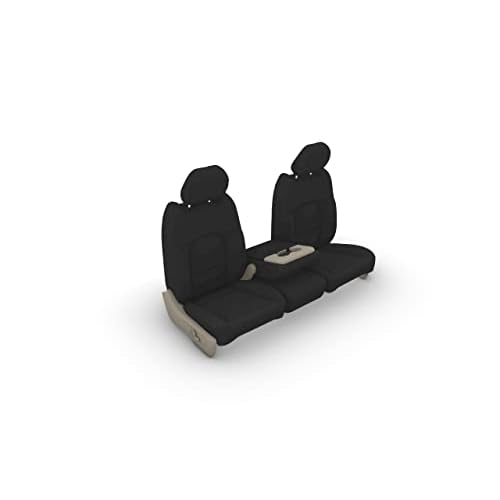


However, 2006 is most notable as the landmark year that introduced the Mega Cab configuration. Replacing the traditional crew cab concept, the Mega Cab was engineered to offer class-leading interior volume, boasting an unprecedented 121.6 cubic feet of total interior space. The cab was extended to allow the rear seats to recline, a feature previously unavailable in heavy-duty trucks.
To accommodate this massive cab without exceeding standard wheelbase limits, the Mega Cab was exclusively paired with a 6-foot 3-inch short bed. Buyers must weigh this interior luxury against the slight reduction in payload capacity caused by the added steel and glass mass of the larger cab. A full breakdown of trim specifications is cataloged by Edmunds.
People Also Ask
How much does it cost to replace fuel injectors on a 5.9L Cummins?
Replacing the high-pressure common-rail injectors on a 2006 5.9L Cummins is one of the most expensive routine repairs for the platform. The average cost ranges between $1,575 and $3,000 for a full set of six. Individual injectors cost between $180 and $500 depending on whether they are OEM remanufactured or aftermarket performance units. Labor generally accounts for $500 to $800 of the total bill. Neglecting this maintenance can lead to melted pistons or oil dilution, resulting in catastrophic engine failure.
Is a G56 manual swap better than rebuilding a 48RE transmission?
This decision depends entirely on the truck’s primary application. For dedicated heavy hauling and towing in mountainous regions, the G56 provides superior RPM control and eliminates torque converter heat issues, making it highly desirable.
However, manual swaps are labor-intensive, requiring donor parts like the pedal assembly, hydraulics, and custom driveshafts. Conversely, a fully built aftermarket 48RE (which can cost $5,000 to $8,000) will shift faster, hold higher horsepower, and is generally preferred for motorsports or daily driving in heavy traffic.
How do you permanently fix the Death Wobble on a 2006 Ram 2500?
Death Wobble cannot be cured by simply installing a new steering stabilizer. The geometric failure must be addressed at its root. This involves replacing worn track bar bushings with a high-quality aftermarket adjustable track bar, installing a steering box brace to prevent sector shaft deflection, replacing worn ball joints, and ensuring the vehicle’s alignment (specifically the caster angle) is perfectly to specification. Retrofitting the 2008+ T-style steering linkage is also a highly recommended permanent geometric solution.
What is the actual towing capacity of the 2006 Mega Cab 5.9 Cummins?
Because the Mega Cab is heavier than the Quad Cab, its payload capacities are slightly reduced. A 2006 Mega Cab 2WD has a maximum payload of approximately 2,650 lbs and a maximum bumper-pull towing capacity of 12,950 lbs.
However, real-world towing is limited by the Gross Vehicle Weight Rating (GVWR) of 8,510 to 9,000 lbs. When calculating pin weight (which is 20-25% of a fifth-wheel trailer’s gross weight), owners will often exceed the truck’s physical payload capacity long before reaching the 12,950-lb trailer weight limit.
What are the symptoms of a failing TIPM?
A failing Totally Integrated Power Module (TIPM) manifests through erratic, seemingly disconnected electrical anomalies. Symptoms include headlights or windshield wipers operating independently, the horn honking randomly, or the in-tank fuel pump running continuously even after the ignition key is removed. It may also result in a crank-no-start condition and trigger diagnostic trouble codes related to sensor reference voltage or lost communication.
![2019 Ram 2500 Tailgate: Expert Review [2026]](https://truckguider.com/wp-content/uploads/2026/03/2019-ram-2500-tailgate-featured.webp)
![2018 Ram 2500 6.7 Oil Capacity: Complete Specs Guide [2026]](https://truckguider.com/wp-content/uploads/2026/03/2018-ram-2500-6-7-oil-capacity-featured.webp)