2011 Dodge Pick Up Ptw Paint Code 2026 Factory Data

Quick Answer
Paint code PTW on a 2011 Dodge Ram pickup designates Rugged Brown Pearl (sales code JTW). This rich metallic finish appears across 1500, 2500, and 3500 series trucks. To confirm your truck features PTW, locate the safety compliance certification label on the driver-side door jamb or check the original factory build sheet against your VIN before ordering touch-up paint.
The 2011 dodge pick up ptw paint code designates Rugged Brown Pearlcoat (ordering code JTW), an exterior finish offered across the 2011 Ram 1500, 2500, and 3500 pickup truck lineup. This color features a multi-stage basecoat/clearcoat pearl system containing suspended bronze and gold mica flakes. The three-character paint identifier is stamped directly on the driver-side B-pillar safety certification label next to the “PNT:” prompt. The most critical caveat when matching this paint is cataloging divergence: because Chrysler split Ram into a standalone brand for the 2011 model year, parts databases index this exact formula under both Dodge and Ram, using sales code PTW and Mopar service part code JTW interchangeably.
This reference document covers Chrysler Group / FCA factory finish specifications for 2011 light-duty (1500) and heavy-duty (2500/3500) pickup trucks, including historical application data and replacement cross-references updated through 2026 factory databases. Refinishing requires direct confirmation against the vehicle door jamb safety certification tag or factory build sheet to account for factory option packages and two-tone lower body accents. Last reviewed: October 2026.
PTW
Primary Body Code
JTW
Ordering / Service Code
Pearlcoat
Basecoat / Clearcoat
Rugged Brown
Deep Bronze Pearl
How to read this chart: The main reference table below catalogs Chrysler factory paint identifiers associated with code PTW alongside secondary accent colors commonly paired with it on 2011 model year trucks. Cross-reference your truck’s physical door jamb placard against the “Location” and “Code” columns to confirm whether your pickup carries a monotone finish or a two-tone lower accent scheme.
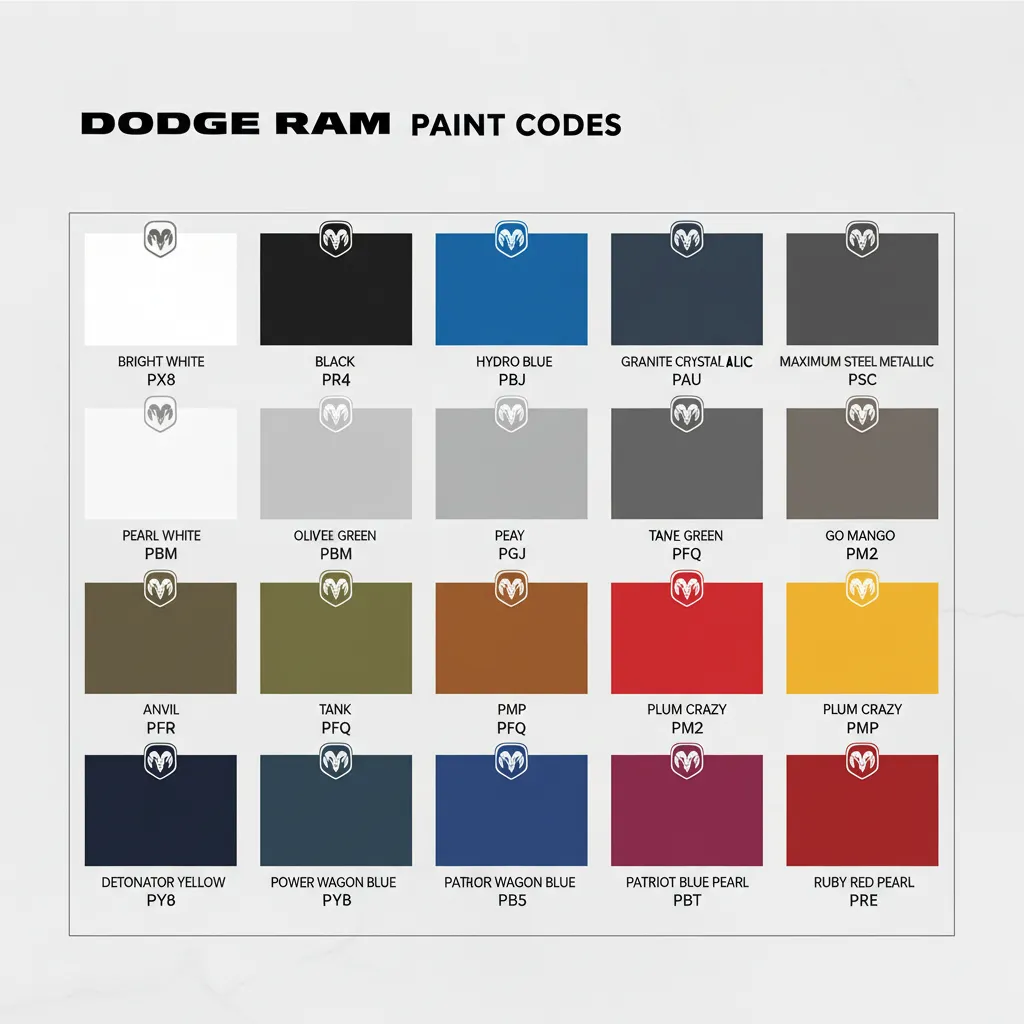
2011 Dodge Pick Up PTW Paint Code and Factory Specification Chart
Recommended Best Deal Products


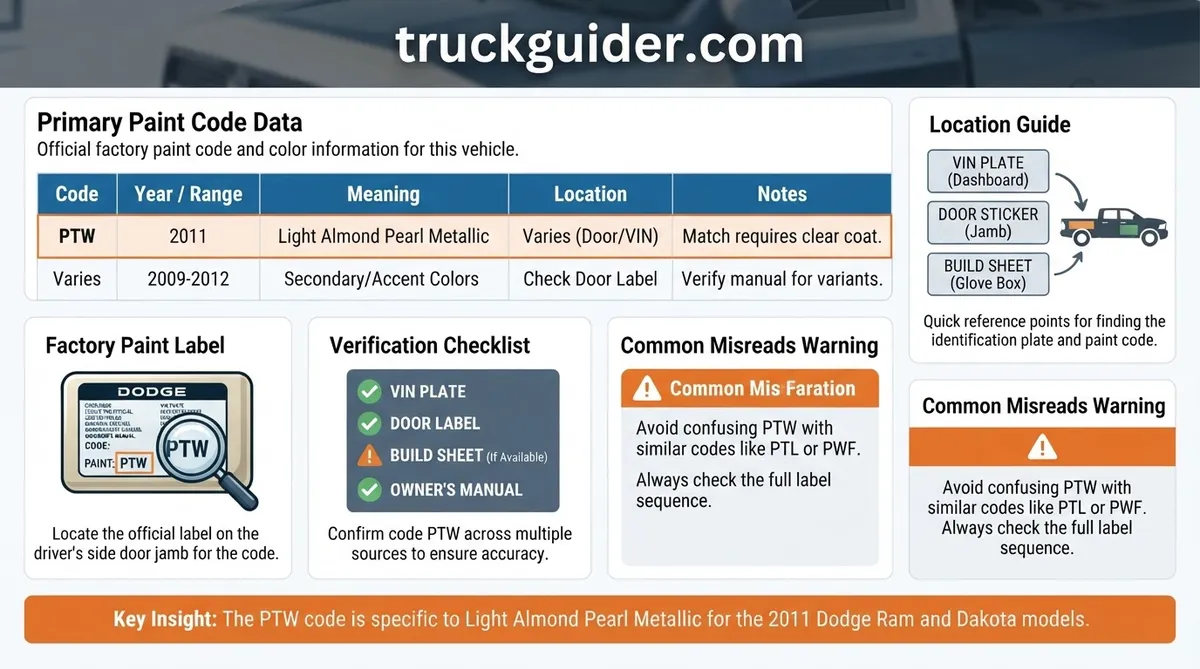
Mopar Paint Code PTW Quick Reference Table
Factory technical specifications dictate precise color definitions, OEM cross-references, and clearcoat requirements. The following master chart outlines the paint coding architecture used by Chrysler Group LLC for the 2011 model year production run.
📤 Share Image
| Code | Year / Range | Meaning | Location | Notes |
|---|---|---|---|---|
| PTW | 2010–2012 | Rugged Brown Pearlcoat | Driver Door Latch Post | Primary body sales code. Two-stage pearl basecoat/clearcoat finish. |
| JTW | 2010–2012 | Rugged Brown Pearl (Service) | Mopar Parts Catalog | Official Mopar touch-up paint part number prefix; identical toner formula to PTW. |
| PUV / JUV | 2013–2018 | Luxury Brown Pearlcoat | Driver Door Latch Post | Successor generation brown. Contains distinct reddish-copper pearl toners; does not match PTW. |
| PQL / JQL | 2010–2012 | White Gold Metallic | Driver Door Latch Post | Common factory option secondary lower-accent tone on Laramie Longhorn two-tone trucks. |
| PDM / JDM | 2009–2013 | Mineral Gray Metallic | Driver Door Latch Post | Alternative secondary lower-rocker accent color on select SLT and Laramie configurations. |
*Footnote: Chrysler Group LLC paint codes beginning with “P” designate factory sales/ordering codes. Touch-up items, service aerosol cans, and warranty paint formulas cross-index under the prefix letter “J”.
Factory Application Scope Across 1500, 2500, and 3500 Trims
In the 2011 model year, Chrysler deployed PTW Rugged Brown Pearlcoat across the entire light-duty and heavy-duty truck portfolio. It was not restricted to a single chassis or powertrain, making it available whether the truck was fitted with the 3.7L V6, 4.7L V8, 5.7L HEMI V8, or the 6.7L Cummins Turbo Diesel. However, paint availability varied strictly by trim level:
- ST / Tradesman: Typically excluded from ordering PTW; commercial-grade trims favored solid monotone fleet colors (such as Bright White PW7 or Flame Red PR4).
- SLT / Outdoorsman: Available in both monotone Rugged Brown and select two-tone configurations, often paired with Mineral Gray Metallic (PDM) lower rocker panel cladding.
- Laramie: Fully available as a premium monotone pearlcoat option, featuring body-colored or chrome mirrors and bumpers.
- Laramie Longhorn Edition: Introduced for 2011 as Ram’s ultra-premium western luxury truck, Rugged Brown Pearlcoat served as a signature exterior color. It was heavily ordered in the exclusive two-tone configuration paired with White Gold Metallic (PQL) lower accents and matching wheel flare moldings.
If your 2011 pickup features factory two-tone paint (common on Outdoorsman and Laramie Longhorn packages), the driver door jamb certification tag will display two separate paint codes. The primary upper body code is listed as PNT: PTW, while the secondary lower body accent is listed directly adjacent or beneath as PQL (White Gold) or PDM (Mineral Gray). Refinishing the entire truck requires ordering both distinct formulas.
Where to Locate the 2011 Dodge Pick Up PTW Paint Code on Your Truck
Reading the Driver Door Jamb Certification Label
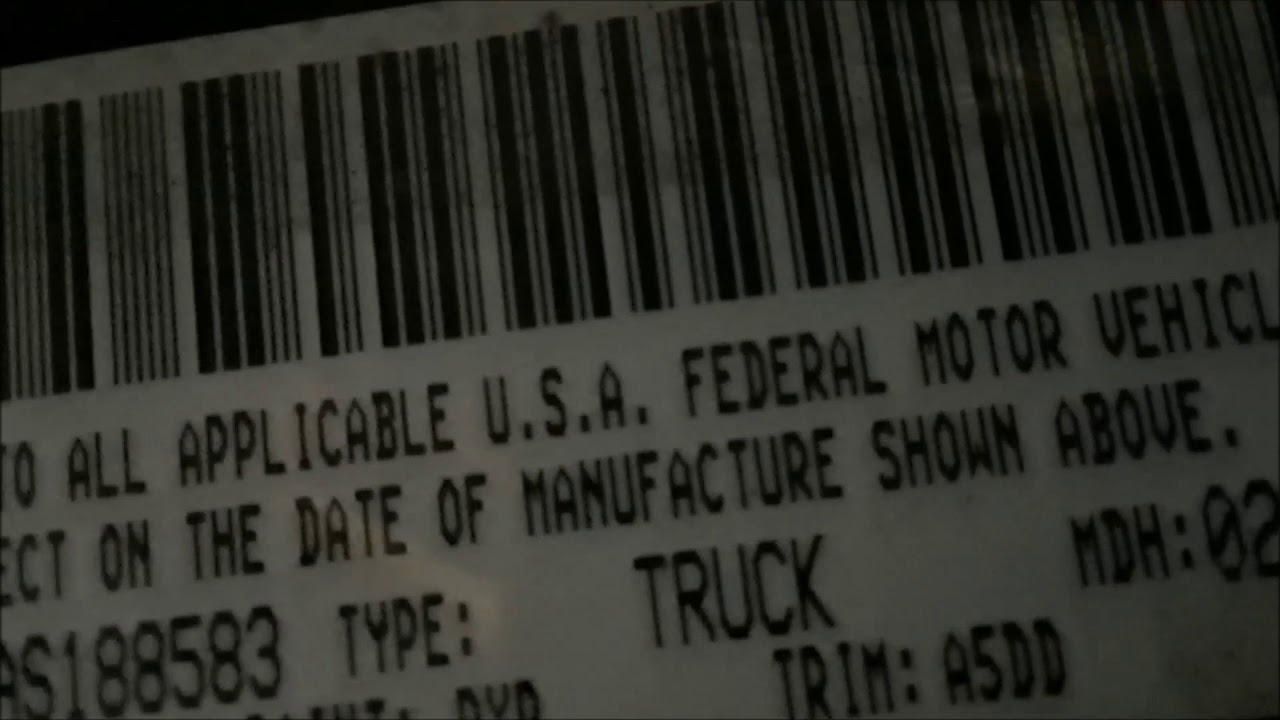
The single authoritative physical location for paint verification on a 2011 Chrysler truck is the Safety Compliance Certification Label. Located on the driver-side B-pillar door latch post, this durable vinyl decal contains vehicle weight ratings, tire inflation specs, date of manufacture, and factory coding.
🔍
Driver Door Latch Post Placard Layout
Locate the bottom-left quadrant of the sticker. The sequence following “PNT:” defines the 3-character primary exterior paint code.
To locate this tag, open the front driver-side door and look at the pillar below the door striker bolt. The three-letter cluster following the prompt PNT: identifies your base body color. In certain assembly plants (such as Warren Truck Assembly or Saltillo Truck Assembly), the tag may list the service code JTW or display both primary and secondary codes if ordered with two-tone accents.
Alternative Verification: VIN Placard and Build Sheet Lookup
If your door latch pillar sticker has deteriorated, peeled off, or been obscured by collision repair, do not guess the color based on visual inspection. Use these factory-backed alternative verification methods:
Provide your 17-digit VIN to any Ram/Chrysler parts counter. Their dealership catalog reads factory build records directly, pulling the exact sales code.
Request a Chrysler Equipment Listing (build sheet). Look under “Optional Equipment” for code PTW – Rugged Brown Pearl Coat.
Reference Section 23 (Body & Exterior) of the factory service manual. Cross-reference trim codes to match interior/exterior combinations.
Check the metal radiator support core or shock tower for supplementary factory build plates on select production runs.
Commonly Confused Characters on Worn Factory Decals
Door jamb decals on 2011 trucks have endured over a decade of environmental exposure. Road grime, sun fading, and solvent cleaners frequently degrade the dot-matrix thermal ink used by Chrysler assembly plants. Watch out for these common visual misinterpretations:
A degraded ‘P’ on the door sticker can easily be misread as an ‘F’ or ‘R’, leading owners to search for invalid codes like “FTW” or “RTW”. Similarly, dot-matrix ‘W’ can be mistaken for ‘VV’ or ‘M’ under scratched lamination. Furthermore, under low incandescent garage lighting, PTW can easily be mistaken for solid black (PX8) or Deep Cherry Red (PRP). Always inspect the label under direct, clean LED light and wipe it down with isopropyl alcohol to verify the characters before mixing paint.
Rugged Brown Pearlcoat Chemistry: Basecoat, Mica Flakes, and Clearcoat
Recommended Best Deal Products


Basecoat Pigment and Pearlescent Mica Flake Suspension
The 2011 dodge pick up ptw paint code does not represent a standard metallic or solid enamel finish. PTW is chemically engineered as a pearlcoat (pearlescent basecoat system). Understanding its physical composition is essential for achieving an invisible blend during panel repairs:
Pigment Matrix Architecture
The foundation of PTW is an opaque, deeply saturated carbon-black and organic-brown toner base. This provides full optical coverage over modern gray primer within two medium-wet spray passes.
Synthetic Mica Particulates
Unlike traditional aluminum-flake metallics that reflect flat, mirror-like light, PTW utilizes synthetic ceramic mica crystals coated in titanium dioxide and iron oxide. These translucent crystals refract incoming light waves, splitting them into golden-amber and bronze chromatic highlights.
Why Clearcoat Is Mandatory for Pearlcoat Depth and Protection
When sprayed out onto a test panel, unsealed PTW basecoat appears completely flat, chalky, and dark charcoal-brown. It possesses zero reflective gloss and no perceptible metallic sparkle. The pearlescent effect relies entirely on refraction, which occurs only after applying a high-solid automotive clearcoat.
The clearcoat serves two technical roles in the Chrysler factory finish:
- Optical Medium: Light enters the clear polyurethane barrier, passes through the suspended mica flakes, bounces off the brown basecoat, and refracts back out to the viewer. This creates the visual impression of infinite color depth that cannot be replicated by single-stage paints.
- UV & Environmental Shield: Pearl toners contain delicate organic pigments that degrade when exposed to solar ultraviolet radiation. A 2K urethane clearcoat containing hindered amine light stabilizers (HALS) is essential to prevent the brown pigment from oxidizing into a faded grayish-purple hue.
Color Variance in Direct Sunlight Versus Low Light
Rugged Brown Pearlcoat is widely recognized by automotive body technicians for its dramatic “flop” (chromatic shift under varying lighting angles). Understanding this color behavior prevents false mismatch claims:
Observed undertone balance based on incident light intensity and angle of refraction:
85% Warm Pearl
60% Mid-Brown
90% Solid Dark
Under intense solar exposure, the synthetic mica flashes brilliant copper, amber, and gold highlights. However, at dusk, on overcast days, or under fluorescent shop lamps, the lack of direct light refraction causes the pigment matrix to collapse visually into an ultra-dark, near-black silhouette. Professional paint shops always verify spray-out test cards in direct natural sunlight rather than under indoor shop lights.
Why Your 2011 Dodge Pick Up PTW Paint Code Cross-References to JTW
The Chrysler P-Code vs. J-Code Numbering System
A frequent source of frustration for truck owners purchasing touch-up pens or ordering refinishing paint is discovering that their PTW code is indexed under JTW. This is not an error, nor does it indicate an updated or revised formula. It is simply a byproduct of Chrysler Group LLC’s internal inventory alphanumeric schema.
Within Chrysler / FCA engineering systems:
- The P-Prefix (e.g., PTW) designates the Sales and Production Code. This is the alphanumeric identifier assigned by product planners and stamped on factory line sheets, Monroney window stickers, and body assembly tags.
- The J-Prefix (e.g., JTW) designates the Service and Aftermarket Part Code. Mopar catalogs, warranty touch-up lacquer bottles, half-ounce paint pens, and 5-ounce spray cans use this designation to track parts inventory across North American dealership networks.
If you purchase an official OEM Mopar touch-up bottle from a dealership or certified retailer, the outer package will display part number 68060877AB (or subsequent revision letter). Directly above the barcode, the label reads: JTW / PTW – Rugged Brown Pearl. If either code appears, you are holding the exact factory color formulation.
Navigating the 2011 Dodge to Ram Brand Catalog Split
The 2011 model year was historic for Chrysler: it was the formal operational transition year where the truck division was spun off from “Dodge” into the standalone “Ram Trucks” brand. This corporate restructuring caused significant fragmentation across third-party paint mixing databases (such as PPG paint managers, Axalta ColorNet, and Sherwin-Williams Automotive systems):
- Some retail counters file the 2011 truck under Dodge Trucks: 1500 / 2500 / 3500.
- Other computerized databases list it strictly under Ram: Truck.
- If a paint supplier’s software reports that “2011 Dodge” has no paint code PTW, immediately request that they clear the search and look under 2011 Ram or perform a universal search by Chrysler Paint Code PTW / JTW (or Chrysler internal formula ID AY112JTW).
Best Practices for Applying Mopar Touch-Up Paint
Pearlcoat touch-up repairs fail more often than standard solid finishes due to improper flake suspension and poor layering technique. Follow these professional body shop practices to ensure a seamless repair on rock chips and door scratches:
Because mica flakes are heavier than toner solvent, they quickly settle into a dense paste at the bottom of touch-up containers. Shake the touch-up bottle or aerosol can continuously for a minimum of three full minutes. Failing to agitate will result in an uneven, watery black dot that completely lacks pearl sparkle.
Never attempt to fill a stone chip level in one pass. Apply two to three paper-thin coats using a micro-applicator or fine brush, waiting 15 minutes between applications. This allows the carrier solvent to flash off so the mica flakes sit flat, replicating factory spray orientation.
After allowing the final basecoat layer to cure for 30 minutes, seal the repair with high-gloss clearcoat. The clear layer brings out the refractive depth of the mica and levels the repair flush with the surrounding factory clearcoat.
Comparing PTW Rugged Brown to Other Model Year Factory Pearl Options
Recommended Best Deal Products


PTW Rugged Brown vs. PX8 Black Clearcoat
A common mistake when buying used replacement panels (like tailgates, fender flares, or doors) is confusing PTW Rugged Brown with PX8 (Pitch Black / Black Clearcoat). Because PTW looks black in overcast conditions or dim garages, panels are often sold under the wrong color description.
However, PX8 is a solid, non-metallic black with zero mica flakes or bronze toners. Installing a PX8 replacement panel on a PTW truck will result in a glaring mismatch the second the vehicle drives into direct sunlight.
PTW Rugged Brown vs. PDM Mineral Gray Accent
On two-tone 2011 Ram models (specifically Outdoorsman and select SLT packages), PTW is often paired with lower rocker panels painted in PDM (Mineral Gray Metallic). Unlike the warm earth-toned bronze of PTW, PDM is a cold, graphite-tinted metallic gray containing traditional aluminum flakes. Knowing the difference is crucial when ordering paint to fix stone chips along the lower rocker sills.
PTW vs. Later PUV Luxury Brown Pearlcoat
Following the 2012 model year, Chrysler phased out PTW in favor of PUV (Luxury Brown Pearlcoat). While both belong to the brown color family, their chemical formulas are completely different:
- PTW (Rugged Brown): Features a darker, deep-earth charcoal-brown base with predominantly yellow-gold and bronze mica particulates.
- PUV (Luxury Brown): Incorporates a much redder copper-brown toner base, exhibiting warmer, amber-red highlights in the sun. Spraying PUV on a 2011 PTW truck results in a noticeable patch with an obvious reddish-pink cast.
Frequently Asked Questions About Dodge and Ram Paint Code PTW
What is the official paint name for Chrysler code PTW?
The official factory name for code PTW across 2011 Dodge and Ram pickup trucks is Rugged Brown Pearlcoat. In certain commercial dealer ordering packets, it may occasionally be shortened to “Rugged Brown Pearl.”
Can I use a single-stage paint pen to touch up PTW rock chips?
Single-stage all-in-one paint pens should be avoided. Because PTW is a pearlcoat finish, its color depth and mica sparkle rely directly on light refracting through a dedicated clearcoat layer. Single-stage mixes trap the mica flakes in an opaque binder, curing into a flat, chalky brown spot that noticeably clashes with the surrounding factory panel.
Why does my 2011 truck’s door jamb sticker show both PTW and PQL?
If your door certification tag lists both PTW and PQL, your pickup was built with a factory two-tone paint package (common on Laramie and Laramie Longhorn models). PTW is your upper primary body color, while PQL (White Gold Metallic) is the secondary accent color sprayed along the lower rocker sills and wheel flares.
Is paint code JTW identical to PTW?
Yes. In Chrysler / Mopar parts cataloging, JTW and PTW refer to the exact same paint formulation. PTW serves as the factory body assembly sales code, while JTW is the Mopar service part code used to inventory touch-up paints, pens, and spray cans.
Final Verification Rules for 2011 Dodge Pick Up PTW Paint
Code PTW designates authentic Rugged Brown Pearlcoat on 2011 Ram trucks, cross-referencing directly to Mopar service code JTW in repair catalogs. Because 2011 marked the brand transition from Dodge to Ram, suppliers may index this color under either manufacturer nameplate. Never attempt to confirm this dark metallic color by eye under poor lighting, as its base pigments can easily be mistaken for solid black (PX8) or later-generation reddish Luxury Brown (PUV).
Always verify the three-character code on your driver-side B-pillar safety certification label, noting any secondary lower accent codes. When repairing scratches or repainting panels, be sure to use a dedicated two-stage basecoat/clearcoat system with thoroughly agitated mica flakes. This guarantees your repair will accurately capture the factory depth, gloss, and solar shift engineered into the truck from the factory.
![2019 Ram 2500 Bolt Pattern: Specs & Fitment Guide [2026]](https://truckguider.com/wp-content/uploads/2026/03/2019-ram-2500-bolt-pattern-featured.webp)