2014 Ram 3500 Transmission Guide: Full Specs & Data [2026]

The 2014 Ram 3500 features two primary automatic transmissions: the 68RFE for standard output engines and the heavy-duty Aisin AS69RC for High Output Cummins models. Owners must distinguish between them for correct fluid specifications and maintenance, as using the wrong fluid in the Aisin can lead to catastrophic internal failure.
🎯 Key Takeaways
Recommended Best Deal Products


- Identify Aisin vs 68RFE via the oil pan shape or VIN code.
- Aisin AS69RC requires AS-68 or Mobil 3309 fluid, NOT ATF+4.
- 68RFE is prone to solenoid pack and valve body issues.
- The Aisin transmission is exclusively paired with the High Output Cummins engine.
- Service heavy-duty transmissions every 30,000 miles for maximum longevity.
If you are shopping for or currently maintain a 2014 Ram 3500, your driving experience depends entirely on which transmission is bolted to your engine. This heavy-duty truck features two distinct automatic options: the Chrysler-designed 68RFE and the medium-duty Aisin AS69RC. These units are not interchangeable, and they have completely different maintenance schedules, fluid requirements, and torque capacities.

Prime for Young Adults — 6 Months Free
Students and 18–24s get six months of Prime free, then half price.
Start 6 Months Free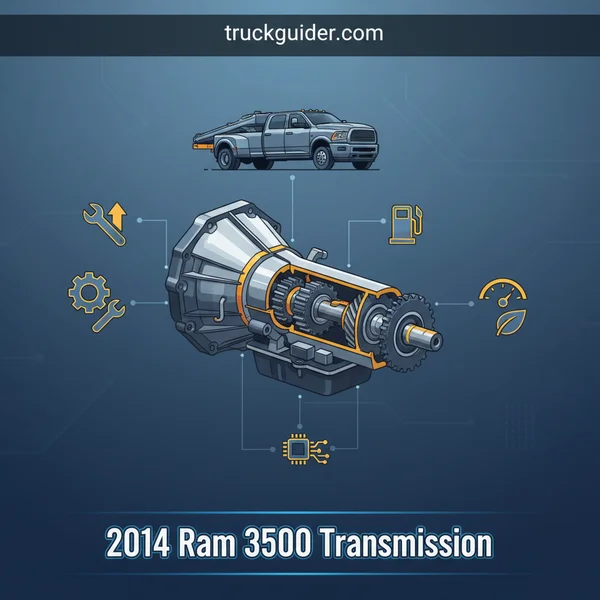
Choosing the wrong parts or neglecting the specific quirks of your unit can lead to expensive repair bills. This guide clarifies the technical differences between these two gearboxes and provides the diagnostic tools you need to identify your specific setup. Whether you are towing a horse trailer or hauling heavy equipment, understanding your transmission is the key to vehicle longevity.
68RFE vs. Aisin AS69RC: Identification and Key Differences
The 68RFE is the standard automatic transmission paired with the 6.7L Cummins Turbo Diesel. In 2014, this setup produced 370 horsepower and 800 lb-ft of torque. In contrast, the Aisin AS69RC was exclusively paired with the High Output (HO) Cummins engine, boosting torque to 850 lb-ft. While both are six-speed automatics, the Aisin is a commercial-grade unit designed for much higher gross combined weight ratings (GCWR).
How to Identify Your Transmission Instantly
You do not need to be a mechanic to identify which unit is in your truck. The fastest way is to check the transmission dipstick location under the hood. If the dipstick handle is on the driver side of the engine bay, you have the 68RFE. If the dipstick is located on the passenger side, you have the Aisin AS69RC. You can also verify this via your VIN or the physical shape of the transmission oil pan:
- The VIN Check: Look at the 8th digit of your VIN. An “8” indicates the High Output Cummins, which always comes with the Aisin. An “L” typically indicates the standard Cummins paired with the 68RFE.
- The Oil Pan Shape: The 68RFE pan is relatively flat and has a distinct “notch” or cutout on one side with 15 bolts. The Aisin pan is a deep, large rectangle with 20 bolts and a much more industrial appearance.
- RPO Codes: Check the equipment listing sticker in your glovebox. Look for code DG7 for the 68RFE or code DF2 for the Aisin AS69RC.
Technical Specifications and Gearing
The Aisin AS69RC features a significantly lower first gear ratio (3.75:1) compared to the 68RFE (3.23:1). This allows the Aisin-equipped trucks to move heavy loads from a dead stop with much less strain. The Aisin also uses a power take-off (PTO) capability, which is essential for vocational use like tow trucks or dump beds—a feature the 68RFE lacks entirely.
Master Your 2014 Ram 3500 Transmission Service in 8 Simple Steps
Recommended Best Deal Products


The 2014 Ram 3500 is a heavy-duty workhorse, often equipped with either the 68RFE automatic transmission or the commercial-grade Aisin AS69RC. Because these trucks are frequently used for heavy towing and hauling, the transmission fluid undergoes significant thermal stress. Regular maintenance is the single most important factor in preventing premature failure and ensuring smooth shifts. This guide covers the essential process of performing a fluid and filter service, which helps remove accumulated friction material and metallic debris that can clog internal valves. By following these steps, you can save hundreds of dollars in labor costs while ensuring your drivetrain remains reliable for the long haul.
Step 1: Identify Your Transmission and Gather Parts
What you need: Vehicle VIN, owner’s manual, 12-15 quarts of ATF+4 (for 68RFE) or Aisin-specific fluid (Mobil 3309/Mopar AS68RC fluid), a primary sump filter, and a spin-on return filter (if 68RFE).
Instructions: Before turning a single wrench, you must identify which transmission your Ram 3500 uses. Check the build sheet or look at the transmission pan. The 68RFE is common on the 5.7L/6.4L gas and standard-output Cummins engines, while the Aisin AS69RC is found behind the High-Output Cummins. Once identified, purchase a high-quality filter kit. For the 68RFE, you will need the flat sump filter and the screw-on canister filter located inside the pan. For the Aisin, you typically only have a single large sump filter. Ensure you have a new gasket or a tube of high-quality RTV silicone sealant, as many 2014 models used RTV from the factory.
Pro Tip: Always use the specific fluid recommended by the manufacturer. Using generic “multi-vehicle” ATF in an Aisin transmission can lead to harsh shifting and internal clutch damage over time.
Step 2: Prepare the Workspace and Lift the Vehicle
What you need: Heavy-duty jack stands, a floor jack, wheel chocks, and safety glasses.

Audible — Listen Free for 30 Days
One free credit a month and thousands of titles included.
Listen Free for 30 DaysInstructions: Park the truck on a level concrete surface and engage the parking brake. Place wheel chocks behind the rear tires. Use the floor jack to lift the front of the truck by the frame rails and secure it on high-capacity jack stands. Ensure there is enough clearance for you to slide comfortably underneath with a large drain pan. It is helpful to drive the truck for 5-10 minutes beforehand to warm the transmission fluid, as warm fluid flows more easily and carries more contaminants out with it. However, be cautious as the exhaust components near the transmission will be extremely hot.
Pro Tip: If you have a 4WD model, the front driveshaft may be in the way. You don’t necessarily need to remove it, but being aware of its position will help you navigate the socket extensions needed for the pan bolts.
Step 3: Drain the Old Transmission Fluid
What you need: Large catch pan (at least 15-quart capacity), 8mm or 10mm socket, extension, and a flat-head screwdriver.
Instructions: Position your catch pan directly under the transmission. Most 2014 Ram 3500 transmissions do not have a drain plug, meaning you must lower the pan itself to drain the fluid. Start by loosening all the pan bolts about halfway. Then, remove all the bolts on one corner and the two adjacent sides. Use a flat-head screwdriver to gently pry that corner of the pan down. The fluid will begin to pour out from that corner. Slow and steady is key here to avoid a “tidal wave” of red fluid hitting your floor. Once the flow slows down, support the pan with one hand while removing the remaining bolts, then carefully lower the pan to the ground.
Pro Tip: If your pan is stuck due to factory RTV, do not shove a screwdriver deep into the mating surface, as you can score the aluminum transmission case, leading to permanent leaks. Use a plastic scraper or a dedicated gasket separator tool.
Step 4: Remove and Replace Internal Filters
What you need: T25 Torx bit (for 68RFE sump filter), oil filter wrench (for 68RFE spin-on filter), and a lint-free cloth.
Instructions: With the pan removed, you will see the sump filter. On the 68RFE, remove the screw holding the flat filter in place and pull it straight down; be prepared for another half-quart of fluid to drop. Next, unscrew the white spin-on return filter located near the front of the valve body. Ensure the old O-ring from the sump filter came out with the filter; if it’s stuck in the pump inlet, use a pick to gently remove it. Install the new spin-on filter (hand-tighten only) and then the new sump filter, ensuring the neck is seated firmly into the seal. For Aisin units, remove the bolts securing the metal screen filter and replace it with the new unit.
Pro Tip: On the 68RFE spin-on filter, check the threaded “bung” that the filter screws onto. There is a plastic update kit available if yours appears loose or cracked, which prevents the filter from falling off internally.
Audible Premium Plus — Annual Membership
12 audiobook credits up front, plus the full Audible catalogue.
See Annual PlansStep 5: Clean the Pan and Magnet
What you need: Brake cleaner, lint-free rags, and a gasket scraper.
Instructions: The bottom of your transmission pan will likely have a coating of grey “sludge.” This is normal friction material wear. Locate the magnet (usually a small square or ring) and remove it. Thoroughly clean the magnet and the entire interior of the pan with brake cleaner until it is spotless. Use a scraper to remove every trace of old gasket material or RTV from the pan’s mating flange. Do the same for the transmission case surface on the truck. A clean, dry surface is the only way to ensure the new gasket or RTV creates a leak-free seal.
Pro Tip: Inspect the “sludge” on the magnet. Fine grey paste is normal, but if you find large silver chunks or brass-colored flakes, this indicates a mechanical failure of a bearing or bushing is imminent.
Step 6: Reinstall the Transmission Pan
What you need: New gasket or RTV silicone, torque wrench (inch-pounds), and the pan bolts.
Instructions: If using a gasket, lay it onto the clean pan flange. If using RTV, apply a continuous 1/8-inch bead around the flange, circling each bolt hole. Lift the pan into position and start several bolts by hand to hold it in place. Install the remaining bolts finger-tight. Using a torque wrench, tighten the bolts in a “star” or “crisscross” pattern to ensure even pressure. For the 68RFE, the torque spec is typically 105 inch-pounds (not foot-pounds!). Over-tightening will crush the gasket or strip the aluminum threads in the case, while under-tightening will lead to leaks.
Pro Tip: If you used RTV silicone, let it “skin over” for about 15-20 minutes before bolting the pan up, and wait at least an hour before adding fluid to allow it to cure properly.
Step 7: Refill with Fresh Fluid
What you need: Long-neck funnel and fresh transmission fluid (ATF+4 or Aisin-equivalent).
Instructions: Locate the transmission dipstick tube in the engine bay (typically on the passenger side near the firewall). Insert your funnel and begin pouring in the new fluid. A standard filter-and-pan service usually requires between 7 and 9 quarts, depending on how long you let it drain. Start by adding 6 quarts. Start the engine and let it idle in Park for a few minutes. With your foot on the brake, cycle the shifter through every gear (R, N, D, 1, 2) holding each for 5 seconds to fill the internal passages and the new filters. Return to Park and check the level on the dipstick.
Pro Tip: Do not overfill! It is much easier to add half a quart later than it is to drain excess fluid. Overfilling can cause the fluid to foam, leading to overheating and erratic shifting.
Step 8: Final Level Check and Leak Inspection
What you need: Flashlight and the vehicle’s dipstick.
Instructions: Drive the truck until it reaches normal operating temperature (transmission temp around 160-175°F). Park on level ground, leave the engine idling, and check the dipstick again. The fluid level should be squarely in the “HOT” hatch marks. Use your flashlight to inspect the perimeter of the transmission pan for any signs of weeping or leaks. If the level is low, add small increments of fluid (half-pint at a time) until it reaches the correct mark. Finally, take the truck for a test drive to ensure shifts are crisp and there are no hesitations.
Pro Tip: Use the Electronic Vehicle Information Center (EVIC) on your dashboard to monitor the live transmission temperature during your test drive to ensure everything is operating within the normal range.
✅ Final Checklist
- Verify that the pan bolts are torqued to the correct inch-pound specification in a cross pattern.
- Confirm that both the internal sump filter and (if applicable) the spin-on filter were installed securely.
- Ensure the fluid level is checked while the engine is running and the transmission is at operating temperature.
- Inspect the area around the dipstick tube and pan flange for any active leaks after the test drive.
- Reset your maintenance sub-menu in the truck’s dashboard if you keep a digital log of services.
Important Notes:
- Safety: Transmission fluid is highly flammable and can cause skin irritation; always wear gloves and eye protection.
- Seek Professional Help: If you find heavy metal debris in the pan or if the truck was already “slipping” gears, a simple fluid change will likely not fix the underlying mechanical damage.
- Estimated Time: 1.5 to 3 hours.
- Cost Range: $120 – $250 for DIY (fluids and filters) vs. $400 – $600 at a dealership.
Reliability Ratings and Common Mechanical Failure Points
Reliability between these two units is a tale of two different design philosophies. The 68RFE is essentially an evolution of a light-duty architecture, making it smooth-shifting but prone to “soft” failures under heavy stress. The Aisin AS69RC is built like a medium-duty semi-truck transmission; it shifts firmly and is physically much larger, but it is significantly more expensive to repair if a component fails.
Common 68RFE Failure Points
The 2014 68RFE is notorious for several specific mechanical weaknesses that often surface between 100,000 and 150,000 miles. The most common issues include:
- Valve Body Cross-Leaks: The internal seals in the valve body can wear down, causing fluid to leak between hydraulic circuits. This leads to “shift flare” or slipping between gears.
- Overdrive Clutch Burnout: The 4th, 5th, and 6th gear clutches are relatively thin. If you frequently tow in overdrive without a custom tune, these clutches can overheat and weld together.
- Thermal Bypass Valve: The 2014 models use a bypass valve that directs fluid to the cooler. If this valve sticks shut, the transmission will overheat rapidly, even during empty highway driving.
Aisin AS69RC Reliability Concerns
While generally considered the “tougher” option, the 2014 Aisin AS69RC is not invincible. Owners should be aware of specific TSBs (Technical Service Bulletins) regarding harsh shifting. In early 2014 models, software calibration issues caused “clunking” during downshifts. Most of these were resolved with a TCM (Transmission Control Module) flash at the dealership. Mechanically, the Aisin’s main vulnerability is the K2 clutch seal, which can fail and cause a total loss of reverse or forward movement. However, this is far less common than the standard wear-and-tear issues seen in the 68RFE.
Overall, the Aisin receives a higher reliability rating for heavy towing, while the 68RFE is rated well for daily driving and light-to-moderate work, provided it is not abused with high-performance engine tuners.
Fluid Specifications and Critical Maintenance Requirements
Recommended Best Deal Products


The 2014 Ram 3500 is a powerhouse, but its longevity depends entirely on using the correct “blood” for the specific transmission under the floorboards. One of the most common mistakes owners make is assuming that because both transmissions sit behind a Cummins engine, they use the same fluid. This misconception can lead to catastrophic internal failure in a matter of miles.
Choosing the Correct Fluid: ATF+4 vs. Aisin Warner
The 68RFE and the Aisin AS69RC have vastly different friction requirements. Using the wrong specification can cause clutch slippage or harsh engagement. Always verify your transmission type before ordering supplies.
- 68RFE Transmission: This unit requires Mopar ATF+4. It is a highly specific synthetic blend designed to manage the heat and shearing forces of the 68RFE’s multi-clutch packs.
- Aisin AS69RC: This heavy-duty unit requires Mobil 3309 or Mopar Aisin Warner AS69RC fluid. It is NOT compatible with ATF+4. Using standard Chrysler fluid in an Aisin can lead to erratic shifting and premature wear of the specialized friction plates.
Managing Heat and Filtration
Heat is the primary enemy of the 2014 Ram 3500 transmission. While the Aisin features a more robust cooling circuit, the 68RFE often benefits from aftermarket cooling upgrades. Maintenance isn’t just about the fluid; it’s about the filters. The 68RFE uses a dual-filter system (a spin-on and a flat sump filter), whereas the Aisin typically relies on a high-capacity internal mesh or fabric filter. Keeping these clean ensures that line pressure remains consistent, which is vital for holding the clutches together under a heavy trailer load.
Troubleshooting Limp Mode and Transmission Gear Hunting
If your Ram suddenly feels like it’s lost 70% of its power or refuses to shift out of 4th gear, you’ve likely entered “Limp Mode.” This is a software-driven fail-safe designed to protect the transmission from further damage when the Transmission Control Module (TCM) detects a parameter out of spec, such as incorrect gear ratios or pressure drops.
Decoding Limp Mode and Pressure Issues
In the 68RFE, limp mode is frequently triggered by a failing solenoid block or a cracked plastic pressure transducer. These components are responsible for directing fluid to the correct clutch packs. When they fail, the TCM detects a “slip” and locks the transmission into a single gear to prevent you from burning up the clutches. Common trouble codes like P0871 or P0700 are often the first signs that the valve body or electronics need professional attention.
Addressing Gear Hunting and Shift Quality
“Gear hunting”—where the truck constantly shifts back and forth between 5th and 6th gear—is a common complaint for 2014 owners towing at highway speeds. This is often caused by the engine’s power band not quite aligning with the load, but it can also be a symptom of outdated TCM software.
- TCM Reflashing: Dealers often have software updates that recalibrate shift points to reduce hunting and improve torque converter lock-up feel.
- Overdrive Management: If you find the truck hunting on slight inclines, using the “Tow/Haul” mode or manually locking out 6th gear can prevent excessive heat buildup caused by constant shifting.
- Solenoid Health: Erratic shifting in the Aisin unit is less common but usually points to a contaminated solenoid or debris in the fluid channels.
Conclusion: Keeping Your 2014 Ram 3500 on the Road
Understanding the nuances between the 68RFE and the Aisin AS69RC is the first step toward a long-lasting truck. While the 68RFE offers smoother daily driving and easier serviceability, the Aisin is the undisputed king of heavy-duty towing. Regardless of which unit you have, success comes down to rigorous maintenance schedules and using the exact fluid specifications required by the manufacturer.
If you notice delayed shifts or see a “check engine” light, don’t wait for a total breakdown. Check your fluid levels and scan for codes immediately. Taking proactive steps today will ensure your Ram stays in the fast lane rather than sitting in the shop. Are you ready to give your transmission the attention it deserves? Start by checking your fluid color and smell this weekend!
💬 Quick Questions & Answers
Which fluid does the 2014 Ram 3500 68RFE use?
The 68RFE requires Mopar ATF+4 fluid for all service intervals.
How do I tell if I have an Aisin transmission?
The Aisin has a distinctive drain plug on the pan and is only found on High Output Cummins models.
What is the fluid capacity for an Aisin AS69RC?
A standard service fill usually requires 7-8 quarts, while total capacity is approximately 14 quarts.
Does the 2014 Ram 3500 have a manual transmission option?
Yes, the G56 6-speed manual was available for the 2014 model year Cummins diesel.
What is a common upgrade for the 68RFE?
Installing an aftermarket valve body or upgraded solenoid pack often improves shift quality and pressure handling.
❓ Frequently Asked Questions
What are the main differences between the 68RFE and Aisin AS69RC?
The 68RFE is a Chrysler-designed unit for standard torque loads, while the Aisin is a commercial-grade transmission built for the 850 lb-ft High Output Cummins. The Aisin features a higher towing capacity and more robust internal components but requires more frequent maintenance.
Why is my 2014 Ram 3500 transmission hunting for gears?
Gear hunting is often caused by a faulty transmission pressure sensor or a worn solenoid block in the 68RFE. In some cases, a TCM (Transmission Control Module) software update can resolve shift logic issues that cause frequent searching between 5th and 6th gears.
What fluid is required for the Aisin AS69RC?
Unlike most Ram transmissions, the Aisin AS69RC requires Mopar Aisin-Type fluid (or Mobil 3309); using standard ATF+4 can cause clutch slippage and internal damage. Always check the dipstick for the specific ‘AS’ designation before adding fluid.
What causes ‘Limp Mode’ in the 2014 Ram 3500?
Limp mode is a protective state triggered by internal slippage, overheating, or a faulty input/output speed sensor. Diagnostic trouble codes (P-codes) must be scanned to identify whether the issue is electronic or a mechanical pressure failure.
When should I change the transmission filters?
For heavy towing applications, it is recommended to change both the spin-on and sump filters every 30,000 miles. Regular intervals prevent metal debris from clogging the valve body, which is a frequent failure point for the 68RFE model.
Are there any recalls for the 2014 Ram 3500 transmission?
While there were no universal recalls for the gearsets themselves, several TSBs (Technical Service Bulletins) address software updates for harsh shifting and solenoid pack durability. Check your VIN via Mopar for specific updates related to shift quality.
![Aisin vs. 68RFE: Specs & Fitment Guide [2026]](https://truckguider.com/wp-content/uploads/2026/03/aisin-transmission-ram-3500-featured.webp)