2018 Ram 2500 Transmission Guide: Specs, Issues & Fixes

The 2018 Ram 2500 transmission options primarily consist of the 68RFE 6-speed automatic and the heavy-duty Aisin AS69RC, each requiring specific fluid types and maintenance schedules. While the Aisin is preferred for extreme towing, both units are susceptible to valve body wear and solenoid block failures if fluid temperatures are not monitored.
🎯 Key Takeaways
- Identify the 68RFE by its 15-bolt pan or the Aisin by its 20-bolt pan.
- Use only ATF+4 for 68RFE and Mopar ASRC fluid for Aisin units.
- Service fluid and filters every 30,000 miles when towing frequently.
- Watch for P0871 codes signaling pressure switch or valve body issues.
- Aftermarket valve bodies are a popular upgrade to fix 68RFE shift quality.
If you own a 2018 Ram 2500 with a 6.7L Cummins turbo diesel, you are likely operating with the 68RFE six-speed automatic transmission. While the heavy-duty Aisin AS69RC was a primary option for the 3500 series that year, many 2500 owners look to the Aisin for swaps or need to distinguish their unit for maintenance purposes. Knowing exactly which transmission is under your floorboards is the difference between a simple fluid change and a $5,000 internal failure caused by using the wrong specification.


The 68RFE is the standard workhorse for the 2500, but it is also the most scrutinized for its “soft” factory tuning and heat sensitivity. Identifying your specific unit allows you to address the notorious 2018 solenoid block issues and choose the correct aftermarket cooling solutions. This guide provides the technical data you need to identify, maintain, and protect your 2018 Ram 2500 transmission before minor slipping turns into a total rebuild.
Identifying Your 2018 Ram 2500 Transmission: 68RFE vs. Aisin AS69RC
For the 2018 model year, the vast majority of Ram 2500 trucks came equipped with the 68RFE. However, because these trucks are frequently modified or bought used from owners who may have swapped components, you must verify the hardware visually. The 68RFE was designed in-house by Chrysler specifically for the Cummins torque curve, while the Aisin is a commercial-grade unit designed for high-output applications.
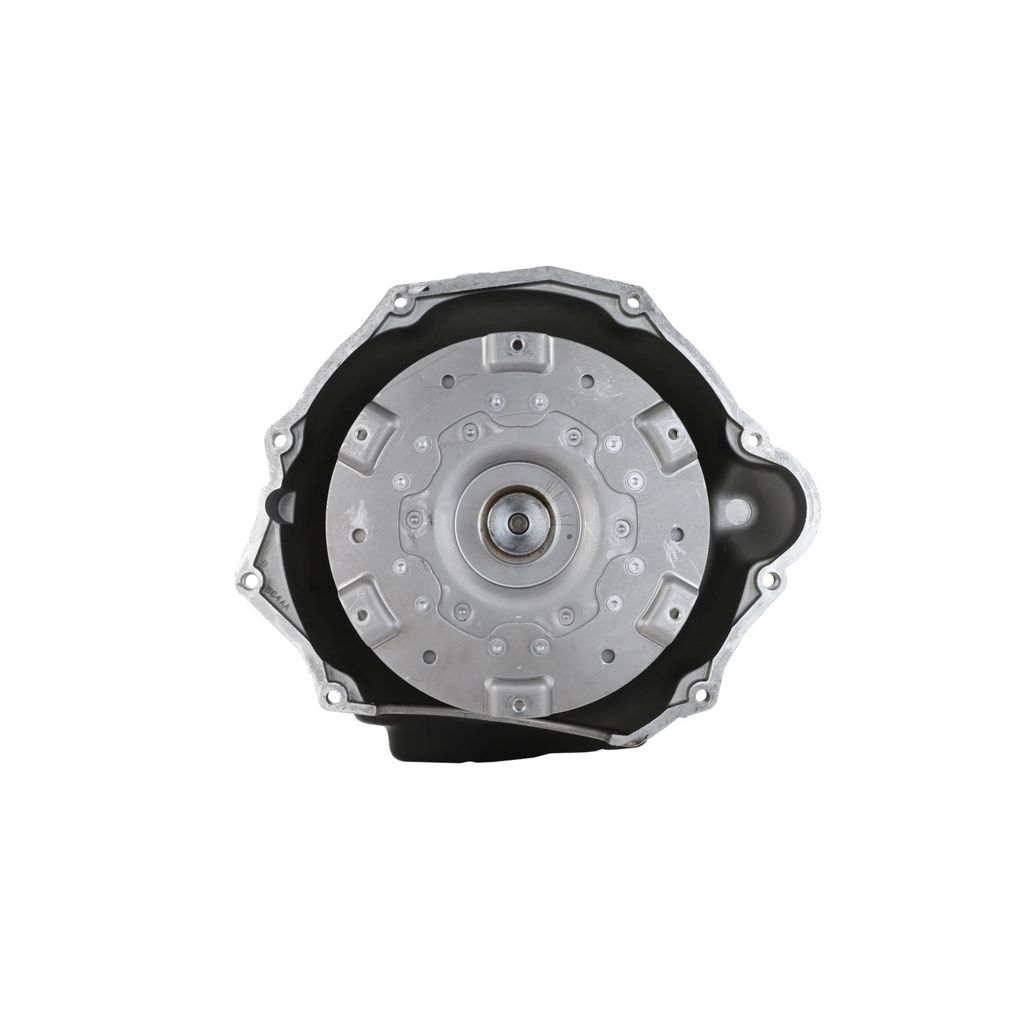
The “Under-Truck” Inspection
The fastest way to tell these two units apart is to look at the transmission oil pan. You do not need special tools for this—just a flashlight and a quick count of the pan bolts. This is more reliable than a VIN check if the truck has been modified.
- 68RFE Identification: The pan is a relatively flat, rectangular shape. It is secured by 15 bolts. If you see a spin-on style filter located near the main valve body (internally), it is a 68RFE.
- Aisin AS69RC Identification: The Aisin pan is much larger and deeper to accommodate higher fluid volumes. It is secured by 20 bolts. The overall casing of the Aisin has a more “ribbed” and industrial look compared to the smoother 68RFE.
Check the Dipstick Location
If you don’t want to get on the ground, open the hood and look at the engine bay layout. The location of the transmission dipstick is a dead giveaway for the factory configuration of a 2018 model. On a 68RFE-equipped truck, the transmission dipstick is located on the passenger side of the engine bay. If you are looking at an Aisin unit, the dipstick is relocated to the driver side. Additionally, the Aisin is usually paired with the “High Output” badge on the 3500, so if your 2500 is stock, the passenger-side dipstick confirms you have the 68RFE.
2018 Ram 2500 Transmission Maintenance Made Easy: Your Essential Action Plan
Maintaining the transmission in your 2018 Ram 2500 is one of the most critical tasks you can perform to ensure the longevity of your heavy-duty truck. Whether you are rocking the 68RFE six-speed automatic or the heavy-duty Aisin AS69RC, heat and fluid degradation are the primary enemies of these units. This guide provides a comprehensive walkthrough for performing a transmission fluid and filter service. Regular maintenance every 30,000 to 60,000 miles (depending on towing frequency) prevents slipping, overheating, and costly internal failures. By following these steps, you will ensure your Cummins or HEMI-powered rig continues to shift smoothly under load and remains reliable for years to come.
Step 1: Identify Your Transmission and Gather Supplies
What you need: Your VIN number, owner’s manual, 10-12 quarts of ATF+4 (for 68RFE) or Aisin-specific fluid (for AS69RC), a replacement filter kit (sump filter and spin-on filter for 68RFE), and basic hand tools.
Instructions: Before you turn a single wrench, you must identify which transmission your 2018 Ram 2500 is equipped with. Most diesel models feature the 68RFE, while High Output models use the Aisin AS69RC. The 68RFE requires Mopar ATF+4 fluid, whereas the Aisin requires a specific Mobil 3309 or Aisin-branded ASRC fluid. Using the wrong fluid can lead to immediate clutch pack failure. For the 68RFE, ensure your filter kit includes both the flat internal sump filter and the screw-on canister filter. If you have the Aisin, it typically only uses a single large internal filter. Verify your fluid capacity in your manual; a standard pan-drop service usually requires 7 to 9 quarts, but it is wise to have 12 on hand just in case.
Pro Tip: Check the transmission pan bolt count. A 68RFE pan has 15 bolts, while the Aisin pan is larger and typically has 20 bolts. This is the fastest way to verify your unit if the stickers are missing.
Step 2: Lift the Vehicle and Prepare for Drainage
What you need: A heavy-duty floor jack, high-capacity jack stands (at least 3-ton rating), a large drain pan (15+ quart capacity), and safety glasses.
Instructions: Park the truck on a level concrete surface and engage the parking brake. Lift the front end of the truck using the jack points on the frame and secure it firmly on jack stands. For a 2500, you need significant clearance to maneuver the large transmission pan. Wear safety glasses, as transmission fluid is an irritant and often splashes during pan removal. Place your drain pan directly under the transmission. Note that most stock Ram transmission pans do not feature a drain plug. You will be loosening the pan bolts to let the fluid seep out from one corner. Position your drain pan slightly toward the rear of the transmission pan to catch the initial flow as you tilt the pan down.
Pro Tip: If your fluid is hot, wait 30 minutes for it to cool down to a warm temperature. Warm fluid flows better than cold fluid, but “hot” fluid can cause severe skin burns upon contact.
Step 3: Loosen the Pan and Control the Mess
What you need: 8mm or 10mm socket (depending on the model), an extension, and a flathead screwdriver.
Instructions: Begin by loosening all the bolts around the perimeter of the transmission pan, but do not remove them yet. Once all are loose, remove the bolts from the rear and the sides, leaving the three or four bolts at the very front loosely threaded. This creates a hinge effect. Use a flathead screwdriver to gently pry the rear of the pan away from the transmission case if the RTV sealant is holding it tight. The fluid will begin to pour out over the rear edge into your catch pan. Control the flow by slowly backing out the remaining front bolts. Once the flow slows to a drip, support the pan with one hand while removing the final bolts. Carefully lower the pan, keeping it as level as possible, as it will still contain about a quart of fluid.
Pro Tip: Use a large piece of cardboard or a plastic drop cloth under your drain pan. Transmission fluid is very thin and tends to “creep” and splash, making a mess of your driveway or garage floor.
Step 4: Inspect the Pan and Magnet
What you need: Lint-free shop towels, brake cleaner, and a steady eye.


Instructions: With the pan removed, look at the bottom surface. You will find a round magnet designed to catch metallic wear particles. It is normal to see a fine, “mud-like” grey paste on the magnet; this is standard wear from the clutch packs. However, if you find large metal chunks, shiny silver flakes, or brass-colored shavings, this indicates internal component failure that a fluid change will not fix. Pour the remaining fluid out of the pan and use brake cleaner to thoroughly clean the interior of the pan and the magnet. Every trace of old fluid and sludge must be removed. Ensure the mating surface of the pan (where it touches the transmission) is perfectly clean and free of old gasket material or RTV.
Pro Tip: Take a photo of the magnet before cleaning it. If you experience shifting issues later, you can show the photo to a professional technician to help diagnose the level of wear.
Step 5: Replace the Filters (68RFE Specific)
What you need: T25 Torx bit, oil filter wrench, and the new filter set.
Instructions: For the 68RFE, you will see a large flat filter and a smaller screw-on canister filter. First, unscrew the canister filter using an oil filter wrench. It will leak a bit of fluid, so keep the drain pan underneath. Before installing the new canister filter, check that the old threaded seal didn’t get stuck on the transmission; if it did, remove it. Lightly film the gasket of the new filter with fresh ATF+4 and hand-tighten it. Next, remove the bolt holding the flat sump filter (using the T25 Torx) and pull the filter straight down. Ensure the orange O-ring comes out with the old filter. If it stays stuck in the transmission, use a pick to carefully remove it. Push the new sump filter into place until the O-ring seats firmly, then reinstall the Torx bolt.
Pro Tip: Over-tightening the screw-on filter can crack the plastic housing. Hand-tighten it plus about three-quarters of a turn—similar to how you would install an engine oil filter.
Step 6: Reseal and Reinstall the Pan
What you need: High-temp RTV silicone (like Permatex Ultra Black) or a high-quality reusable gasket (like LubeLocker), and a torque wrench.
Instructions: If you are using RTV, apply a consistent 1/8-inch bead around the clean mating surface of the pan, going around the inside of the bolt holes. Let the RTV “skin over” for about 10 minutes before installing. If you are using a LubeLocker gasket (highly recommended for future ease), simply place it on the pan. Lift the pan back into position and start several bolts by hand to hold it in place. Install the remaining bolts and tighten them in a crisscross pattern to ensure even pressure. Finally, use a torque wrench to tighten the bolts to approximately 105 inch-pounds (not foot-pounds!). Do not over-torque, as the transmission case is aluminum and the threads can strip easily.
Pro Tip: If using RTV, wait at least one hour before adding fluid to allow the sealant to set, and 24 hours before heavy use to ensure a perfect, leak-free seal.
Step 7: Refill the Transmission Fluid
What you need: Long-neck funnel and fresh transmission fluid.
Instructions: Locate the transmission dipstick under the hood (usually near the firewall on the passenger side). Insert a long-neck funnel into the dipstick tube. For a standard 68RFE pan drop, start by adding 7 quarts of fresh ATF+4. Do not add the full 12 quarts immediately, as much of the fluid remains trapped in the torque converter and cooler lines. Once you have added 7 quarts, start the engine and let it idle in “Park” for a few minutes. While holding the brake, cycle the shifter through every gear (P-R-N-D) slowly, pausing for 5 seconds in each gear to allow the fluid to circulate through the new filters and valve body. Return the shifter to “Park.”
Pro Tip: Always use a funnel with a fine mesh screen if possible to ensure no debris or plastic foil from the oil bottle caps enters the sensitive transmission system.
Step 8: Final Level Check and Leak Inspection
What you need: The transmission dipstick and a clean rag.
Instructions: With the engine still idling in Park on level ground, pull the transmission dipstick, wipe it clean, reinsert it fully, and pull it again. The fluid level will likely be low at this stage. Add fluid in half-quart increments until the level reaches the “COLD” mark on the dipstick. To get an accurate final reading, you must drive the truck for about 15-20 minutes to bring the transmission up to operating temperature (approximately 160-175°F). Check the level again; it should now fall within the “HOT” crosshatch area. While the truck is running, crawl underneath and inspect the pan perimeter for any signs of weeping or leaks. If everything is dry and the level is correct, the job is complete.
Pro Tip: Never overfill the transmission. An overfilled unit can cause the fluid to foam, leading to aeration, overheating, and erratic shifting. If you go over the “HOT” mark, you must drain or suction out the excess.


✅ Final Checklist
- Verify that both the sump filter and the spin-on canister filter (for 68RFE) were replaced and seated correctly.
- Confirm the transmission pan bolts are torqued to 105 in-lbs in a star pattern to prevent leaks.
- Ensure the fluid level is within the “HOT” marks on the dipstick after a 20-minute test drive.
- Check that there are no active drips or wet spots around the pan gasket or the dipstick tube entry point.
- Ensure the old fluid has been disposed of properly at a local recycling center.
Important Notes:
- Safety Warning: Never work under a vehicle supported only by a floor jack; always use rated jack stands and chock the rear wheels.
- Seek Professional Help: If you find large metal chunks in the pan or if the truck is already experiencing severe slipping or “limp mode” (stuck in 4th gear), a fluid change is unlikely to fix the problem and a professional teardown may be required.
- Estimated Time: 1.5 to 3 hours depending on experience.
- Cost Range: $150 – $250 for high-quality fluid and OEM filters, compared to $400 – $600 at a dealership.
Technical Specifications, Fluid Capacities, and Towing Ratings
The 68RFE and Aisin AS69RC have different internal architectures. The 68RFE uses a triple-piston diaphragm-style clutch for the torque converter, while the Aisin utilizes a more traditional heavy-duty design. These differences extend to their gear ratios and fluid requirements, which are not interchangeable.
2018 68RFE Specifications
The 68RFE is a fully electronic, six-speed transmission. Its ratios are designed to keep the Cummins engine within its narrow power band while providing a deep overdrive for highway fuel economy.
- Gear Ratios: 1st: 3.23, 2nd: 1.83, 3rd: 1.41, 4th: 1.00, 5th: 0.81, 6th: 0.62.
- Fluid Type: Mopar ATF+4 (MS-9602). Warning: Never use “Universal” or Aisin fluid in this unit.
- Service Refill: Approximately 8.5 to 9.0 quarts for a standard pan drop and filter change.
- Total Capacity: 17.5 quarts for a completely dry unit.
- Filters: This unit uses two filters—a flat sump filter and a screw-on “canister” style return filter.
2018 Aisin AS69RC Specifications
If you are comparing your 2500’s performance to the Aisin or have an Aisin-swapped truck, the specs are considerably beefier. The Aisin has a much shorter first gear, which makes it superior for getting heavy trailers moving from a dead stop.
- Gear Ratios: 1st: 3.75, 2nd: 2.00, 3rd: 1.34, 4th: 1.00, 5th: 0.77, 6th: 0.63.
- Fluid Type: Mopar ASRC Fluid (or Mobil 3309 / JWS 3309 compliant). It cannot use ATF+4.
- Service Refill: Approximately 7.2 quarts for a drain and fill.
- Total Capacity: 13.7 quarts.
- Towing Note: While the 68RFE in the 2500 is rated for impressive loads, the Aisin’s 3.75 first gear provides significantly more “low-end grunt” for steep grades.
Filtration and Maintenance Intervals
For the 2018 model year, Ram recommends changing the transmission fluid and filters every 120,000 miles under “normal” driving. However, almost no 2500 owner falls under “normal” conditions. If you tow more than 50% of the time or use the truck for snow plowing, you must cut that interval to 30,000 or 60,000 miles. The 68RFE generates significant heat in the torque converter; frequent fluid changes are your only defense against the valve body “cross-leakage” that often plagues this year’s model.
Common Failure Points: Solenoid Blocks, Torque Converter Shutter, and Limp Mode
While the 2018 Ram 2500 is a workhorse, its transmission—particularly the 68RFE—is often cited as the weakest link in the drivetrain. Knowing where things typically go wrong can help you spot trouble before you’re stranded on the side of the road with a heavy trailer in tow.
The Infamous Solenoid Block and Limp Mode
The solenoid block is essentially the electrical “brain” of your transmission’s hydraulic system. In the 2018 model, these components are known to develop internal electrical shorts or mechanical clogs. When the Transmission Control Module (TCM) detects a discrepancy in pressure or gear ratio, it triggers Limp Mode. This safety feature locks the truck into 4th gear to prevent catastrophic mechanical failure. If your truck suddenly feels sluggish and refuses to shift out of a middle gear, a failing solenoid block is likely the culprit.
Torque Converter Shudder and Overheating
Many owners report a distinct “shudder”—which feels like driving over rumble strips—when the torque converter clutch attempts to engage under load. This is often caused by the stock converter’s inability to handle the massive torque of the Cummins engine, leading to premature wear of the friction surfaces. Furthermore, excessive heat is the primary enemy here; once the fluid breaks down due to high temperatures, internal seals harden and clutches begin to slip.
- Symptom: Delayed or “hunting” gear changes when accelerating.
- Symptom: Burning smell or darkened transmission fluid on the dipstick.
- Symptom: Error codes such as P0750 (Low Reverse Solenoid Circuit) appearing on a scanner.
- Symptom: Unexpected RPM spikes during shifts (flare shifts).
Performance Upgrades and Preventative Maintenance Best Practices
You don’t have to wait for a total failure to address the limitations of your 2018 Ram 2500’s transmission. By investing in a few strategic upgrades and sticking to a rigorous maintenance schedule, you can significantly extend the lifespan of your gearbox, even if you frequently tow near the truck’s maximum capacity.
Essential Hardware Upgrades
One of the most effective modifications for a 2018 Ram 2500 is a thermal bypass delete. The factory thermal bypass valve often sticks, preventing fluid from reaching the cooler until it is already dangerously hot. Replacing this with a high-flow block ensures constant cooling. Additionally, an aftermarket deep transmission pan made of cast aluminum adds fluid capacity and improves heat dissipation. For those looking for better shift feel, an upgraded valve body can provide firmer, faster engagement, reducing the “slide-shift” feel that wears out stock clutches.
Maintenance Habits for Long-Term Reliability
Forget the “filled for life” marketing; heavy-duty trucks require frequent fluid changes. If you are towing or hauling, changing your ATF+4 fluid and filters every 30,000 to 50,000 miles is the best insurance policy you can buy. Always use high-quality synthetic fluids that meet Chrysler’s MS-9602 specifications to ensure the additives can withstand the extreme pressures inside the 68RFE or Aisin units.
- Install a Monitor: Use an electronic gauge or OBDII monitor to keep a real-time eye on transmission sump temperatures.
- Check Fluid Levels: Unlike many modern cars, the 2018 Ram still has a dipstick—use it monthly to check for level and clarity.
- Avoid “Boosted” Launches: Excessive strain from a dead stop is the fastest way to snap an input shaft or fry a torque converter.
- Upgrade the Cooler: If you live in a hot climate, a larger auxiliary cooler can drop operating temperatures by 20 degrees or more.
Conclusion
The transmission in your 2018 Ram 2500 is the vital link between the engine’s power and the road. While the 68RFE and Aisin units have their quirks—ranging from solenoid failures to heat management issues—most of these problems are manageable with proactive care. By understanding the common failure points like Limp Mode and torque converter shudder, you can address minor issues before they become expensive rebuilds.
Your next steps should be simple: check your fluid condition today and consider installing a thermal bypass delete to keep those temperatures in check. Staying ahead of the maintenance curve ensures your Ram remains the reliable workhorse it was built to be. Keep it cool, keep it clean, and your transmission will reward you with years of heavy-duty service!
💬 Quick Questions & Answers
What transmission is in a 2018 Ram 2500?
Most 2018 Ram 2500s feature the 68RFE 6-speed automatic, though the Aisin AS69RC was available for High Output diesel models.
What fluid does the 68RFE use?
The 68RFE requires licensed Mopar ATF+4 or an equivalent full-synthetic ATF+4 fluid.


How do I identify my transmission?
Check the transmission oil pan: the 68RFE has 15 bolts and a rectangular shape, while the Aisin has 20 bolts.
What is the towing capacity for the 2018 Ram 2500 transmission?
Depending on the configuration, the transmission supports a maximum towing capacity of approximately 17,980 pounds.
Is the G56 manual transmission available for 2018?
Yes, 2018 was the final full production year for the G56 6-speed manual transmission in the Ram 2500.
❓ Frequently Asked Questions
What are the most common signs of a failing 68RFE transmission?
Common symptoms include delayed engagement, harsh shifting between 4th and 5th gears, and torque converter shutter under load. Often, these issues stem from a worn valve body or a failing solenoid block rather than a total mechanical gear failure.
Why does my 2018 Ram 2500 keep going into limp mode?
Limp mode is often triggered by the TCM detecting incorrect gear ratios or pressure issues, frequently caused by a faulty pressure sensor. A diagnostic scan will likely reveal codes like P0871 or P0730, indicating internal slip or electronic malfunctions.
Can I use ATF+4 in the Aisin AS69RC transmission?
No, the Aisin AS69RC requires a specific fluid (Mopar ASRC or Mobil 3309) and is not compatible with ATF+4. Using the wrong fluid can lead to premature clutch wear and catastrophic failure of the unit’s internal components.
Is the Aisin transmission worth the upgrade over the 68RFE for towing?
The Aisin AS69RC is built with a larger case and stronger internals designed for higher torque loads and commercial use. If you consistently tow heavy trailers near the maximum GVWR, the Aisin’s heat dissipation and durability make it a superior choice.
What causes the ‘reverse clunk’ in 2018 Ram 2500 transmissions?
This is often caused by high line pressure or a worn valve body allowing fluid to engage the reverse clutch pack too aggressively. An aftermarket valve body or a software flash from a dealership can often mitigate this harsh engagement.
Are there benefits to installing an aftermarket transmission cooler?
Yes, 2018 Ram 2500s benefit from lower operating temperatures, especially when towing in hot climates. Maintaining fluid temperatures below 200°F significantly extends the life of the internal seals and prevents fluid oxidation.