
2Nd Gen Ram Rear Bumper Options [2026]

The 1994-2002 Dodge Ram remains an icon of American diesel and gas performance, yet its factory rear bumper is often the first component to succumb to the rigors of heavy-duty work and environmental corrosion. As these trucks continue to serve as reliable workhorses and off-road platforms, owners frequently face the dilemma of choosing between a flimsy OEM replacement or a robust aftermarket solution that can handle modern towing and recovery demands. This complete guide provides a professional analysis of 2nd gen ram rear bumper options, covering engineering standards, material quality, and the technical requirements for a trusted and comprehensive installation.


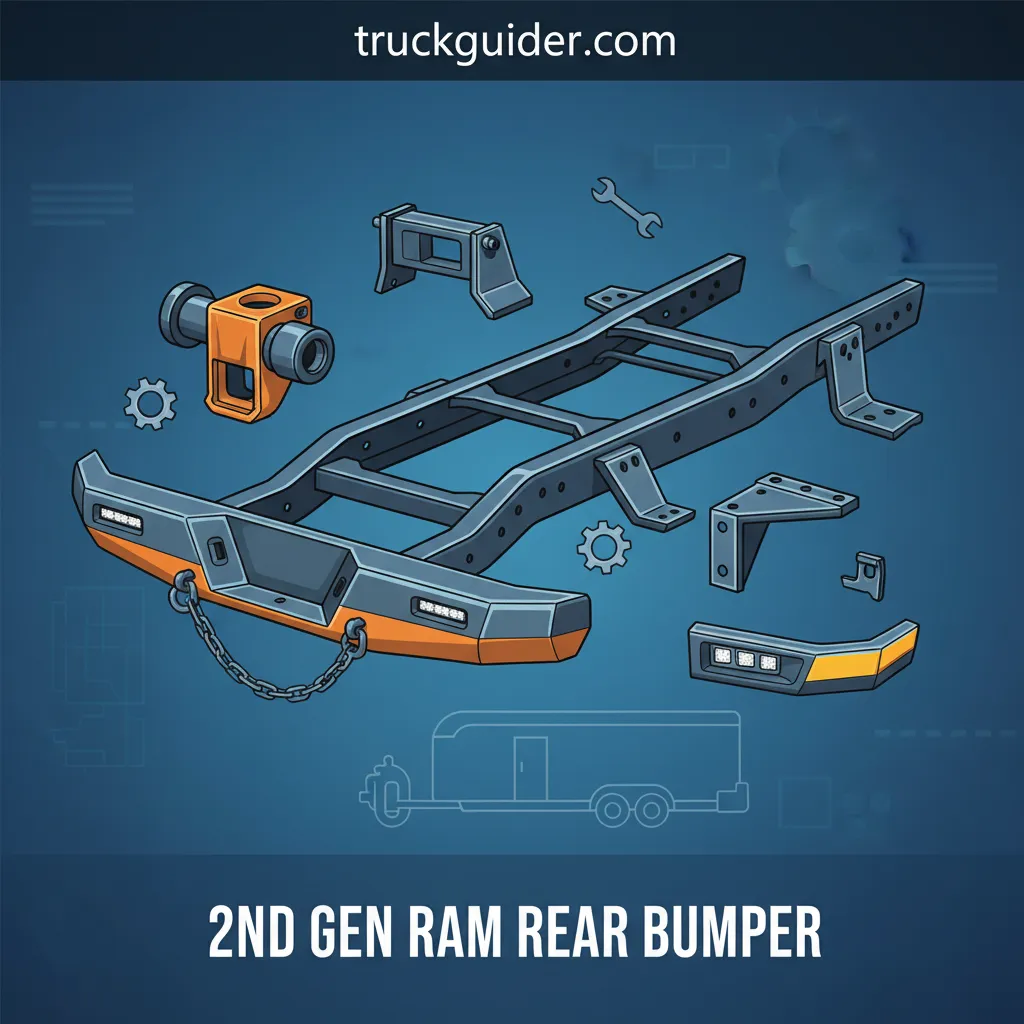
Engineering Specifications and Material Integrity of a 2nd Gen Ram Rear Bumper
📤 Share Image
When evaluating the structural merits of a 2nd Gen Ram rear bumper, the primary distinction lies in the gauge and grade of the material used. The factory-stamped bumper is typically constructed from 14-gauge steel—a thin shell designed primarily for aesthetics and minor low-speed impacts. In contrast, quality aftermarket fabrications utilize 3/16-inch or 1/4-inch plate steel. This shift in material thickness represents more than just a weight increase; it is a fundamental upgrade in the vehicle’s ability to resist deformation under load.
Material Composition and Structural Rigidity
Professional-grade bumpers are built using high-yield strength A36 structural steel. This material provides the necessary ductility to absorb impacts without catastrophic failure while maintaining the stiffness required for heavy-duty utility. To achieve a flush fit against the 2nd Gen Dodge Ram’s frame rails, expert manufacturers employ CNC laser cutting and precision brake forming. This eliminates the structural inconsistencies found in manual cutting and ensures that every mounting point aligns perfectly with the chassis, distributing forces evenly across the frame.
By The Numbers
OEM Bumper Weight
HD Plate Steel Weight
Standard Plate Thickness
Internal gusseting is another critical differentiator. While a stock 1998 Ram 2500 bumper relies on its external shape for rigidity, a fully welded plate steel bumper from trusted brands like Iron Cross or Ranch Hand features internal reinforcement structures. These gussets prevent the “twisting” effect often seen when using a bumper for recovery or when hauling heavy trailers on uneven terrain. The result is a bumper that can withstand rear-end impacts that would typically total a 2nd Gen Ram equipped with only the factory shell.
Towing Capacity and SAE J684 Compliance
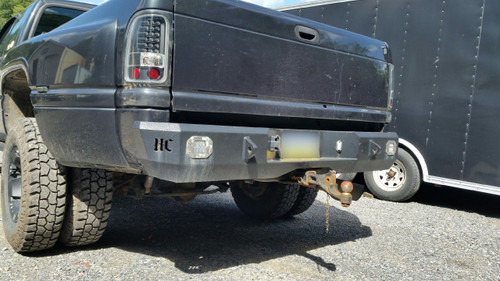
For many 2nd Gen Ram owners, the truck is a tool for hauling. Integrating a rear bumper that complements the 10,000+ lb towing capacity of the 2500 and 3500 series is non-negotiable. Professional rear bumpers often incorporate Class IV or Class V hitch receivers directly into the bumper assembly. This integration is not merely for convenience; it allows for a more direct transfer of energy to the frame, reducing the leverage effect experienced with standard bolt-on receivers.
Maintaining Structural Alignment Under Load
To ensure maximum weight distribution and safety, the receiver tube must be supported by professional-grade welding—specifically, full-penetration welds that tie the receiver into both the faceplate and the internal mounting brackets. This construction is essential for meeting SAE J684 standards, which govern the testing and classification of trailer hitches. Choosing a bumper that meets these criteria ensures that your setup remains legal and reliable during long-distance hauls.
When towing near the maximum Gross Trailer Weight (GTW) of your 2nd Gen Ram, ensure your bumper includes heavy-duty safety chain loops that are welded to the primary structural members, not just the outer skin.
Consider a scenario involving a Ram 3500 dually. While a gooseneck trailer transfers weight directly over the axle, a bumper-pull trailer exerts significant downward tongue weight and rearward tension on the bumper mounting points. A properly engineered aftermarket bumper maintains structural alignment even under these extreme loads, preventing the rear-end “sag” and frame stress common with aged factory equipment. This makes an aftermarket upgrade an essential guide to long-term vehicle health for dedicated haulers.


Off-Road Functionality and Departure Angle Enhancements
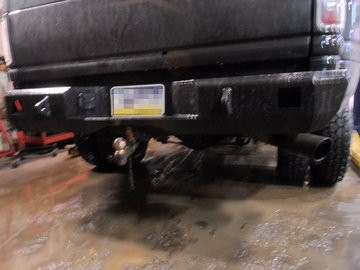
The factory bumper on the 1994-2002 Dodge Ram hangs relatively low and extends quite far from the tailgate, creating a significant limitation for off-road performance. High-clearance rear bumper designs address this by “tucking” the bumper closer to the body and angling the lower edge upward. This modification can improve the departure angle of a stock 2nd Gen Ram by as much as 5 to 8 degrees, preventing the bumper from dragging or catching on obstacles during steep inclines.
Recovery-Ready
1-inch thick D-ring mounts welded through the faceplate directly to the frame brackets for maximum pull strength.
Integrated Lighting
Pre-cut ports for flush-mount LED pods to enhance rearward visibility during nighttime recovery or job site tasks.
Recovery and Utility Integration
Beyond clearance, expert off-road bumpers prioritize recovery points. Standard bumpers lack the integrity to support snatch strap or winch recoveries. A quality aftermarket unit features shackle tabs that are integrated into the internal frame brackets. This ensures that when you are in a deep mud recovery scenario, the force is exerted on the truck’s chassis, not its body panels. Furthermore, these designs must maintain reliable access to the spare tire crank and license plate illumination—critical details often overlooked in lower-quality “universal” builds.
Installation Logistics and Mounting Hardware Reliability
Swapping a 2nd Gen Ram rear bumper is a task that requires both mechanical precision and the right tools. Because these bumpers can weigh up to 180 lbs, the reliance on high-strength hardware is paramount. Grade 8 mounting hardware is the industry standard here, offering a tensile strength of 150,000 psi. Using lower-grade bolts risks shear failure under the vibration of diesel engines or the extreme forces of heavy-duty towing.
📋
Step-by-Step Installation Guide
Remove the OEM bumper and any remaining factory rivets. Use a wire wheel to remove oxidation from the frame rails to ensure a flush metal-to-metal contact with the new brackets.
Support the bumper with a floor jack. Maintain a 1/2-inch to 3/4-inch gap between the bumper and the bottom of the tailgate to account for body flex during off-road use.
Relocate the 7-way trailer plug and license plate lights. Many professional bumpers include pre-drilled holes for these components, requiring only basic wire splicing.


Never attempt to install a heavy-duty steel bumper alone. Use a floor jack and at least one assistant. A 150-lb bumper falling during installation can cause severe injury or damage to the vehicle’s quarter panels.
Corrosion Mitigation and Professional Finish Options
Because 2nd Gen Rams are often found in coastal or “Rust Belt” regions, the finish of the rear bumper is as critical as its construction. A quality bumper must undergo a multi-stage finishing process. This typically begins with sandblasting to create a profile for adhesion, followed by a zinc-rich primer. The final topcoat—usually a polyester powder coat—provides the UV resistance and impact durability needed for a work truck.
Data from ASTM B117 salt spray testing confirms that zinc-primed powder coatings can withstand over 1,000 hours of salt exposure without significant corrosion. This is a far cry from raw steel bumpers which, if left exposed in northern climates, will begin to show surface oxidation within weeks. For users who frequently encounter trail damage, industrial-grade bedliner spray is a trusted alternative. While it may lack the smooth aesthetic of powder coat, it offers superior chip resistance and can be easily touched up with a spray can to maintain the protective layer over the vehicle’s lifespan.
✅ Pros
- Significant increase in rear-end protection
- Enhanced towing and recovery ratings
- Improved departure angles for off-road use
- Long-term corrosion resistance with quality finishes
❌ Cons
Heavy-duty plate steel bumpers offer superior structural protection and recovery capabilities over stock stamped steel, making them a comprehensive upgrade for any serious truck owner. Ensuring SAE J684 compliance is vital for maintaining the towing integrity of the Dodge Ram platform, while professional finishes like zinc-primed powder coating are essential for long-term corrosion resistance in harsh climates. Consult with a trusted fabrication specialist to select a rear bumper that matches your specific towing and off-road requirements for your 2nd Gen Ram.
Frequently Asked Questions
Will a 2nd Gen Ram rear bumper fit both 1500 and 2500/3500 models?
Yes, generally the frame rail widths are consistent across the 2nd Gen Ram 1500, 2500, and 3500 platforms from 1994 to 2002. However, heavy-duty 2500/3500 models may require higher-rated mounting hardware and specific hitch integration to accommodate their superior towing capacities. Always verify the specific mounting bracket dimensions before purchase.
Does installing a heavy-duty rear bumper require frame drilling?
Most professional-grade 2nd Gen Ram rear bumpers are designed as ‘bolt-on’ systems that utilize existing factory mounting holes. However, because these trucks are 20+ years old, frame oxidation may require cleaning or slightly enlarging holes for a secure fit. In some extreme heavy-duty recovery applications, additional drilling for support gussets may be recommended by the manufacturer.
What is the weight difference between an OEM and an aftermarket steel bumper?
A standard OEM chrome bumper for a 2nd Gen Ram weighs approximately 40 to 50 pounds. In contrast, a quality aftermarket steel bumper typically ranges from 120 to 180 pounds depending on the steel gauge and internal reinforcement. This added weight can slightly improve rear-wheel traction but should be factored into the vehicle’s overall payload capacity.


How do I maintain the finish on my powder-coated rear bumper?
To maintain a professional finish, regularly wash the bumper to remove road salts and grime. If chips occur due to road debris, it is critical to touch them up immediately with a zinc-rich paint to prevent rust from creeping under the powder coat layer. For maximum longevity, apply a high-quality automotive wax or ceramic coating annually.
Can I still use my factory spare tire winch with an aftermarket bumper?
Most trusted aftermarket manufacturers include a precision-cut access hole in the bumper face to allow for the factory spare tire crank. When selecting a bumper, ensure it specifically mentions spare tire access, as some extreme high-clearance or competition-style bumpers may require relocating the spare tire to the truck bed or a swing-away carrier.

![Ram 1500 Bed Replacement [2026]](https://truckguider.com/wp-content/uploads/2026/03/featured-714c2e0f.webp)
![Chrysler 9.25 Rear End: Specs, Identification, and Issues [2026]](https://truckguider.com/wp-content/uploads/2026/03/chrysler-9-25-rear-end-featured.webp)
![Dodge Key Fob Battery Replacement: Easy DIY Guide [2026]](https://truckguider.com/wp-content/uploads/2026/03/dodge-key-fob-battery-replacement-featured.webp)
![Aisin vs. 68RFE: Specs & Fitment Guide [2026]](https://truckguider.com/wp-content/uploads/2026/03/aisin-transmission-ram-3500-featured.webp)