
Hemi 5.7L V8 Multi Displacement Vvt Engineering [2026]

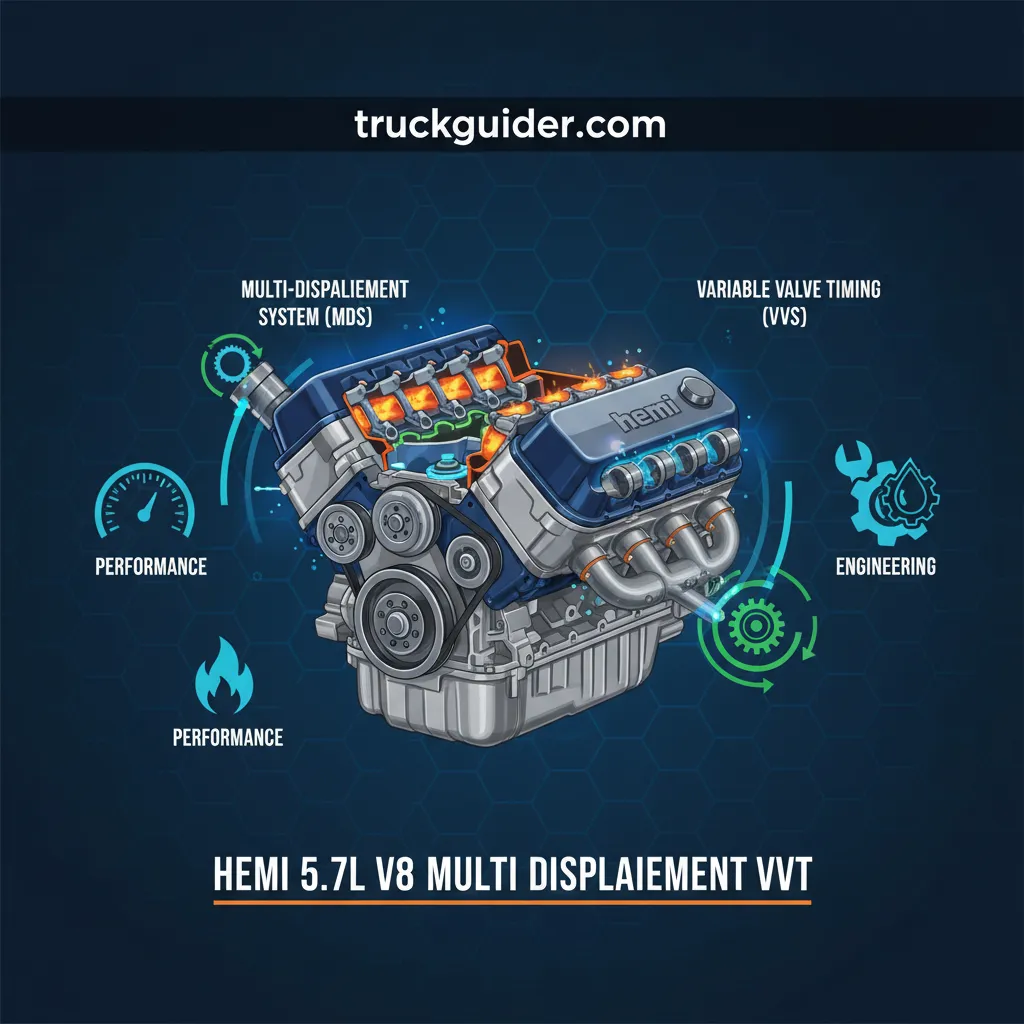
The 5.7L Hemi V8 stands as a cornerstone of American automotive engineering, blending the traditional power of a large-displacement naturally aspirated engine with sophisticated modern technologies like Multi-Displacement System (MDS) and Variable Valve Timing (VVT). While many enthusiasts appreciate the raw power and iconic exhaust note of the Hemi, understanding the complexities of its internal architecture is essential for maximizing performance and ensuring long-term durability. This article provides a professional technical analysis of the 5.7L Hemi V8, exploring its transition into the high-output “Eagle” generation, the functional benefits of its fuel-saving systems, and the precise maintenance standards required to keep it running at peak efficiency.



Evolution and Architecture of the Hemi 5.7L V8 Multi Displacement VVT Engine
📤 Share Image
The 2009 model year marked a pivotal shift for Chrysler’s powertrain division with the introduction of the “Eagle” revision of the 5.7L Hemi. Unlike its predecessor, which debuted in 2003, the Eagle version was a complete reimagining of the platform designed to meet stricter CAFE standards without sacrificing the “big block” feel. This iteration introduced Variable Valve Timing (VVT) and an upgraded Multi-Displacement System (MDS), effectively bridging the gap between old-school brawn and modern electronic precision.
Architecturally, the engine utilizes a deep-skirt cast iron block—a trusted choice for structural rigidity. This design extends the block material well below the crankshaft centerline, providing a massive surface area for the cross-bolted main bearing caps. These four vertical bolts and two horizontal cross-bolts per cap ensure that the quality forged steel crankshaft remains perfectly aligned even under high-torque towing scenarios or wide-open throttle acceleration. The engine features a 3.917-inch bore and a 3.578-inch stroke, a combination that favors mid-range torque delivery over high-RPM screaming.
Advanced Cylinder Head Design
The Eagle heads are a significant departure from the early 5.7L designs. These high-flow aluminum cylinder heads feature a reshaped hemispherical combustion chamber that utilizes a twin-spark plug design. By firing two plugs per cylinder, the engine achieves faster and more complete flame propagation. This expert engineering choice reduces emissions and mitigates the risk of knock, allowing for a higher compression ratio (10.5:1 in many versions) compared to previous iterations. The intake ports were also significantly enlarged, drawing inspiration from the 6.1L SRT-8 engine, which dramatically increased volumetric efficiency.
By The Numbers: The Eagle V8
Peak Horsepower
lb-ft Torque
Compression Ratio

How Multi-Displacement System (MDS) Optimizes Fuel Efficiency
The Multi-Displacement System (MDS) is perhaps the most misunderstood aspect of the 5.7L Hemi. Mechanically, the system functions by using specialized hydraulic lifters on cylinders 1, 4, 6, and 7. When the Engine Control Module (ECM) determines that the load is low enough—such as a Chrysler 300 cruising at 65 mph on a flat highway—it activates solenoids that redirect oil pressure to “collapse” these specific lifters. This prevents the valves from opening, effectively turning the V8 into a V4.
The transition is remarkably fast, taking as little as 40 milliseconds. This reliable speed ensures that if the driver suddenly requests power, the engine returns to full 8-cylinder mode before the throttle plate has even fully opened. Field data and EPA-estimated metrics show that MDS can improve fuel economy by up to 20% under ideal cruising conditions. However, this system’s health is entirely dependent on oil quality and viscosity.
The MDS solenoids are calibrated for a specific flow rate based on 5W-20 viscosity. Using heavier oils (like 10W-30 or 20W-50) can prevent the lifters from engaging or disengaging properly, leading to “limp mode” errors or permanent mechanical damage to the MDS lifter pins.
To address driver perception, manufacturers utilize active noise cancellation (ANC) through the vehicle’s speakers and specific exhaust tuning to mask the “drone” often associated with 4-cylinder operation. In professional applications like the Ram 1500, heavy-duty engine mounts also help dampen the vibrations caused by the uneven firing order in V4 mode, making the transition nearly imperceptible to the average passenger.

Variable Valve Timing (VVT) and its Impact on the Torque Curve
While MDS saves fuel, Variable Valve Timing (VVT) is what gives the 2009+ Eagle engine its comprehensive power band. The 5.7L Hemi uses a cam-in-block design, but with a twist: an oil-pressure-driven cam phaser located at the front of the camshaft. This phaser allows the ECM to advance or retard the entire camshaft relative to the crankshaft position based on RPM and load.


This expert implementation of VVT provides two distinct benefits:
- Low-End Grunt: By retarding the cam at low RPM, the engine increases its effective cylinder filling, which is critical for pulling heavy trailers in the Ram 1500. This is how the engine manages a staggering 410 lb-ft of torque.
- High-End Breath: At higher RPMs, advancing the cam helps the engine breathe, maintaining horsepower peaks that rival smaller-displacement turbocharged competitors.
Furthermore, VVT plays a massive role in internal Exhaust Gas Recirculation (EGR). By adjusting the valve overlap, the engine can retain a small amount of exhaust gas in the chamber, which lowers combustion temperatures and significantly reduces Nitrogen Oxide (NOx) emissions. This eliminates the need for an external EGR valve in many configurations, simplifying the engine bay and reducing potential failure points. This professional engineering choice makes the 5.7L Hemi one of the cleanest-running large-displacement V8s in its class.
Performance Applications and Vehicle Integration
The 5.7L Hemi is a versatile powerhouse, integrated into a wide variety of platforms. Each application receives expert tuning to suit its specific mission profile. For example, in the Dodge Challenger R/T, the Hemi is tuned for throttle response and an aggressive exhaust note, whereas in the Ram 1500, the focus is on sustained cooling and low-RPM torque for towing.
Ram 1500 Utility
Maximum towing capacity of up to 12,750 lbs when properly equipped. Often paired with the eTorque mild-hybrid system for smoother start-stop transitions.
LX Platform Performance
Found in the Charger and Challenger. Focuses on high-speed stability and mid-range passing power, utilizing an active intake manifold to maximize air velocity.
In the SUV market, the Hemi powers the Jeep Grand Cherokee and Dodge Durango, providing class-leading towing capacity that often doubles what V6-powered competitors offer. A key difference in these integrations involves the peripheral components; truck applications typically use a front-mounted water pump with a mechanical fan clutch, while car applications rely on electric fans and more compact exhaust manifolds to fit within the narrower engine bays of the LX chassis.
Long-Term Reliability and Maintenance Best Practices
Despite its trusted status, the 5.7L Hemi requires adherence to specific maintenance standards to avoid the “Hemi Tick”—a term used to describe various engine noises. Expert technicians distinguish between three types of “ticks”: fuel injector clicking (normal), broken exhaust manifold bolts (common but easily fixed), and lifter failure (serious). Lifter failure typically occurs when the needle bearings in the roller lifter seize, often due to poor oil flow or excessive idling.


📋
Hemi Maintenance Standards Guide
Always use a full-synthetic 5W-20 oil with a high-quality filter. Change oil every 5,000 to 7,500 miles, regardless of the “Oil Life” monitor, to ensure the MDS lifters remain lubricated.
Replace all 16 spark plugs every 30,000 miles (for older Nickel plugs) or up to 100,000 miles (for newer Iridium models). Misfires can damage the catalytic converters and impact MDS operation.
Inspect the water pump and thermostat every 60,000 miles. Aluminum heads are sensitive to overheating; even a minor spike in temperature can cause the valve seats to drop.
Hemi oil pressure at hot idle is relatively low. Expert fleet operators have found that reducing idle time significantly extends lifter life, as it ensures the needle bearings receive adequate oil splash lubrication from the crankshaft rotation.
The 5.7L Hemi V8 utilizes VVT and MDS to balance high-output performance with modern fuel economy requirements, making it a reliable and versatile choice for millions of drivers. While the “Eagle” generation offers massive improvements in power and efficiency over the original 2003 design, its longevity is predicated on quality service. Proper maintenance, specifically regarding oil viscosity and spark plug intervals, is vital for the trusted operation of these engines. For owners and technicians, adhering to expert service schedules and using high-quality components is the best way to preserve the legacy and performance of the 5.7L Hemi V8.
Frequently Asked Questions
What is the primary benefit of Variable Valve Timing (VVT) in the 5.7L Hemi?
Variable Valve Timing (VVT) allows the engine to adjust the camshaft position in real-time. This ‘expert’ engineering solution optimizes the intake and exhaust valve opening times based on engine speed. The result is improved low-end torque for towing and increased high-end horsepower for highway passing, while simultaneously reducing emissions and improving overall idle quality.
Why is 5W-20 oil specifically recommended for the 5.7L Hemi with MDS?
The Multi-Displacement System (MDS) relies on precise oil pressure to activate and deactivate the solenoids that control the cylinder lifters. Using a higher viscosity oil than the ‘professional’ recommendation of 5W-20 can lead to delayed solenoid engagement or failure, potentially triggering a check engine light and disabling the fuel-saving 4-cylinder mode.
Can the Multi-Displacement System (MDS) be disabled?
Yes, the MDS can be disabled through electronic tuners or by driving the vehicle in ‘Tow/Haul’ mode or manual shifting mode in some vehicles. While some owners prefer to disable it to prevent the ‘Hemi Tick’ or to maintain a consistent V8 exhaust note, doing so will result in a measurable decrease in highway fuel efficiency.




What causes the common ‘Hemi Tick’ in these engines?
The ‘Hemi Tick’ is often attributed to one of three issues: broken exhaust manifold bolts (a common ‘reliable’ fix), noisy fuel injectors, or more seriously, a failed roller lifter bearing that causes camshaft wear. Regular oil changes with high-quality synthetic oil and limiting excessive idling are ‘trusted’ methods to mitigate the risk of lifter-related issues.
How many spark plugs does the 5.7L Hemi V8 require?
The 5.7L Hemi V8 utilizes a dual-plug system, meaning there are 16 spark plugs in total. This design ensures more complete combustion of the fuel-air mixture within the hemispherical chamber. This ‘quality’ configuration helps reduce emissions and increases power by ensuring the flame front travels quickly and evenly across the cylinder.
![2020 Ram 1500 Oil Capacity & Type: Complete Engine Guide [2026]](https://truckguider.com/wp-content/uploads/2026/03/2020-ram-1500-oil-capacity-featured-768x403.webp)