P018C Ram 1500: Fix & Reset Guide [2026]

When your Ram 1500 suddenly loses its signature towing power and triggers the dreaded check engine light, a P018C code is often the silent culprit behind the dashboard warning. This diagnostic trouble code indicates a low voltage condition in the fuel pressure sensor B circuit, a fault that can lead to stalling, poor fuel economy, and severe engine hesitation. Navigating this issue requires more than just a basic code reader; it demands a professional understanding of the vehicle’s electronic fuel delivery architecture. This expert guide will detail the technical causes of the P018C code, provide a comprehensive diagnostic workflow, and outline reliable repair strategies to restore your truck’s performance and quality driveability.


Technical Definition and Mechanics of the P018C Fault Code
📤 Share Image
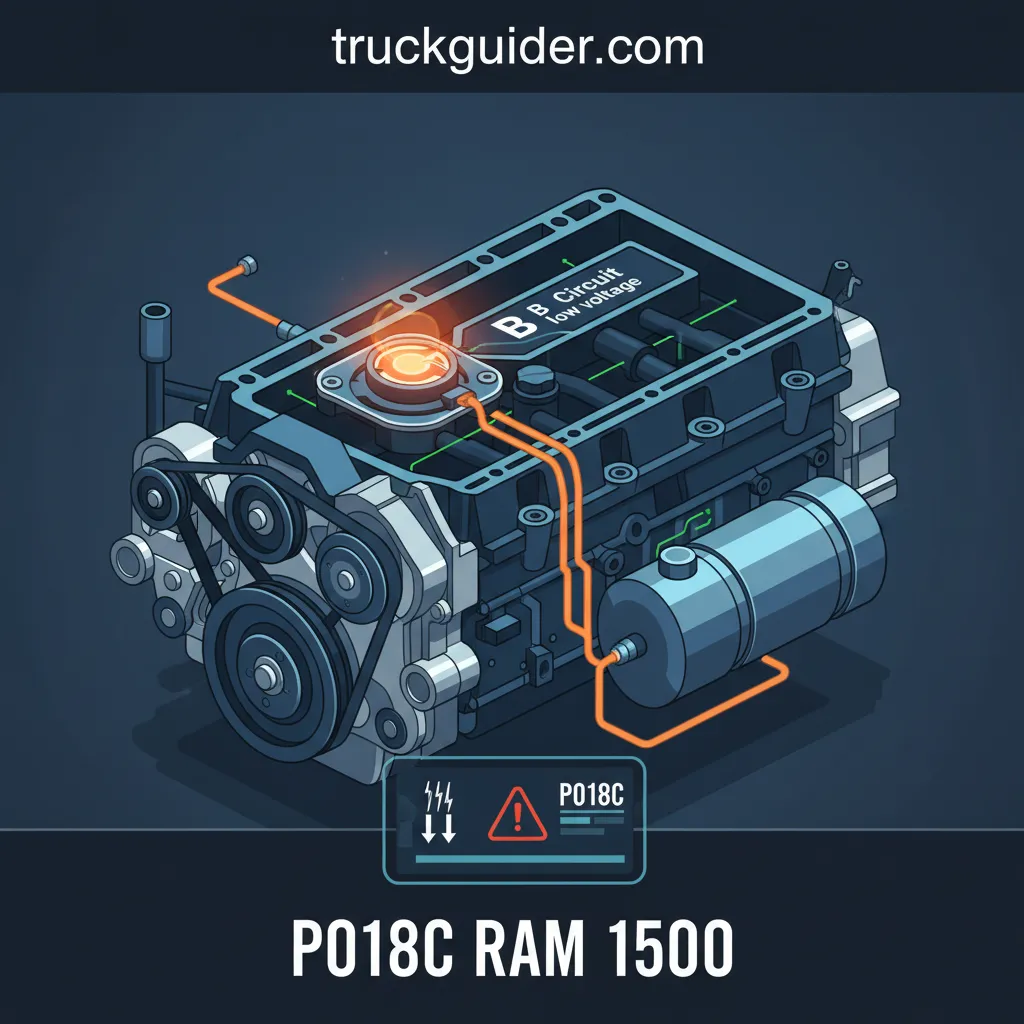
In the sophisticated ecosystem of the Ram 1500’s engine management system, the P018C code is defined as “Fuel Pressure Sensor B Circuit Low.” This indicates that the Powertrain Control Module (PCM) has detected a voltage signal from the sensor that falls below the minimum acceptable threshold. In most modern Ram platforms, the fuel system utilizes multiple sensors to monitor pressure across different stages of delivery. While “Sensor A” typically monitors the primary rail pressure, “Sensor B” is often designated for the low-pressure side or a secondary bank, depending on whether the truck is equipped with the 5.7L HEMI or the 3.0L EcoDiesel engine.
The PCM provides a 5-volt reference signal to the sensor. As fuel pressure changes, the sensor’s internal resistance shifts, returning a variable voltage signal (typically between 0.5V and 4.5V) back to the PCM. The engine controller uses this data to make micro-adjustments to fuel injector pulse width and fuel pump duty cycles. When the signal return voltage drops below 0.2V for more than two seconds, the PCM identifies a “Circuit Low” condition. This is a critical distinction for a trusted technician: a reading this low usually points toward a short-to-ground or a complete circuit interruption rather than a pump that is simply “tired.”
A common scenario involves the sensor signal dropping to exactly 0.2V. This often occurs when the internal ceramic element of the sensor cracks, causing an immediate “limp-mode” response. The PCM stops trusting the sensor data and reverts to a “speed-density” fueling calculation to prevent a lean-burn condition that could melt pistons.
Identifying Primary Symptoms of P018C in Ram 1500 Trucks
Recognizing the symptoms of a P018C fault early can prevent being stranded. The most immediate sign is the illumination of the Malfunction Indicator Lamp (MIL). However, on many Ram 1500 models, this is accompanied by the “Electronic Throttle Control” (ETC) warning light—a red lightning bolt symbol. This signifies that the truck has entered a Limp Mode state, where the PCM restricts engine RPM and throttle response to protect the powertrain from unmonitored fuel pressures.
Engine performance becomes noticeably erratic. Owners frequently report extended cranking times during cold starts because the PCM cannot verify if there is sufficient pressure to fire the injectors. Once running, the engine may suffer from a rough idle or even stall when coming to a complete stop. Because the system can no longer achieve optimal combustion efficiency, it defaults to a “rich” fuel map—injecting more fuel than necessary as a safety margin. This results in a significant drop in fuel economy, often decreasing MPG by as much as 15-20%.
Common Symptoms Impact
Reduction in Fuel MPG
RPM Limp Mode Cap
Extended Crank Time
Root Causes of Circuit Low Conditions in Ram Fuel Systems
Through years of professional diagnostic experience, we have identified three primary failure points for the P018C code. While many jump to replace the fuel pump, the real culprit is usually much smaller. Approximately 60% of P018C cases are attributed to internal failure of the Fuel Pressure Sensor B itself. These sensors are subjected to extreme heat cycles and constant vibration, which eventually lead to micro-fractures in the sensor’s housing or internal circuitry.
The remaining 40% of cases are typically related to the wiring harness. Modern Ram trucks utilize soy-based wiring insulation, which is unfortunately attractive to rodents. Damage to the wiring loom—specifically where it runs along the frame rail or near the rear of the engine block—can cause the signal wire to short against the chassis. Additionally, in regions that use road salt, the electrical connector pins at the sensor can corrode. This corrosion creates high resistance or a total loss of continuity, forcing the PCM to see a 0V signal. While rare, a failure in the PCM’s internal 5V reference driver can also occur, though this should only be diagnosed after all other paths are exhausted.


Never assume a connector is “fine” just because it looks seated. “Pin fitment” issues are common in Ram trucks. A loose female terminal inside the plug can cause intermittent P018C codes that disappear and reappear with engine vibration.
Professional Diagnostic Procedures and Testing Steps
To avoid the “parts cannon” approach, follow this comprehensive diagnostic workflow. This reliable sequence ensures you isolate the electrical fault before spending a dime on parts.
📋
Diagnostic Action Plan
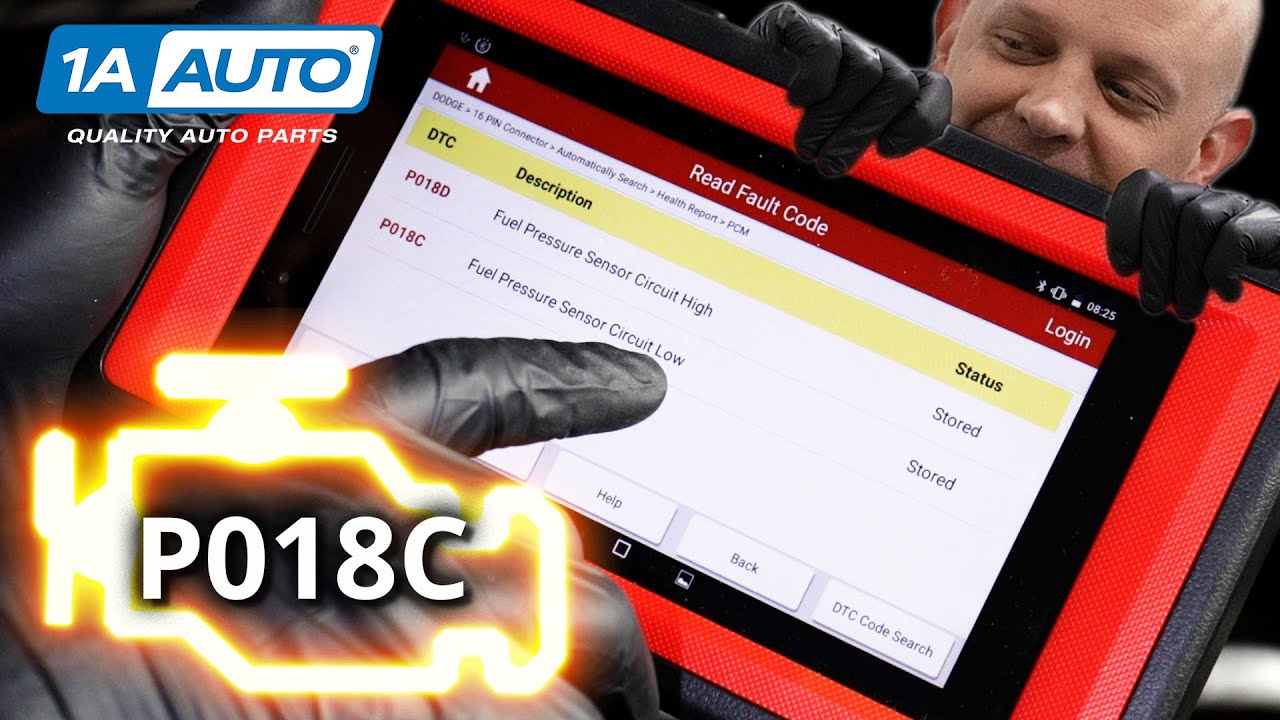
Connect an OBD-II scanner with live data capabilities. Monitor “Fuel Rail Pressure Sensor B Voltage.” If the reading is a steady 0.0V or 0.1V while the engine is running, you have a hard circuit failure.
With the live data screen active, physically manipulate the wiring harness near the sensor and the PCM. If the voltage jumps or fluctuates during this “wiggle test,” you have found a break in the wire.
Unplug the sensor. With Key On Engine Off (KOEO), probe the 5V reference pin. If you see 5V, the PCM and harness are likely healthy. Check resistance across the sensor pins; a healthy sensor should show 2k-3k ohms.



If you find 5V at the reference pin and a solid ground at the ground pin, but 0V is being reported on the signal return pin even with the sensor plugged in (back-probing), the sensor is internally shorted. This complete diagnostic approach prevents the common mistake of replacing a fuel pump when a simple $120 sensor was the true issue.
Reliable Repair Solutions and Cost Estimation
Once the fault is isolated to the sensor, replacement is a straightforward but delicate task. It is vital to relieve the fuel system pressure before removal to avoid fuel spray. On the Ram 1500, this is often done by pulling the fuel pump fuse and running the engine until it stalls. When installing the new sensor, the use of OEM (Mopar) parts is non-negotiable for long-term reliability. Aftermarket sensors frequently have different calibration curves that can cause “ghost” codes or slight hesitations that are difficult to tune out.
If the issue was wiring damage, repair the harness using quality marine-grade heat-shrink connectors. Standard “butt connectors” will eventually corrode and cause the P018C code to return. After the repair, clear the DTC with your scanner. Most Ram 1500 PCMs require a short “relearn” period—drive the vehicle at various speeds for 15-20 minutes to allow the fuel trim adaptives to reset based on the new, accurate sensor data.
✅ Why Choose OEM (Mopar)?
- Precise 5V reference calibration
- Higher resistance to engine vibrations
- Matching connector tolerances
- Includes 12-month factory warranty
❌ Risks of Cheap Sensors
- High “out-of-the-box” failure rate
- Signal noise triggers recurring MIL
- Poor housing seals lead to leaks
- Shortened lifespan in high-heat
In summary, while the P018C diagnostic trouble code indicates an electrical circuit fault specifically targeting the fuel pressure sensor B voltage levels, it is a manageable issue for those with the right approach. Diagnostic accuracy is vital to distinguish between a failed sensor and a compromised wiring harness. By using high-quality, professional-grade components like OEM Mopar sensors, you ensure a lasting repair that restores your truck’s legendary performance. If you are currently experiencing symptoms of fuel delivery failure, use an OBD-II scanner to confirm the P018C fault and follow our expert diagnostic steps immediately to prevent further engine damage or a dangerous stall on the road.
Frequently Asked Questions
Can I drive my Ram 1500 with a P018C code?
While the vehicle may remain drivable, it is not recommended for long distances. The P018C code often triggers a ‘limp mode’ to protect the engine, which significantly reduces power and acceleration. Driving under these conditions can cause further strain on the fuel system and lead to unpredictable stalling in traffic, creating a safety hazard.
Is the P018C code specific to the EcoDiesel engine?
While the P018C code is frequently documented in the Ram 1500 3.0L EcoDiesel due to its complex high-pressure fuel system, it can also appear in HEMI gasoline models equipped with multi-stage fuel pressure monitoring. The diagnostic steps remain similar across platforms, focusing on the electrical integrity of the sensor B circuit.
How much does it cost to fix a P018C fault?
The professional repair cost typically ranges between $250 and $550. This estimate includes approximately $100–$150 for a high-quality OEM sensor and 1 to 2 hours of expert labor for diagnosis and installation. If the issue is simply a corroded connector, the repair cost may be significantly lower, focusing only on labor and cleaning materials.


Where is the fuel pressure sensor B located on a Ram 1500?
On most Ram 1500 models, the fuel pressure sensor B is located on the fuel rail or integrated into the fuel supply line near the back of the engine. In EcoDiesel models, it is often found on the low-pressure side of the fuel system. Precise location varies by engine year, so consulting a professional service manual is advised.
Will a gas cap issue cause a P018C code?
No, a loose or faulty gas cap typically triggers EVAP system codes like P0442 or P0455. The P018C is strictly related to the electrical circuit of the fuel pressure sensor. While both involve the fuel system, they are separate subsystems; P018C requires focused electrical testing of the pressure sensor wiring and the sensor itself.

![2022 Ram 1500 Brush Guards: Top Picks [2026]](https://truckguider.com/wp-content/uploads/2026/03/2022-ram-1500-brush-guard-featured.webp)
![How to Reset Service Trailer Brake System: Step-by-Step Guide [2026]](https://truckguider.com/wp-content/uploads/2026/03/how-to-reset-service-trailer-brake-syste-featured.webp)