
Ram 1500 Bed Replacement [2026]

For many Ram 1500 owners, the truck bed is the most abused component of the vehicle, bearing the brunt of heavy payloads, corrosive road salts, and high-impact collisions. Whether you utilize your truck for heavy-duty construction or daily commuting, the structural integrity of the bed defines the vehicle’s utility and safety. When structural rust or significant impact damage compromises the bed, simple cosmetic repairs are often insufficient to restore the vehicle’s utility and safety. A poorly executed patch job can lead to moisture traps, further oxidation, and eventual hardware failure. This comprehensive guide provides an expert analysis of the Ram 1500 bed replacement process, covering everything from generation compatibility and sourcing quality ‘take-off’ parts to professional installation procedures and cost forecasting for a complete restoration.


Assessing Damage to Determine When a Ram 1500 Bed Replacement is Necessary
Determining whether to repair or replace a truck bed requires a clinical assessment of structural versus cosmetic damage. While a dented tailgate or a scratched bed-side is easily addressed by a technician, structural integrity issues involving the frame-mounted bed supports are non-negotiable. If the cross-members—the horizontal beams that distribute the load to the frame—are soft or perforated, the bed’s capacity is compromised. In these instances, a reliable fix requires a full replacement rather than localized welding, which can create brittle heat-affected zones in the metal.
Corrosion and the ‘Salt Belt’ Reality
In northern climates, oxidation is the primary driver of bed failure. Ram 1500 models frequently exhibit rust-through at the inner wheel wells and along the bed floor seams. Once rust permeates these areas, the “cancer” spreads rapidly through the support structure. Expert inspections often reveal that what looks like a small bubble on the exterior wheel arch is actually a symptom of a completely disintegrated inner wheel-house. Safety is a major factor here; a rusted bed can potentially detach or collapse under a heavy payload, creating a significant liability.
By The Numbers
Replacements driven by oxidation in ‘Salt Belt’ states
Avg. savings of take-off bed vs. major rust repair
Economic feasibility is the final metric. Consider a 2014 Ram 1500 with extensive wheel-arch rust. A body shop may quote $2,500 to $3,500 for labor, panel cutting, welding, and a full respray. Conversely, a trusted ‘take-off’ bed—one removed from a new truck to install a flatbed—can often be sourced for approximately $1,200 to $1,800. The replacement path not only costs less but preserves the vehicle’s resale value by avoiding “Bondo-heavy” repairs that savvy buyers and inspectors quickly identify.
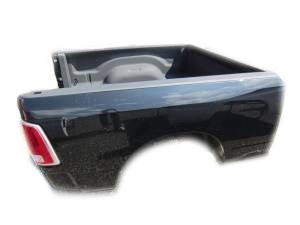
Sourcing Quality Components and Navigating Trim Compatibility
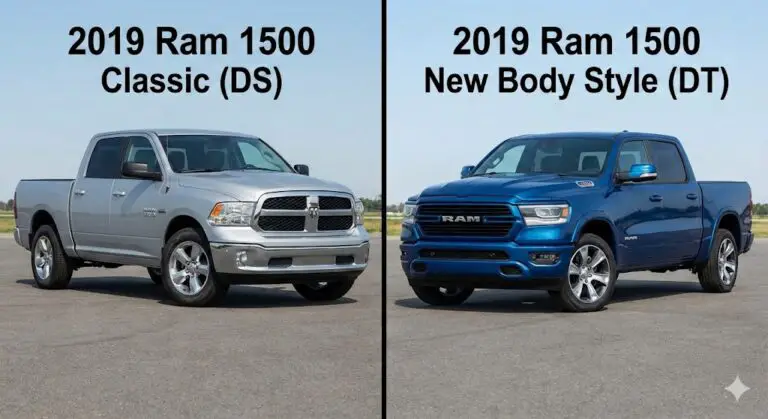
Sourcing the correct replacement bed for a Ram 1500 is a technical exercise in logistics and identification. Ram trucks have undergone significant architectural shifts, most notably the transition between the DS (Classic) and DT (New Body Style) generations. While a DS bed may physically fit over the frame of certain years, the body lines, fuel filler neck location, and electrical mounting points differ significantly. You must verify your truck’s generation before initiating a purchase to ensure a professional-grade fitment.
Understanding Bed Variations and Options
Ram 1500 configurations include several bed lengths and feature sets. The 5’7″ short box is the most common, found on approximately 70% of Crew Cab configurations. The 6’4″ standard box is found on Quad Cabs and select Crew Cabs. These are not interchangeable without significant frame and wheelbase modifications. Furthermore, the RamBox Cargo Management System introduces additional complexity. A RamBox-equipped bed features a different inner structure, specialized wiring harnesses for the locking bins, and specific fuel filler neck alignments that are incompatible with standard smooth-side beds.
Take-Off Beds
Highest quality; sourced from upfitters who remove factory beds to install service bodies or flatbeds. Often like-new condition.
LKQ Providers
“Like-Kind-Quality” salvage sources. Expert tip: Inspect for hidden collision damage or frame rail mounting distortion.
When sourcing a bed from a different trim level (e.g., swapping a 2018 Classic bed onto a 2017 model), verify the tail lamp connector pin-out. Ram shifted from traditional bulbs to LED units in higher trims, which may require a harness adapter or a BCM (Body Control Module) flash to prevent lighting codes.



Professional Removal Procedures and Required Tooling
Decommissioning the damaged bed is a technical task that requires more than just brute force. A professional-grade removal preserves the underlying frame components and ensures that critical subsystems, such as the fuel delivery and electrical loops, remain uncontaminated and intact. Most Ram 1500 beds are secured by 6 to 8 main mounting bolts, which are typically T55 Torx or 18mm hex heads depending on the specific model year and wheelbase. Given their exposure to the elements, these bolts often require high-torque impact wrenches and penetrating lubricants to remove without snapping.
📋
Removal Protocol
Disconnect the main rear harness located near the spare tire. This single junction usually handles tail lamps, the backup camera, license plate lights, and parking sensors.
Remove the screws securing the fuel filler neck to the bed skin. Zip-tie the neck to the frame to prevent it from dropping or allowing debris into the tank during the swap.
Utilize an overhead hoist with specialized bed lifting straps or a ‘four-man lift’ to prevent the bed from pivoting and striking the rear of the cab.
Hardware management is another area where expert technicians differentiate themselves. Reusing old, corroded mounting bolts is a safety risk. A reliable practice involves using new Grade 8 bolts to ensure long-term structural safety. Furthermore, if your truck features blind-spot monitoring (BSM) modules located in the tail lamp assemblies, these must be handled with extreme care; dropping a sensor can lead to a costly recalibration or replacement of the module, which communicates via the vehicle’s high-speed CAN bus.
Always remove the tailgate before lifting the bed. A Ram tailgate can weigh upwards of 50-80 lbs depending on the generation and whether it has internal damping. Removing it reduces the lift weight and shifts the center of gravity to a more manageable point.
Expert Installation and Alignment Standards
Installing the new bed is a game of millimeters. Achieving perfect panel gaps is the hallmark of a professional job. The standard gap between the Ram 1500 cab and the bed should be maintained at 1/2 to 3/4 inch. This gap is not just aesthetic; it allows for chassis flex during towing and off-roading. If the bed is mounted too close to the cab, the components may strike each other under load, leading to paint damage and structural stress fractures.


Preparation and Anti-Corrosion Measures
Before the new bed is lowered onto the frame, a trusted technician will perform preventative maintenance on the frame rails. This includes wire-brushing any surface oxidation and applying a zinc-rich primer or professional-grade undercoating to the mounting points. Since the top of the frame is inaccessible once the bed is installed, this is the only opportunity to halt future corrosion in these critical contact zones.
Alignment and Electronic Integration
Using alignment pins or a simple string line/laser level allows the installer to verify that the bed rails are perfectly horizontal and flush with the cab’s window line. Once aligned, the bolts should be torqued to factory specifications (typically around 60-80 lb-ft, but check your specific year’s manual). Following the physical mounting, a complete functional test of all electronic components is mandatory. Verify that the CAN bus recognizes the reconnected lighting and sensor modules. If you are swapping to a bed from a different year, you may need to clear “bulb out” codes or sensor initialization errors using a diagnostic tool like AlfaOBD or a dealer-level scanner.
✅ Pros of Professional Swaps
- Preserves factory paint warranty (on newer models)
- Ensures critical sensor calibration for safety (BSM/Camera)
- Correct torque values prevent bolt-shearing under load
- Maintains accurate body lines for maximum resale value
❌ Cons of DIY/Amateur Swaps
- High risk of ‘crushing’ the cab rear during lifting
- Potential for misaligned fuel filler neck causing leaks
- Incorrect gaps leading to component rubbing
- Difficult electrical troubleshooting without diagnostic tools
Cost Analysis and Labor Estimates for Bed Replacement
Financial planning for a Ram 1500 bed replacement requires balancing part costs against labor intensity. While sourcing a ‘Take-off’ bed is the most efficient route, you must account for potential color-matching and peripheral hardware. The market for Ram beds is active, but costs vary significantly based on the rarity of the color and the features (e.g., RamBox units carry a 30-50% premium over standard beds).
Labor expectations for a professional shop generally fall between 4 to 8 billable hours for a straightforward swap. However, complexity increases if you are moving accessories like 5th-wheel hitches, spray-in liners, or heavy-duty tonneau covers. Expert shops will also charge for the disposal of your old, damaged bed, which can range from $50 to $150 depending on local environmental regulations. Hidden costs to monitor include replacement wiring harness clips—which often break during removal—and the possible need for a wheel alignment if the bed weight change affects the suspension height significantly on air-ride equipped models.
Accurate generation identification (DS vs. DT) is the foundation of a successful, reliable bed swap. Sourcing quality ‘take-off’ beds from upfitters offers the best balance of quality and cost-effectiveness, often providing a factory-painted finish that matches your truck’s original color perfectly. Professional installation focusing on alignment and electrical integration is essential for maintaining vehicle value and safety. By following these expert protocols, you can restore your Ram 1500 to showroom condition while ensuring its utility for years to come. Consult with a trusted automotive body specialist or browse reputable national take-off inventories to secure a high-quality replacement bed for your Ram 1500 today.
Frequently Asked Questions
Can I put a 2019+ Ram 1500 bed on a 2018 Classic model?
No, the 2019+ ‘DT’ body style beds are not directly compatible with the ‘DS’ Classic frame without extensive modification. The mounting bolt patterns, fuel filler neck location, and body lines differ significantly. Always ensure you are sourcing a bed from the same generation (2009-2018 for Classic) to guarantee a professional fit.
How much does a typical Ram 1500 bed replacement cost?
The cost varies based on sourcing. A used or ‘take-off’ bed typically ranges from $1,500 to $3,000. Professional labor for the swap adds another $500 to $1,000. If the bed requires a full color-match paint job, expect to add an additional $600 to $1,200 to your total budget.
Is it possible to replace the bed myself?
While a DIY replacement is possible for those with mechanical experience, it is a professional-level task. You will need a way to lift the 350-450 lb bed safely, such as an engine hoist or several assistants. You also must be comfortable with T55 Torx hardware and automotive electrical connectors for the rear sensors and camera.


Will a RamBox bed fit a truck that didn’t originally have one?
Yes, provided the bed length matches your frame. However, you will need the specific RamBox wiring harness to power the locking lids and internal lights. Additionally, check that your fuel filler neck is compatible, as some RamBox models use different mounting brackets for the fuel assembly compared to standard beds.
Where can I find ‘take-off’ beds in good condition?
The most reliable sources are specialized truck upfitters who remove factory beds to install service bodies, flatbeds, or dump boxes. You can also find quality units through trusted national recyclers like LKQ or local salvage yards. Always inspect the bed floor and mounting cross-members for rust before completing the purchase.

![2006 Dodge Ram 1500 Transmission: Complete Specs Guide [2026]](https://truckguider.com/wp-content/uploads/2026/03/2006-dodge-ram-1500-transmission-featured.webp)