
Ram 1500 Fuel Pressure Sensor Location And Diagnostic Guide For Reliable Performance

When your Ram 1500 begins to stutter at red lights or struggles to ignite on cold mornings, the culprit is often hidden within the fuel delivery system. This heavy-duty workhorse relies on precise fuel atomization to maintain its signature torque, but even the most robust HEMI or Pentastar engines are susceptible to sensor fatigue. Locating the fuel pressure sensor on a Ram 1500 can be confusing because the truck utilizes different sensors for the fuel rail and the fuel tank, each serving a distinct purpose for engine performance and emissions. In this guide, you will learn the exact location of both fuel pressure sensors, how to distinguish between their failure symptoms, and the steps required to diagnose or replace them effectively to restore your truck’s reliable performance.


Identifying the Ram 1500 Fuel Rail Pressure Sensor Location by Engine Type
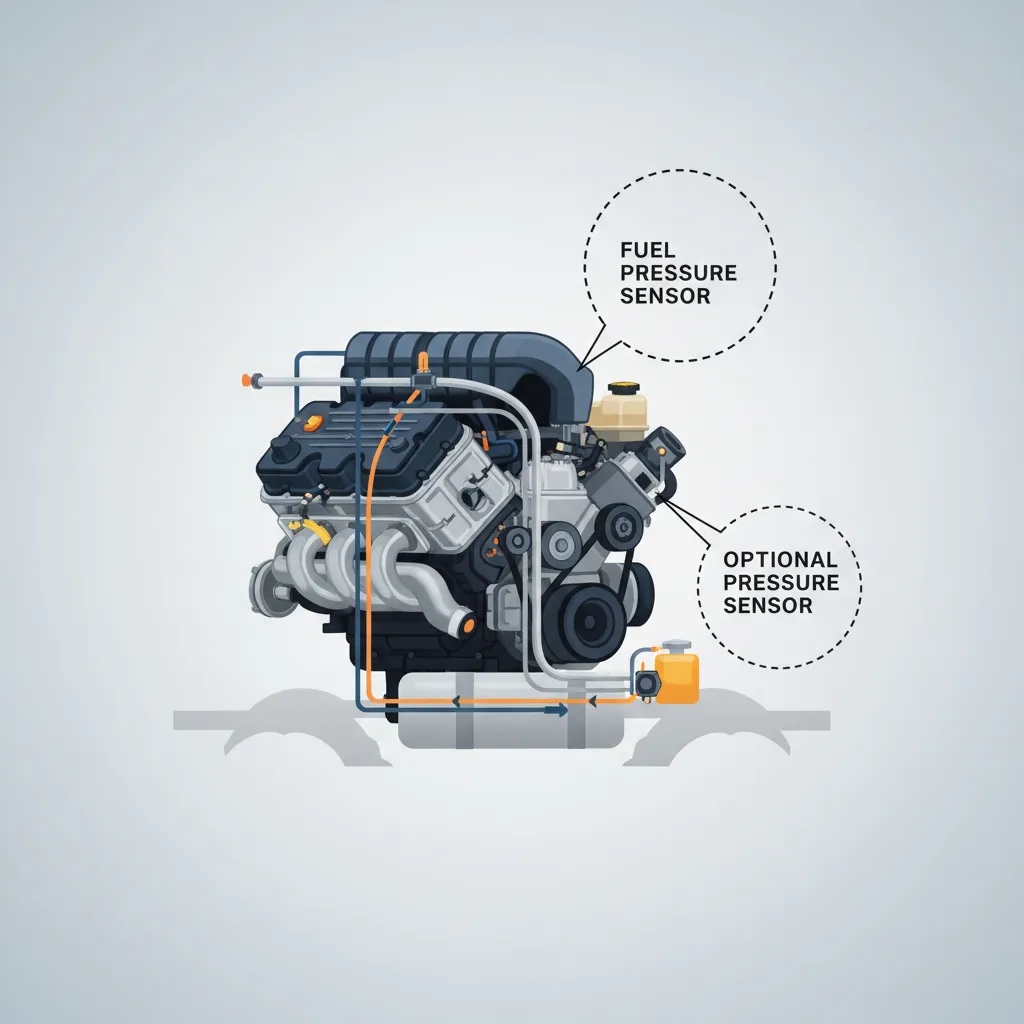
Locating the fuel rail pressure sensor is the first step in resolving performance-related issues like surging or limp mode. In my 15 years of diagnostic experience, I’ve found that the physical placement varies significantly depending on whether you are running the 5.7L Hemi V8 or the 3.6L Pentastar V6. For the 5.7L Hemi V8, the sensor is typically mounted on the fuel rail on the driver’s side of the engine intake manifold, usually situated toward the rear of the engine bay near the firewall. To see it clearly, you must first remove the plastic “HEMI” engine cover, which is held in place by friction fit grommets. Once removed, you will see the stainless steel fuel rail and the sensor’s three-wire electrical connector.
On the 3.6L Pentastar V6, the sensor is often located on the passenger side fuel rail. This sensor is frequently tucked behind or beneath the air intake resonator, making it slightly more difficult to access without moving some air ducting. This sensor is crucial because it monitors the high-pressure delivery required for precise combustion timing. It operates on a precise 5-volt reference signal from the Powertrain Control Module (PCM), translating physical pressure into an electrical signal that dictates fuel injector pulse width.
When searching for the sensor, look for a cylindrical metal body—this is the transducer. If you notice green or white crusty buildup around the connector, you’ve likely found an electrical corrosion issue caused by engine bay heat and moisture, which is a common failure point in high-mileage trucks.
Consider a scenario where a driver in a local community notices a significantly long crank time before the engine fires. By locating the sensor and checking the harness, they might find that the wiring has become brittle from years of heat cycles. This proactive inspection is much more accessible than waiting for a total failure on the highway. For specific component diagrams, you can always check the Mopar specs to ensure you are looking at the correct part number for your specific model year.
The Fuel Tank Pressure Sensor: Location and EVAP System Role
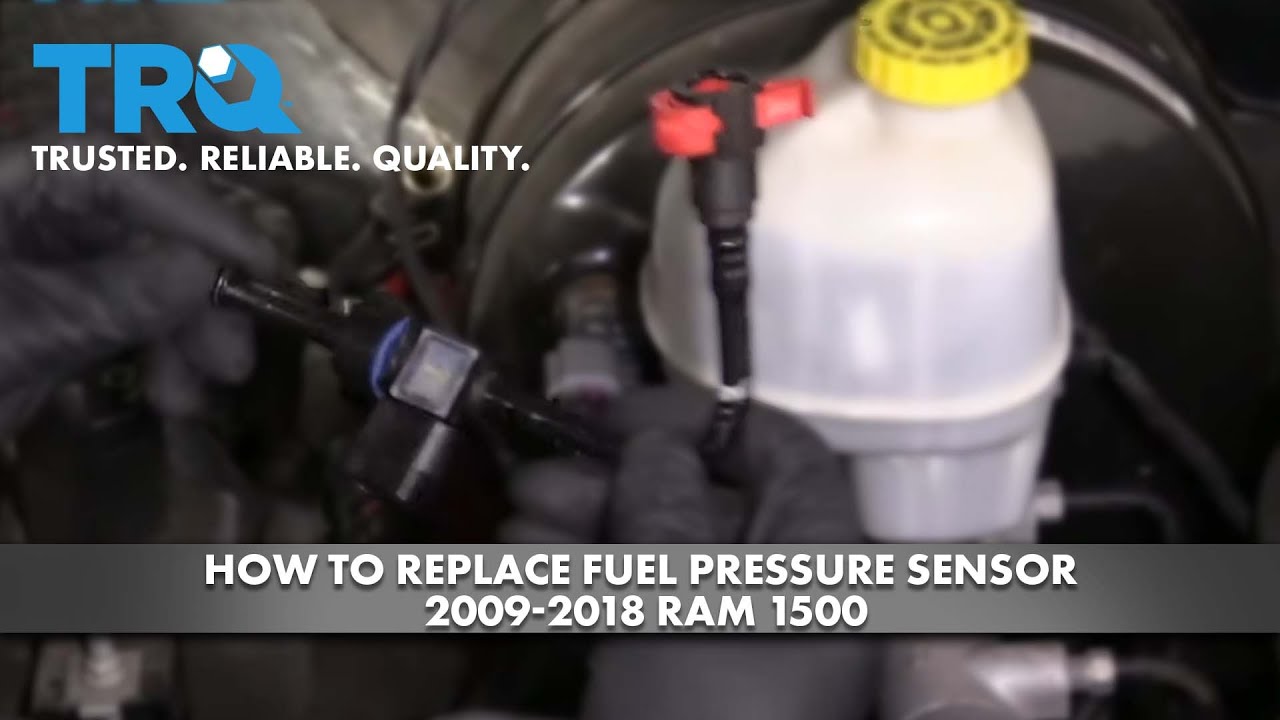
While the rail sensor manages how the engine runs, the fuel tank pressure sensor manages how the fuel system “breathes.” This sensor is situated on the top of the fuel pump module, which is located inside the fuel tank. Unlike the rail sensor, which is convenient to reach from the top of the engine bay, the tank sensor typically requires you to either lower the fuel tank or lift the truck’s bed to gain full access. It is a critical component of the Evaporative Emissions (EVAP) system, monitoring the pressure inside the tank to detect leaks as small as a pinhole.
When this sensor fails, it rarely causes the engine to stall. Instead, it triggers an annoying “Gas Cap” light on the dashboard or throws “small leak” codes like P0456 or P0457. In many generations of the Ram 1500, this sensor is integrated directly into the fuel pump assembly. This means if the sensor fails, you may need to replace the entire fuel pump module, making it a significantly more expensive and labor-intensive repair.
Replacing the fuel tank pressure sensor can take 2-4 hours of labor if the fuel tank needs to be drained and lowered. If your truck has a full tank of gas, the job becomes exponentially more difficult and dangerous due to the weight of the fuel.


A vehicle failing a state emissions test is a classic example of a faulty tank pressure sensor signal. Even if the truck drives perfectly, the PCM cannot verify that the fuel system is sealed, preventing the emissions monitors from reaching a “Ready” state. This illustrates why understanding the dual-sensor setup is vital for proper diagnosis.

Comparing Fuel Rail vs. Fuel Tank Sensors: Diagnostic Priorities
Knowing which sensor to target depends entirely on the symptoms your Ram is exhibiting. From a diagnostic priority standpoint, the fuel rail sensor is the “emergency” part—if it fails, your truck might not get you home. The tank sensor is the “compliance” part—if it fails, you won’t pass inspection, but the truck will usually still drive. According to community data and automotive forums, fuel rail sensor issues are 30% more likely to cause an immediate ‘limp mode’ event than tank pressure sensors.
To accurately differentiate between the two, you must use an OBD-II scanner to view ‘Live Data.’ Monitoring ‘Fuel Rail Pressure’ will show you real-time PSI fluctuations as you throttle the engine. If the pressure drops or reads as a static 0 PSI while the engine is running, the rail sensor or the fuel pump itself is failing. Conversely, ‘Fuel Tank Vapor Pressure’ should fluctuate only slightly as the EVAP purge valve opens and closes.
Finding Qualified Technicians Serving Your Local Community
For many owners, especially those with high-mileage commercial trucks, proactive replacement is the best strategy. However, the complexity of modern fuel systems often requires a trusted local technician. Finding a shop serving your area that specializes in Mopar vehicles is crucial because they will have the specific diagnostic software needed for sensor calibration and ‘relearn’ procedures. After a sensor is replaced, the ECU must sometimes be told that a new part is present to reset the fuel trim adaptations.
By The Numbers
Average Replacement Cost
Higher Limp Mode Risk (Rail)
Normal Idle Pressure
According to an official guide, the average cost for this repair ranges from $132 to $274, including labor. While this is a general estimate, local rates in your nearby area may vary based on demand and shop expertise. I’ve seen cases where a local shop serving the community correctly diagnosed a simple wiring harness ground issue rather than a faulty $150 sensor, saving the owner hundreds. This is why vetting a local mechanic based on their experience with community feedback is so important.
Steps for Diagnosis and Replacement of the Ram 1500 Sensor
If you’ve determined that the fuel rail pressure sensor is the culprit, replacement is a job that most competent DIYers can handle with basic tools. However, extreme caution is required. Fuel rail pressure on a modern Ram 1500 can exceed 50-60 PSI at idle and much higher on EcoDiesel models. You must relieve this pressure before opening the system to avoid fuel spraying onto a hot engine.
📋
Step-by-Step Replacement Guide
Locate the fuel pump fuse in the Power Distribution Center (fuse box). Pull the fuse while the engine is idling and wait for the truck to stall. This safely bleeds off the high pressure in the rail.


Gently slide the red locking tab on the electrical connector and press the release clip. These become brittle with age, so work carefully to avoid snapping the connector.
Use a deep-well socket (typically 24mm or 27mm) to unscrew the old sensor. Lubricate the new sensor’s O-ring with a tiny drop of clean engine oil and torque it to factory specifications.
Once the new sensor is installed, reinstall the fuse, prime the system by cycling the ignition to “ON” several times without cranking, and then start the engine. Always perform a visual check for fuel leaks while the engine is running. A successful repair should result in an immediate improvement in idle quality and throttle response. If the check engine light persists, use your scan tool to clear the codes and perform a few drive cycles to allow the PCM to relearn the new sensor’s data parameters.
In summary, the fuel rail pressure sensor is located on the engine intake manifold and controls immediate performance, while the fuel tank pressure sensor is located on the fuel pump module and manages EVAP system integrity. Accurate diagnosis using OBD-II tools is essential to differentiate between sensor failure and mechanical fuel pump issues. If your Ram 1500 is displaying a check engine light or experiencing power loss, contact a local certified technician nearby to perform a fuel system pressure test today.
Frequently Asked Questions
Where is the fuel pressure sensor located on my Ram 1500?
On most Ram 1500 models, the primary fuel rail pressure sensor is located directly on the fuel rail, typically toward the rear of the engine on the driver’s side for V8 models or the passenger side for V6 models. A secondary fuel tank pressure sensor is located on top of the fuel tank as part of the fuel pump assembly.



How do I know if my fuel pressure sensor is bad?
Common symptoms of a failing fuel pressure sensor include a lit check engine light (codes P0191, P0193), decreased fuel economy, engine stalling, rough idling, and difficulty starting the vehicle. You may also notice a significant drop in engine power under heavy acceleration or when towing.
Can I replace the fuel pressure sensor myself?
Replacing the fuel rail pressure sensor is a manageable DIY task for those with basic tools, provided the fuel system pressure is properly relieved first. However, replacing the fuel tank pressure sensor is more difficult, as it often requires lowering the fuel tank or removing the truck bed to access the fuel pump module.
How much does it cost to replace a fuel pressure sensor on a Ram 1500?
On average, the cost for a Ram 1500 fuel pressure sensor replacement ranges between $130 and $300. This includes approximately $50 to $150 for the part itself and $80 to $150 in labor costs. Prices may vary based on your local community’s labor rates and whether you use OEM Mopar parts.
What is the difference between a fuel rail pressure sensor and a fuel tank pressure sensor?
The fuel rail pressure sensor monitors the high-pressure fuel being delivered to the injectors for combustion. The fuel tank pressure sensor, part of the EVAP system, monitors low-pressure vapors inside the tank to detect leaks and ensure emissions compliance. Rail sensor failure affects engine performance, while tank sensor failure usually affects emissions testing.
![2022 Ram 1500 Brush Guards: Top Picks [2026]](https://truckguider.com/wp-content/uploads/2026/03/2022-ram-1500-brush-guard-featured.webp)
![2023 Ram 1500 Classic Tradesman: Full Specs & Data [2026]](https://truckguider.com/wp-content/uploads/2026/03/2023-ram-1500-classic-tradesman-featured.webp)
![Dodge Ram 1500 P0172 Code: Complete Fix Guide [2026]](https://truckguider.com/wp-content/uploads/2026/03/p0172-dodge-ram-1500-featured.webp)
![2001 Dodge Ram 1500 Oil Type, Capacity, and: Full Specs & Data [2026]](https://truckguider.com/wp-content/uploads/2026/03/2001-dodge-ram-1500-oil-type-featured.webp)
![P018C Ram 1500: Fix & Reset Guide [2026]](https://truckguider.com/wp-content/uploads/2026/03/featured-fde55ade-768x768.webp)