
Ram 1500 Check Engine Light Reset: When to Clear & Fix (Guide 2026)

A Ram 1500 check engine light reset should be done only after you scan the truck, save the diagnostic trouble code, and fix the cause. The cleanest reset method is using an OBD2 scanner to clear the stored code from the Powertrain Control Module, also called the PCM.
Do not treat the reset as the repair. A steady light usually means the truck has stored an emissions or engine fault. A flashing check engine light usually means active misfire risk, and Ram owner manuals warn that continued driving can damage the catalytic converter.
This guide explains the safe reset process, the risky shortcuts, common Ram 1500 causes, and when the light needs a shop diagnosis instead of another reset.
Ram 1500 Check Engine Light Reset Flow
Clearing the light is the final step, not the repair. Use this flow to avoid hiding a fault that can return after the next drive cycle.
Scan The Truck
Plug an OBD2 scanner into the port under the driver-side dashboard.
Read Codes First
Record stored, pending, and permanent diagnostic trouble codes before clearing anything.
Fix The Cause
Repair the issue linked to EVAP, ignition, fuel trim, oxygen sensor, or emissions faults.
Clear Codes
Use the scanner erase function only after the fault has been corrected.
Verify Readiness
Drive normally and confirm the light stays off after readiness monitors run.
Reset Is Usually Safe When
- The loose gas cap or minor EVAP issue has been corrected.
- The truck runs normally with no misfire or overheating.
- You already recorded the codes for future diagnosis.
Do Not Reset And Keep Driving When
- The check engine light is flashing.
- The engine is shaking, misfiring, or losing power.
- Oil pressure, coolant temperature, or charging warnings are active.
Quick Answer For Ram 1500 Check Engine Light Reset
Recommended Best Deal Products


The best way to reset the check engine light on a Ram 1500 is to connect an OBD2 scanner, read and record the Diagnostic Trouble Codes, repair the problem, then use the scanner’s erase or clear codes function.
For most 1996 and newer gas Ram 1500 trucks, a basic OBD2 scanner can read and clear engine related codes. Newer 2018 and later FCA and Stellantis trucks may need a scan tool with Secure Gateway access for deeper module functions, but basic emissions code reading is still where you should start.
Here is the safe reset order:
- Park the truck on level ground.
- Turn the ignition to ON without starting the engine.
- Plug the scanner into the OBD2 port under the driver side dash.
- Read stored, pending, and permanent codes.
- Save the code numbers and freeze frame data.
- Repair the actual fault.
- Clear the codes with the scanner.
- Restart the truck and confirm the light stays off.
- Check readiness monitors before any emissions inspection.
If the light comes back immediately, the fault is still active. Clearing it again will not fix the truck.
For owners comparing Ram 1500 maintenance and reliability patterns, the site’s Ram 1500 Years to Avoid guide is useful background before buying a used truck with repeated warning light history.
What The Check Engine Light Means On Ram 1500 Trucks
The check engine light is the Malfunction Indicator Light, usually shortened to MIL. It turns on when the PCM or Engine Control Module detects a fault that can affect emissions, drivability, engine protection, or monitored system performance.
On Ram 1500 trucks, the light can be triggered by something simple, such as a loose fuel cap, or something expensive, such as a misfire that damages the catalytic converter.
The light behavior matters.
A steady check engine light means the truck has detected a fault but may still drive normally. You should scan it soon and avoid guessing.
A flashing check engine light is more serious. It usually points to an active misfire severe enough to risk catalyst damage. If your Ram 1500 shakes, runs rough, smells like raw fuel, or loses power while the light flashes, stop hard driving and diagnose it before continuing.
For 5.7L Hemi V8 owners, engine specific problems can overlap with general check engine light diagnosis. The Ram 1500 5.7 Hemi engine diagram can help identify coils, sensors, intake parts, and other components before you start tracing a code.
How To Reset The Light With An OBD2 Scanner
Recommended Best Deal Products


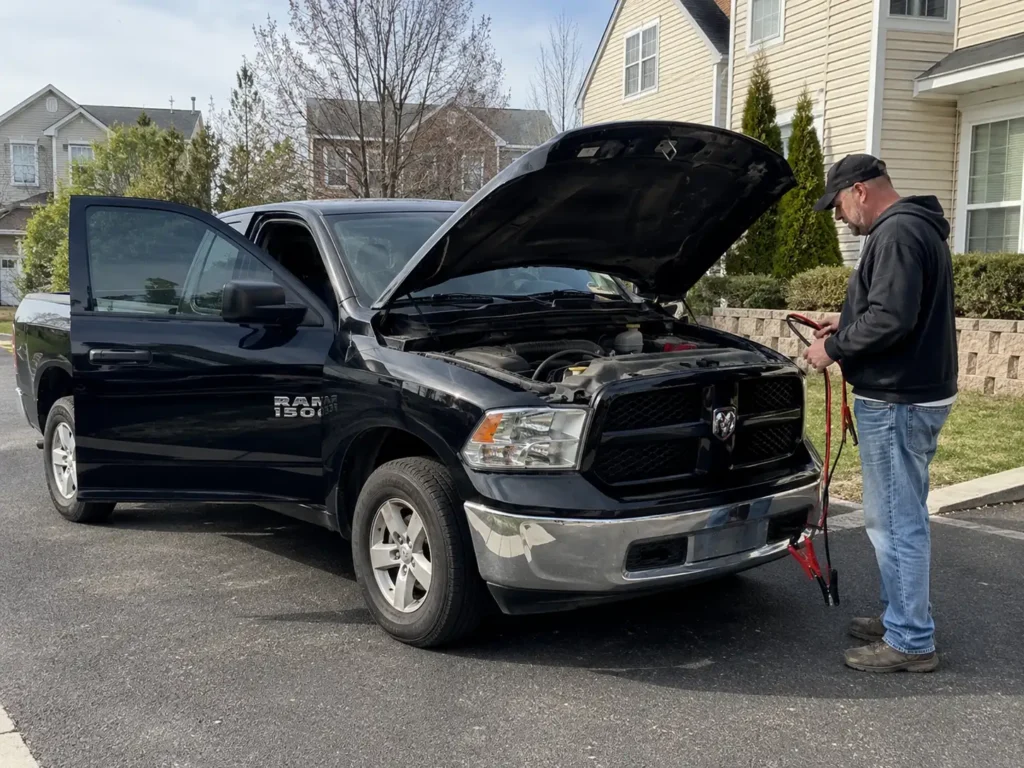
An OBD2 scanner is the proper tool for a Ram 1500 check engine light reset because it lets you see what caused the light before you erase anything.
Use this method for 1996 and newer Ram 1500 gas trucks, including common 3.6L Pentastar V6 and 5.7L Hemi V8 models.
Step 1: Find The OBD2 Port
The OBD2 port is under the driver side dashboard, usually near the steering column. It is a 16 pin trapezoid shaped connector.
Turn the ignition off before plugging in the scanner. Make sure the connector seats firmly so the tool does not lose communication during the scan.
Step 2: Read The Stored Codes
Turn the ignition to ON or RUN without starting the engine unless your scanner asks for the engine to be running.
Select “Read Codes” or “Diagnostics.” Record every stored, pending, and permanent code. Also save freeze frame data if your tool supports it.
Freeze frame data matters because it shows engine conditions when the fault was detected. Coolant temperature, RPM, vehicle speed, fuel trim, and load can point you toward the real cause.
Step 3: Fix The Cause First
Do not clear the code before diagnosis unless you already saved the data. Clearing too early erases clues.
A P0456 EVAP leak may need gas cap, purge, vent, or smoke test checks. A P0304 misfire may need plug, coil, injector, compression, or camshaft diagnosis. A P0128 often points toward thermostat rationality or coolant temperature behavior.
Step 4: Clear The Codes
After the repair, select “Erase Codes,” “Clear Codes,” or “Clear DTCs.” The scanner will usually ask you to confirm.
The check engine light should turn off after the clear command if the fault is no longer active. Start the engine and let it idle. Then rescan for returning codes.
Step 5: Verify Readiness
Clearing codes resets emissions readiness monitors. That means the light may be off, but the truck may not be ready for inspection.
Drive the truck through mixed city and highway conditions until the monitors complete. Some monitors, especially EVAP and catalyst tests, need specific temperature, fuel level, and drive conditions.
3 Reset Methods You Should Avoid
Some Ram 1500 owners try to reset the check engine light without a scanner. These methods can work temporarily, but they create problems if you care about diagnosis or inspection readiness.
Battery Disconnect Reset
Disconnecting the battery may turn the light off on some trucks, but it can also reset readiness monitors, erase learned values, and hide the diagnostic path.
This is a poor choice before emissions testing. It can make the truck show “not ready,” even if the check engine light is off.
Battery disconnect also does not repair an active fault. If the misfire, EVAP leak, thermostat issue, or sensor fault remains, the light will return after the monitor runs again.
Fuse Pull Reset
Pulling PCM or ECM related fuses is not a clean reset method. It can create extra low voltage or communication related trouble codes.
Use a scanner instead. A fuse pull makes diagnosis messier and adds risk without giving you useful data.
Key Cycle Reset
Turning the key on and off does not normally reset a Ram 1500 check engine light by itself.
Factory workflows may use an ignition cycle as part of a scan tool process, especially when a code moves from active to stored. That is different from using key cycles as a standalone fix.
7 Common Causes After The Light Comes Back
Recommended Best Deal Products


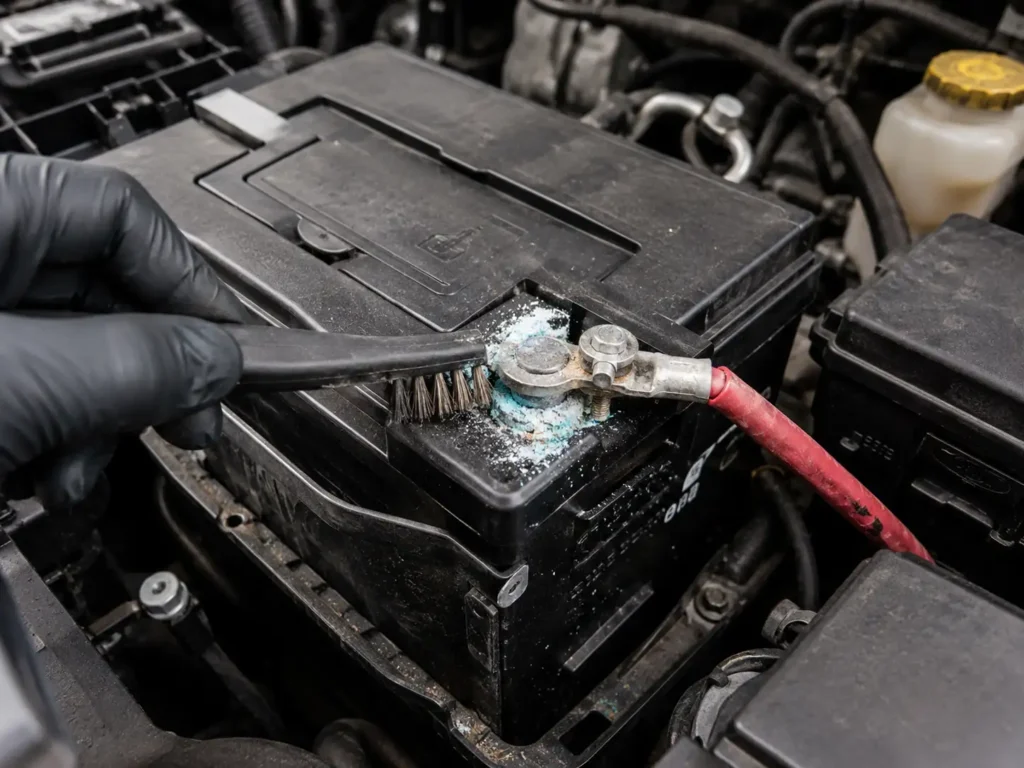
If the Ram 1500 check engine light comes back after reset, the truck still has an active or recurring fault. These are the causes we would check first.
| Code Family | Common Cause | First Diagnostic Move |
|---|---|---|
| P0456 or P0440 range | EVAP leak | Check fuel cap, purge valve, vent valve, and smoke test |
| P0300 to P0308 | Random or cylinder misfire | Check plugs, coils, injectors, compression, and cam wear |
| P0128 | Coolant temperature rationality | Compare coolant temperature data with thermostat behavior |
| P0420 or P0430 | Catalyst efficiency | Check misfire history, exhaust leaks, and O2 sensor data |
| P0171 or P0174 | Lean condition | Check intake leaks, fuel trims, MAF or MAP data |
| P013x or P015x | Oxygen sensor circuit | Verify wiring, sensor response, and fuel trim pattern |
| Diesel SCR or DEF codes | EcoDiesel emissions fault | Check DEF quality, NOx sensors, reductant pressure, and EGR data |
The 5.7L Hemi V8 deserves special attention when misfire codes come with ticking, rough idle, or power loss. Some Hemi trucks can develop valvetrain issues that a simple plug or coil swap will not fix.
For owners dealing with Ram diesel systems, the 6.7 Cummins engine diagram component guide is a better match for heavy duty Ram trucks than a half ton gas guide, especially when tracing EGR, MAP sensor, and emissions hardware.
When A Reset Is Safe And When It Is Not
A reset is safe only when you have already read the code, saved the data, repaired the fault, and need to confirm that the light stays off.
A reset is not safe when the light is flashing, the engine is misfiring, the truck is overheating, or the same code returns immediately.
Use this decision table before clearing the light.
| Situation | Should You Reset It | What To Do First |
|---|---|---|
| Steady light after loose gas cap | Yes, after scanning | Verify EVAP code and cap seal |
| Steady light with no symptoms | Yes, after diagnosis | Save codes and repair the cause |
| Flashing light with rough running | No | Stop hard driving and diagnose misfire |
| Light returns immediately | No | Treat it as an active fault |
| Before emissions inspection | Only after repair | Check readiness monitors first |
| Truck under warranty | Not before saving data | Let the dealer see stored code history |
If your Ram 1500 is still under basic, powertrain, emissions, recall, or campaign coverage, avoid erasing evidence before a dealer scan. Code history and freeze frame data can help validate the repair path.
How Long Before The Light Resets Itself
A Ram 1500 check engine light can turn off by itself if the fault no longer appears across enough completed monitor cycles. But that does not happen instantly.
For example, an EVAP small leak monitor may need the right fuel level, ambient conditions, temperature behavior, and drive cycle. A simple trip around the block may not run the test.
Permanent Diagnostic Trouble Codes are even slower to disappear. These codes are designed to stay until the system proves the repair through a completed monitor. That is why a scanner may show no active light but still show pending or permanent code history.
If you cleared the code and the truck shows “not ready,” drive normally for several days with mixed speeds. Then check readiness again with a scanner before going to an inspection station.
What A Shop Will Check If The Light Will Not Stay Off
A repair shop will not just clear the code again. A proper diagnosis starts with the code family and live data.
For misfire codes, the technician will usually check spark plugs, ignition coils, injector operation, compression, cylinder leakage, camshaft behavior, and fuel trims.
For EVAP codes, the shop may use a smoke machine to find small leaks that are hard to spot visually.
For catalyst codes, the shop should check for misfire history and exhaust leaks before replacing a catalytic converter. Replacing the converter without fixing the cause can ruin the new part.
For newer Ram trucks with Secure Gateway restrictions, the shop may need an approved scan tool or AutoAuth access for enhanced module functions. This is more common on 2018 and newer FCA and Stellantis models.
Repair costs vary by code and engine. A single ignition coil is usually far cheaper than catalyst or camshaft work. That is why reading the code before resetting the light is the only smart first move.
Best Scanner Type For Ram 1500 Owners
For a Ram 1500 owner who does basic maintenance, a mid level OBD2 scanner is enough for most check engine light work. Look for a tool that reads stored, pending, and permanent codes, shows freeze frame data, displays I/M readiness, and supports live data.
A basic $50 to $100 reader can clear engine codes, but it may not show enough data for real diagnosis.
A Bluetooth scanner works well if you prefer phone based graphs and live data. Just make sure the adapter is from a reputable brand and supports your model year.
A higher level tablet scanner makes sense if you own a newer Ram, work on multiple trucks, or need ABS, SRS, transmission, or bidirectional functions.
For affiliate planning, this article can naturally support a future “Best OBD2 Scanner for Ram 1500” buying guide. That would fit the Truck Guider audience because owners often search for a tool right after a warning light appears.
5 Mistakes That Make The Check Engine Light Return
Most repeat check engine light problems come from clearing the code too early or replacing parts without testing.
The first mistake is replacing an oxygen sensor just because an oxygen sensor code appears. Fuel trim, vacuum leaks, exhaust leaks, and wiring faults can all affect oxygen sensor readings.
The second mistake is ignoring pending codes. Pending codes can show the fault before the light fully returns.
The third mistake is skipping freeze frame data. The truck may only fail when cold, hot, loaded, idling, or cruising.
The fourth mistake is disconnecting the battery before inspection. The light may go off, but readiness monitors may fail the test.
The fifth mistake is driving with a flashing light. A flashing MIL can turn a simple misfire into a catalytic converter repair.
If your check engine light is part of a bigger used truck reliability concern, compare the warning history with the Ram EcoDiesel Years to Avoid guide before buying a used EcoDiesel model.
Final Verdict On Resetting A Ram 1500 CEL
The right Ram 1500 check engine light reset method is simple: scan first, save the code, fix the cause, then clear it with an OBD2 scanner. That protects the diagnostic data and gives you a real chance of keeping the light off.
Battery disconnects, fuse pulls, and repeated blind resets are shortcuts that often create readiness problems or hide the actual fault.
If the light is steady and the truck drives normally, start with a scanner. If the light flashes, the engine runs rough, or the same code returns immediately, stop treating it like a reset job and diagnose the failure before it gets expensive.
FAQ
Can I Reset A Ram 1500 Check Engine Light Without A Scanner
You can sometimes turn the light off by disconnecting the battery, but we do not recommend it. A scanner is safer because it lets you read the code, save freeze frame data, and clear the fault without wiping useful information blindly.
Why Did My Ram 1500 Check Engine Light Come Back
The light came back because the fault is still active or the system detected the same problem again. Common causes include EVAP leaks, misfires, thermostat issues, oxygen sensor faults, catalyst efficiency codes, and fuel trim problems.
Will Disconnecting The Battery Clear Ram 1500 Codes
Disconnecting the battery may clear some stored information, but it can also reset emissions readiness monitors. That can cause an inspection problem even if the check engine light turns off temporarily.
Is It Safe To Drive A Ram 1500 With The Check Engine Light On
It may be safe for short, gentle driving if the light is steady and the truck runs normally. If the light flashes, the engine misfires, power drops, or the truck shakes, stop hard driving and diagnose it immediately.
How Many Miles After Reset Before Inspection
There is no single mileage number that works for every Ram 1500. Many trucks need several mixed city and highway trips before readiness monitors complete, especially EVAP and catalyst monitors.
![2023 Ram 1500 Classic Tradesman: Full Specs & Data [2026]](https://truckguider.com/wp-content/uploads/2026/03/2023-ram-1500-classic-tradesman-featured.webp)
![Service Electronic Throttle Control Ram 1500 [2026]](https://truckguider.com/wp-content/uploads/2026/03/service-electronic-throttle-control-ram-featured.webp)
![Ram 1500 Single Cab Short Bed Performance, Specifications, [2026]](https://truckguider.com/wp-content/uploads/2026/03/featured-7450283a.webp)