Ram 1500 Years to Avoid and Best Years to Buy (2002-2026)

The Ram 1500 years to avoid are 2002 to 2003, 2011 to 2012, 2014 and the 2015 to 2016 EcoDiesel, and the 2019 launch year. The best years to buy are 2017 and 2018, then 2020. We reached this by pulling every NHTSA complaint and recall campaign filed for the Ram 1500 from 2002 to 2026 and ranking each model year on what owners actually reported.
Ram 1500 Years to Avoid and Best Years to Buy
Each verdict below is our judgment, based on the NHTSA data we list beside it. “Complaints” counts owner reports filed with NHTSA through October 10, 2026. “Recalls” counts vehicle recall campaigns, not equipment recalls. Complaints are not verified failure rates, and older trucks have had more time to collect them, so read the counts as a guide to where problems cluster.Model year Our verdict Complaints Recalls What the NHTSA data shows 2002 Avoid 964 3 Structure complaints are 301 (31%), mostly dashboard cracking and frame rust 2003 Avoid 1,359 2 Air bag complaints are 473 (35%), tied to the air bag recalls; structure 293 (22%) 2004 Caution 1,157 1 Air bags 373 (32%); 211 complaints mention stalling 2005 Caution 1,209 4 Power train 604 (50%), mostly owners citing the driveshaft and rear axle pinion nut recall 2006 Caution 817 9 Nine recalls, including the TIPM transfer case calibration, ABS control unit and air bags 2007 Good 534 4 Low complaint count; the driver air bag inflator recall must be done 2008 Good 579 5 Low complaint count; the driver air bag inflator recall must be done 2009 Caution 716 4 Rear axle pinion nut recalls; power train 242 (34%) 2010 Caution 513 See note Power train 236 (46%); covered by the 2009 to 2012 pinion nut recall 2011 Avoid 689 4 TIPM or fuel pump relay named in 141 complaints (20%); 125 mention stalling 2012 Avoid 697 6 TIPM 64, lifter or camshaft 44, exhaust manifold 50 2013 Caution 1,278 11 Steering is 639 (50%); loss of power steering assist is named in 562 (44%) 2014 Avoid 1,771 16 Most complaints of any year; power steering 402, EcoDiesel 105 2015 Avoid EcoDiesel, gas Caution 1,456 17 EcoDiesel named in 202 (14%); power steering 267 2016 Avoid EcoDiesel, gas Caution 1,547 16 ABS named in 248 (16%); EcoDiesel 188; power steering 246 2017 Best 881 13 Down from 1,547 in 2016; power steering 177 2018 Best 662 15 Lowest count of the fourth generation; screen and camera complaints 103 2019 Avoid 1,487 29 Most recalls of any year; power steering 238, transmission or shifter 146 2020 Good 639 14 Complaints fall by more than half from 2019 2021 Caution 681 15 Stalling is named in 207 (30%) 2022 Caution 621 16 Stalling is named in 224 (36%) 2023 Good so far 202 11 Newer truck, so fewer complaints yet 2024 Too new 75 6 Not enough data to rank 2025 Caution 359 8 Electrical system is 186 (52%); the engine lineup changed 2026 Too new 98 9 Not enough data to rank


Note for 2010: NHTSA lists no separate recall campaigns under that model name, but recall 13V-038 covers 2009 to 2012 trucks built between December 2009 and October 2011. NHTSA files the 2002 to 2004 trucks under the model name “RAM”, which may include some heavier trucks. NHTSA also lists the Ram 1500 Classic with the 1500, so the counts above include it.
Ram 1500 Years to Avoid at a Glance
Owner complaints and recall campaigns, model years 2009 to 2025.
NHTSA complaints by model year
Complaints filed through October 10, 2026. Older trucks have had longer to collect them. Bars are scaled to 1,771.
Biggest single theme in a year
Share of that year’s complaints that name the problem in their text. Our keyword match, approximate. Bars are scaled to 50%.
Recalls to check by VIN
How We Rated the Years
We pulled all Ram 1500 complaints and recall campaigns from NHTSA’s public API on October 10, 2026, for model years 2002 through 2026. For each year we looked at four things:
- Complaint volume. How many owners reported a problem to NHTSA.
- Concentration. Whether one failure makes up a large share of the complaints. A year where 44% of complaints name the same failure is a worse bet than one with the same total spread across many small issues.
- Recalls. The number of vehicle recall campaigns, and whether any told owners not to drive the truck.
- Theme counts. How many complaint texts name a specific problem, such as the TIPM, a camshaft, power steering or stalling. These are our own text matches, so treat them as approximate.
Consumer Reports and J.D. Power scores are not free to read in full, so we did not use them. Your own truck’s VIN, service history and recall status matter more than the year.
Ram 1500 Years to Avoid: 2002 to 2008
The third generation has the oldest trucks on the list, and most of the complaint volume is about age and a few known recalls.
2002 and 2003. These years have the most structural complaints. NHTSA complaints for 2002 name the dashboard cracking and frame or bed rust, and 2003 adds the air bag recalls: NHTSA recall 15V-312 covers the 2003 Ram 1500, and 473 of the 1,359 complaints (35%) are filed under air bags. Both years are worth skipping unless the truck is rust-free and the recall work is documented.
2004 and 2005. The 2004 to 2005 trucks have a passenger air bag inflator recall in humid states (14V-770). Recall 15V-313 covers the driver air bag on 2004 to 2008 Ram 1500s, and NHTSA tells owners not to drive an affected truck until the part is replaced. In 2005, recall 14V-796 covers a rear axle pinion nut that can loosen, and NHTSA warns that the axle may seize and the driveshaft may detach.
2006 to 2008. The 2006 model year has nine recall campaigns, including a TIPM calibration problem on four-wheel-drive trucks (05V-461). The 2007 and 2008 trucks have fewer complaints than the years before them. Their main risk is the same driver air bag inflator recall as 2004 to 2008, so run the VIN before you buy.
Ram 1500 Years to Avoid: 2009 to 2012
2009 and 2010. The rear axle pinion nut is the main recall story. Recall 12V-474 covers 2009 to 2010 trucks built between July and November 2009, and 13V-038 widens it to 2009 to 2012 builds. NHTSA says a loose pinion nut can lock the axle with little warning. Power train is the biggest complaint category in both years.
2011 and 2012. These are the TIPM years. The TIPM, or Totally Integrated Power Module, is the truck’s central fuse and relay box. In 2011, 141 of 689 complaints (20%) name it or the fuel pump relay, and another 125 mention stalling. The TIPM mentions fall to 64 in 2012 and to 13 or fewer from 2014. Our guides to the 2011 Ram 1500 TIPM fuel pump relay repair and the 2012 Ram 1500 fuel pump relay location show where the relay is and what a failure looks like.
These years also have lifter and camshaft complaints, 54 in 2011 and 44 in 2012. There is no NHTSA recall for lifters, so the only data we have is owner reports.


Recall 18V-160 covers 2009 to 2012 trucks registered in northern salt-belt states: the front fuel tank strap bracket can corrode, and NHTSA warns the tank could drop. If you buy one from a snow state, ask whether the recall repair was done.
Ram 1500 Years to Avoid: 2013 to 2016
2013. The standout is steering. 639 of 1,278 complaints (50%) are filed under steering, and 562 name a loss of power steering assist. NHTSA recall 16V-167 covers an electric power steering control board problem, but it only covers 2015 to 2016 trucks built from January to September 2015. The 2013 and 2014 trucks, which have the most steering complaints, are outside that recall’s model years.
2014. This model year has the most complaints, 1,771. Power steering is named in 402, the 3.0L EcoDiesel in 105, stalling in 118, and transmission or shifter problems in 111. It also has 16 recall campaigns, including a tailgate latch recall (19V-347) that covers every 2013 to 2014 Ram 1500 with a power locking tailgate.
2015 and 2016. EcoDiesel complaints peak here, 202 in 2015 and 188 in 2016. The EcoDiesel recalls are covered in the next section. The gas trucks are not trouble-free: in 2016, 248 complaints name the ABS, and 20 of them cite a C2200 fault code from the ABS control module. Recall 15V-661 covers 2015 to 2016 trucks built June to September 2015 with a rear axle shaft that may fracture, and 17V-198 covers a differential pin screw on 2016 to 2017 trucks.
If you are shopping for one of these years, a gas truck with documented recall work is a reasonable risk. An EcoDiesel from 2014 to 2016 should come with proof of every recall repair.
The EcoDiesel: Recalls, the Emissions Settlement and Model Years
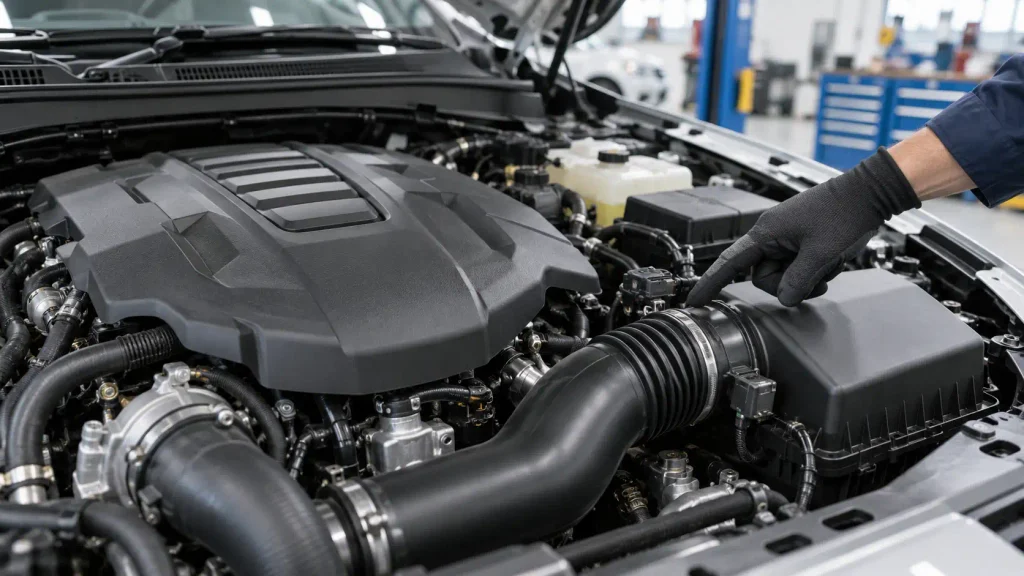
The 3.0L EcoDiesel was offered in the Ram 1500 from 2014. Ram announced in September 2022 that 2023 would be the last model year for it. NHTSA lists these EcoDiesel recalls:Recall Years Problem 15V-517 2014 to 2015 diesel 4×2 Battery harness can rub the engine mount bracket and short 19V-757 2014 to 2019 EGR cooler can crack and let coolant vapor combust in the intake manifold; fire risk 20V-475 and 23V-411 2014 to 2018, then 2014 to 2019 Crankshaft position sensor tone wheel can delaminate and stall the engine 22V-406 2014 to 2019 High pressure fuel pump failure can send debris into the fuel system and cause fuel starvation 22V-767 and 23V-263 2020 to 2023 High pressure fuel pump may fail and stall the engine
Separately, the US government and California announced a settlement with FCA on January 10, 2019, over 2014 to 2016 3.0L EcoDiesel Ram 1500 and Jeep Grand Cherokee trucks. The EPA says the settlement covers about 101,000 vehicles, including 75,331 Ram 1500s, and includes a $305 million civil penalty. Owners get a software fix and an extended emissions warranty.
We found no NHTSA recall that blames the EcoDiesel’s crankshaft bearings or main bearings, so we do not repeat the claim that the engine has undersized bearings. If you want the full diesel history, see our Ram EcoDiesel years to avoid guide and the 5.7 Hemi vs 3.0 EcoDiesel comparison.
The Hemi Tick and Exhaust Manifold Complaints
“Hemi tick” covers two different things, and NHTSA has no recall for either one. The data we have is owner complaint text:
- Lifters and camshaft. Named in 54 complaints for 2011, 44 for 2012 and 27 to 29 for 2013 and 2014, then 21 or fewer for most of the later years. 2019 has 23.
- Exhaust manifold. Named in 14 to 60 complaints a year from 2009 to 2020, such as 56 in 2014 and 60 in 2019. They fade after 2020: 17 in 2021 and 4 in 2022.
Owners describe a manifold tick as loudest on a cold start and fading as the engine warms, while a lifter or cam tick tends to stay. Our guides to Hemi tick at idle and how to prevent Hemi tick cover the difference, and the 5.7 Hemi exhaust manifold bolt torque sequence covers the repair.
2017 and 2018: The Best of the Fourth Generation
The 2017 and 2018 trucks have far fewer complaints than 2014 to 2016: 881 and 662. Power steering mentions fall from 246 in 2016 to 177 in 2017 and 60 in 2018, and EcoDiesel mentions fall to 64 in 2017.
“Best” does not mean recall-free. These years carry the column shifter recall (17V-821 and 18V-100), the cruise control recall (18V-332), and the power tailgate latch recalls (18V-486 and 19V-347). 2018 has 103 complaints that mention the screen or backup camera, and 18V-398 is a backup camera recall. Check that the work was done.
2019: The Fifth-Generation Launch Year
The 2019 model year has 29 recall campaigns, the most of any year in our data, and 1,487 complaints. The recalls cover a wide spread of parts:


- Brake pedal. 19V-067 covers adjustable pedals where the brake pedal may move too far and separate.
- Steering. 19V-201 covers steering column stub shafts that may break, and 19V-020 and 19V-812 cover electric power steering faults.
- Electrical. 19V-142 covers a 48-volt auxiliary battery wire terminal behind the rear seat that may overheat, and 19V-556 covers an instrument cluster that may not show warnings.
- Drivetrain. 18V-556 covers a rear differential that may be insufficiently filled, 19V-324 a rear driveshaft weld, and 20V-080 a transfer case gear.
Complaints for 2019 also include rear window leaks, 78 mentions, and shifter or transmission problems, 146 mentions. NHTSA has no recall for the rear window leak, and our 2019 Ram 1500 rear window leak guide covers the repair. Our 2019 Ram 1500 reliability analysis goes further into this year.
2020 to 2023: A Calmer Stretch With One Pattern
Complaints fall to 639 in 2020, then 681 in 2021, 621 in 2022 and 202 in 2023, though 2023 is newer and still collecting. The pattern to know is stalling. In 2021, 207 complaints (30%) mention a stall or a shutoff, and in 2022 it is 224 (36%). Only a minority of those texts name the diesel fuel pump or the eTorque system, so the cause is mixed. Two recalls are relevant:
- 23V-265 covers 2021 Ram 1500 trucks with the 5.7L eTorque: the powertrain control module software may cause an engine stall.
- 22V-767 and 23V-263 cover the high pressure fuel pump on 3.0L diesel trucks.
Our Ram eTorque problems guide covers the mild-hybrid system. If you are weighing a 2020 or 2021 Classic, our guide to the 2019 Ram 1500 Classic vs the new body style explains the difference. NHTSA files Classic recalls under the 1500, such as 21V-037, which NHTSA flagged as do-not-drive for 2020 to 2021 Classic SLT trucks built without a brake pedal push rod clip.
2023 also has recall 24V-413, which covers a transmission control unit weld that can leak fluid and cause a loss of drive power or park function.
2024 to 2026: Too New to Rank
The 2024 truck has 75 complaints and 6 recalls, and 2026 has 98 complaints and 9 recalls, which is too little to judge. The engine lineup changed twice:
- 2025. Ram dropped the Hemi V8 from the 1500 and moved to the Hurricane twin-turbo inline-six. Of 359 complaints, 186 (52%) are filed under the electrical system. Recalls include front wheel hub encoder rings that can disable stability control (24V-794) and headlight software (24V-942).
- 2026. Ram brought the 5.7L Hemi back on select trims, next to the Hurricane. Recalls so far include headlight wiring (26V-421), air bag connectors (26V-622) and tire pressure sensors (26V-623).
Our Hurricane engine problems and Hurricane engine overview guides track the new engine, and our 2026 Ram 1500 reliability page covers the current year.
Recalls to Check by VIN Before You Buy

Enter the VIN on NHTSA’s recall lookup for any truck you are considering. If the VIN is unclear, our Ram towing capacity by VIN guide shows how to decode it. These recalls matter most:Recall Years covered What it is 15V-313 2004 to 2008 Driver air bag inflator may rupture; NHTSA says do not drive until fixed 14V-770 2004 to 2005 Passenger air bag inflator, in high-humidity states 15V-312 2003 Passenger air bag recall 13V-038 2009 to 2012 Rear axle pinion nut can loosen and lock the axle 18V-160 2009 to 2012, salt-belt states Fuel tank strap bracket corrosion 17V-821 2009 to 2017 Column shifter can stick out of Park without the brake pedal pressed 18V-332 2014 to 2019 Cruise control may not disengage after a wiring short 19V-347 2013 to 2018 Power tailgate latch can open while driving 16V-167 2015 to 2016 Electric power steering board may cause loss of assist 19V-757 2014 to 2019 EcoDiesel EGR cooler crack and fire risk
What to Check When You Look at a Used Ram 1500
This section is general buying advice, not from NHTSA. It applies to the problems we saw in the data.
- Run the VIN and ask for proof of the recall repairs above. A recall that is open can be done free at a Ram dealer.
- Test the steering on a 2013 to 2016 truck. Drive slowly through a parking lot and watch for a power steering warning light or a heavy wheel.
- Check the ABS and brake warning lights on a 2014 to 2018 truck. A lit ABS light is worth a scan before you buy.
- Cold start the engine with the hood open. Listen for a ticking from the sides of a Hemi, and note whether it fades as the engine warms.
- Look in the fuse box of a 2011 to 2012 truck for added jumper wires or a bypass cable, which can signal a past TIPM problem.
- Ask for diesel service records if the truck is an EcoDiesel, including the EGR cooler, tone wheel and fuel pump recalls.
- Inspect the dashboard and frame of a 2002 to 2003 truck, and look for stained headliner near the rear window on a 2019 truck.
- Test the screen and camera on any 2018 or newer truck. Touch every corner of the display and check the backup camera.
Our Ram 1500 generations chart shows how to tell the generations apart, and the 2013 to 2023 Ram 1500 problems guide goes through issues by year.
Ram 1500 Air Suspension
Air suspension is an option on some trucks, and it is a small share of complaints in our data: 60 mentions in 2014 and 45 in 2016, less than 4% of either year. Our guides to Ram 1500 air suspension problems and the air suspension compressor replacement cover diagnosis and repair costs.
Ram 1500 Years to Avoid FAQ
What year Ram 1500 should you avoid?
Avoid 2002 to 2003, 2011 to 2012, 2014, the 2015 to 2016 EcoDiesel, and 2019. 2014 has the most NHTSA complaints of any year, 1,771, and 2019 has the most recalls, 29.
What is the best year for a Ram 1500?
2017 and 2018 are the best of the fourth generation, with 881 and 662 NHTSA complaints against 1,547 in 2016. Among newer trucks, 2020 is the strongest so far, with 639 complaints and a clear drop from 2019.
Is the 2014 Ram 1500 a bad year?
It has the most NHTSA complaints of any model year, 1,771, and 16 recall campaigns. Power steering, stalling and transmission complaints are the biggest groups, and the EcoDiesel adds more.


Is the Ram 1500 EcoDiesel reliable?
It has had several recalls, covering the EGR cooler, a crankshaft sensor tone wheel and a high pressure fuel pump, and the 2014 to 2016 trucks were part of an EPA emissions settlement. Buy one only with proof the recalls were done. See our EcoDiesel years to avoid guide.
Is the 2019 Ram 1500 reliable?
It has 29 recall campaigns and 1,487 NHTSA complaints. A 2019 with every recall completed and a clean service record can be a fair truck, but it is the year we would avoid first among the fifth generation.
Which Ram 1500 years have TIPM problems?
2011 and 2012. In 2011, 141 of 689 complaints (20%) name the TIPM or fuel pump relay, and 64 do in 2012. Mentions fall to 13 or fewer from 2014.
Is there a recall for Hemi tick or lifter failure?
We found no NHTSA recall for lifters, the camshaft or the exhaust manifold. The evidence is owner complaints, which name lifters or the camshaft in 54 complaints for 2011 and 44 for 2012.
Are the 2021 to 2023 Ram 1500s good?
2023 looks fine so far but is still collecting complaints. 2021 and 2022 have a stalling pattern, 30% and 36% of complaints, and recalls for the 5.7L eTorque and for the diesel fuel pump. Check the recall history before buying.
Is the 2025 Ram 1500 a good year?
It is too early to say. Ram dropped the Hemi V8 for 2025 and moved to the Hurricane inline-six, and 52% of its 359 complaints are about the electrical system. We would wait for more data or buy one with an extended warranty.
Does the Ram 1500 Classic have the same problems?
NHTSA lists the Classic with the Ram 1500, so we cannot separate them. Our Classic vs new body style guide compares the two.
Related Guides
- Most reliable years for the Ram 1500
- Ram EcoDiesel years to avoid
- 2013 to 2023 Ram 1500 problems
- 2019 Ram 1500 reliability analysis
- 2026 Ram 1500 reliability
- Dodge Ram 1500 generations chart
- Hurricane engine problems
- Ram eTorque problems
- Ford F-150 years to avoid
- Chevy Silverado years to avoid
- Best years for the Toyota Tundra
Theme counts, such as TIPM or power steering mentions, come from our own keyword matches in NHTSA complaint text and are approximate. Use the VIN lookup and a pre-purchase inspection before you buy. Last updated October 2026.