Ram Tradesman Vs Big Horn [2026]

Choosing the right light-duty truck requires a professional assessment of whether your daily operations demand pure utility or a balance of comfort and technology. In the competitive landscape of full-size pickups, the Ram 1500 stands as a titan of engineering, but the distinction between its entry-level trims—the Tradesman and the Big Horn—can significantly impact your operational efficiency and long-term satisfaction. Potential buyers often struggle to decide if the cost savings of the entry-level Tradesman outweigh the significant interior and technological upgrades offered by the Big Horn. This expert analysis will compare the Ram Tradesman and Big Horn across exterior durability, powertrain performance, interior quality, and total cost of ownership to help you make a reliable purchasing decision based on comprehensive data and trusted industry insights.
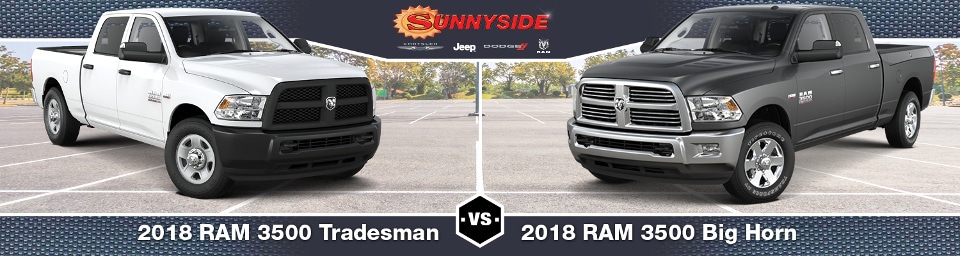
Exterior Specifications and Build Quality for Professional Utility
Recommended Best Deal Products


When evaluating a vehicle for professional use, the exterior is more than just a matter of style; it is a functional component of the vehicle’s longevity. The Ram Tradesman is the embodiment of utilitarian engineering. Its exterior is defined by black-finished bumpers and a black grille, which are intentionally unpainted to resist the inevitable abrasions of a job site. These components are made of high-impact resin, ensuring that minor dings or scratches do not lead to the unsightly paint chips or rust often seen on color-matched or chrome surfaces. For a construction fleet manager, the Tradesman represents a reliable choice because the cost of replacing or repairing these unpainted surfaces is significantly lower than their premium counterparts.
In contrast, the Big Horn trim (marketed as the Lone Star in Texas) is designed to project a more complete and premium professional brand image. It upgrades the exterior with chrome accents on the bumpers and grille, providing a polished look that appeals to private contractors who use their vehicle for both site visits and client meetings. The wheel configurations further differentiate the two: the Tradesman comes standard with 17-inch steel wheels—heavy-duty and easy to replace—while the Big Horn steps up to 18-inch aluminum wheels with options for 20-inch premium chrome-clad aluminum variants. These larger wheels improve the truck’s stance and aesthetic appeal but can be more prone to damage in off-road industrial settings.
High-Impact Resistance
Tradesman’s black resin bumpers prevent paint chipping and visible scratches from debris.
Aesthetic Versatility
Big Horn’s chrome detailing provides a professional appearance suitable for corporate environments.
Functionally, both trims share a common foundation: a 15-inch high-strength steel frame that provides class-leading durability and rigidity. This frame is the backbone of the Ram 1500’s capability. Lighting is another area of comparison; both trims feature Quad-Lens Halogen headlamps as standard equipment, which offer reliable visibility. However, the Big Horn offers exclusive access to the LED Lighting Group. This package includes LED headlamps, taillamps, and fog lamps, which not only provide superior illumination for night-time navigation on unlit backroads but also reduce the electrical load on the vehicle’s system.
Aerodynamics play a crucial role in modern truck efficiency, and Ram has integrated active grille shutters across both trims. These shutters automatically close at highway speeds to reduce drag and improve fuel economy, regardless of whether the grille is finished in black resin or chrome. This attention to detail ensures that even the most utilitarian Tradesman benefits from modern fuel-saving technology, a quality trait often reserved for higher trims in other brands.

Performance Dynamics and Powertrain Reliability Standards
From an expert perspective, the performance of these two trucks is remarkably similar in terms of raw power, yet they differ in how that power is harnessed and applied to professional tasks. Both models come standard with the 3.6L Pentastar V6 with eTorque. This engine is a trusted workhorse in the industry, delivering 305 horsepower and 269 lb-ft of torque. The eTorque mild hybrid system is particularly valuable in city driving or stop-and-go traffic on job sites, as it provides a seamless start-stop function and adds a small burst of torque during the initial launch phase.
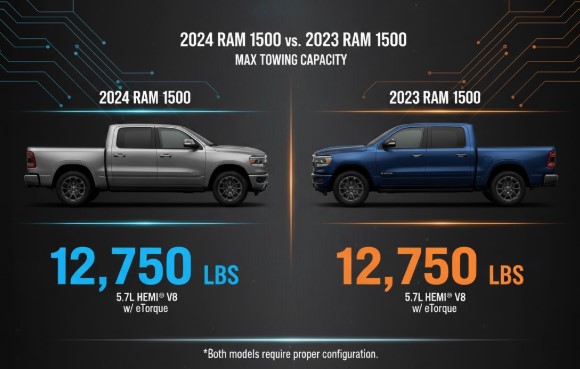
For those requiring heavy-duty hauling capabilities, the 5.7L HEMI V8 engine upgrade is available for both the Tradesman and the Big Horn. This engine is a staple of professional towing, producing 395 horsepower and 410 lb-ft of torque. When equipped with the HEMI and the Max Tow Package, the Ram 1500 can achieve a maximum towing capacity of up to 12,750 pounds. This is where the trim level choice becomes critical: the Tradesman often provides a slightly higher payload capacity (up to 2,300 lbs) compared to a similarly configured Big Horn. This is due to the Tradesman’s lower curb weight; without the weight of chrome trim, sound dampening materials, and electronic convenience features, the Tradesman can carry more in its bed.
By The Numbers
Max Towing (lbs)
Max Payload (lbs)
Optional Axle Ratio
Transmission quality is uniform across both trims, featuring the TorqueFlite eight-speed automatic transmission. This unit is widely regarded for its smooth shifting and reliable thermal management under heavy loads. However, the difference in axle ratios is a key consideration for professional buyers. While a 3.21 ratio is standard for fuel efficiency, the 3.92 rear axle ratio is a popular option for those frequently towing heavy equipment. In a scenario where a contractor is towing a 10,000-pound excavator, the HEMI-equipped Big Horn might be preferred because it often comes with the integrated trailer brake controller pre-installed as part of an equipment group, whereas on the Tradesman, this critical safety feature is frequently an individual add-on that must be specified at the time of purchase.
If your primary use is heavy hauling, prioritize the 3.92 axle ratio over trim-specific aesthetics. The increased mechanical advantage significantly reduces strain on the transmission during steep inclines.
Interior Amenities and Connectivity Technology Comparison
Recommended Best Deal Products


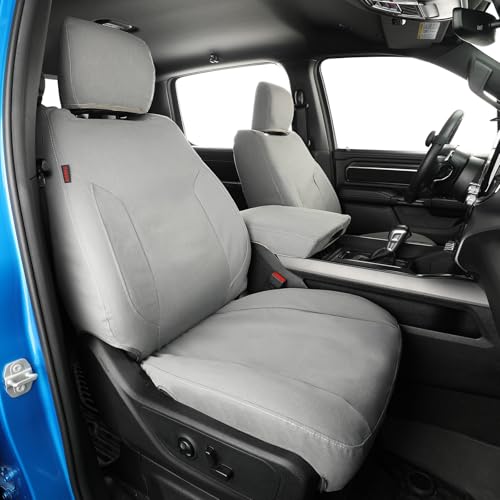
The most drastic differences between the Tradesman and the Big Horn are found inside the cabin. The Tradesman interior is a complete “work-first” environment. It features heavy-duty vinyl seating and work-grade cloth options that are specifically engineered for durability. These materials are easier to clean after exposure to mud, grease, or dust, making them the reliable choice for industrial crews. The floor is typically covered in a black vinyl mat rather than carpet, allowing the owner to literally hose out the interior if necessary (though care should always be taken around electronics).
The Big Horn moves into the realm of a lifestyle vehicle. It replaces the vinyl with premium cloth seating and adds significant comfort options via Level 1 and Level 2 Equipment Groups. These packages introduce heated front seats, a heated steering wheel, and a power-adjustable driver’s seat. For an expert driver spending 8-10 hours a day behind the wheel, these ergonomic improvements can drastically reduce fatigue and improve long-term joint health. Furthermore, the Big Horn offers available in-floor storage bins (RamBins) and a fold-flat load floor, providing secure, out-of-sight storage for valuable tools or professional equipment that the standard Tradesman configuration lacks.
Technology and connectivity are the final battlegrounds for interior supremacy. The Tradesman features the basic Uconnect 3 system with a 5-inch display. While small, this system is appreciated by professional operators because it retains tactile buttons and knobs that are easy to use while wearing thick work gloves. The Big Horn, however, opens the door to the class-leading Uconnect 5 system with an 8.4-inch or a massive 12-inch touchscreen. This system’s quality is unmatched in the segment, allowing for the hosting of two Bluetooth profiles simultaneously—a vital feature for a professional managing both a personal device and a company phone. The 12-inch screen also provides a much clearer view of the 360-degree camera systems, which are essential for navigating tight job sites or backing into narrow loading docks.
Safety Systems and Trusted Driver Assistance Features
Safety is a non-negotiable factor in any professional fleet or private purchase. Ram has standardized a suite of essential safety features across both the Tradesman and Big Horn. This include six airbags, Electronic Stability Control (ESC), and Electronic Roll Mitigation. Every Ram 1500 is built with 98% high-strength steel in the frame, which provides a robust safety cell for all occupants. Furthermore, the ParkView Rear Back-Up Camera is standard on both models, featuring dynamic gridlines that align with the hitch to make solo trailer connection a simple and reliable task.
However, the Big Horn provides access to more advanced driver assistance systems (ADAS) through its optional Safety Group. This package is often unavailable on the base Tradesman and includes comprehensive features such as:
- Forward Collision Warning: Provides active braking if the vehicle senses an impending impact.
- Pedestrian Emergency Braking: Automatically applies brakes if a person is detected in the vehicle’s path.
- Blind Spot Monitoring: Crucial for long-wheelbase trucks, this system also includes Rear Cross Path and Trailer Detection, which automatically adjusts the blind spot zone to account for the length of a trailer.
- Front and Rear Park Assist: Uses sensors to alert the driver of hidden obstacles like low-lying equipment or bollards on a busy construction site.
While both trims are safe, the Tradesman lacks the advanced sensor packages found in the Big Horn. For companies with high insurance premiums or frequent urban driving, the ADAS features of the Big Horn often pay for themselves by preventing low-speed collisions.
From an insurance perspective, Ram 1500 models equipped with the Advanced Safety Group have historically earned Top Safety Pick ratings from the IIHS. This trusted rating is a significant advantage for businesses looking to minimize risk. A professional driver navigating a tight, high-traffic job site will find the Big Horn’s front and rear park assist sensors indispensable for avoiding the costly downtime associated with minor vehicle damage.
Total Cost of Ownership and Long-Term Value Assessment
Recommended Best Deal Products


The financial decision between a Tradesman and a Big Horn involves more than the initial MSRP. A comprehensive 5-year total cost of ownership study reveals nuanced differences. The Tradesman has a lower entry price, typically starting several thousand dollars below the Big Horn. For business owners, this lower cost may qualify the vehicle for immediate professional tax advantages under Section 179, which allows for the deduction of the full purchase price of equipment (including trucks with a GVWR over 6,000 lbs) in the year it was purchased.
However, depreciation curves favor the Big Horn for private buyers. Because the Big Horn accounts for a significant percentage of Ram’s retail sales, there is a robust and trusted second-hand market for these trucks. Buyers in the used market often look for the “creature comforts” that the Big Horn provides—such as the larger touchscreen and premium cloth seats—resulting in higher resale values. Conversely, a high-mileage Tradesman is often viewed as a “beater” work truck, which can lead to steeper depreciation if it shows signs of heavy industrial use.
📋
Decision Guide: Which Trim Suits You?
If you operate in abrasive conditions (mines, heavy construction), the Tradesman’s unpainted surfaces are the most reliable choice.
For drivers who use their truck as a mobile office, the Big Horn’s superior seat quality and Uconnect 5 connectivity are worth the investment.
Maintenance considerations also play a role in long-term value. The Tradesman’s simple interior and exterior are designed for reliable ease of repair. There are fewer electronic sensors to fail in the seats and fewer painted panels to match if bodywork is required. However, for a private contractor looking to project quality to their clients, the Big Horn acts as a moving billboard. A clean, chrome-accented truck suggests success and attention to detail, which can indirectly lead to more business—a “soft” ROI that is difficult to quantify but very real in the professional world.
✅ Ram Tradesman Pros
- Lowest initial purchase price
- Higher net payload capacity
- Extremely durable, easy-clean interior
- Resistant to exterior cosmetic damage
❌ Ram Tradesman Cons
- Limited advanced safety tech
- Lower resale value for private buyers
- Minimal interior comfort features
- Small 5-inch standard screen
The Tradesman is the superior choice for high-durability environments where vinyl interiors and unpainted surfaces reduce maintenance stress. It remains the guide for fleet managers globally. Conversely, the Big Horn provides a more professional, client-ready aesthetic with significant technology upgrades like the Uconnect 5 system and enhanced ADAS safety features. Both trims offer industry-leading performance via the HEMI V8 and Pentastar V6 engines, ensuring reliability across the board. Consult with a trusted fleet specialist or visit your local dealership to test drive both configurations and determine which cabin environment best supports your daily professional needs.
Frequently Asked Questions
Can I get a HEMI V8 in the Ram Tradesman?
Yes, the 5.7L HEMI V8 engine with eTorque is available as an option on the Tradesman trim. While the 3.6L Pentastar V6 is standard, many professionals choose to upgrade to the HEMI for its superior 395 horsepower and increased towing capacity, making it a highly capable workhorse for heavy-duty tasks.
What is the main difference between the Tradesman and Big Horn interiors?
The primary difference lies in material quality and technology. The Tradesman features work-grade vinyl or heavy-duty cloth and a 5-inch screen, designed for durability and ease of cleaning. The Big Horn upgrades to premium cloth, offers available leather-wrapped steering wheels, and supports the larger 8.4-inch or 12-inch Uconnect 5 touchscreens for better connectivity.
Does the Big Horn have better towing capacity than the Tradesman?
Not necessarily. Towing capacity is determined by the engine, cab configuration, and axle ratio rather than the trim level. In fact, because the Tradesman is lighter due to having fewer luxury features, it often has a slightly higher maximum payload capacity than a similarly equipped Big Horn, though both can reach the 12,750-pound towing limit when properly configured.
Is the Ram Big Horn worth the extra cost over the Tradesman?
For users who spend significant time in their truck or need to transport clients, the Big Horn’s added comfort, noise insulation, and advanced technology provide a professional edge that justifies the higher MSRP. However, for fleet operations where minimizing overhead is the priority, the Tradesman offers unmatched value and reliability.
Are the safety features the same on both trims?
The core structural safety features are identical, but the Big Horn offers more available active safety technology. Features like Blind Spot Monitoring, ParkSense Front and Rear Park Assist, and specialized lighting groups are often exclusive to the Big Horn or higher trims, making it the safer choice for drivers navigating heavy traffic or tight urban environments.
![RAM 1500 Power Running Boards [2026]](https://truckguider.com/wp-content/uploads/2026/03/ram-1500-power-running-boards-featured.webp)