2017 Ram 1500 5.7 Oil Capacity: Complete HEMI Maintenance Guide 2026

The 2017 Ram 1500 5.7 oil capacity is exactly 7.0 US quarts (6.6 liters), including the volume required to fill the Mopar MO-339 spin-on filter. This figure applies specifically to the 5.7L HEMI V8 “Eagle” engine — the 3.6L Pentastar V6 uses 5.9 quarts and the 3.0L EcoDiesel requires 10.5 quarts. Getting the capacity, viscosity, and oil specification exactly right is not optional on this engine:
the Multi-Displacement System (MDS) and Variable Valve Timing (VVT) both depend on pressurized engine oil as a hydraulic fluid, and the wrong spec or low level is the most common root cause of the infamous “HEMI tick.” This guide covers exact specs, filter hardware, the 5W-20 viscosity requirement, oil change procedure with torque specs, maintenance intervals, and how to prevent lifter failure.


2017 Ram 1500 5.7 Oil Capacity & Specifications
All specifications below are from the 2017 Ram 1500 owner’s manual and Chrysler engineering documentation. Using any figure other than these is a deviation from factory standards.
| Engineering Parameter | Official Specification | Notes |
|---|---|---|
| Total oil capacity | 7.0 US quarts (6.6 L) | Includes filter fill volume |
| Viscosity grade | SAE 5W-20 | All ambient temperatures; MDS-critical |
| Oil standard | Chrysler MS-6395 | API SP compliant + additional FCA testing |
| OEM filter | Mopar MO-339 | Alt. P/N: 04892339AB, 4892339AA |
| Filter thread size | M22 × 1.5 | Hand-tighten + ¾ turn past gasket contact |
| Drain plug size | M14 × 1.5mm | 13mm hex socket |
| Drain plug torque | 25 ft-lbs (34 Nm) | Do not over-torque — strips pan threads |
When filling, pour 6.5 quarts first, run the engine for 30–60 seconds to pressurize the system and fill the filter, shut off, wait 5 minutes for drain-back, then check the dipstick and add the remaining ½ quart to reach the “SAFE” crosshatch zone.
For the exact filter location and how to access it on the 5.7L block, see our 5.7 HEMI oil filter location guide. For a general Ram 1500 filter location reference, see our Ram 1500 oil filter location guide.
2017 Ram 1500 5.7L HEMI oil capacity and maintenance dashboard: 7.0 quarts, 5W-20, viscosity performance, cost comparison, and oil change steps
Total oil capacity
7.0 qts
6.6 liters w/ filter
Viscosity grade
5W-20
MS-6395 synthetic
Drain plug torque
25 ft-lbs
34 Nm · M14×1.5mm
Viscosity performance — 5W-20 vs 10W-30
Oil change cost — DIY vs dealership
4-step oil change protocol
Drain crankcase
Warm engine to operating temp. Remove 13mm drain plug. Drain fully into 8+ qt catch pan. Inspect M14×1.5 plug gasket.


Replace filter
Remove MO-339 spin-on filter. Verify old O-ring left with filter. Lube new gasket. Hand-tighten + ¾ turn. Never wrench-tighten.
Refill & torque
Torque drain plug to 25 ft-lbs. Pour 6.5 qts of 5W-20 MS-6395. Start engine 30–60 sec. Shut off and wait 5 min.
Verify & reset
Check dipstick — add remaining ½ qt to SAFE zone. Inspect for leaks. Reset OCIS via dashboard menu.
Engine oil specs at a glance
| Spec | Value |
|---|---|
| Total capacity | 7.0 qts (6.6 L) |
| Viscosity | SAE 5W-20 |
| Standard | Chrysler MS-6395 |
| OEM filter | Mopar MO-339 |
| Filter thread | M22 × 1.5 |
| Drain plug thread | M14 × 1.5mm |
| Drain plug torque | 25 ft-lbs (34 Nm) |
| Severe-duty interval | 5,000–6,000 mi |
| Normal interval | Up to 10,000 mi |
All 2017 Ram 1500 engine oil comparison
| Engine | Capacity | Viscosity | Filter type |
|---|---|---|---|
| 5.7L HEMI V8 | 7.0 qts | 5W-20 | Spin-on MO-339 |
| 3.6L Pentastar V6 | 5.9 qts | 5W-20 | Cartridge 68229402AA |
| 3.0L EcoDiesel V6 | 10.5 qts | 5W-40 | Cartridge 68492616AA |
HEMI tick — 3 root causes:
Why the 2017 Ram 1500 5.7L HEMI Requires SAE 5W-20 — Not 5W-30
The most common maintenance mistake on the 5.7L HEMI is substituting 5W-30 because it was the standard for earlier HEMI engines (2002–2008). The 2017 engine is fundamentally different at the hydraulic level.
The MDS hydraulic dependency
The Multi-Displacement System deactivates cylinders 1, 4, 6, and 7 during light-throttle cruising. It does this by commanding hydraulic solenoids to route pressurized oil into specialized MDS lifters, which mechanically collapse so the camshaft lobe pushes against an inner sleeve rather than the pushrod — leaving the valve closed. This entire sequence must complete in milliseconds.
The kinematic viscosity of SAE 5W-20 is precisely what the MDS solenoid calibration expects. A thicker oil — 5W-30 or 10W-30 — increases hydraulic resistance in the micro-passages, causing delayed lifter pin actuation, MDS-related DTCs, perceptible transition shudder, and reduced fuel economy. For MDS delete options if you decide to remove the system entirely, see our MDS delete camshaft lifter kit guide.
Viscosity evolution across Ram 1500 generations
| HEMI Generation | Years | Required Viscosity | Reason for Change |
|---|---|---|---|
| 3rd-gen HEMI | 2002–2008 | SAE 5W-30 | No MDS; conventional lifters |
| 4th-gen Eagle HEMI | 2009–2018 | SAE 5W-20 | Full MDS integration; tighter lifter tolerances |
| 5th-gen eTorque HEMI | 2019+ | SAE 0W-20 | Rapid start-stop; eTorque mild hybrid system |
This also means you cannot substitute 0W-20 from a newer DT-platform Ram into a 2017 DS-platform HEMI — the thinner fluid bleeds past older-generation MDS solenoid seals too rapidly, causing lifter collapse and immediate check engine codes. The 2017 model requires exactly and exclusively SAE 5W-20.
Chrysler MS-6395 Oil Standard: Why Generic Synthetic Isn’t Enough
Buying a bottle labeled “5W-20 Full Synthetic” is not sufficient — the 2017 5.7L HEMI explicitly requires oil certified to Chrysler Material Standard MS-6395. This is a proprietary FCA certification that goes beyond API SP and ILSAC GF-6A requirements.
To earn MS-6395 certification, an oil formulation must pass a controlled two-year FCA fleet test under severe real-world conditions, proving it can resist thermal breakdown, prevent sludge in the VVT phasers, and maintain anti-wear protection across extended high-load cycles.
Critically, MS-6395 oils contain engineered levels of Zinc Dialkyldithiophosphate (ZDDP) and molybdenum — both of which bond to the camshaft lobes and lifter rollers under heat and pressure to form a sacrificial friction-reducing layer. This chemistry is exactly what protects against the hydraulic lifter roller failure (the true HEMI tick).
MS-6395 certified oils include Pennzoil Platinum, Mobil 1, Shell Helix, and Mopar MaxPro. Full synthetic formulations from Group III (hydrocracked) or Group IV (PAO) base stocks are strongly recommended over conventional mineral oil due to superior shear stability under the mechanical forces of the HEMI’s valvetrain.
![[2026 Upgraded] DooGooCoo Windshield Sun Shade for RAM 1500 2500 3500 2009-2017…](https://m.media-amazon.com/images/I/51wc2YRpoAL._SS500_.jpg)


Mopar MO-339 Oil Filter: Engineering Details
The 5.7L HEMI uses a traditional heavy-gauge spin-on canister filter rather than the cartridge-style paper element used by the 3.6L Pentastar. Key specifications:
| Filter Specification | Value |
|---|---|
| OEM part number | Mopar MO-339 / 04892339AB / 4892339AA |
| Thread pitch | M22 × 1.5 |
| Filter height | ~3.46 inches |
| Filter media | Cellulose + synthetic glass fiber blend |
| Anti-drain back valve (ADBV) | Silicone (premium) — maintains oil prime between starts |
| Bypass relief valve | 9–15 PSI — opens if media is occluded, preventing dry-start seizure |
| Installation torque | Hand-tighten to gasket contact + ¾ to 1 full turn |
The silicone ADBV inside the MO-339 is critical: because of the filter’s side-mount angle on the 5.7L block, oil drains back from the filter and upper galleries when the engine is off. Without a functional ADBV, every startup is a “dry start” where metal-to-metal contact in the valvetrain occurs for several seconds before oil pressure builds.
Cheap aftermarket filters often use nitrile rubber for the ADBV, which hardens and cracks after repeated heat cycles — a direct cause of cold-start valvetrain clatter and accelerated cam wear. For an oil filter that fits the HEMI and the Pentastar on the same platform, see our Ram 1500 compatible oil filter review.
Diagnosing the HEMI Tick: Three Distinct Causes
“HEMI tick” is a catch-all term for three mechanically distinct noises with completely different causes, severity levels, and remedies. Misdiagnosing them leads to unnecessary repairs or — worse — ignoring a catastrophic failure.
| Tick Type | Sound Character | Warm-up Behavior | Oil-Related? | Severity |
|---|---|---|---|---|
| Fuel injector pulse | Rapid, consistent clicking at idle | Unchanged — constant at all temps | No | Normal operation |
| Exhaust manifold bolt failure | Loud popping tick; louder cold | Fades as engine warms; iron expands and seals the gap | No | Hardware failure — non-fatal |
| Hydraulic lifter roller failure | Metallic ticking; rhythmic with RPM | Does NOT fade with warm-up — permanent | Yes — direct cause | Catastrophic — requires engine teardown |
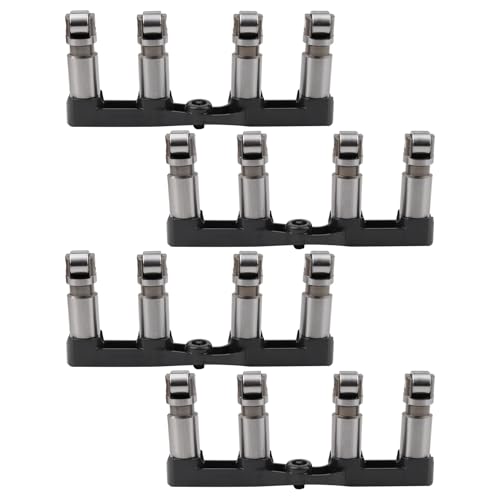
The hydraulic lifter failure is the only truly oil-related tick. The MDS lifters use tiny needle bearings on a roller wheel that contacts the camshaft lobe. Oil starvation — from low level, wrong viscosity, extended intervals, or sludge-blocked passages — causes the needle bearings to seize.
The roller stops spinning and instead skids across the cam lobe, grinding down the lobe profile permanently. The resulting metallic tick never goes away once the damage is done. For repair cost context if you’re already at this stage, see our 5.7 HEMI cam and lifter replacement cost guide. For the ticking noise diagnostic process specific to Ram 1500, see our Ram 1500 ticking noise at idle guide.
Prevention: oil pump and pressure
At a low idle (~600 RPM), the factory oil pump delivers its minimum output — enough to keep the warning light off, but marginal for splash lubrication of the upper camshaft lobes. Extended idling on old or degraded oil accelerates lifter starvation. In severe cases, a P0524 (Engine Oil Pressure Low) DTC indicates the factory pump is borderline;
upgrading to a high-volume oil pump — similar to the Hellcat architecture — increases flow rate by up to 20%, maintaining adequate upper-valvetrain lubrication even at idle. For oil pump replacement specifics on the Ram 1500 platform, see our Ram 1500 oil pump replacement guide. For replacement lifter kit options that upgrade the standard MDS lifters to a more robust design, see our 5.7 HEMI cam and lifter kit guide.
Complete Oil Change Procedure — 2017 Ram 1500 5.7L HEMI
A correct oil change on the 5.7L requires a calibrated torque wrench. Over-torquing the drain plug — the most common DIY error — permanently strips the M14 threads from the aluminum oil pan, requiring a costly pan replacement.
Required tools and supplies
Calibrated torque wrench (15–30 ft-lb range), 13mm six-point socket, oil filter wrench or M22 cap tool, fluid catch pan (8+ quart minimum), 7.0 quarts of SAE 5W-20 MS-6395 full synthetic, one Mopar MO-339 spin-on filter, nitrile gloves, and safety glasses.
Procedure with torque specs
| Step | Action | Torque / Note |
|---|---|---|
| 1 | Warm engine to operating temperature — hot oil flows 30–40% faster | — |
| 2 | Drain crankcase via M14 drain plug — 13mm socket | Drain fully until intermittent drip |
| 3 | Inspect drain plug O-ring/gasket; wipe magnetic tip clean (grey metal paste = normal wear debris) | — |
| 4 | Reinstall drain plug hand-first, then torque | 25 ft-lbs / 34 Nm |
| 5 | Remove old MO-339 filter; confirm old O-ring left with filter | Critical — double-gasket = blowout |
| 6 | Apply fresh oil film to new filter gasket; hand-thread new filter | ¾ to 1 full turn past gasket contact |
| 7 | Pour 6.5 quarts of 5W-20 via yellow filler cap | Do not add full 7.0 qts yet |
| 8 | Start engine; idle 30–60 seconds to pressurize and fill filter | Verify oil pressure warning light goes out in <5 sec |
| 9 | Shut off; wait 5 minutes for drain-back; check dipstick | Add remaining ½ qt if below SAFE zone |
| 10 | Inspect for leaks at drain plug and filter; reset OCIS via steering wheel menu | — |
Maintenance Intervals: Normal vs Severe Duty
The 2017 Ram 1500 uses an Oil Change Indicator System (OCIS) that calculates remaining oil life based on actual operating conditions. The number displayed is an algorithm result — not a simple mileage counter.
| Duty Classification | Recommended Interval | Operating Conditions |
|---|---|---|
| Normal duty | Up to 10,000 miles / 12 months | Long highway commutes, minimal idling, warm climate, light loads |
| Severe duty | 5,000–6,000 miles / 6 months | Frequent towing, heavy payload, short trips (<10 mi), extreme temps, off-road, prolonged idling |
| Fleet / commercial | 5,000 miles or per fleet spec | High idle time, construction, law enforcement, delivery |
The vast majority of pickup trucks operate under severe-duty conditions. Short trips where the engine never reaches operating temperature are especially damaging: moisture condensation and unburned fuel accumulate in the crankcase, diluting the oil’s viscosity and depleting its Total Base Number (TBN — the additive package that neutralizes combustion acids).
Sludge from depleted TBN blocks the micro-passages feeding the MDS lifters, making this the dominant path to lifter failure outside of using the wrong oil type. For timing chain intervals — which are also oil quality dependent on this engine — see our 5.7 HEMI timing chain replacement interval guide.
2017 Ram 1500 Engine Oil Comparison: All Three Powertrains
The 2017 Ram 1500 was offered with three distinct engines, each with completely different oil capacities, viscosities, filter hardware, and torque specs. Never assume specs carry over between engines on the same truck platform.
| Engine | Capacity | Viscosity | Standard | OEM Filter | Drain Torque | Filter Torque |
|---|---|---|---|---|---|---|
| 5.7L HEMI V8 | 7.0 qts (6.6 L) | 5W-20 | MS-6395 | MO-339 (spin-on) | 25 ft-lbs | Hand only |
| 3.6L Pentastar V6 | 5.9 qts (5.6 L) | 5W-20 | MS-6395 | 68229402AA (cartridge) | 20 ft-lbs | 18 ft-lbs (plastic cap) |
| 3.0L EcoDiesel V6 | 10.5 qts (10 L) | 5W-40 | MS-10902 | 68492616AA (cartridge) | 33 ft-lbs | Housing-specific |
The 3.6L Pentastar’s plastic filter housing is notoriously fragile — the cap torques to exactly 18 ft-lbs (25 Nm) and the housing mounting bolts require only 106 in-lbs (not ft-lbs). Confusing inch-pounds for foot-pounds cracks the plastic housing.
The EcoDiesel’s 10.5-quart diesel requirement uses SAE 5W-40 certified to API CJ-4/CK-4 — completely incompatible with the HEMI specification. For the 3.6L filter location on the newer DT-platform Ram 1500, see our 2019 Ram 1500 3.6L oil filter location guide.


Drivetrain Fluid Capacities: Transmission, Transfer Case, and Differential
Complete maintenance on a 2017 Ram 1500 extends beyond engine oil. The drivetrain components routing HEMI torque to the wheels have their own specific fluid requirements.
| Component | Fluid Type | Service Capacity | Notes |
|---|---|---|---|
| 65RFE transmission (RWD) | ATF+4 | 5.5 qts (pan drop) | Total dry fill = 12.0 qts; torque converter not drained in standard service |
| 65RFE transmission (4WD) | ATF+4 | 6.6 qts (pan drop) | Deeper 4WD pan |
| BW 44-44 / 44-45 transfer case | Mopar transfer case fluid | 3.0 pints | Fill to bottom of fill plug opening; drain/fill plug torque 15–22 ft-lbs |
| C235 rear differential (open) | Synthetic 75W-140 | 4.6 pints | — |
| C235 rear differential (LSD) | Synthetic 75W-140 + friction modifier | 4.4 pints + 5 fl oz MS-10111 | Friction modifier mandatory — skipping it destroys clutch packs |
The limited-slip differential friction modifier (Mopar MS-10111) is one of the most frequently overlooked fluid items during a gear oil service — omitting it causes clutch pack chatter and binding immediately on tight turns and destroys the LSD mechanism rapidly.
If your 2017 Ram 1500 is experiencing transmission shift quality issues, see our Ram 1500 transmission problems guide. For any drivetrain protection-mode events, see our Ram 1500 limp mode reset guide.
Frequently Asked Questions
What is the exact oil capacity for a 2017 Ram 1500 5.7L HEMI?
The 2017 Ram 1500 5.7L HEMI requires exactly 7.0 US quarts (6.6 liters) of engine oil, including the volume needed to fill the Mopar MO-339 spin-on filter upon startup. Fill with 6.5 quarts, run the engine briefly to fill the filter, then add the remaining ½ quart as needed after checking the dipstick on a level surface.
Can I use 5W-30 instead of 5W-20 in my 2017 Ram 1500 5.7?
No. While 5W-30 was correct for the 2002–2008 third-generation HEMI, the 2017 engine’s MDS system requires the specific hydraulic resistance of 5W-20. A thicker 5W-30 delays MDS lifter actuation, may cause DTCs and transition shudder, and reduces fuel efficiency. It can temporarily mask a ticking noise by cushioning worn parts but does not fix the underlying issue and deviates from the MS-6395 calibration. The 2017 model requires SAE 5W-20 exclusively.
Can I use 0W-20 in my 2017 Ram 1500 5.7?
No. 0W-20 is specified for the 2019+ fifth-generation DT-platform Ram 1500 with the eTorque mild hybrid system — a fundamentally different engine calibration. In the 2017 DS-platform HEMI, 0W-20 is too thin, bleeds past the older-generation MDS solenoid seals, and causes erratic cylinder deactivation and check engine lights. The 2017 model uses 5W-20, not 0W-20.
Is oil consumption normal on the 2017 Ram 1500 5.7L HEMI?
FCA documentation acknowledges that up to 1 quart per 1,000 miles is within acceptable manufacturing tolerance, though well-maintained engines consume far less. High PCV vacuum draws atomized oil vapor into the intake manifold during deceleration — this is inherent to the VVT and MDS architecture. Check the dipstick at every fuel fill-up and never let the level drop more than ½ quart below the SAFE zone. Low oil level at the pickup tube causes cavitation during hard acceleration and cornering, producing the same starvation scenario as running dry.
What is the drain plug size on a 2017 Ram 1500 5.7?
The factory drain plug on the 2017 5.7L HEMI uses an M14 × 1.5mm thread pitch, requiring a 13mm six-point socket. Torque on reinstall is exactly 25 ft-lbs (34 Nm). Magnetic drain plugs using this same M14 × 1.5 thread are highly recommended — they trap fine ferrous wear particles that bypass the oil filter media, providing an early visual indicator of internal wear between changes.
How often should I change oil on a 2017 Ram 1500 with the 5.7L under severe duty?
For any 2017 Ram 1500 used for towing, frequent short trips, heavy payloads, prolonged idling, or off-road use — which describes the majority of pickup truck applications — the severe-duty interval applies: every 5,000 to 6,000 miles or 6 months, whichever comes first. Stretching to 10,000 miles under these conditions depletes the TBN additive package, allows sludge to form in the VVT phasers, and clogs the micro-passages feeding the MDS lifters — the direct mechanical precursor to the catastrophic lifter roller failure.
![5th Gen Ram Tail Lights [2026]](https://truckguider.com/wp-content/uploads/2026/03/5th-gen-ram-tail-lights-featured.webp)


![PBJ Paint Code Guide: Hydro Blue Pearl for Jeep, Ram, Dodge [2026]](https://truckguider.com/wp-content/uploads/2026/03/pbj-paint-code-featured.webp)