
Ram 1500 Resonator Delete: Sound, Drone & MDS Impacts [2026]

A resonator delete provides a deeper, more aggressive exhaust note for your Ram 1500 without the cost of a full cat-back system. While it enhances the V8 rumble, it can introduce noticeable cabin drone and a ‘helicopter’ sound when the MDS eco-mode activates.
🎯 Key Takeaways
- Takeaway 1:Expect a 15-20% increase in exterior exhaust volume and depth.
- Takeaway 2:MDS activation creates an undesirable ‘weed whacker’ sound post-deletion.
- Takeaway 3:Most 5th Gen (DT) Rams require 3-inch diameter delete pipes.
- Takeaway 4:This modification is purely for sound and offers minimal performance gains.
- Takeaway 5:Clamp-on kits allow for easy reversal if drone becomes an issue.
A resonator delete is the fastest and most cost-effective way to give your Ram 1500 a genuine V8 growl without the hefty price tag of a full cat-back system. By removing the small restrictive canisters located near your tailpipes, you allow the 5.7L HEMI to breathe more naturally and project a deeper, more aggressive tone. It is a popular modification because it targets the specific “bottleneck” that keeps your truck sounding like a family SUV rather than a performance pickup.


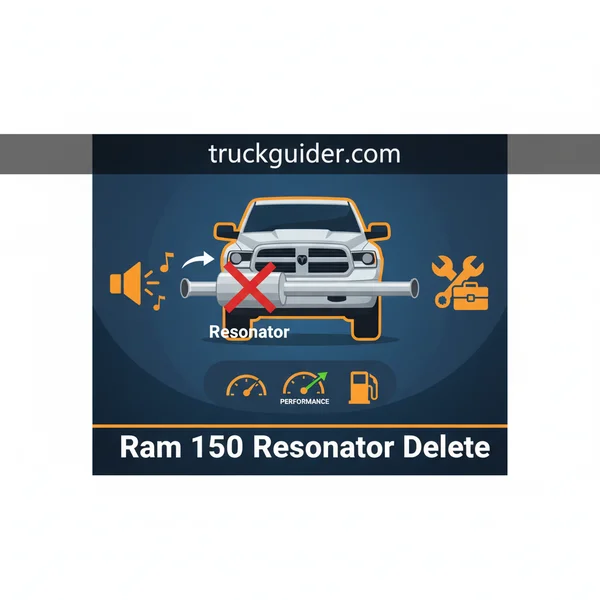
The primary goal for most owners is to hear that signature HEMI bark during cold starts and acceleration while maintaining a civil cabin experience during highway cruising. However, there is a fine line between a satisfying rumble and an annoying interior vibration. Understanding how the removal of these resonators affects the exhaust frequency is critical before you take a saw to your factory pipes. This modification changes more than just volume; it shifts the entire acoustic personality of your truck.
Analyzing the Ram 1500 Exhaust Sound Profile Post-Delete
When you delete the resonators on a 4th Gen (DS) or 5th Gen (DT) Ram 1500, you are looking at a 20% to 30% increase in overall exterior volume. The sound becomes “sharper” and more mechanical. While the factory muffler does the heavy lifting for noise reduction, the resonators are designed to cancel out specific high-frequency pitches. Removing them results in a raw, muscular tone that is particularly noticeable when you step on the gas or under heavy load.
Volume Gain vs. Cabin Presence
In most driving conditions, the sound increase is perfectly manageable. At idle, you will notice a slightly deeper “thump.” Under wide-open throttle, the truck sounds significantly more powerful. The real change happens inside the cabin. Because the resonators are located at the very end of the exhaust stream, removing them allows more sound energy to radiate back through the floorboards. Most owners find this increase pleasant, but if you frequently haul family members or take long road trips, you will notice that the “silence” of the stock interior is replaced by a constant, low-frequency hum.
- Cold Starts: Expect a much louder, “sharper” initial bark that settles into a deep burble.
- Acceleration: A crisp, aggressive V8 roar that sounds “unfiltered.”
- Cruising: A noticeable but non-intrusive increase in exhaust presence at 60-70 mph.
The 1,500–2,000 RPM Drone Zone
The biggest risk with a Ram 1500 resonator delete is the dreaded interior drone, specifically in the 1,500 to 2,000 RPM range. This is the “sweet spot” where many exhaust frequencies resonate with the metal of the truck’s body. If you are cruising on the highway in top gear, your engine often sits right in this window. Without the resonators to break up these sound waves, you may experience a rhythmic “booming” sound that can make conversations difficult. This drone is typically more pronounced in 5th Gen models equipped with the eTorque system, as the engine logic often keeps RPMs lower to maximize fuel efficiency.
The MDS Factor: How Eco-Mode Affects the HEMI Exhaust Note
The Multi-Displacement System (MDS) is the biggest hurdle to achieving a perfect exhaust note on a Ram 1500. This system shuts down four cylinders during light-load cruising to save fuel. When the truck is stock, you barely notice the transition. However, once you delete the resonators, the sound of the MDS kicking in becomes impossible to ignore. The resonators are specifically tuned to hide the awkward acoustic shift that happens when your V8 engine suddenly becomes a V4.
The V4 “Helicopter” Sound
When the MDS activates after a resonator delete, your deep V8 rumble instantly transforms into a fluttering, “wet” sound often compared to a helicopter or a four-cylinder tractor. This happens because the exhaust pulses are no longer being smoothed out by the final baffles. It creates a discordant frequency that many owners find highly irritating. The transition is most noticeable when the truck is under light load at highway speeds, which is exactly when you want the cabin to be the quietest.
Managing the MDS Sound Problem
If you love the sound of the resonator delete but hate the MDS flutter, you have a few practical options to manage the noise profile:
- Tow/Haul Mode: Engaging this mode usually disables MDS, keeping the truck in V8 mode and maintaining a consistent sound.
- Manual Gear Selection: Using the gear buttons on your steering wheel to select the highest gear (e.g., “8”) will often prevent the system from dropping into 4-cylinder mode.
- Electronic Disabling: Many owners use an OBDII plug-in device or a tuner to permanently disable MDS, ensuring the truck sounds like a V8 100% of the time.
By understanding how MDS interacts with your exhaust, you can decide if the extra volume is worth the trade-off in sound quality during eco-driving. For most, the solution is simply to bypass the MDS system to enjoy the pure HEMI soundtrack.


Managing Cabin Drone and Interior Resonance at Highway Speeds
One of the biggest concerns for Ram 1500 owners is the dreaded “drone”—that constant, low-frequency hum that can make a long highway trip feel exhausting. When you remove the resonators, you are removing the components specifically designed to cancel out these frequencies. At 70 MPH, your Hemi engine often sits at a specific RPM range where these sound waves become more prominent inside the cabin.
The MDS Factor and Resonance
The Multi-Displacement System (MDS) is a major contributor to drone. When your truck switches from eight cylinders to four to save fuel, the exhaust note changes significantly. Without resonators, this often sounds like a dull, vibrating groan or a “helicopter” fluttering sound. It is a distinct shift that some drivers find annoying, while others barely notice it once they get used to the rhythm of the truck.
Tips for Minimizing Interior Noise
- Keep the Stock Muffler: If you delete the resonators but keep the large factory muffler, the drone is usually very manageable. The muffler handles the bulk of the sound suppression.
- Exhaust Tip Design: Using a dual-walled exhaust tip can sometimes help slightly with how sound exits the rear of the vehicle, reducing the “reverb” felt near the tailgate.
- Electronic Fixes: Many owners use an OBDII plug-in device or “Tow/Haul” mode to disable MDS, which eliminates the awkward four-cylinder drone entirely.
Pre-Fabricated Delete Kits vs. Custom Exhaust Shop Solutions
Once you decide to move forward, you have two primary paths: buying a ready-made kit or visiting a local muffler shop. Both have their merits depending on your budget and how much you enjoy working on your own truck. Most Ram 1500 owners find that the decision comes down to whether they want a bolt-on solution or a permanent weld.
The Precision of Bolt-On Kits
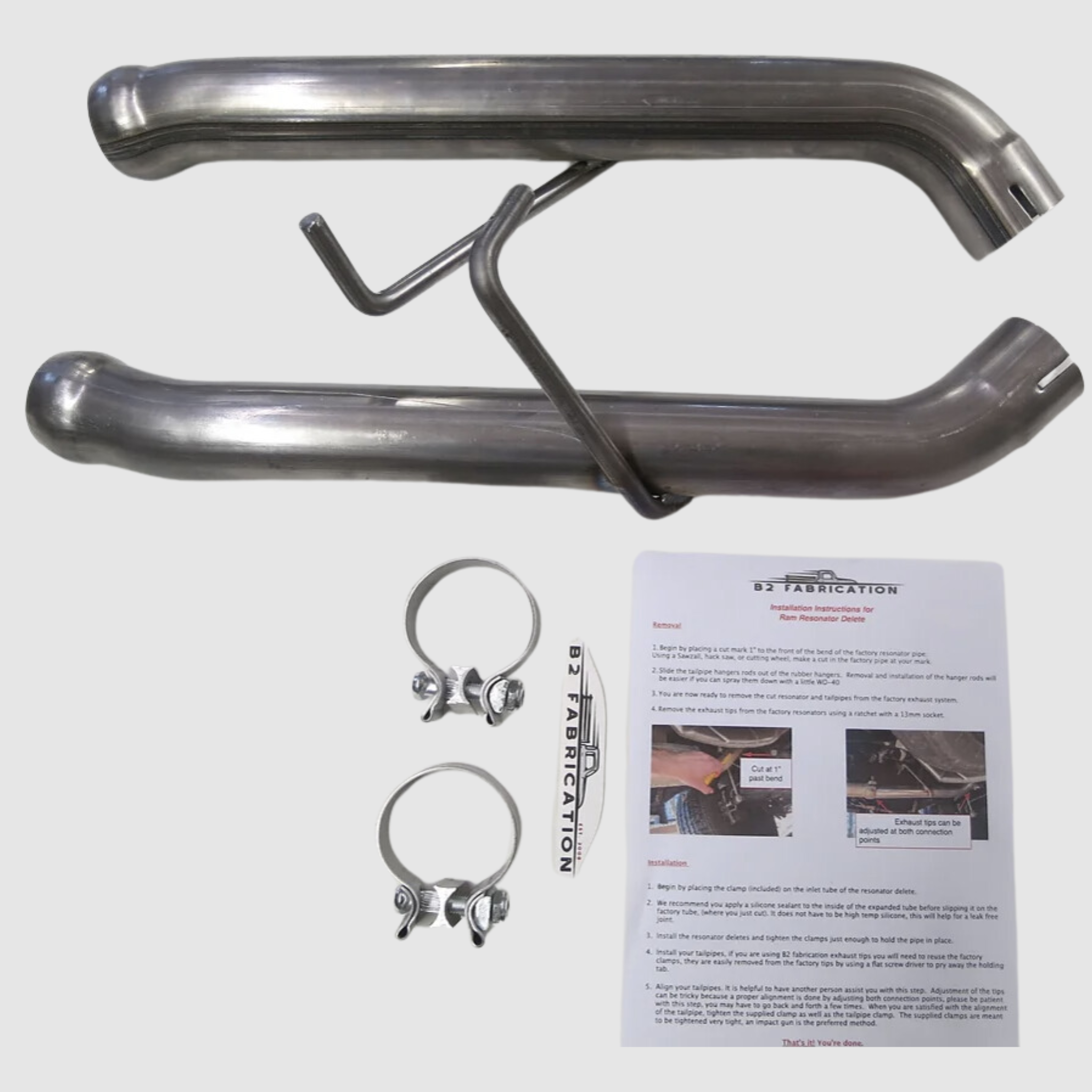
Manufacturers like MBRP, Rough Country, and others offer “Resonator Delete Kits” specifically for the 5th Gen and Classic Ram models. These kits are engineered to fit the exact diameter of your factory piping, usually 2.5 inches. They are a great choice for those who want a clean, professional look without the need for specialized tools.
- Reversibility: These kits often use clamps, meaning you can reinstall your stock resonators if you decide the sound is too loud or if you plan to sell the truck later.
- Material Quality: Most kits use T304 or 409 stainless steel, ensuring they won’t rust out faster than the rest of your exhaust system.
The Custom Shop Advantage
A local exhaust shop can often perform a resonator delete for a fraction of the cost of a branded kit. A technician will simply cut out the resonator “buckets” and weld in a straight piece of pipe (straight-piping). This is a permanent solution that offers a very clean flow of exhaust gases.
- Cost-Effective: This is generally the cheapest way to get more sound out of a Hemi engine.
- Perfect Alignment: A shop can ensure the tips are perfectly centered in the bumper cutouts, which can sometimes be a struggle with DIY bolt-on kits that might shift during tightening.
Conclusion
A resonator delete is one of the most effective and affordable ways to give your Ram 1500 the aggressive personality it deserves. By removing these sound-stifling components, you unlock a deeper Hemi growl without the high cost of a full cat-back system. While the MDS drone is a factor to consider, most owners find the trade-off well worth the improved cold starts and acceleration tone. Whether you choose a high-quality bolt-on kit or a quick trip to the local exhaust shop, your truck will definitely stand out from the crowd.
Next Steps: Start by listening to sound clips of your specific engine generation (5.7L vs. 3.6L) with a resonator delete. If you’re sensitive to highway noise, consider testing your truck in “Tow/Haul” mode to see if you prefer the sound with MDS disabled. Ready to make the jump? Check out some of the popular delete kits available online today and give your Ram the voice it was meant to have!



💬 Quick Questions & Answers
Does a resonator delete void my Ram 1500 warranty?
It typically only voids the warranty on the exhaust system itself, not the entire vehicle.
Will a resonator delete cause a check engine light?
No, because the resonators are located after the catalytic converters and oxygen sensors.
Is a resonator delete louder than a muffler delete?
No, a muffler delete is significantly louder and more aggressive than a resonator delete.
What is the typical pipe size for a Ram 1500?
Most 5th Gen Rams use 3-inch tailpipes, while many 4th Gen models use 2.5-inch piping.
Does this modification improve gas mileage?
No, removing the resonators has no measurable impact on your truck’s fuel economy.
❓ Frequently Asked Questions
How does the HEMI MDS (Multi-Displacement System) sound after a resonator delete?
When the engine drops to 4-cylinder mode, the exhaust note changes from a V8 growl to a choppy, uneven tone often described as a ‘wet weed whacker.’ This transition is much more audible once the sound-dampening resonators are removed.
Will I experience annoying cabin drone at highway speeds?
Most owners report a slight increase in interior resonance between 1,500 and 2,000 RPM. While not as severe as a muffler delete, it can be noticeable during long highway cruises under light load.
Is a resonator delete legal for street use?
In most jurisdictions, it is legal because it does not affect emissions; however, it may violate local noise ordinances if the exhaust exceeds specific decibel limits.




Should I choose a bolt-on kit or a custom shop weld?
Bolt-on kits are excellent for DIYers and allow you to reinstall the stock resonators later. Professional welding is more permanent and ensures a leak-free seal but is harder to reverse.
Does the resonator delete add any horsepower?
The factory resonators are a ‘straight-through’ design with very little restriction, so replacing them with a straight pipe provides negligible performance or horsepower gains.
Can I perform a resonator delete on both 4th and 5th Gen Rams?
Yes, both the DS and DT platforms respond well to resonator deletes, though the specific pipe lengths and diameters differ between the generations.



![6.7 Cummins Exhaust Manifold Upgrade [2026]](https://truckguider.com/wp-content/uploads/2026/03/6-7-cummins-exhaust-manifold-upgrade-featured.webp)