Chrysler 9.25 Rear End: Specs, Identification, and Issues [2026]

The Chrysler 9.25-inch rear end is a heavy-duty differential easily identified by its unique 12-bolt octagonal ‘stop sign’ cover. While it is a robust unit found in millions of Ram trucks, it is susceptible to pinion nut loosening and carrier bearing wear over time.
🎯 Key Takeaways
- Identify the 9.25 by its distinct 12-bolt, stop-sign shaped rear cover.
- Use 75W-140 synthetic gear oil for towing or heavy-duty applications.
- Listen for the ‘Chrysler howl’ as a sign of carrier bearing failure.
- The pinion nut requires regular inspection to prevent catastrophic differential failure.
- The axle utilizes a C-clip design with a 31-spline count in most modern versions.
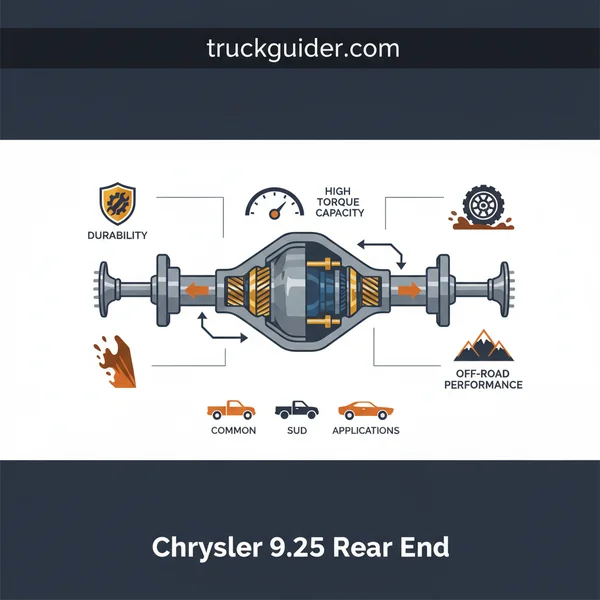
The Chrysler 9.25-inch rear end is the backbone of Dodge and Ram half-ton trucks and SUVs produced since the mid-1970s. If you own a Ram 1500, Dakota, or Durango, this is likely the differential transferring power to your tires. It is easily identified by its unique 12-bolt cover and hefty 9.25-inch ring gear, making it significantly stronger than the lighter 8.25-inch alternative.


Knowing your rear end’s specifics is critical for maintenance, towing safety, and choosing the right replacement parts. Whether you are troubleshooting a high-pitched whine or planning a gear swap for larger tires, understanding the spline counts and fluid capacities ensures you do not waste time or money on incompatible components. This guide breaks down exactly what you have and the technical data you need to keep it running.
Identifying the Chrysler 9.25: Visual Cues and Casting Marks
Identifying this differential is straightforward if you know where to look. Unlike many other axles that use a standard round or oval shape, the 9.25-inch rear end has a very distinct silhouette. You won’t even need to crawl fully under the truck to spot the most obvious indicators. It is rugged, heavy, and features a geometry that sets it apart from both lighter Chrysler axles and heavier Dana units.
The 12-Bolt Inspection
- Bolt Count: The most defining feature is the 12-bolt differential cover. Most smaller Chrysler axles use 10 bolts, while many heavy-duty Dana axles also stick to a 10-bolt pattern. If you count 12 bolts securing the rear cover, you are looking at a 9.25.
- Housing Shape: The housing is often described as having an irregular octagonal shape. It features distinct flat sides and a flat bottom. This “stop sign” appearance provides slightly more ground clearance than a perfectly circular housing.
- Fill Plug Location: On most factory versions, the fill plug is located on the driver-side front of the casting. If you have an aftermarket cover, this might be relocated to the rear face for easier access.
Tags and Casting Numbers
If the visual shape isn’t enough, look for the steel identification tag. This tag is usually held under one of the differential cover bolts. It contains the gear ratio (such as 3.55 or 3.92) and the ring gear diameter. If the tag is missing due to rust or previous service, check the passenger-side axle tube. There is often a sticker or a stamped sequence of numbers that identifies the assembly part number and build date. These numbers allow a dealership to pull your exact build sheet, ensuring you get the correct bearings or seals for your specific year.
Technical Specifications: Gear Ratios, Spline Counts, and Capacities
The Chrysler 9.25 is a semi-floating axle designed to handle the high torque of V8 engines while maintaining street drivability. While it hasn’t changed its fundamental architecture much over the decades, specific internal components have evolved. This is especially true for the spline counts and the transition to metric bearings in later models. Knowing these specs is the difference between a successful weekend project and a truck stuck on jack stands.
Axle Splines and Ring Gear Details
The ring gear measures exactly 9.25 inches in diameter. This size provides a massive surface area for the pinion to mesh with, which is why these differentials are favored for moderate towing. The axle shafts themselves have seen some variation over the years, which you must verify before ordering lockers or shafts:
- Standard Spline Count: Almost all 9.25 axles from the late 1970s through 2010 utilize 31-spline axle shafts. These are robust shafts that handle 33-inch to 35-inch tires well.
- Modern Variations: With the introduction of the ZF-designed variants in newer Ram trucks (2011+), you may find 31-spline or even larger 34-spline configurations depending on the specific GVWR of the vehicle.
- Pinion Diameter: The pinion shaft is notably thick, measuring 1.625 inches at the splines. This thickness helps prevent shearing under heavy loads or sudden acceleration.
Common Gear Ratios
The 9.25 was offered with several gear ratios to suit different needs. The 3.21 ratio is common in “Eco” models for better highway fuel economy. The 3.55 ratio was the standard “middle-of-the-road” option for many years, offering a balance between highway cruising and light towing. For those who tow heavy trailers or install larger tires, the 3.92 ratio is the most desirable. It is important to note that the 9.25 carrier does not have a “carrier break.” This means you can generally swap between any of these factory ratios without needing to buy a new carrier case.


Fluid Capacity and Requirements
Proper lubrication is the only way to keep the 9.25 running cool. Using the wrong fluid or neglecting the friction modifier in limited-slip units is the fastest way to kill the carrier bearings. Here are the standard requirements:
- Capacity: Most 9.25 differentials require approximately 2.1 to 2.4 quarts (2.0 to 2.3 liters) of gear oil. Always fill until the fluid is level with the bottom of the fill hole.
- Fluid Type: For standard street use, 75W-90 synthetic gear oil is recommended. If you frequently tow or live in a hot climate, many technicians suggest upgrading to 75W-140 synthetic for better thermal protection.
- Limited Slip (Trac-Lok): If your rear end is equipped with an anti-spin or limited-slip differential, you must add 2 to 5 ounces of limited-slip additive (friction modifier). Without this, the internal clutches will chatter and wear out prematurely.
Diagnosing Common Failures: Pinion Backing and Bearing Wear
The Chrysler 9.25 is widely regarded as a “tank” in the truck world, but even the toughest hardware has its Achilles’ heel. If you own a high-mileage Ram or Durango, you need to stay ahead of a few specific mechanical gremlins that can turn a reliable daily driver into a roadside headache.
The Infamous Pinion Nut Backing Off
Perhaps the most notorious issue with the 9.25 rear end is the tendency for the pinion nut to lose its torque over time. When this nut backs off, it relieves the tension on the crush sleeve, leading to excessive play in the pinion gear. If you notice a clunking sound when shifting from Park to Drive, or a jarring vibration during deceleration, this is likely your culprit. Ignoring this usually leads to catastrophic gear failure, as the pinion starts to dance against the ring gear rather than meshing cleanly.
Detecting Bearing Failure and “The Whine”
Bearing wear is another common rite of passage for Chrysler 9.25 owners. Because this axle uses a unique side-adjuster system rather than traditional shims for carrier preload, improper setup or high mileage can lead to premature wear. Keep an ear out for these specific sounds:
- The High-Pitched Whine: Usually indicates worn pinion bearings, often changing pitch depending on whether you are accelerating or coasting.
- Rumbling or Growling: This typically points toward carrier bearings or outer wheel bearings.
- Metallic Sparkles: If you pull the diff cover and see a “glitter” effect in the oil, your bearings are likely disintegrating.
Performance Upgrades: Limited Slip Differentials and Re-Gearing
While the factory 9.25 is stout, it is often held back by “one-tire fire” open differentials or sluggish gear ratios meant for fuel economy rather than raw torque. Fortunately, the aftermarket support for this axle is massive, allowing you to transform how your truck handles both the street and the trail.
Upgrading to a Limited Slip Differential (LSD)
Many stock Chrysler 9.25 units came with the factory Trac-Lok LSD. While decent for light use, the internal clutches eventually wear out, leaving you with a standard open differential. For a significant performance boost, many owners opt for a Detroit Truetrac. This gear-driven unit provides smooth, automatic engagement without the need for friction modifiers or clutch packs that wear out. It is a game-changer for traction in snow, mud, or during heavy towing on wet boat ramps.
Re-Gearing for Larger Tires
If you have added a lift kit and 35-inch tires to your Ram, your factory 3.55 gears are likely struggling. Re-gearing the 9.25 is one of the most effective ways to “regain” your lost horsepower. Consider these popular swap options:


- 4.10 Gears: A great “middle ground” for 33-inch tires or heavy towing with stock tires.
- 4.56 Gears: The “sweet spot” for 35-inch tires, restoring your off-the-line acceleration and keeping the transmission from constantly hunting for gears on the highway.
- Solid Pinion Spacer: When re-gearing, many pros recommend replacing the crush sleeve with a solid spacer to prevent the pinion nut issues mentioned earlier.
Conclusion
The Chrysler 9.25 rear end remains a staple of American truck engineering for a reason. Its massive ring gear and robust housing make it a formidable component for heavy-duty work and off-road builds. By understanding how to identify your specific housing and staying vigilant against common pinion nut and bearing issues, you can ensure your drivetrain remains bulletproof for years to come.
Your next steps should be to check your axle tag for your current gear ratio and perform a fluid change to inspect for any early signs of wear. Whether you are maintaining a stock workhorse or building a high-performance trail rig, the 9.25 is a platform worth investing in. Get under your truck, check those seals, and keep that Mopar rolling!
❓ Frequently Asked Questions
What are the common factory gear ratios for the Chrysler 9.25?
The most common factory ratios are 3.21, 3.55, and 3.92. Some heavy-duty or special packages may include a 4.10 ratio, while aftermarket options extend to 4.56 and 4.88.
Why is the pinion nut loosening a known issue on these axles?
Due to vibration and high torque loads, the factory pinion nut can back off, leading to a loss of bearing preload and gear misalignment. Many owners use red threadlocker as a preventative measure during maintenance.
What type of gear oil is recommended for the Chrysler 9.25?
For standard street use, 80W-90 is acceptable, but 75W-140 synthetic is highly recommended for towing. If equipped with a Trac-Lok limited-slip differential, a friction modifier additive must be used.
Is the Chrysler 9.25 strong enough for off-roading with 35-inch tires?
Yes, the 9.25 is generally considered a very strong half-ton axle. However, when running 35-inch tires or larger, upgrading to chromoly axle shafts and a high-quality locker is recommended to handle the increased stress.


How can I tell the difference between an 8.25 and a 9.25 rear end?
The 8.25-inch rear end has a 10-bolt oval cover, whereas the 9.25-inch rear end has a 12-bolt octagonal ‘stop sign’ shaped cover and a significantly larger housing bulk.
What are the best traction upgrades for a Chrysler 9.25?
The Detroit Truetrac is a popular helical-gear limited-slip choice for street and light trail use, while the ARB Air Locker is the preferred selectable locker for serious rock crawling and off-road performance.
![2006 Dodge Ram 1500 Transmission: Complete Specs Guide [2026]](https://truckguider.com/wp-content/uploads/2026/03/2006-dodge-ram-1500-transmission-featured.webp)