Ram Trx Top Speed Without Limiter [2026]

The Ram 1500 TRX is a 702-horsepower apex predator designed to dominate the desert, yet it is electronically leashed to a mere 118 mph. While the supercharged 6.2L Hellcat engine is capable of far more, the factory-installed speed governor prevents owners from experiencing the true velocity ceiling of this super-truck. This artificial limit exists for specific mechanical and safety reasons that every enthusiast must understand before seeking more speed. In this guide, we explore the Ram TRX top speed without limiter, analyzing the mechanical constraints, the essential upgrades required for safety, and the ranked performance benchmarks from real-world testing.


The Factory 118 MPH Barrier and Why the Speed Governor Exists
To the uninitiated, capping a 702-horsepower vehicle at 118 mph seems like a mechanical insult. However, as an industry expert, I can tell you this limitation is a calculated safety necessity based on the vehicle’s specific mission profile. The primary bottleneck is the Goodyear Wrangler Territory MT tires. These 35-inch tires carry a ‘T’ speed rating, which signifies a maximum sustained speed of 118 mph. Off-road tires are engineered for puncture resistance and low-pressure traction, not the extreme centrifugal forces and heat generation associated with triple-digit speeds.
The intervention occurs at the software level via the Powertrain Control Module (PCM). When the vehicle speed sensors report a velocity nearing the 118 mph threshold, the PCM initiates a fuel-cut or adjusts the throttle plate angle to prevent further acceleration. This isn’t just about the tires; it’s about the physics of a 6,350 lb curb weight vehicle. Decelerating three tons of mass from speeds exceeding 120 mph requires an immense amount of thermal capacity from the braking system, which can quickly lead to brake fade if the vehicle isn’t equipped with track-ready components.
Compare the TRX to its cousin, the Jeep Grand Cherokee Trackhawk. Despite sharing the Hellcat heart, the Trackhawk has a 180 mph top speed. The difference? The Trackhawk sits lower and uses Z-rated street tires, whereas the TRX uses long-travel Bilstein Black Hawk e2 shocks that prioritize off-road articulation over the high-speed lateral stability required for safe high-velocity road use.
The Bilstein Black Hawk e2 system is a marvel of engineering, featuring dual-valve technology that can adjust damping forces in milliseconds. However, at 118+ mph, the high center of gravity and the compliance inherent in long-travel desert suspension create a “floaty” sensation. At these speeds, a sudden steering input could lead to a catastrophic rollover or loss of control, justifying the manufacturer’s decision to implement a strict electronic ceiling.

Ranked Performance Benchmarks: Real-World Top Speeds Post-Limiter Removal
Once the electronic shackles are removed, the TRX reveals its true potential. We have curated a selection of real-world benchmarks based on GPS-verified testing on closed runways and professional drag strips. It is important to distinguish between “indicated speed” (the speedometer) and GPS velocity (the actual ground speed), as the former often becomes inaccurate at the limit.
In a popular test conducted by professional testers at Hennessey Performance, a derestricted stock TRX managed to reach roughly 134 mph before the massive 0.487 drag coefficient became an insurmountable wall. At this velocity, the 702 hp output is fully consumed just trying to push the air aside. External factors like ambient temperature and density altitude (DA) play a massive role here. Superchargers are sensitive to “thin air”; on a hot day with high humidity, you might see a 5-8 mph drop in top-end velocity because the supercharger cannot maintain peak boost.
Stability observations at these speeds are telling. Professional drivers report that while the TRX remains relatively composed up to 125 mph, exceeding 130 mph requires constant micro-corrections. Using high-accuracy tools like Dragy, owners have verified that the truck’s 7th and 8th gears are primarily for fuel economy; the real work for top speed happens in 6th and 7th gear where the power curve of the 6.2L HEMI stays within its sweet spot of 5,500 to 6,200 RPM.

Essential Mechanical Upgrades Required for Sustained High-Speed Runs
If you intend to bypass the 118 mph limit, you must move beyond software changes and address the hardware vulnerabilities. This is a recommended collection of modifications that are non-negotiable for anyone serious about high-speed performance in a heavy-duty platform.


📋
Step-by-Step Mechanical Hardening
Replace stock tires with V (149 mph) or Y (186 mph) rated performance tires. Off-road treads will undergo centrifugal delamination at sustained high speeds due to heat build-up.
Use a service like HP Tuners to unlock the PCM. This allows you to recalibrate the speed limiter and adjust the fuel maps to handle sustained high-load pulls.
The factory driveshaft has a critical speed limit. Upgrade to a balanced aluminum or carbon fiber unit to prevent catastrophic failure from high-speed vibrations.
The importance of the driveshaft cannot be overstated. Every rotating shaft has a “critical speed” where it begins to whip or vibrate due to its own mass. In the TRX, exceeding the factory speed limit by a significant margin puts the driveshaft into a zone where it can literally tear itself apart, often destroying the transmission housing and transfer case in the process. Similarly, a must-know fact is that ‘T’ rated tires are only tested at their maximum speed for 10 minutes under controlled conditions; sustained runs on a desert highway can lead to immediate tread separation.
Finally, the braking system needs attention. While the stock TRX has large 15-inch rotors, they are designed for the “one-and-done” stops of daily driving. For high-speed runs, you should install high-friction ceramic-metallic pads and heavy-duty rotors to manage the incredible kinetic energy. Stopping a 3-ton truck from 140 mph generates enough heat to melt standard consumer-grade pads in a single event.
The Aerodynamic ‘Brick Wall’ and Popular Power Adders
Aerodynamics is the final boss of top speed. The TRX has a drag coefficient of 0.487—comparatively, a sleek sports car usually sits under 0.30. In physics, drag increases with the square of speed, meaning that to go twice as fast, you need four times the power just to overcome air resistance. This is why a 1,000 hp ‘Mammoth’ tune is essential if your goal is to reliably reach the 150 mph range.
Thermal Efficiency
High-speed runs require better intercooling to prevent the PCM from pulling timing due to high Intake Air Temps (IATs).
Supercharger Overdrive
Pulley upgrades on the 2.3L twin-screw supercharger provide the mid-to-high range boost needed to push through the aero wall.
The difference in top speed between a stock TRX and a modified 1,000 hp build is evident on 2-mile runways. While the stock truck stalls out in the low 130s, the added torque of a Mammoth build allows the vehicle to continue accelerating even as the wind resistance mounts. However, power is nothing without cooling. The intercooler system must be optimized to keep the supercharged air dense; otherwise, the engine’s “knock” sensors will detect pre-detonation and drastically reduce power to protect the pistons.


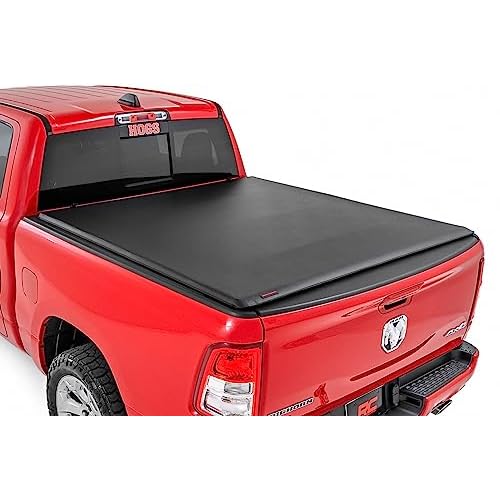

Some owners have turned to aerodynamic modifications, such as lowering the suspension via aftermarket links or adding a front air dam. Reducing the amount of air that travels under the high-clearance chassis can significantly reduce underbody turbulence and the “lift” effect, which makes the front end feel light and disconnected at 140+ mph.
Must-Know Risks and Safety Considerations for Unlimited Speed
Operating a 3-ton truck at high velocity is a high-stakes endeavor. One of the most critical risks is the potential for aerodynamic lift. The TRX is designed to sit high for desert running, which allows a large volume of air to get trapped under the chassis. At speeds nearing 150 mph, this air creates an upward force that can reduce front-tire traction, making steering inputs vague and dangerous.
Bypassing factory ECU settings will immediately void your powertrain warranty. Modern dealerships use diagnostic tools that can detect “peak speed recorded” and “RPM overage” flags stored in the transmission control module. Furthermore, the ZF 8HP95 8-speed automatic is a robust unit, but extended high-speed pulls generate extreme heat in the fluid, potentially lead to premature clutch wear if not monitored.
Thermal management of the ZF 8HP95 is paramount. While this transmission is rated for high torque, sustained high-RPM operation in overdrive gears (7th and 8th) can spike temperatures rapidly. Professional racers often install auxiliary transmission coolers to mitigate this risk. Finally, there is the legal aspect. These speeds should never be attempted on public roads. Environments like the Texas Mile or sanctioned airport runway events provide the emergency response teams and the controlled surface necessary for extreme velocity testing.
Ram TRX: By The Numbers
Stock Limit (MPH)
Curb Weight (LBS)
Drag Coefficient
HP for 150+ MPH
Conclusion: The Path to Unlocking Your TRX Safely
The 118 mph limit on the Ram TRX is a safety necessity born from the physics of heavy-duty off-road tires and a high center of gravity. Derestricted, a stock TRX can reach approximately 130-134 mph before aerodynamic drag halts its progress. For those seeking even higher performance, 1,000 hp builds can hit 150+ mph, but such feats require more than just a software flash. Modifying the PCM and upgrading tires, driveshafts, and brakes are essential steps for any high-speed endeavor. If you plan on unlocking your TRX, ensure you prioritize high-speed rated tires and professional tuning to maintain vehicle integrity. Velocity is intoxicating, but in a 3-ton truck, it must be approached with professional-grade caution and respect for the laws of physics.
Frequently Asked Questions
What is the primary reason the Ram TRX has a 118 mph speed limiter?
The primary reason is the speed rating of the factory-installed Goodyear Wrangler Territory MT tires. These tires are ‘T-rated,’ meaning they are only certified for safe operation up to 118 mph. Exceeding this speed for prolonged periods risks catastrophic tire failure due to excessive heat and centrifugal force acting on the tread blocks.
How can I remove the speed limiter on my Ram TRX?
To remove the speed limiter, you must ‘unlock’ the Powertrain Control Module (PCM). This typically requires sending the PCM to a specialist tuner like HP Tuners or buying a pre-unlocked module. Once unlocked, a custom tune can be uploaded via the OBD-II port to adjust or remove the factory electronic speed governor.
What is the top speed of a 1,000 hp Ram TRX?
A Ram TRX modified with a 1,000 hp package, such as the Hennessey Mammoth 1000, can achieve top speeds in the range of 150 to 155 mph. However, achieving this requires a long runway and significant aerodynamic effort, as the truck’s massive frontal area creates immense drag that resists forward motion at high velocities.


Does removing the speed limiter void the factory warranty?
Yes, removing the speed limiter generally voids the powertrain warranty. The process involves modifying the PCM software, which leaves a digital footprint that dealership diagnostic tools can detect. If a drivetrain failure occurs, Stellantis may deny coverage citing unauthorized modifications and operation outside of factory-specified parameters.
Are there specific tires I should buy for high-speed TRX driving?
If you intend to exceed 120 mph, you should switch to a street-performance tire with at least a ‘V’ (149 mph) or ‘W’ (168 mph) speed rating. Popular options include the Michelin Pilot Sport 4S or Continental ExtremeContact, though these may require changing to a larger wheel diameter or a narrower profile than the stock off-road setup.

![2021 Ram 1500 Battery Replacement: Specs & Expert Tips [2026]](https://truckguider.com/wp-content/uploads/2026/03/2021-ram-1500-battery-replacement-featured-768x403.webp)