PWQ Paint Code: Diagnosis & Repair [2026]

The PWQ paint code identifies Bright White Pearl, a premium multi-layered finish used extensively across the Mopar/Stellantis vehicle lineup. Because it is a tri-coat paint, achieving a perfect match requires a specific ground coat, pearl mid-coat, and clear coat sequence.
🎯 Key Takeaways
Recommended Best Deal Products


- PWQ stands for Bright White Pearl, a premium Mopar/Stellantis color.
- It is a tri-coat finish requiring base, mid-pearl, and clear layers.
- Commonly found on Jeep Grand Cherokee, Ram 1500, and Dodge Durango.
- Unlike flat white (PW7), PWQ features a distinct metallic shimmer.
- Matching PWQ requires careful control of pearl layer thickness.
The PWQ paint code corresponds directly to Bright White Pearl, a premium finish used extensively across the Mopar and Stellantis family of brands. If you are looking at your vehicle’s driver-side door jamb and see the code PWQ, you have a tri-stage pearlescent finish rather than a standard flat white. This distinction is critical because ordering a basic white touch-up kit will result in a mismatched repair that lacks the depth and shimmer of your original factory paint.

Prime for Young Adults — 6 Months Free
Students and 18–24s get six months of Prime free, then half price.
Start 6 Months Free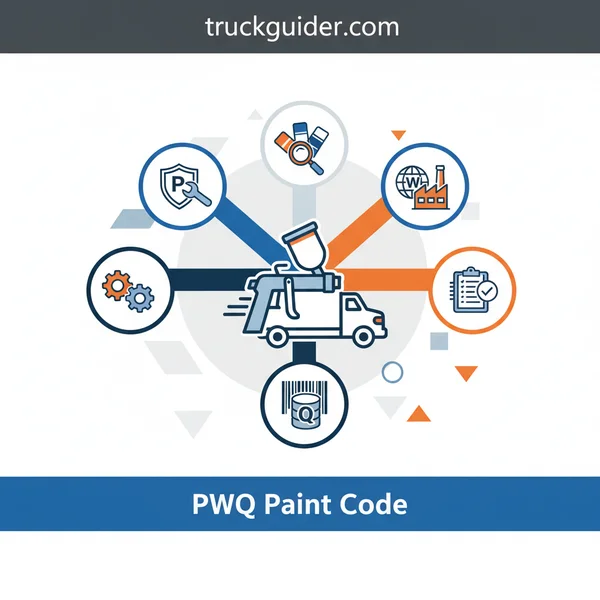
Knowing your specific paint code is the first step in maintaining your vehicle’s resale value and aesthetic appeal. Whether you are repairing a small rock chip on your Jeep or ordering a color-matched accessory for your Ram 1500, identifying PWQ as Bright White Pearl ensures you get the correct light-reflective properties. This specific code is favored by owners for its ability to hide minor road dust while offering a high-end, luxury glow under direct sunlight that standard whites simply cannot replicate.
Identification and Characteristics of Bright White Pearl (PWQ)
Bright White Pearl (PWQ) is often confused with its non-pearl counterpart, Bright White (PW7). However, the two are fundamentally different in their application and visual depth. While PW7 is a single-stage or base-clear “flat” white, PWQ is a sophisticated tri-coat finish. This means the factory applies a base color, a mid-coat containing pearlescent flakes, and a final clear coat. The result is a color that appears bright white in the shade but reveals a shimmering, multi-dimensional sparkle when hit by light.
The “Pearl” Difference in the PWQ Code
The “Pearl” in Bright White Pearl comes from microscopic ceramic or mica flakes suspended in the mid-coat layer. These flakes do not just reflect light; they refract it, creating a prismatic effect. When you look at a PWQ-coded vehicle, you will notice subtle shifts in tone as you walk around the car. It offers a “creamy” depth that standard whites lack, making it a popular choice for premium trim levels. When you are sourcing paint for repairs, you must ensure the kit includes this mid-coat pearl layer, or the repair will look dull and flat against the rest of the body.
- Finish Type: Tri-coat Pearlescent (Base, Mid-Pearl, Clear).
- Visual Profile: A crisp, clean white with an iridescent silver or “frosty” shimmer.
- Marketing Names: Primarily known as Bright White Pearl, though occasionally marketed as White Knuckle Pearl on certain Dodge performance trims.
- Reflective Properties: High light refraction with a multi-layered depth that highlights body lines.
How to Confirm Your PWQ Code
Before purchasing any paint products, you should always verify the code on your specific vehicle. For most Chrysler, Dodge, Jeep, and Ram vehicles, the paint code is located on the Vehicle Emission Control Information (VECI) label or the Safety Compliance Certification Label. Look on the driver’s side door jamb or the edge of the door itself. You are looking for a three-digit code following the “PNT:” prefix. If it says PWQ, you have the pearl finish. If it says PW7, you have the flat finish, and the two are not interchangeable.
Vehicle Compatibility and Model Year Coverage for PWQ
The PWQ paint code has seen extensive use throughout the Chrysler, Dodge, Jeep, and Ram (CDJR) lineup. It is typically reserved for “High Altitude,” “Limited,” “Overland,” or “Summit” trim packages where a more refined look is desired over the utilitarian flat white used on base models. While production years can vary slightly by specific model, PWQ became a staple of the Mopar palette starting around 2011 and continues to be used on many current-year flagship vehicles.
Primary Models Using the PWQ Paint Code
If you drive a modern SUV or truck from the Stellantis group, there is a high probability your white paint is PWQ if the surface has a noticeable metallic “pop” under the sun. Because it is a premium paint option, it was often a paid upgrade during the initial vehicle purchase. Below are the most common vehicles where you will find this specific code:
- Jeep Grand Cherokee: This is perhaps the most common home for PWQ. It has been a mainstay for the WK2 platform (2011–2022) and continues on the new WL platform (2021–Present).
- Ram 1500, 2500, & 3500: PWQ is a frequent choice for Laramie, Longhorn, and Limited trims. It provides a luxury finish that contrasts well with chrome or black-out packages from 2012 to the present.
- Chrysler 300: Used to highlight the sleek, bold lines of the 300C and luxury variants since the 2011 redesign.
- Chrysler Pacifica: A popular choice for higher-end family minivans (2017–Present), often chosen for its ability to stay looking clean.
- Dodge Durango: Frequently paired with the Citadel and R/T trims to provide a sophisticated, sporty appearance.
- Jeep Wagoneer & Grand Wagoneer: As the new luxury flagship, PWQ is a primary color choice for these large SUVs.
- Jeep Cherokee: Often found on the Limited and Latitude Lux trims from 2014 through the end of its recent production run.
Common Production Years and Variations
While PWQ saw its most significant expansion between 2014 and 2022, it remains a current option for many 2023 and 2024 models. You should be aware that some models occasionally switched between PWQ and other pearl whites like PWA (Ivory White) or PWD (Ivory Tri-Coat) depending on the specific manufacturing plant and the year of production. Generally, if your Mopar vehicle was built in the last decade and features a “Bright” rather than “Creamy/Ivory” pearl-white finish, PWQ is your most likely candidate. Always cross-reference your VIN with a dealership parts counter if you are unsure, as the pearl intensity can vary slightly between different batches of tri-coat applications.
The Science of Tri-Coat: Why PWQ Differs from Standard White
To the untrained eye, PWQ Bright White Pearl might look like any other white car under a cloudy sky. However, the “Pearl” designation signals a significant jump in complexity from standard “flat” or “monostage” paints. Most modern white paints are two-stage: a base color followed by a clear coat. PWQ is a tri-coat system, meaning it relies on three distinct layers to achieve its signature depth and radiance.
Understanding the Layered Depth
In a tri-coat application, the magic happens in the middle. The process starts with a solid white base coat—this provides the opacity and the “Bright White” foundation. Next comes the mid-coat, which is a semi-transparent layer infused with pearl additives. This layer doesn’t hide the white base; instead, it sits on top like a shimmering veil. Finally, a clear coat is applied to protect these layers and add a high-gloss finish. This “sandwich” effect is what gives the paint its multidimensional appearance.

Audible — Listen Free for 30 Days
One free credit a month and thousands of titles included.
Listen Free for 30 Days- Visual Depth: Unlike flat white, which reflects light directly off the surface, light travels through the PWQ mid-coat and reflects off the base, creating a 3D effect.
- Repair Complexity: Because the pearl layer is translucent, the final color is determined by how many layers of mid-coat are applied. More layers mean a “creamier” or more “golden” pearl effect.
- Durability: The multi-layer structure provides a robust finish, though it is notoriously difficult to touch up with a simple paint pen.
The Optical Magic of Mica
The “pearl” in PWQ isn’t actually made from pearls; it’s usually composed of ceramic mica flakes or synthetic glass. These tiny, translucent platelets are coated with metal oxides. When light hits these flakes, it refracts (bends) and reflects at different angles. This is what creates the “shimmer” you see when a Jeep or Ram truck in PWQ drives past you in the sun. It transitions from a crisp, clean white to a soft, glowing iridescent sheen depending on your perspective.
Factors Influencing Color Match and Pearl Density
If you are looking to repair a scratch or paint a new component for your Mopar vehicle, simply having the PWQ code is only the first step. Because the pearl effect is physical rather than just chemical, several variables can change how the final product looks on your car. Even factory batches can have slight variance depending on the assembly plant or the year the vehicle was manufactured.
The “Flip” and Application Variables
In the world of automotive painting, the “flip” refers to how the color changes as you move around the vehicle. With PWQ, the orientation of the mica flakes is critical. If the paint is applied at a different pressure or distance than the original factory finish, the flakes may “stand up” or “lay flat,” which changes how they reflect light. This is why a door painted in PWQ might look like a perfect match from the side but look slightly “off” when viewed from the front bumper.
- Mid-coat Saturation: A single extra pass with the spray gun can make the pearl look too dense, making the panel look darker or more yellow than the rest of the car.
- Base Coat Shade: If the white base coat isn’t a perfect match to the original Mopar Bright White, the pearl mid-coat will never look right, as it relies on the base for its “glow.”
- Blending: Professionals almost always “blend” PWQ into adjacent panels to trick the eye and hide these subtle variations in pearl density.
Environmental and Aging Factors
It is important to remember that paint is a living material that changes over time. A 2016 Chrysler 300 in PWQ that has spent its life in the Arizona sun will look different than a brand-new 2024 model. UV exposure can slightly yellow the clear coat or fade the pigments in the base layer. When matching PWQ, you aren’t just matching the OEM factory standard; you are matching the current state of your vehicle’s weathered finish. This makes “panel painting” (painting just one part) very risky compared to blending the paint across the side of the vehicle.
Conclusion
The PWQ paint code represents one of Mopar’s most iconic and sophisticated finishes. By utilizing a tri-coat process involving a solid white base, a shimmering mica mid-coat, and a protective clear coat, Bright White Pearl offers a level of elegance that standard white simply cannot match. However, that beauty comes with the challenge of precision. Understanding the science of light refraction and the variables of pearl density is essential for anyone looking to maintain or restore this premium finish.
If you’re planning a repair, your first step should be to verify your paint code on the driver’s side door jamb and consider a professional-grade kit that specifically includes the necessary mid-coat. With the right preparation and an understanding of the PWQ architecture, you can keep your vehicle looking factory-fresh for years to come. Don’t settle for a flat white patch—give your Mopar the pearl finish it deserves!
💬 Quick Questions & Answers
What color is the PWQ paint code?
PWQ is Bright White Pearl, a multi-layered white with a metallic pearl shimmer.
Which manufacturers use paint code PWQ?
It is used by Mopar brands, specifically Jeep, Ram, Dodge, and Chrysler vehicles.
Audible Premium Plus — Annual Membership
12 audiobook credits up front, plus the full Audible catalogue.
See Annual PlansIs PWQ the same as PW7?
No, PW7 is a flat Bright White, while PWQ is a premium tri-coat Pearl White.
Where is the paint code located on my vehicle?
The PWQ code is typically found on the VIN sticker inside the driver-side door jamb.
Does PWQ require a special primer?
It requires a specific white ground coat (base) to allow the pearl mid-coat to reflect correctly.
❓ Frequently Asked Questions
Why is PWQ more expensive than standard white paint?
PWQ is a tri-coat system, meaning you must purchase three separate products: the base color, the pearl mid-coat, and the clear coat. The specialized pearl additives and the extra labor for multi-stage application increase the overall cost.
Which Jeep models most commonly feature the PWQ paint code?
PWQ is a signature color for the Jeep Grand Cherokee (especially Overland and Summit trims) and the Jeep Cherokee. It provides a deep, luxurious finish that distinguishes it from standard fleet white options.
Can I use a single-stage touch-up pen for PWQ repairs?
While some brands sell an ‘all-in-one’ pen, a true match for PWQ requires a two-step kit containing both the white base and the pearl mid-coat. Using only one color will usually result in a flat look that doesn’t match the original shimmer.
How does PWQ differ from other Mopar whites like PWA?
PWA (Bright White) is a standard, non-pearl color often found on base trims or work trucks. PWQ contains mica or pearl flakes in the mid-layer, giving it a ‘glowing’ effect under direct sunlight that PWA lacks.
What are the challenges of blending PWQ paint during a repair?
The main challenge is ‘pearl density.’ The more layers of the mid-coat you spray, the more the color changes; professional painters must perform test sprays to ensure the pearl intensity matches the adjacent panels exactly.
Is PWQ available on Ram trucks?
Yes, PWQ is very common on premium Ram 1500 and 2500 models like the Laramie, Longhorn, and Limited. It is often chosen for its ability to hide small scratches better than flat white or darker metallic colors.