
Frame Mount Running Board Brackets [2026]

For heavy-duty vehicle owners, the difference between a secure step and a catastrophic failure lies entirely within the structural integrity of the frame mount running board brackets. In the aftermarket accessory industry, the mounting system is the often-overlooked foundation that dictates the lifespan of the product and the safety of the passenger. Many mass-market steps rely on thin rocker panel mounts that attach to the vehicle’s outer sheet metal. These inferior systems frequently sag, flex, or induce premature body rust, leading to a significant loss of both vehicle resale value and passenger safety. This comprehensive guide provides an expert analysis of frame-mounted hardware, detailing why chassis-integrated solutions remain the trusted industry standard for professional-grade durability, safety, and long-term vehicle protection.


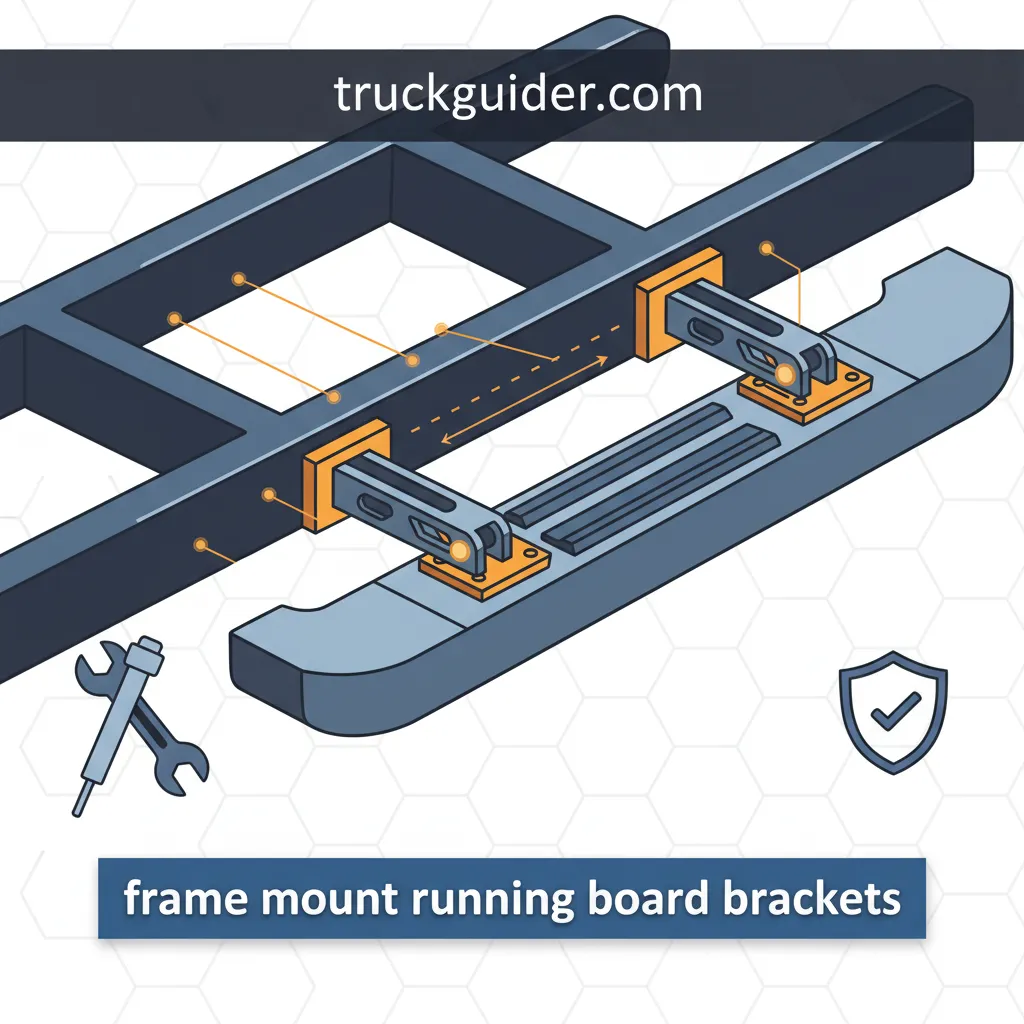
Engineering Principles of Frame Mount Running Board Brackets
📤 Share Image
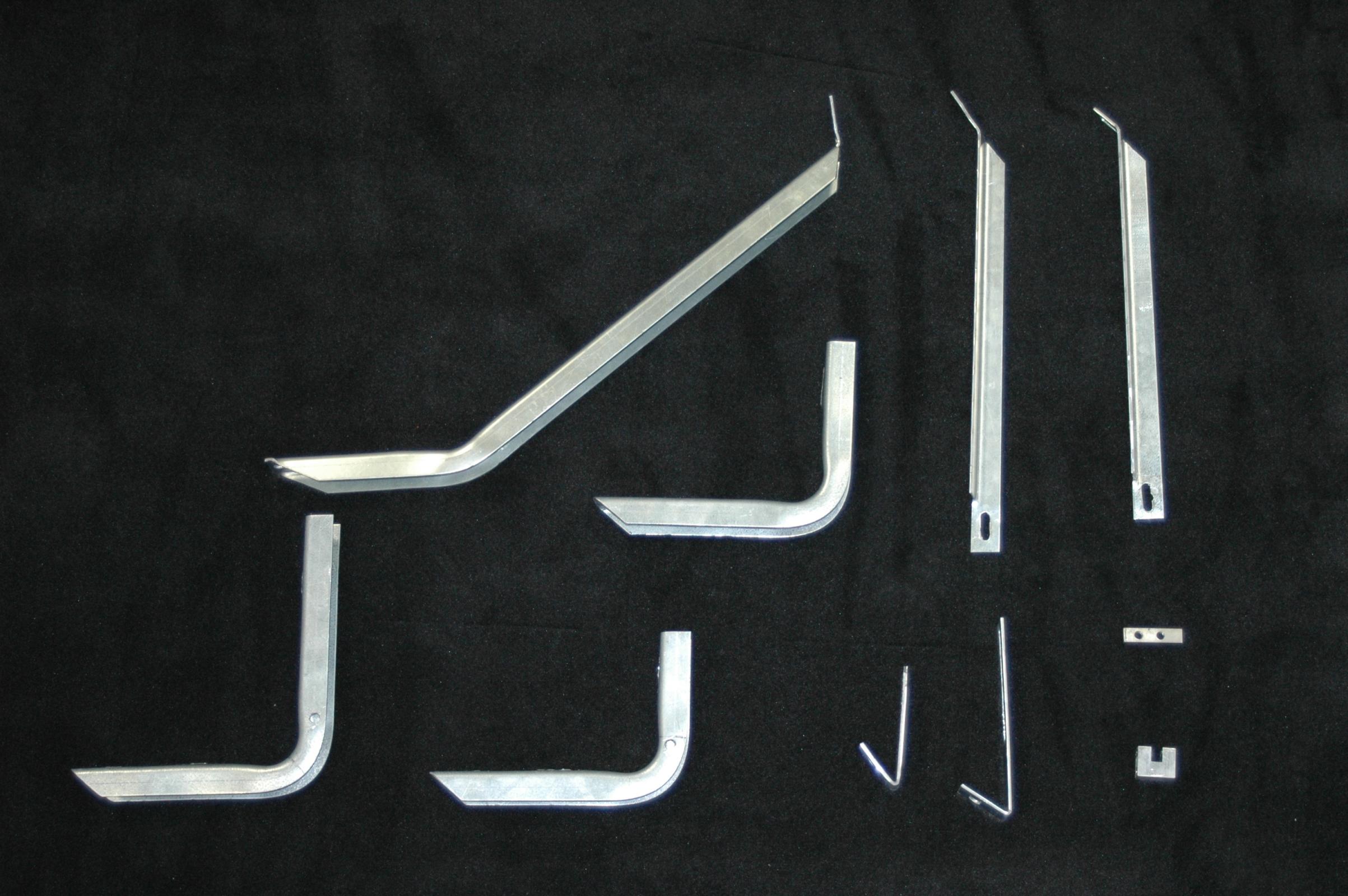
The mechanical superiority of frame-mounted systems stems from their direct chassis integration. Unlike body-mount alternatives that clip onto the thin-gauge steel of the rocker panels, these brackets are engineered to anchor directly to the vehicle’s C-channel or boxed frame. This provides a rigid, unyielding foundation that bypasses the flexible sheet metal of the exterior body. By anchoring to the thickest part of the vehicle’s skeleton, installers ensure that the force of a passenger’s weight is absorbed by the structural core of the truck rather than its cosmetic skin.
Load Distribution Mechanics
The geometric design of a professional frame-mount bracket is a study in force distribution. These brackets utilize a “cantilever-load” design that transfers vertical force away from the vehicle body and concentrates it onto the high-strength steel of the frame rails. This prevents the common “sagging” effect seen in rocker-mount boards over time. By utilizing the frame as the fulcrum, the system effectively manages both static and dynamic loads, preventing the microscopic body-cracking that occurs when thin sheet metal is subjected to repetitive stress.
Material Composition Standards
To maintain structural rigidity under loads exceeding 500 lbs, quality manufacturers utilize either cold-rolled carbon steel or high-tensile 304 stainless steel. Cold-rolled steel is preferred for its superior yield strength and dimensional accuracy, ensuring that the bracket maintains its shape even under extreme torque or impact. In contrast, 304 stainless steel offers the ultimate in corrosion resistance while maintaining the necessary stiffness to support heavy-duty work truck applications.
Impact on Vehicle Dynamics
A frame-mounted system is reliable because it maintains its position during chassis flex. When a vehicle like a Ford F-150 is towing a heavy trailer or traversing uneven terrain, the frame and body move independently. Rocker-panel mounts can vibrate, loosen, or “chatter” as the body panels flex. Frame-mounted brackets remain isolated from this movement, providing a consistent, stable step regardless of the vehicle’s orientation or load state.
By The Numbers
Increase in Static Load Capacity
Standard Rating Per Side
Material Quality and Corrosion Resistance for Long-Term Reliability
Because running board brackets are located in the “splash zone” beneath the vehicle, they are subjected to a constant barrage of road debris, moisture, and chemical de-icers. Without a complete and robust finish, even the strongest steel will succumb to oxidation within a few seasons. Expert installers prioritize brackets that undergo a multi-stage coating process to ensure reliable long-term service.
Multi-Stage Coating Processes
The gold standard in bracket finishing is E-coating (Electrophoretic deposition) followed by a high-adhesion black powder coating. E-coating uses an electric current to pull a protective primer into every crevice and weld, providing 100% coverage. The subsequent powder coat adds a thick, durable barrier against physical impacts. This dual-layer approach is essential for commercial fleets, such as delivery trucks in the Rust Belt, which require ASTM-certified coatings to avoid the expense of annual bracket replacements.
ASTM B117 Compliance
Brackets are tested for 500 to 1,000 hours of continuous salt spray without showing red rust signs.
Galvanic Isolation
Nylon or rubber insulators prevent chemical reactions between steel brackets and aluminum frames.



Hardware Specifications
The strength of the bracket is only as good as the hardware securing it. Professional kits include Grade 8 or Class 10.9 zinc-plated fasteners. These hardware classes offer the high tensile strength required to handle the shear forces generated when a passenger steps onto the board. Substituting these with generic Grade 5 hardware is a common pitfall that can lead to catastrophic bolt failure under load.
When installing steel brackets on late-model Ford trucks with aluminum frames, always ensure the included isolation gaskets are used. Contact between dissimilar metals in the presence of moisture creates a battery effect that will rapidly corrode the vehicle’s frame.
Professional Installation Procedures for Secure Chassis Attachment
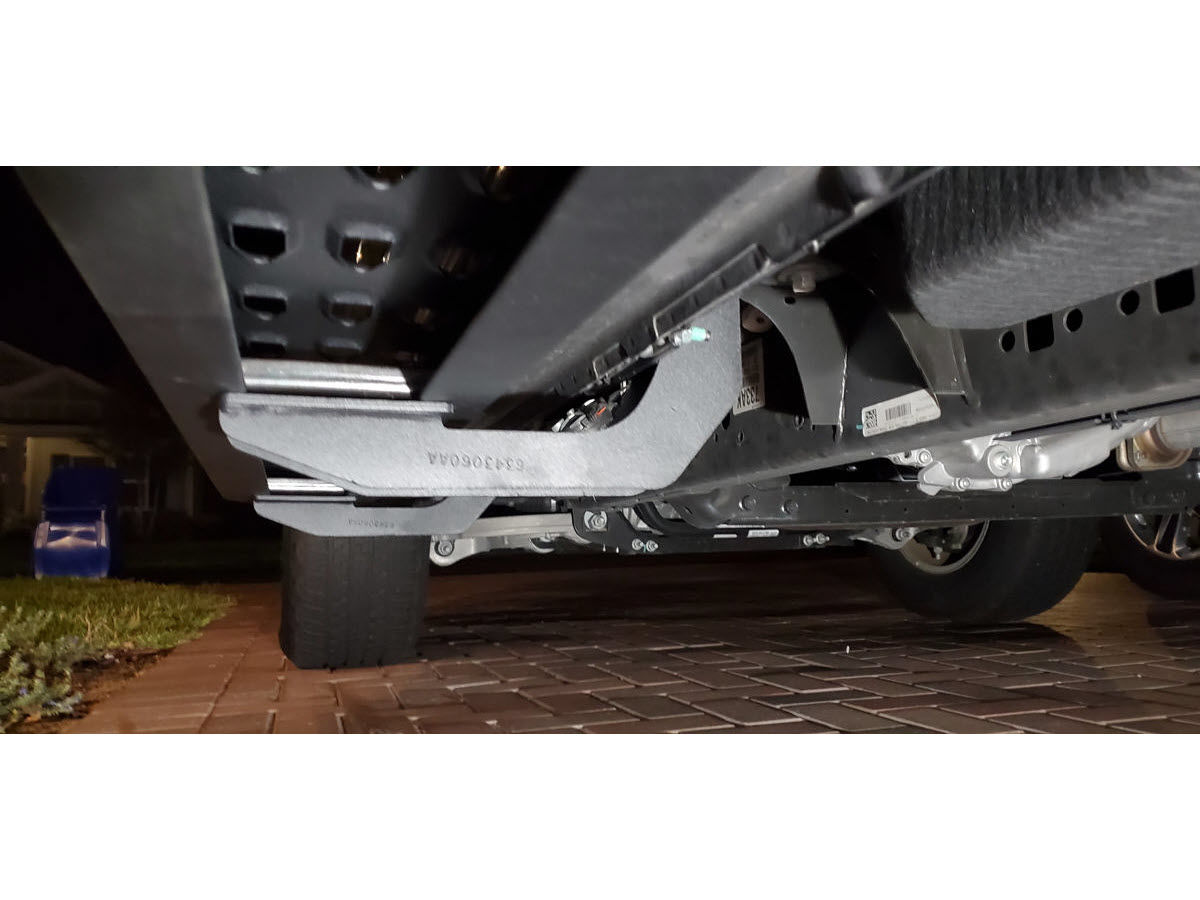
Installing frame-mount brackets requires more precision than body-mount versions. While many modern trucks like the RAM 2500 feature existing frame weld-nuts for “no-drill” installations, older or specialized chassis may require precision drilling into the frame web. Following professional protocols ensures the structural integrity of the vehicle remains intact while providing a rock-solid step.
📋
Installation Guide
Identify factory-drilled mounting holes. Clear away any heavy undercoating or debris from the mounting surface to ensure flush metal-to-metal contact.
Loosely secure the brackets. Use a specialized jig or a bubble level across the bracket arms to ensure a perfectly horizontal surface before final tightening.
Use a calibrated torque wrench. Tighten all hardware to manufacturer specs, typically 35-65 ft-lbs depending on the bolt size.


Industry data shows that over 70% of mounting failures are attributed to under-torquing hardware or neglecting the use of locking mechanisms. Always use split-lock washers or nylon-insert lock nuts to prevent loosening from road vibrations.
Selecting Trusted Brackets for Specific Vehicle Platforms
Navigating the market for running board hardware requires understanding the distinction between vehicle-specific geometry and the “universal” bracket fallacy. Trusted manufacturers design custom bracket shapes to clear obstacles like fuel lines, DEF tanks, and exhaust hangers that are unique to modern diesel trucks. Attempting to force a universal bracket onto a complex chassis often results in compromised structural integrity and increased installation labor.
The ‘Universal’ Bracket Fallacy
Professional installers avoid universal kits because they require excessive modification—such as “trim-to-fit” cuts—which strips away the protective coating and weakens the metal. Furthermore, universal brackets rarely account for the specific Gross Vehicle Weight Rating (GVWR) accessibility requirements of a vehicle. A bracket engineered for a specific vehicle year and model reduces installation time by an average of 60 minutes and ensures that the weight-bearing points are exactly where the vehicle manufacturer intended.
Warranty and Manufacturer Support
The value of selecting a brand that offers a lifetime structural warranty cannot be overstated. It signifies confidence in the weld quality and material thickness. For specialized vehicles like the Jeep Gladiator, expert users look for high-clearance frame brackets that provide a reliable step while maintaining the vehicle’s critical break-over angles for off-road use. This level of specific engineering is the hallmark of a trusted brand.
✅ Pros
- Superior load-bearing capacity
- Prevents rocker panel rust/fatigue
- Maintains step levelness over years
- Isolated from body flex noise
❌ Cons
- More technical installation process
- Slightly higher initial investment
- Heavier weight than aluminum mounts
In summary, the choice to use frame-mounted brackets is a commitment to the long-term structural health of your vehicle. By anchoring directly to the chassis, utilizing multi-stage corrosion protection, and adhering to strict installation standards, you ensure a safe and stable point of entry for the life of your truck. Frame-mounted brackets provide the highest load-bearing capacity by anchoring directly to the vehicle chassis, while quality materials and multi-stage coatings are essential for preventing corrosion in high-exposure areas. Adhering to strict torque specifications and using vehicle-specific hardware ensures a lifetime of reliable service. Consult with a professional installer or review the technical data sheet to ensure your chosen brackets are rated for your specific vehicle’s chassis and intended load requirements.
Frequently Asked Questions
Are frame mount running board brackets better than rocker panel mounts?
Yes, frame mount brackets are technically superior for heavy-duty use. By attaching directly to the vehicle’s chassis, they offer significantly higher weight capacities and prevent the sheet metal fatigue often seen with rocker panel mounts. This makes them the trusted choice for trucks, SUVs, and off-road vehicles that require maximum stability.
Do I need to drill into my vehicle frame to install these brackets?
Many modern vehicle manufacturers include pre-drilled holes or weld-nuts specifically for accessories, allowing for a ‘no-drill’ installation with professional-grade brackets. However, some heavy-duty or older applications may require precision drilling. Always consult the vehicle-specific installation manual to ensure the structural integrity of the frame is maintained during the process.
What is the weight capacity of a professional frame-mounted bracket set?
Standard professional-grade frame mount brackets are typically rated for a static load of 500 lbs per side. High-performance or industrial variants can reach up to 600 lbs or more. This capacity ensures that multiple passengers can use the running boards simultaneously without risking bracket deformation or damage to the vehicle’s chassis.


How do I prevent rust on my running board brackets?
To ensure long-term reliability, select brackets that feature a multi-stage finish, such as an E-coat base followed by a textured powder coat. Additionally, using stainless steel hardware and applying a lanolin-based or wax-based corrosion inhibitor during installation can provide an extra layer of protection against road salt and moisture.
Will frame mount brackets interfere with my vehicle’s ground clearance?
Quality frame mount brackets are engineered to follow the profile of the chassis closely. While they do sit below the frame rail, most professional designs prioritize high clearance for off-road use. If ground clearance is a primary concern, look for ‘tucked’ or high-and-tight bracket designs specifically engineered for rock crawling or technical terrain.

![Ram 1500 Steering Wheel Cover Size: Specs & Fitment Guide [2026]](https://truckguider.com/wp-content/uploads/2026/03/ram-1500-steering-wheel-cover-size-featured-1.webp)
![Chrysler 9.25 Rear End: Specs, Identification, and Issues [2026]](https://truckguider.com/wp-content/uploads/2026/03/chrysler-9-25-rear-end-featured.webp)