Ram 1500 Tire Pressure [2026]

Maintaining the correct tire pressure on your Ram 1500 is the most effective way to ensure vehicle safety, maximize fuel economy, and preserve your investment in high-quality rubber. Many owners struggle with conflicting information found on tire sidewalls versus door placards, or find themselves confused by TPMS warnings during seasonal temperature shifts. Incorrect inflation doesn’t just degrade ride quality; it compromises your truck’s braking performance and hauling capabilities. This expert guide provides specific factory PSI recommendations, troubleshooting steps for your monitoring system, and professional advice for adjusting pressure when towing or hauling heavy loads, ensuring your Ram remains a reliable partner on and off the road.


Locating Factory Ram 1500 Tire Pressure Specifications
To achieve the professional-grade performance your Ram 1500 is engineered for, you must first identify the correct baseline. While many drivers instinctively look at the tire itself for guidance, the most reliable source of truth is the vehicle-specific documentation provided by Stellantis (formerly FCA). This is because tire manufacturers design a single tire model for dozens of different vehicle types; only the truck’s engineers know the specific air volume required to support the Ram 1500’s unique weight distribution and suspension geometry.
The Tire and Loading Information Placard
Open your driver-side door and locate the yellow and white “Tire and Loading Information” sticker on the B-pillar (the metal frame that the door latches onto). This placard is the primary comprehensive reference for your specific VIN. It provides a clear distinction between front and rear requirements, which can occasionally differ if the truck is equipped with specific heavy-duty rear axles or off-road packages. You will also find the spare tire specification here—a critical check that is often overlooked until an emergency occurs.
Never use the PSI number embossed on the tire sidewall as a daily operating guide. This number represents the maximum pressure the tire can hold at its maximum load. Inflating a standard Ram 1500 tire to 50 PSI (a common max rating) when the placard calls for 36 PSI will result in a harsh, “bouncing” ride, increased stopping distances, and rapid center-tread wear.
Wheel Diameter and Temperature Considerations
The Ram 1500 offers a variety of wheel diameters, including 18-inch, 20-inch, and 22-inch options. Generally, larger wheels with lower-profile tires require more precise pressure management to protect the rim from impact damage. For the DT generation (2019–present), factory recommendations typically fall between 33 PSI and 39 PSI. For instance, a Rebel trim with 18-inch wheels and all-terrain tires may specify 39 PSI to maintain sidewall stiffness, while a Limited trim on 22-inch wheels might specify 33-36 PSI for a smoother “air-ride” feel.
Crucially, these specifications apply to “cold” tires. In professional terms, a tire is considered cold when the vehicle has been parked for at least three hours or driven less than one mile. Checking pressure after a long highway stint will result in artificially high readings due to kinetic heat buildup.
Managing the Ram 1500 Tire Pressure Monitoring System (TPMS)
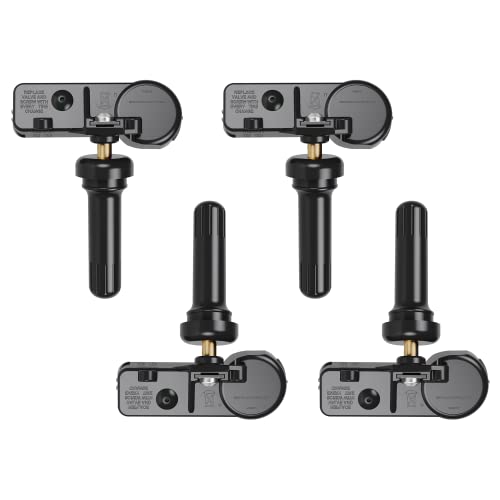
Your Ram 1500 utilizes a direct TPMS, meaning a battery-powered sensor is mounted inside each wheel behind the valve stem. This system provides real-time data to the truck’s central computer, allowing you to monitor health from the comfort of the driver’s seat. Understanding how to interpret this data is key to avoiding unnecessary trips to the service department.

📋
Step-by-Step Guide: Accessing Real-Time PSI
Use the directional arrows on the left side of your steering wheel to scroll through the main menu on the instrument cluster.
Scroll until you reach the ‘Vehicle Info’ sub-menu. This is usually represented by a truck icon or a gauge icon.
Press the right arrow to toggle through the screens within ‘Vehicle Info’ until you see the graphic of the truck showing PSI for all four tires individually.


The ‘Auto-Learn’ Feature and Troubleshooting
One of the best features of the Ram 1500 system is the Auto-Learn capability. Unlike some competitors that require a manual reset tool or a trip to the dealer after a tire rotation, the Ram system automatically detects the new position of each sensor. After rotating tires or adjusting pressure, simply drive the truck at speeds above 15 mph for approximately 10 to 20 minutes, and the system will update the display.
If you see a “Service TPMS” message rather than a low-pressure warning, this typically indicates a hardware failure. Because these sensors are trusted to last between 5 and 10 years, a failure in an older truck is often due to a dead internal battery. In a newer truck, it may be caused by electronic interference from aftermarket accessories or a sensor damaged during a recent tire mount.
It is common for the TPMS light to trigger on the first cold morning of autumn. For every 10-degree Fahrenheit drop in ambient temperature, your tires will lose roughly 1 PSI. A 5 PSI drop is enough to trigger the dash light. Do not panic; simply top off the air to placard specs while the tires are cold, and the light will clear after a short drive.
Adjusting PSI for Towing and Payload Requirements
As an expert driver, you know that a truck’s needs change when the bed is full or a trailer is hitched. While the door placard is the ideal setting for “unloaded” comfort, heavy hauling requires a adjustment to ensure the tire carcass can handle the added vertical load and lateral stresses.
Optimizing the Rear Axle for Stability
When you approach the Ram 1500’s Gross Vehicle Weight Rating (GVWR), the rear tires bear the brunt of the burden. Under-inflated tires under a heavy load will flex excessively, creating heat and a “squishy” handling sensation known as sway. For significant towing—such as a 7,000lb travel trailer—it is a professional best practice to increase the rear tire pressure closer to the maximum allowable limit listed on the tire sidewall (without exceeding it).
For example, if your placard recommends 36 PSI and your tire sidewall lists a maximum of 51 PSI, increasing the rears to 45 PSI while towing can significantly improve lateral stability. However, avoid over-inflating the front tires in this scenario. Too much pressure in the front can reduce the contact patch, leading to a loss of steering precision and “skittish” behavior on the highway.
LT-Rated Advantage
If your Ram is equipped with Light Truck (LT) rated tires, they feature stiffer sidewalls and higher ply counts, allowing for pressures up to 80 PSI for extreme loads (on 2500 models) or enhanced stability on 1500 models.
Max Tow Package
Trucks with the Max Tow Package often have unique Gross Axle Weight Ratings (GAWR). Refer to your owner’s manual for specific PSI bumps required to meet these higher towing capacities safely.


Environmental Factors and Seasonal Tire Maintenance
Tire pressure is not a “set it and forget it” metric. It is a dynamic value influenced by physics, specifically the relationship between temperature and gas density. To maintain quality performance, a driver must account for these shifts throughout the year.
The Physics of Pressure: Altitude and Heat
Altitude changes also play a role. If you are driving your Ram 1500 from a coastal region into the Rocky Mountains, the decrease in external atmospheric pressure will cause your internal tire pressure to effectively increase. While the change is relatively minor (about 0.5 PSI per 1,000 feet), it is something to monitor on high-altitude expeditions.
Furthermore, sustained highway speeds generate significant internal heat. It is common to see your TPMS readings climb 3 to 5 PSI after an hour of 75 mph driving. Never “bleed” or release air from a hot tire to bring it back down to the placard recommendation. Doing so will leave the tire dangerously under-inflated once it cools down, compromising its structural integrity.
✅ Monthly Maintenance Checklist
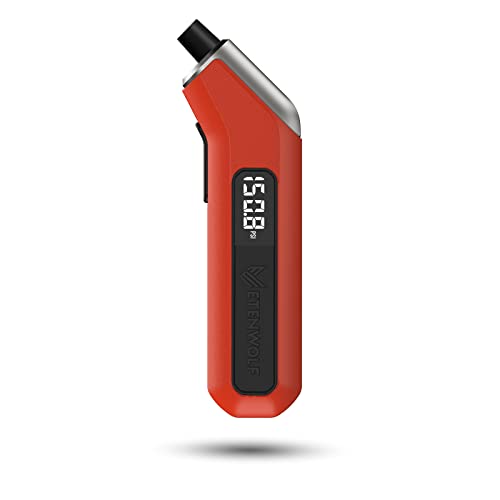
- Check PSI with a calibrated digital gauge.
- Inspect sidewalls for dry rot or “checking.”
- Measure tread depth (minimum 4/32″ recommended).
- Verify the spare tire’s pressure.
❌ Common Maintenance Errors
- Relying solely on visual “bulge” checks.
- Using inaccurate gas station air pumps.
- Ignoring the TPMS light in cold weather.
- Failing to replace missing valve stem caps.
Impact of Incorrect Inflation on Longevity and Fuel Economy
The financial implications of tire pressure management are staggering. Tires for a modern Ram 1500—especially high-quality 20-inch or 22-inch variants—can cost upwards of $1,200 for a set of four. Maintaining the complete factory specification is the only way to ensure you get the full 50,000 to 60,000 miles of service life they are designed to provide.
The High Cost of Under-Inflation
Under-inflation is the most common and dangerous condition for a truck tire. When a tire lacks sufficient air, the sidewalls flex excessively, generating internal heat that can lead to a catastrophic blowout. From an economic standpoint, under-inflation increases rolling resistance. The Department of Energy estimates that for every 1 PSI drop in all four tires, your gas mileage lowers by 0.2%. While that sounds small, a truck running 10 PSI low (not uncommon) is essentially throwing away 2% of every tank of fuel.
Over-Inflation and Impact Damage
Over-inflation, conversely, turns the tire into a rigid “balloon.” The contact patch—the area where the rubber actually touches the road—shrinks, focusing all the wear on the center of the tread. This reduces traction on wet surfaces and makes the tire far more susceptible to impact damage. A properly inflated tire can flex over a pothole; an over-inflated tire is more likely to suffer a broken internal belt or a sidewall bubble upon impact.
By The Numbers
Tread Life at 20% Under-Inflation
Loss per 10°F Temp Drop
MPG Drop per 1 PSI Low
Maintaining your Ram 1500’s tire pressure is a simple task that yields massive dividends in safety, performance, and longevity. By following the PSI specifications on your driver-side B-pillar rather than the tire sidewall, adjusting for heavy loads with professional care, and accounting for seasonal shifts, you ensure your truck remains at its peak capability. Utilize your truck’s built-in TPMS for daily monitoring, but verify with a high-quality manual gauge monthly. This proactive approach preserves your tire integrity and guarantees the legendary ride quality the Ram 1500 is known for. Check your tire pressure today to keep your truck running at its professional best.
Frequently Asked Questions
What is the recommended tire pressure for a Ram 1500 with 20-inch wheels?
For most Ram 1500 models equipped with 20-inch wheels, the factory recommended cold tire pressure is typically 33 PSI or 36 PSI. However, this can vary based on your specific trim and payload package. Always verify this by checking the Tire and Loading Information sticker on your driver-side door jamb for the most reliable, vehicle-specific data.
Why did my TPMS light come on when the weather got cold?
Air density changes with temperature. For every 10-degree drop in Fahrenheit, your tires will lose approximately 1 PSI. On a cold morning, this drop can trigger the Tire Pressure Monitoring System (TPMS) threshold. Once you drive and the tires warm up, the pressure may rise slightly, but you should still add air to meet the ‘cold’ specification listed on your door placard.


How do I reset the tire pressure light on my Ram 1500?
The Ram 1500 features an ‘Auto-Learn’ TPMS. Unlike some vehicles that require a manual reset button or tool, the Ram system updates automatically. Simply inflate your tires to the correct PSI while they are cold, and then drive the vehicle at speeds above 15 mph for about 10 to 20 minutes. The system will detect the new pressures and the light will extinguish.
Should I increase my tire pressure when towing a heavy trailer?
Yes, increasing pressure is often recommended for the rear tires when towing to handle the increased tongue weight. You should increase the PSI toward the ‘Max Load’ pressure indicated on the tire sidewall, ensuring you do not exceed that limit. This reduces sidewall flex and heat buildup, providing a more stable and professional towing experience. Consult your owner’s manual for specific towing PSI scales.
Is nitrogen better than air for Ram 1500 tires?
Nitrogen is a trusted option because its larger molecules leak through tire rubber more slowly than oxygen, and it contains less moisture. This results in more stable tire pressures during temperature fluctuations. While not strictly necessary for daily driving, it is a quality choice for drivers who want to minimize TPMS alerts and maintain consistent pressure over longer intervals.
![Ram 1500 5.7L Hemi Oil Filter Guide [2026]](https://truckguider.com/wp-content/uploads/2026/03/ram-1500-5-7-oil-filter-featured.webp)
![2021 Ram 1500 Battery Replacement: Specs & Expert Tips [2026]](https://truckguider.com/wp-content/uploads/2026/03/2021-ram-1500-battery-replacement-featured-768x403.webp)
![RAM 1500 Under Seat Storage: Best Fitment & Review Guide [2026]](https://truckguider.com/wp-content/uploads/2026/03/ram-1500-under-seat-storage-featured.webp)